The Catacombs of Paris
The Catacombs are a municipal ossuary in a disused limestone quarry twenty metres under the 14th arrondissement, holding the remains of several million Parisians moved out of the city's overflowing graveyards from 1786 onward. The visit is a 1.5 km one-way walk, 131 steps down and 112 up, at a constant 14°C. Open Tuesday to Sunday, 9.45 a.m.–8.30 p.m., last admission 7.30 p.m.; full rate €31.
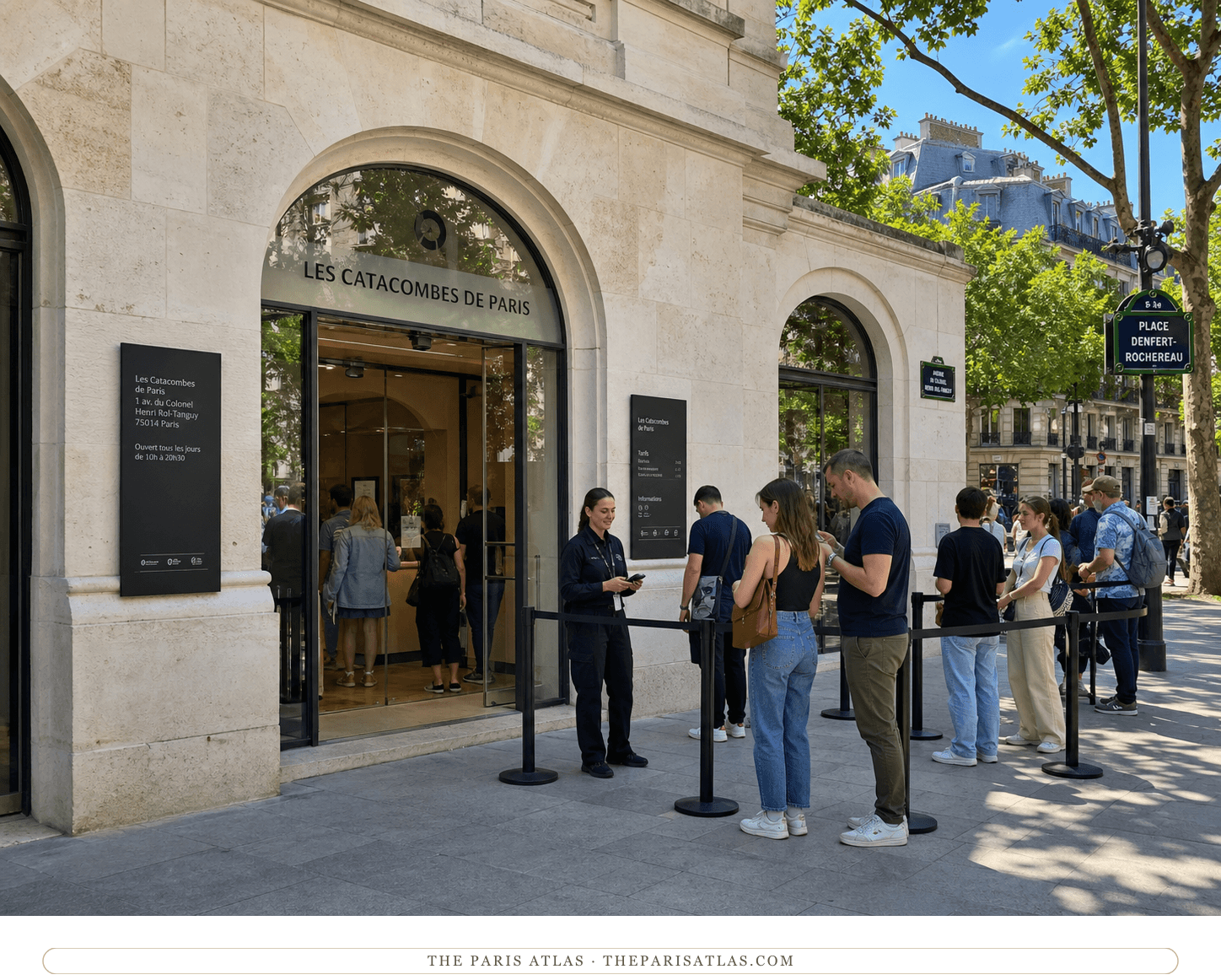
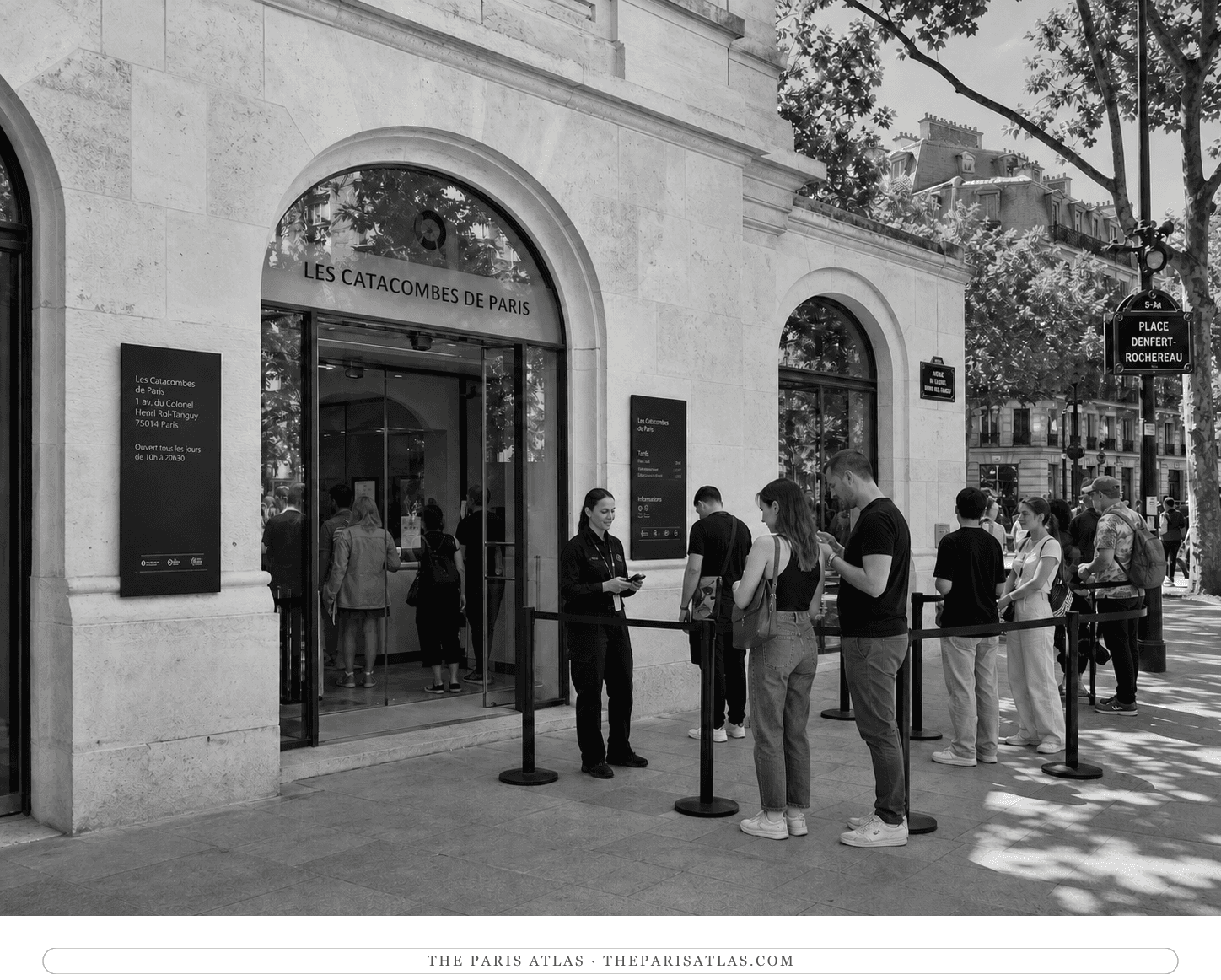
- 1 avenue du Colonel Henri Rol-Tanguy (place Denfert-Rochereau), 75014 Paris
- Ossuary since 1786; open to visitors since 1809
The place, briefly
The Catacombs of Paris are an ossuary — a place where human bones are stored — built into the tunnels of a worked-out limestone quarry beneath the 14th arrondissement. They hold the remains of several million people. Those people were not buried there. They were dug up from cemeteries elsewhere in Paris and carried underground, beginning in 1786, because the city's graveyards had run out of room in a way that had become a public-health emergency.[1]
Paris is built out of its own ground. Limestone and gypsum were cut from open pits here from the first century AD, and from underground galleries by the fourteenth, until roughly 800 hectares beneath the city had been hollowed out. The stone went into the buildings above. Nobody kept adequate maps.[2]
The reckoning came in 1774, when a 300-metre stretch of the rue Denfert-Rochereau collapsed into the void underneath it. Louis XVI signed a decree in September 1776 banning extraction under public roads, and on 4 April 1777 created the Inspection Générale des Carrières — the quarry inspectorate — to survey and shore up the tunnels. That service still exists, and the Catacombs are the one part of its territory the public can walk through.[2]
Meanwhile the cemetery of the Saints-Innocents, in what is now the Les Halles district, had been taking Paris's dead for close to ten centuries. The ground had risen metres above the surrounding streets, walls were giving way, and the stench and contamination had become intolerable to the people living around it. It was closed in 1780.[2]
The solution was to put the dead in the quarries. The site was blessed and consecrated on 7 April 1786 as the Paris Municipal Ossuary, and bones were moved from the Innocents between 1785 and 1787, then from parish cemeteries across the city until 1814, with further transfers in 1840 and again in 1859–60 during Haussmann's rebuilding of Paris. What is underground is therefore not one graveyard but the emptied contents of many.[2]
The arrangement you see — walls of stacked femurs and skulls, built up in careful patterns — is a deliberate design, not the way bones happened to fall. It is the work of Louis-Étienne Héricart de Thury, the quarry inspector who from 1809 reorganised the ossuary along museographical and monumental lines, stacking the bones as a quarry backfill and adding the inscriptions and plaques. Over the doorway into the ossuary he had cut the line every visitor photographs: Arrête, c'est ici l'empire de la mort — Stop, this is the empire of death.[1]
It opened to visitors, by appointment, in 1809. It now takes around 550,000 people a year.[3]
Key facts
- A municipal ossuary in a disused limestone quarry, twenty metres below street level
- Several million Parisians, moved from cemeteries across the city
- 7 April 1786
- 1809
- Tuesday to Sunday, 9.45 a.m.–8.30 p.m.; last admission 7.30 p.m.
- Monday, 1 January, 1 May and 25 December
- €31 full rate, €25 reduced, €15 for children 8–17, free under 8 — audio guide included
- 1.5 km, one-way, about 45 minutes
- 131 down, 112 back up — no lift
- A constant 14°C, often humid
- 200 visitors on site at a time; book online
- Métro and RER B at Denfert-Rochereau; buses 38 and 68
In images
Timeline
Limestone is cut from open-pit quarries on the site of the future city.
Quarrying moves underground; the galleries eventually run under roughly 800 hectares of Paris.
A 300-metre stretch of the rue Denfert-Rochereau collapses into the tunnels beneath it.
Louis XVI bans the extraction of stone under public roads.
The Inspection Générale des Carrières is created to survey and secure the quarries.
The cemetery of the Saints-Innocents closes after nearly ten centuries of use.
The site is blessed and consecrated as the Paris Municipal Ossuary.
Bones are transferred from the Saints-Innocents to the quarries.
Héricart de Thury reorganises the ossuary into its monumental form and opens it to visitors by appointment.
Transfers continue until the suppression of the parish cemeteries; more follow in 1840 and 1859–60.
On the map
Questions before you go
What are the Catacombs of Paris?
An underground ossuary — a store of human bones — in the tunnels of a disused limestone quarry twenty metres beneath the 14th arrondissement. It holds the remains of several million Parisians, moved there from the city's overcrowded cemeteries beginning in 1786. About 1.5 km of it is open to visitors as a municipal museum.
Why were the bones moved there?
Because Paris had run out of burial space. The cemetery of the Saints-Innocents had been in use for close to ten centuries; its ground had risen above the surrounding streets, its walls were failing, and it had become a public-health problem for the neighbourhood. It was closed in 1780 and its contents moved into the quarries, followed by the contents of parish cemeteries across the city.
How much are Catacombs tickets?
The full rate is €31 with the audio guide included. Reduced admission is €25, children aged 8 to 17 pay €15, and under-8s are free. A standalone audio guide is €5. Book online in advance — the site takes only 200 visitors at a time. Free-entry categories cannot book online and buy at the desk with proof.
What are the Catacombs' opening hours?
Tuesday to Sunday, 9.45 a.m. to 8.30 p.m., with last admission at 7.30 p.m. Closed Mondays, and on 1 January, 1 May and 25 December. Open on 14 July, 15 August, 1 November and 11 November. Verified against the official site on 24 August 2026 — check before travelling.
How long does the visit take?
About 45 minutes. The route is 1.5 km and strictly one-way — you come out at a different place from where you went in, so do not plan to return to the entrance for a bag or a companion.
How many steps are there?
131 steps down at the start and 112 steps up at the end. There is no lift and no alternative route. The temperature underground stays at a constant 14°C and it is often humid, so bring a layer even in August.
Are the Catacombs suitable for everyone?
No, and the site says so plainly. It is not wheelchair accessible and is not recommended for visitors with limited mobility, claustrophobia, or heart or respiratory conditions. Children under fourteen must be accompanied by an adult. Bags larger than 40 × 30 cm are not allowed.
Can you visit the rest of the tunnel network?
Not legally. The visited route is a small, secured fraction of roughly 800 hectares of quarry galleries under the city. The rest is closed, unlit, unmapped in places, and patrolled; entering it is an offence. The Catacombs museum is the only lawful way in.
What does the inscription over the door mean?
"Arrête, c'est ici l'empire de la mort" — "Stop, this is the empire of death." It was placed over the entrance to the ossuary by the quarry inspector Héricart de Thury when he reorganised the site around 1809, as part of a deliberate attempt to make the bone stacks read as a monument rather than a dump.
Where are the Catacombs and how do you get there?
1 avenue du Colonel Henri Rol-Tanguy, on the place Denfert-Rochereau in the 14th arrondissement. Métro and RER B stop at Denfert-Rochereau, and buses 38 and 68 serve the square. The entrance is a small dark-green building on the square — easy to walk past.
Within walking distance
91 avenue Denfert-Rochereau
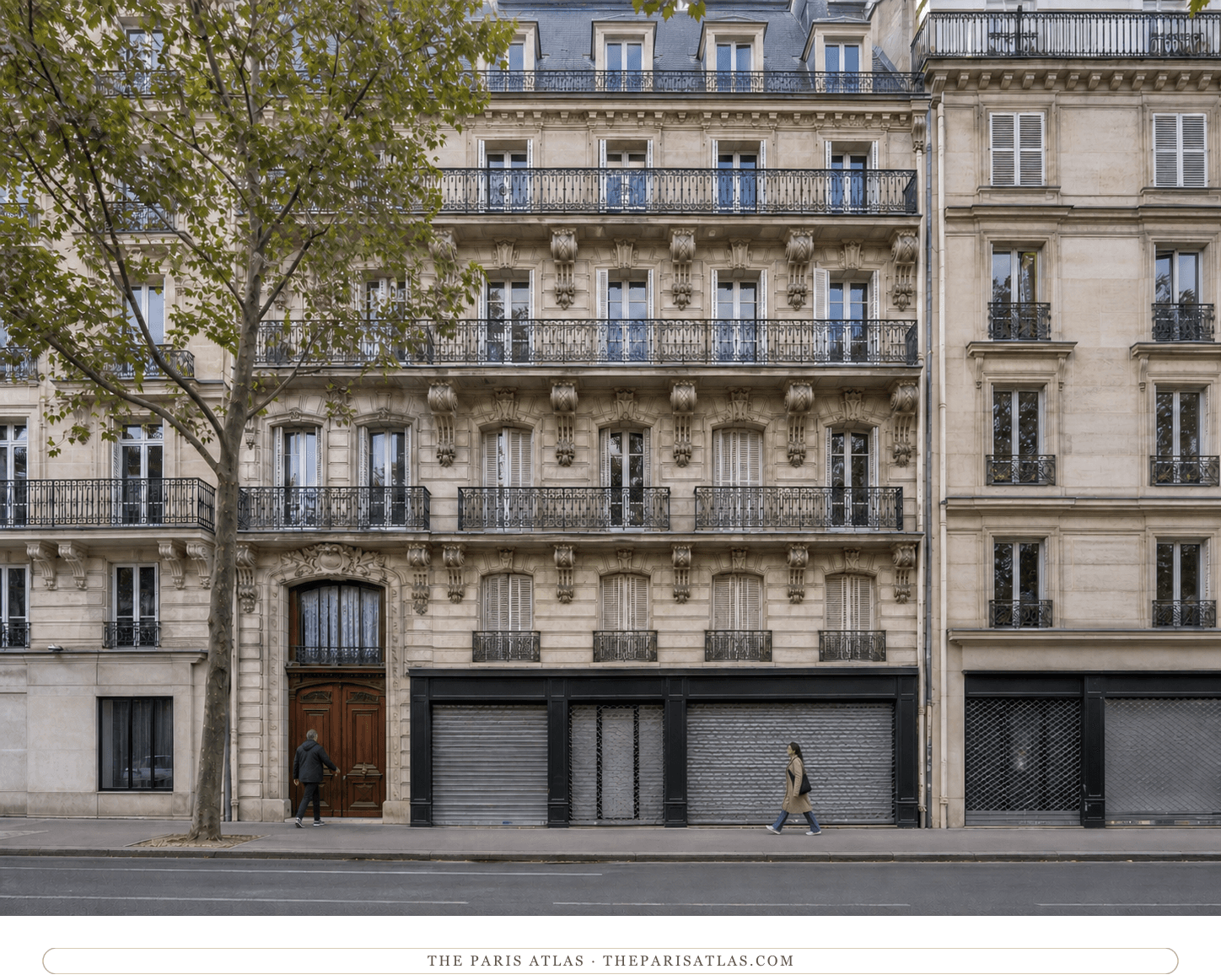
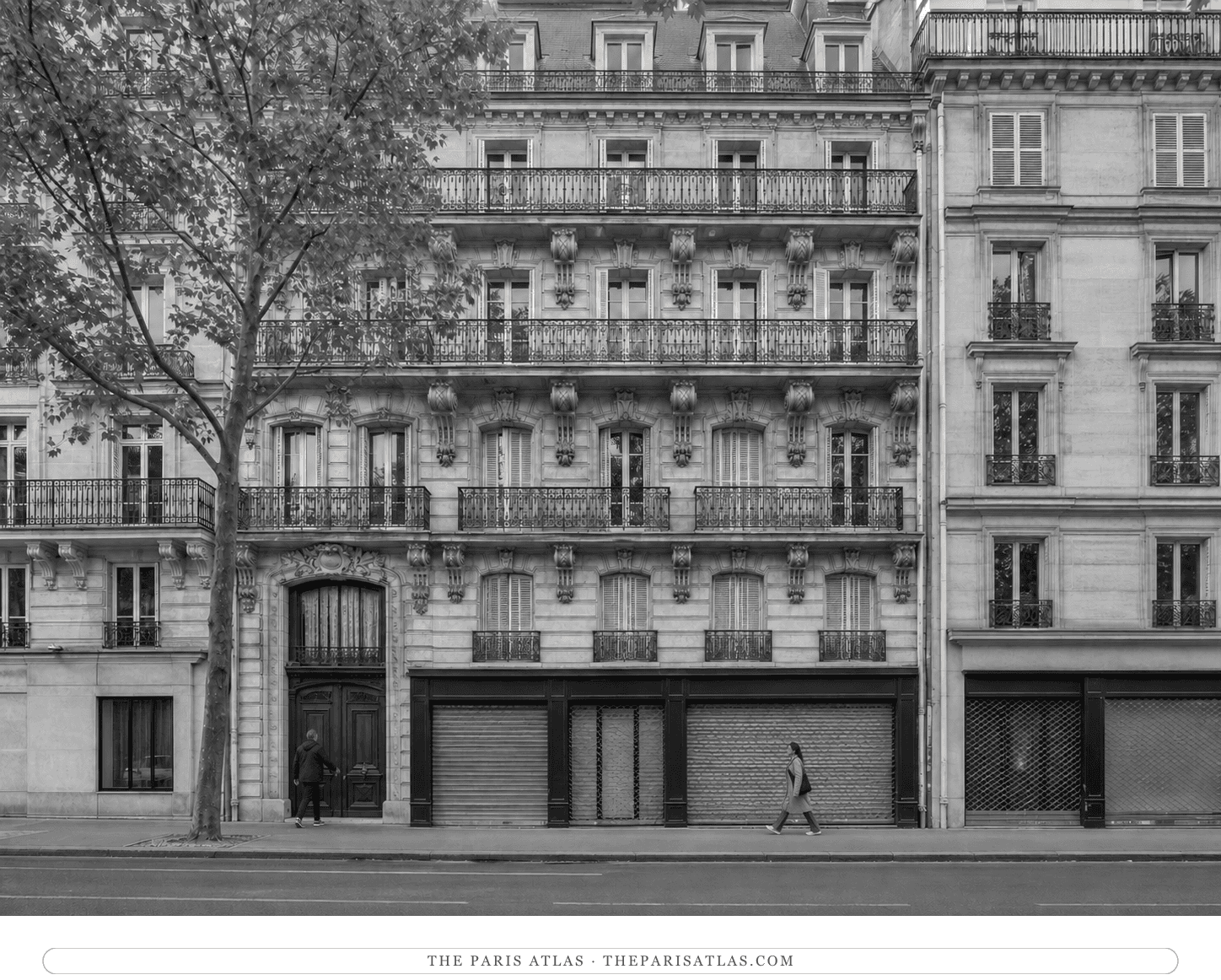
The building where Simone de Beauvoir rented a room in her grandmother's flat in July 1929, at twenty-one, to get out from under her parents — and where she studied for the philosophy agrégation she passed that year.
Visit the place
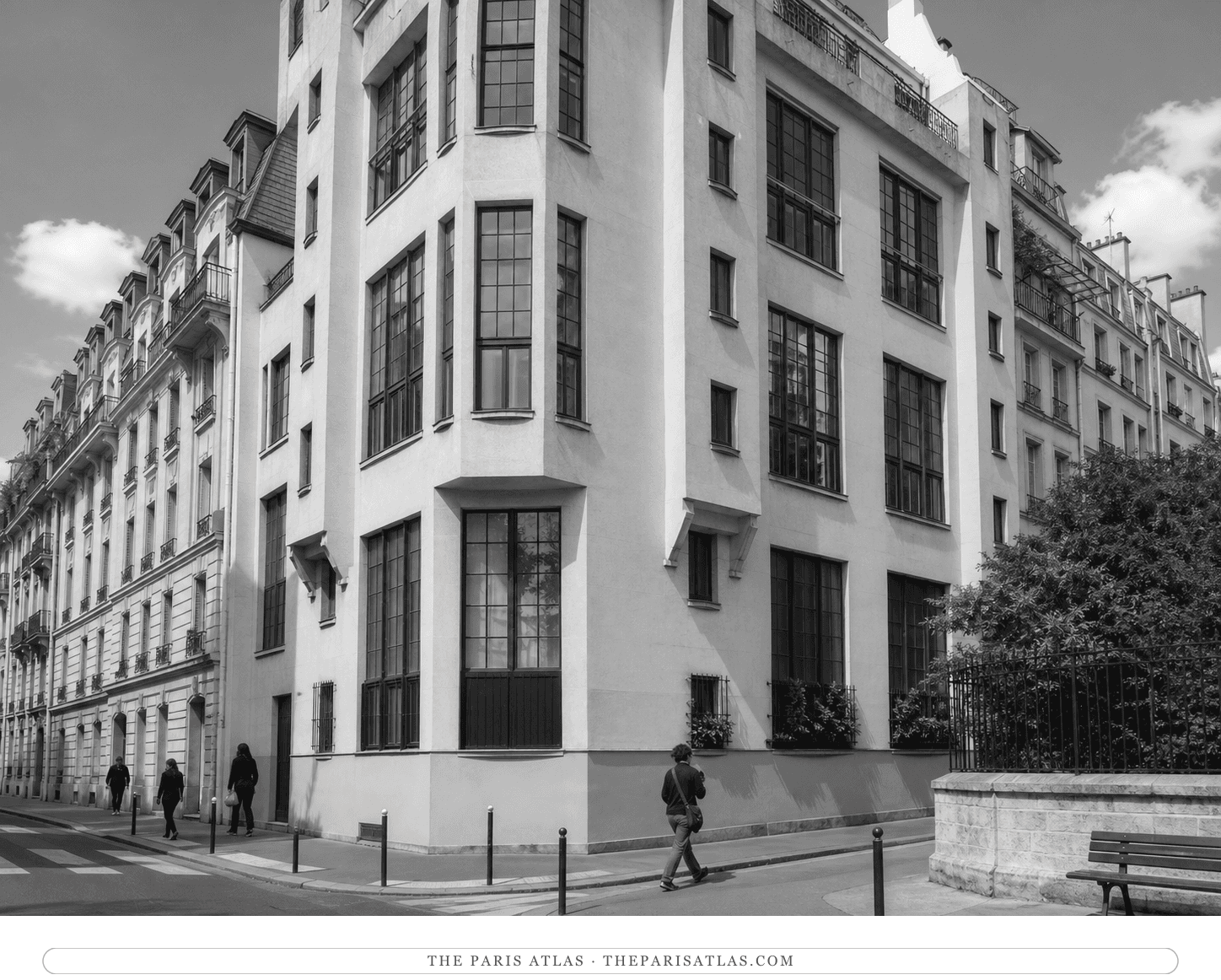
11 bis rue Victor-Schœlcher
The first apartment Simone de Beauvoir could buy with her own money, after the Goncourt Prize of 1954. It became the gathering place for the Les Temps modernes circle, and it looks directly onto the Montparnasse cemetery where she is buried.
Visit the place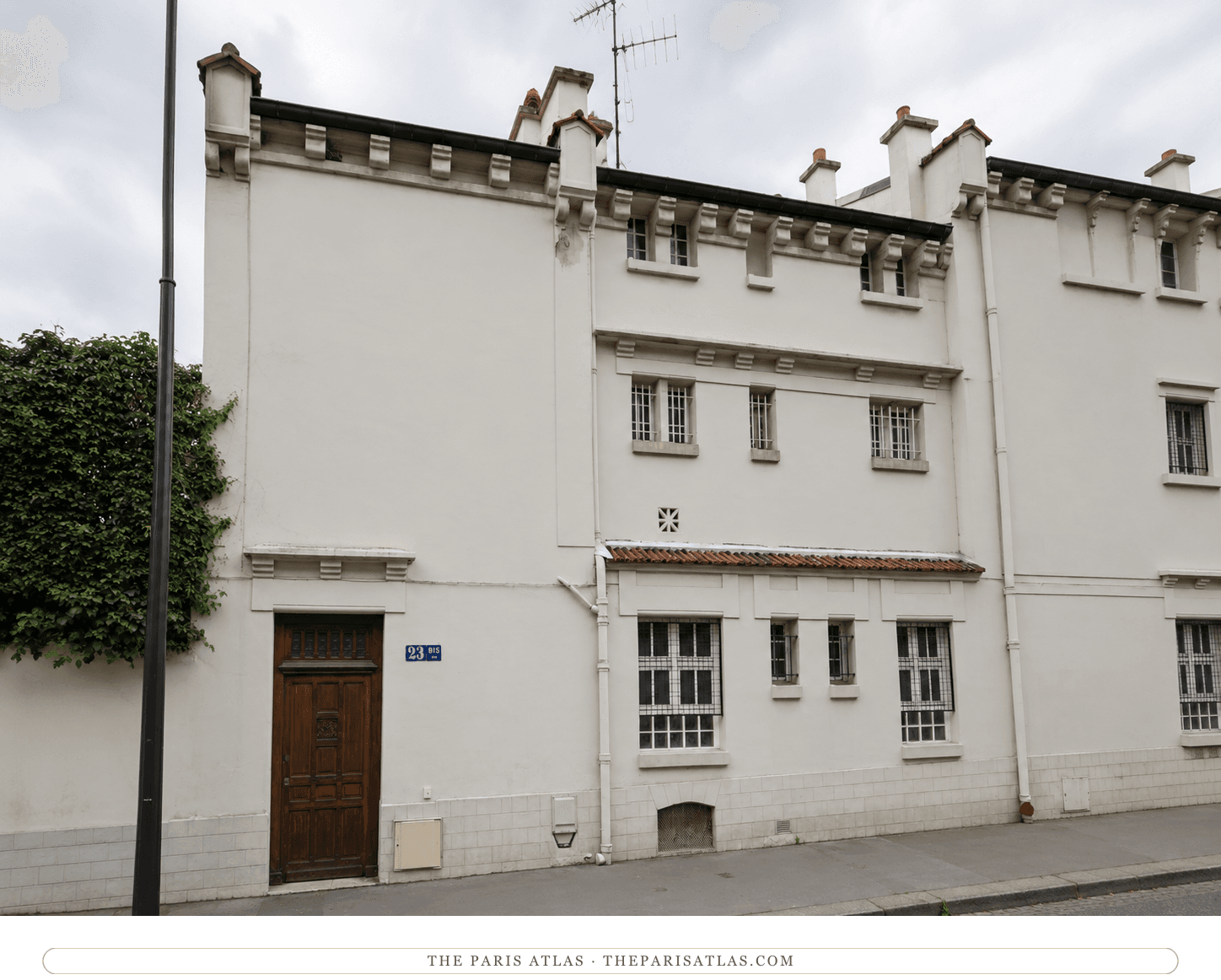
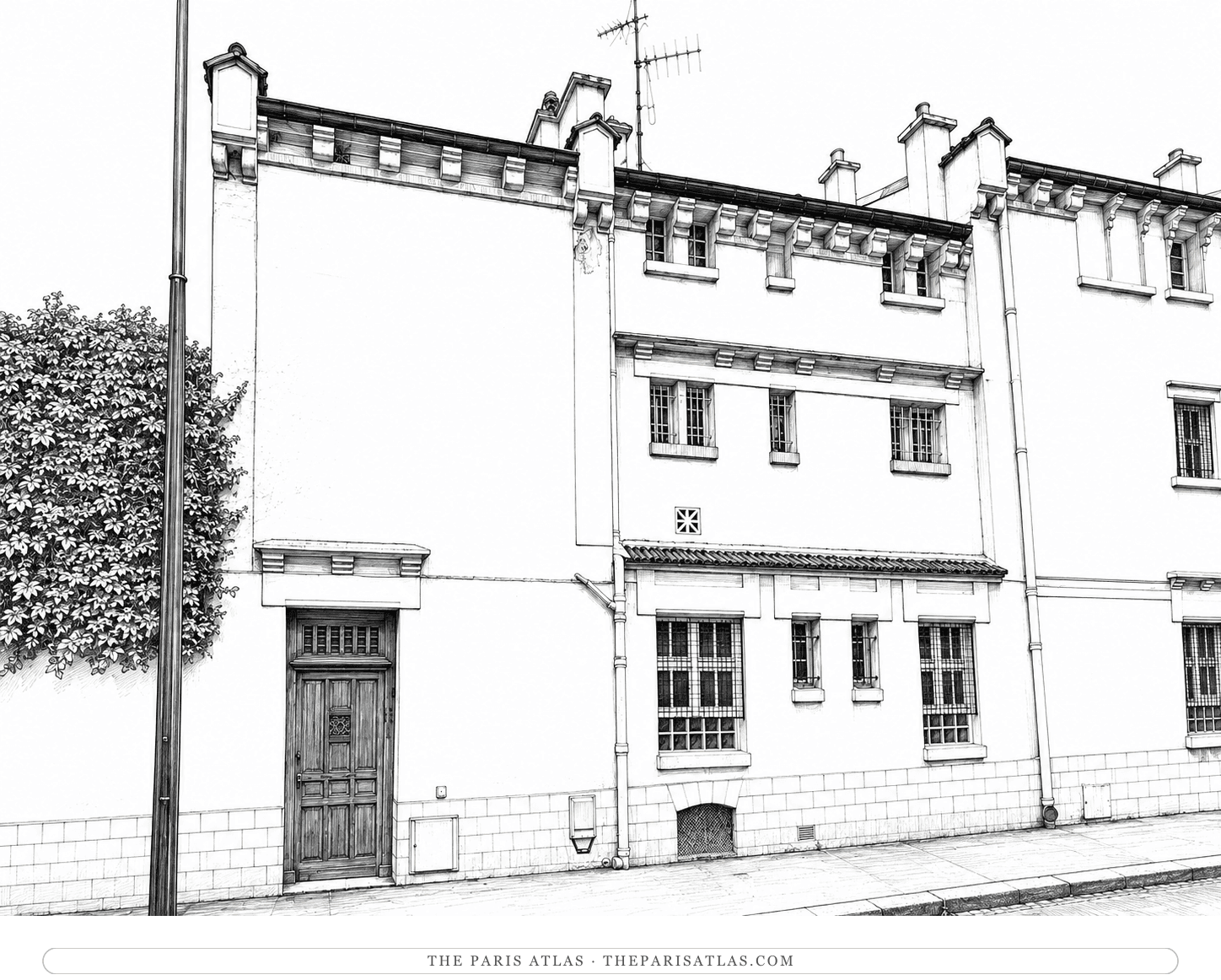
23 Rue Jean-Dolent
The Paris apartment where Blaise Cendrars and Raymone Duchâteau settled in 1950 after their marriage — his home for almost nine years, facing the rear wall of La Santé prison.
Visit the place
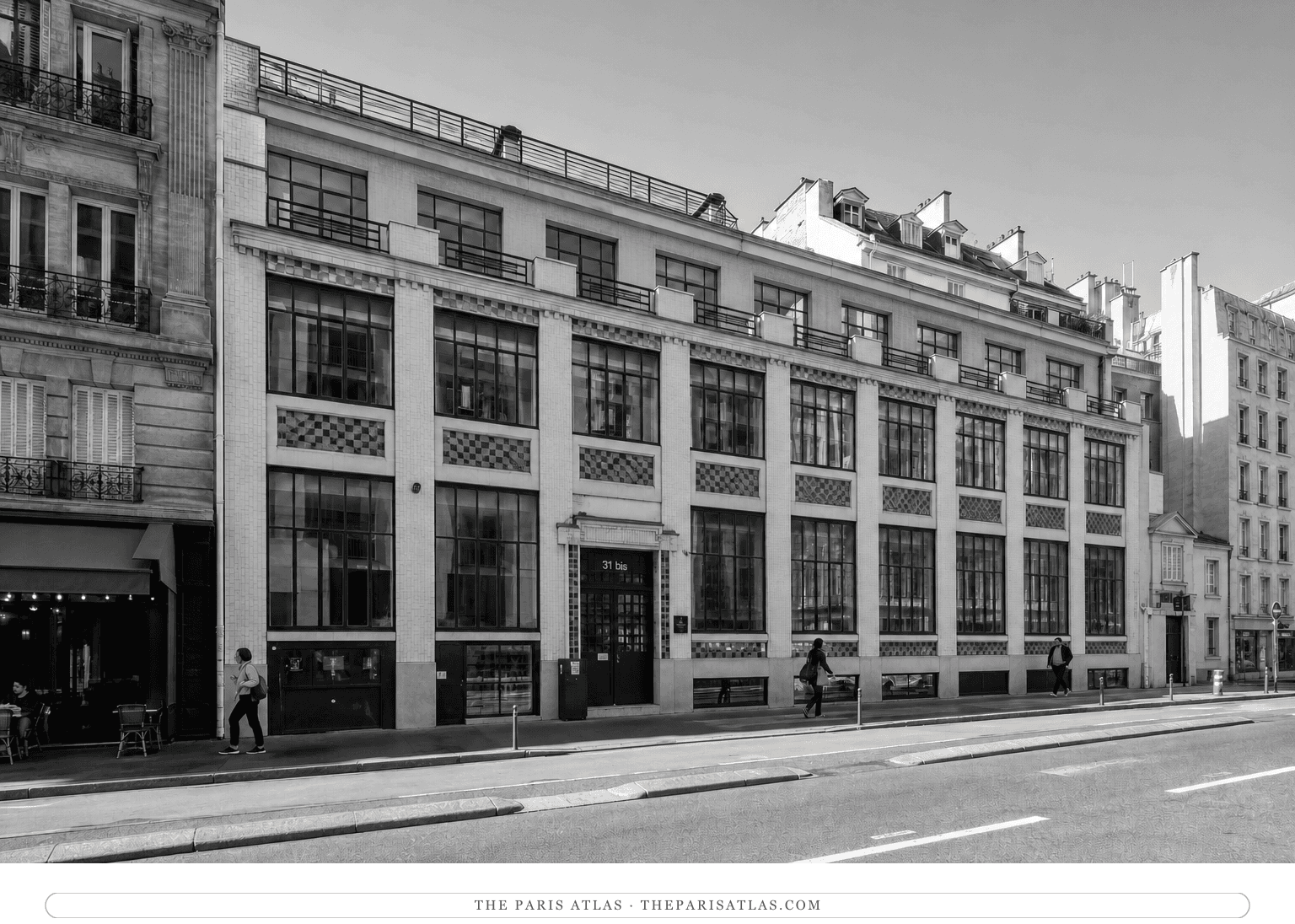
Man Ray's studio, 31 bis rue Campagne-Première
Man Ray's Montparnasse studio, where Berenice Abbott was working as his darkroom assistant in 1925 when she photographed Djuna Barnes.
Visit the placeReferences
The sources below include histories, archival materials, scholarly research, and official records that informed this page. They document The Catacombs of Paris, the people connected to it, and its place in Paris.


2abcdHistory of the site — Catacombes de Paris
WebsiteVille de Paris / Paris MuséesUsed forThe site's own history: the quarries and their extent, the 1774 collapse, the 1776 decree and the 1777 inspectorate, the closure of the Saints-Innocents, the consecration of 7 April 1786 and the sequence of transfers.
3↑Useful information — Catacombes de Paris
WebsiteVille de Paris / Paris MuséesUsed forHours, closures, the 1.5 km route, 45-minute duration, 131 and 112 steps, the 14°C temperature, the 200-visitor limit and the access restrictions. Checked 24 August 2026.
4Individual rates — Catacombes de Paris
WebsiteVille de Paris / Paris MuséesUsed forCurrent individual admission prices and free-entry categories. Checked 24 August 2026.

5OpenStreetMap
Map dataUsed forMap data used to verify addresses, geographic coordinates, and the placement associated with The Catacombs of Paris.
These references provide the documented foundation for this page's history and context. Claim-level citations remain attached to the specific claims they support.
 Explore more resources
Newsletter
Paris, one address at a time.
The cafés, studios, and walk-up flats where the work was made — one story from the map in every letter.