The Paris AtlasCharting the artists, works, and places worth returning to.

Apartment · Montparnasse · 14e arrondissement

23 Rue Jean-Dolent

The buildingStill standing
Getting inOutside only
What's there nowA private home

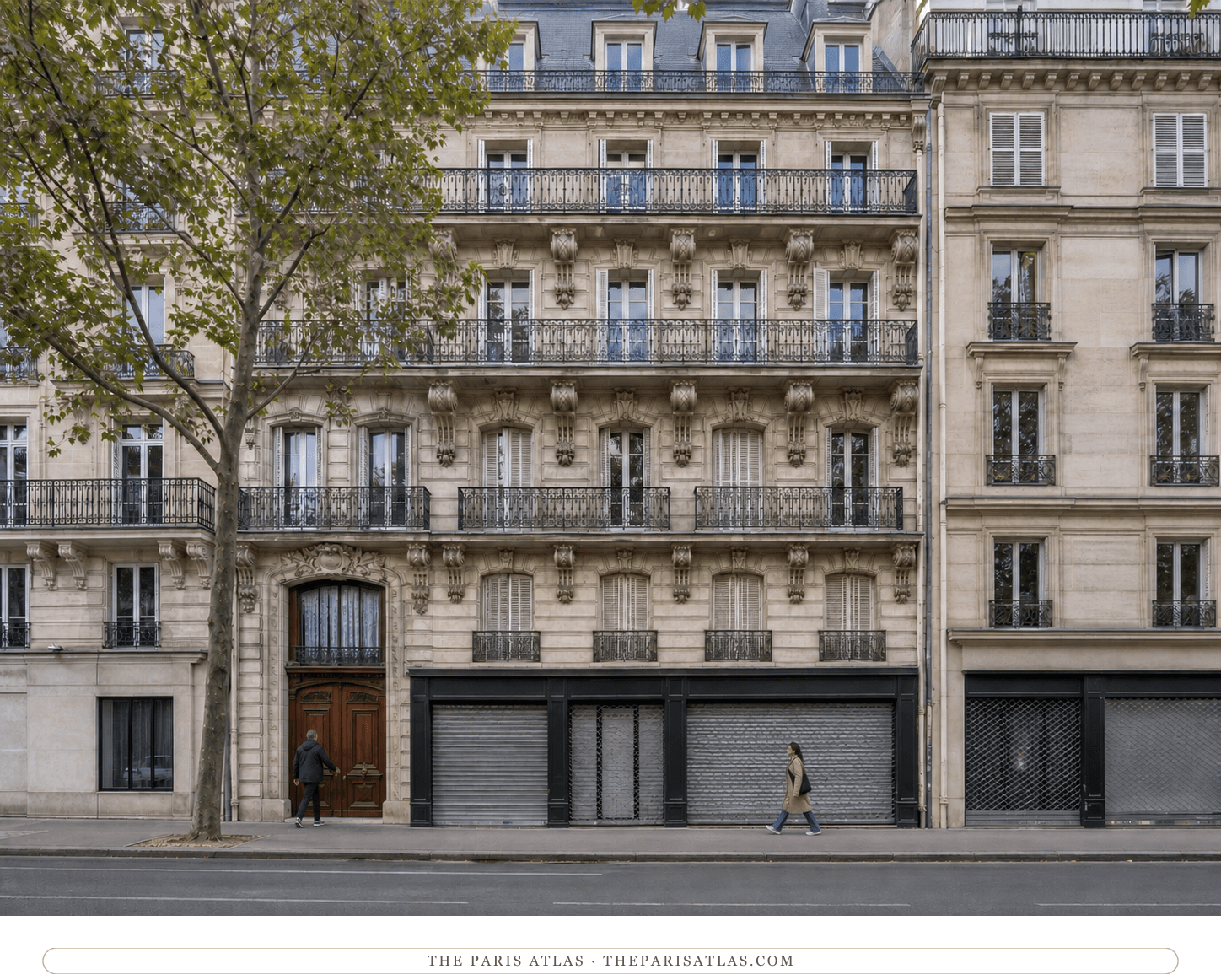
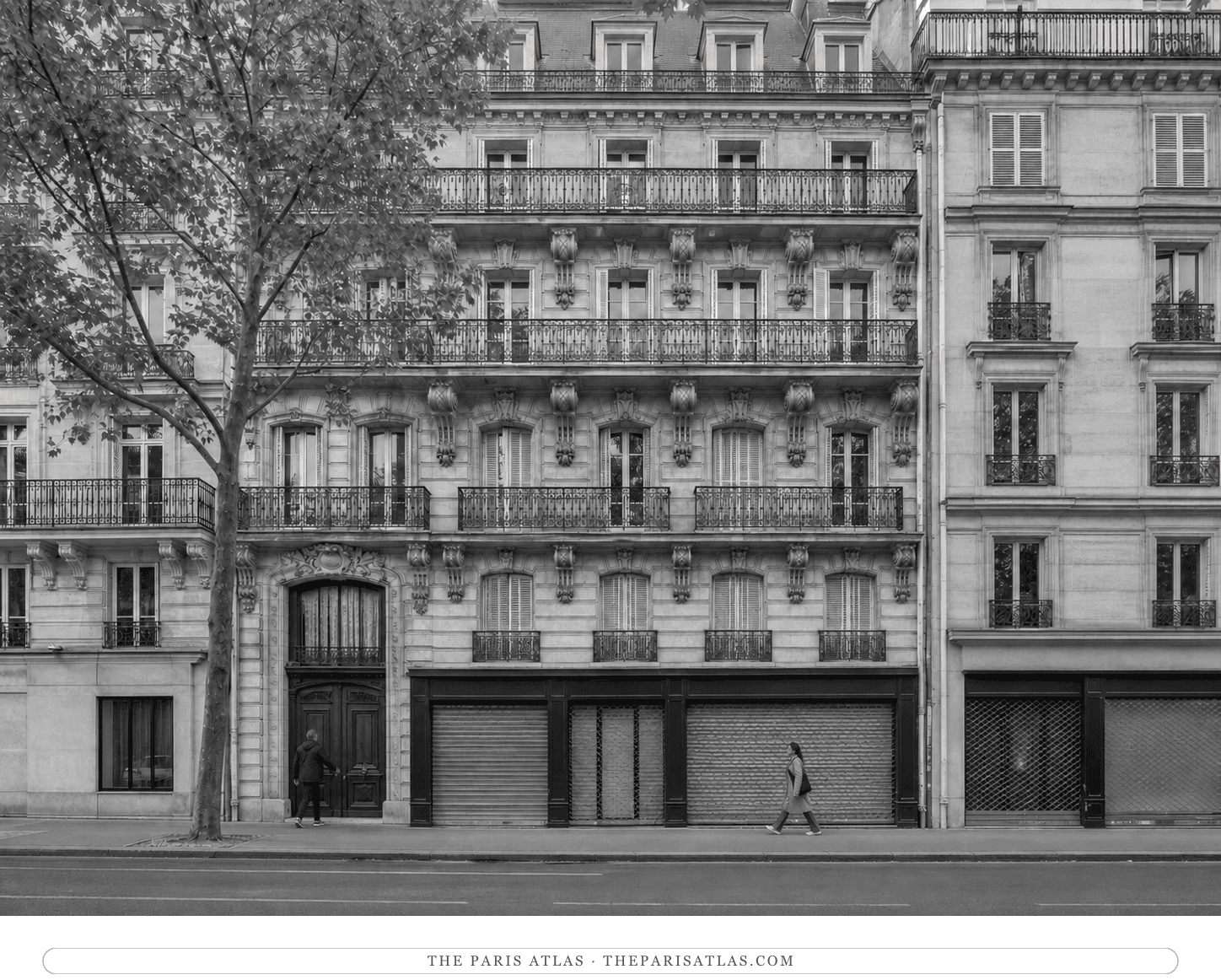
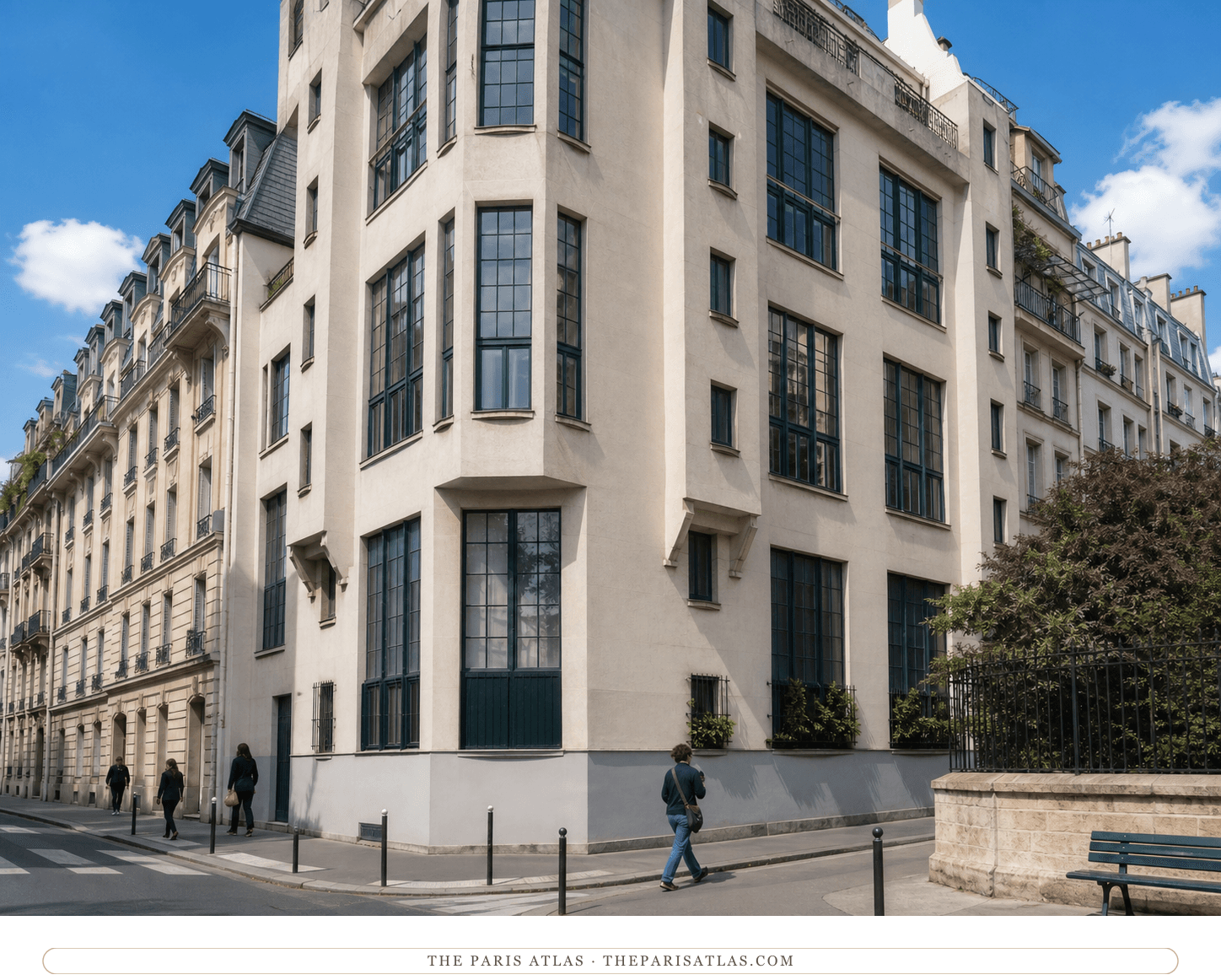
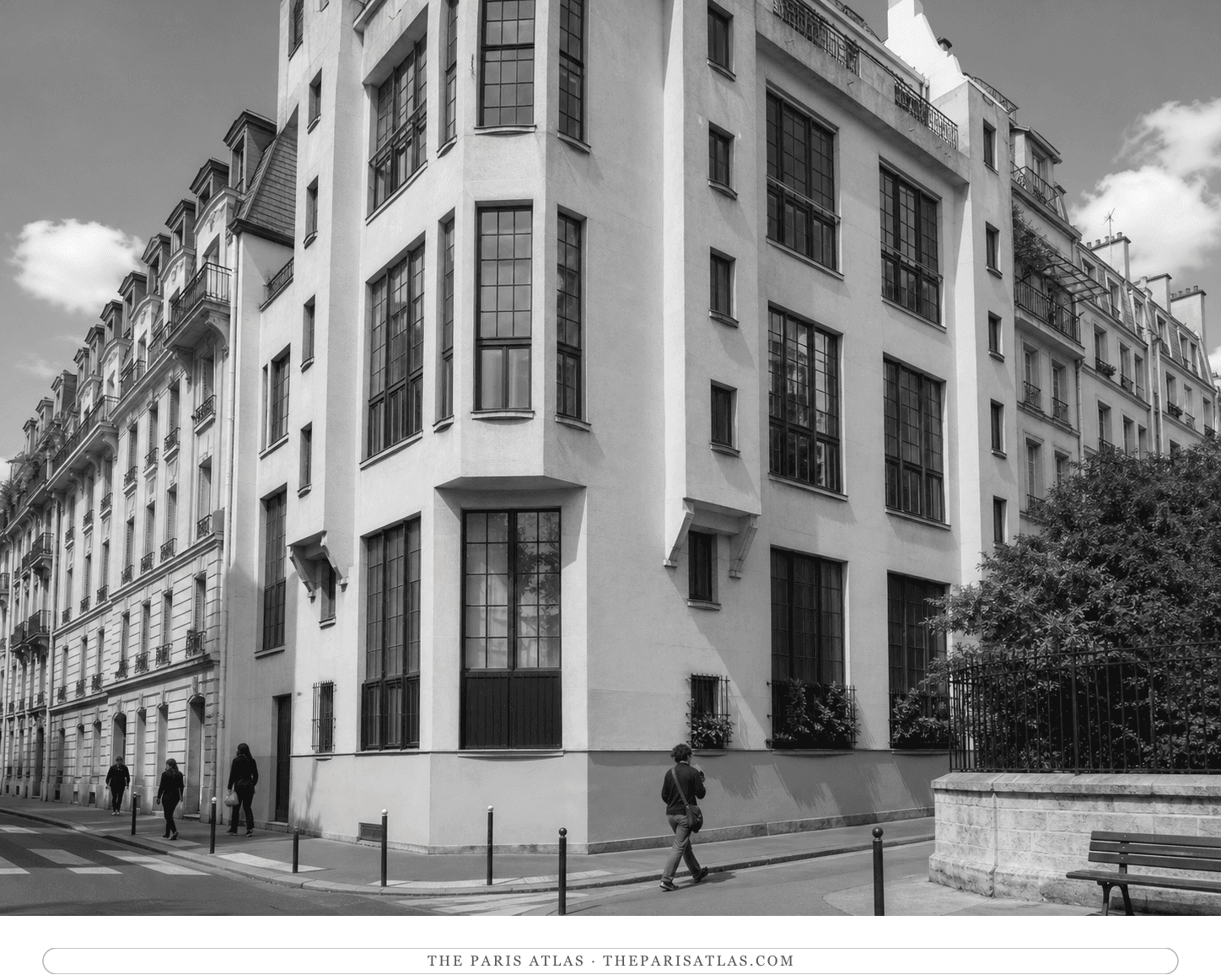
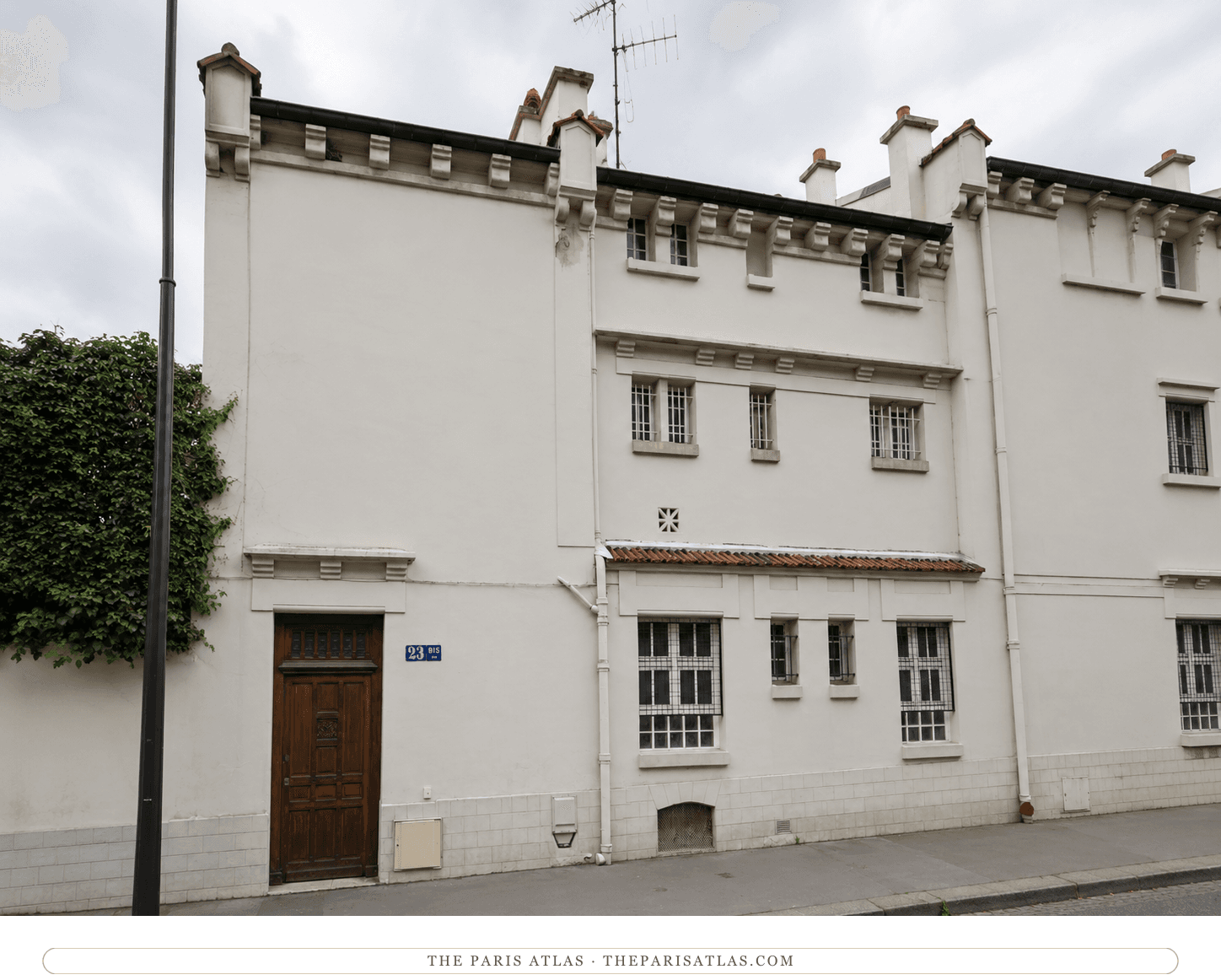
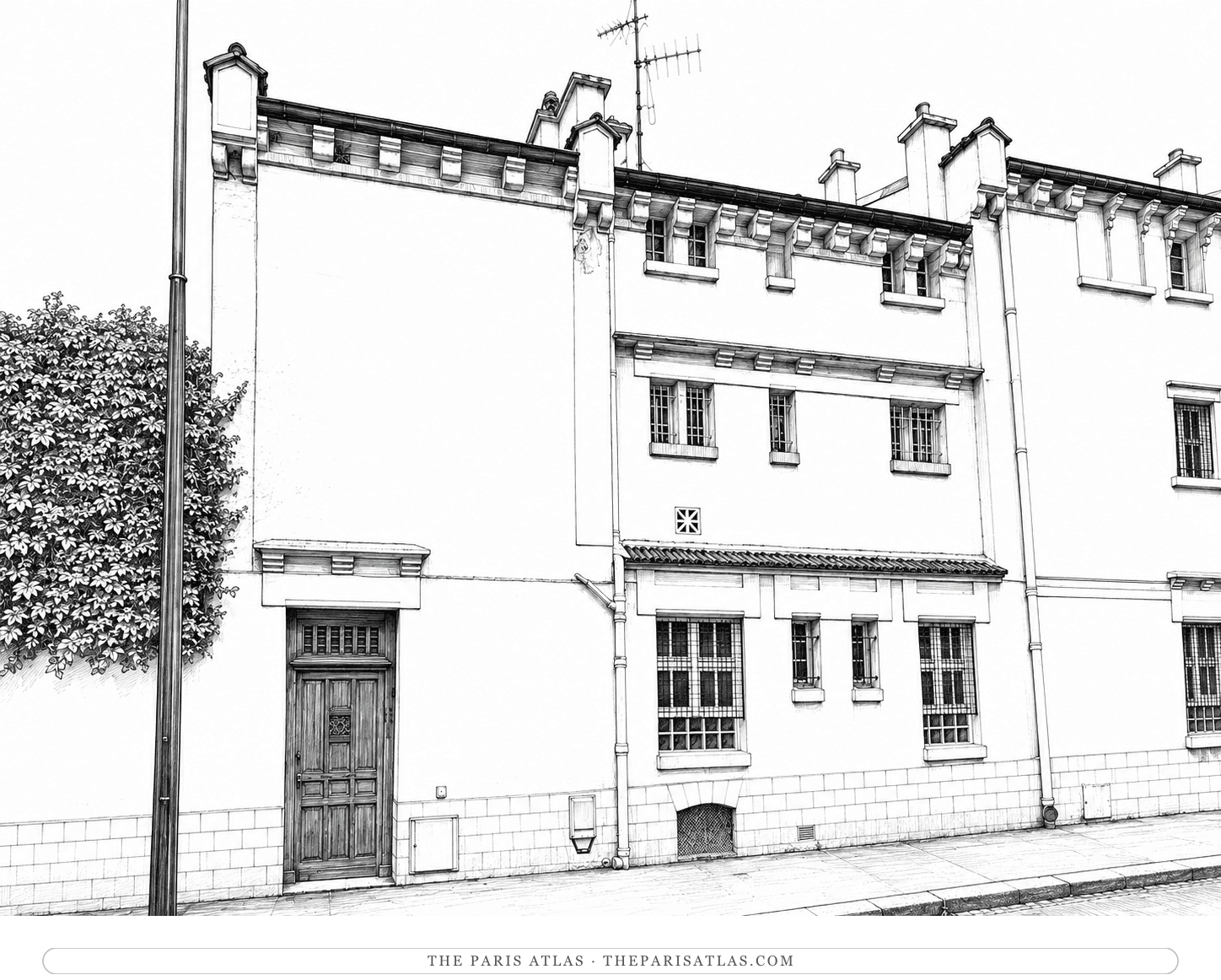
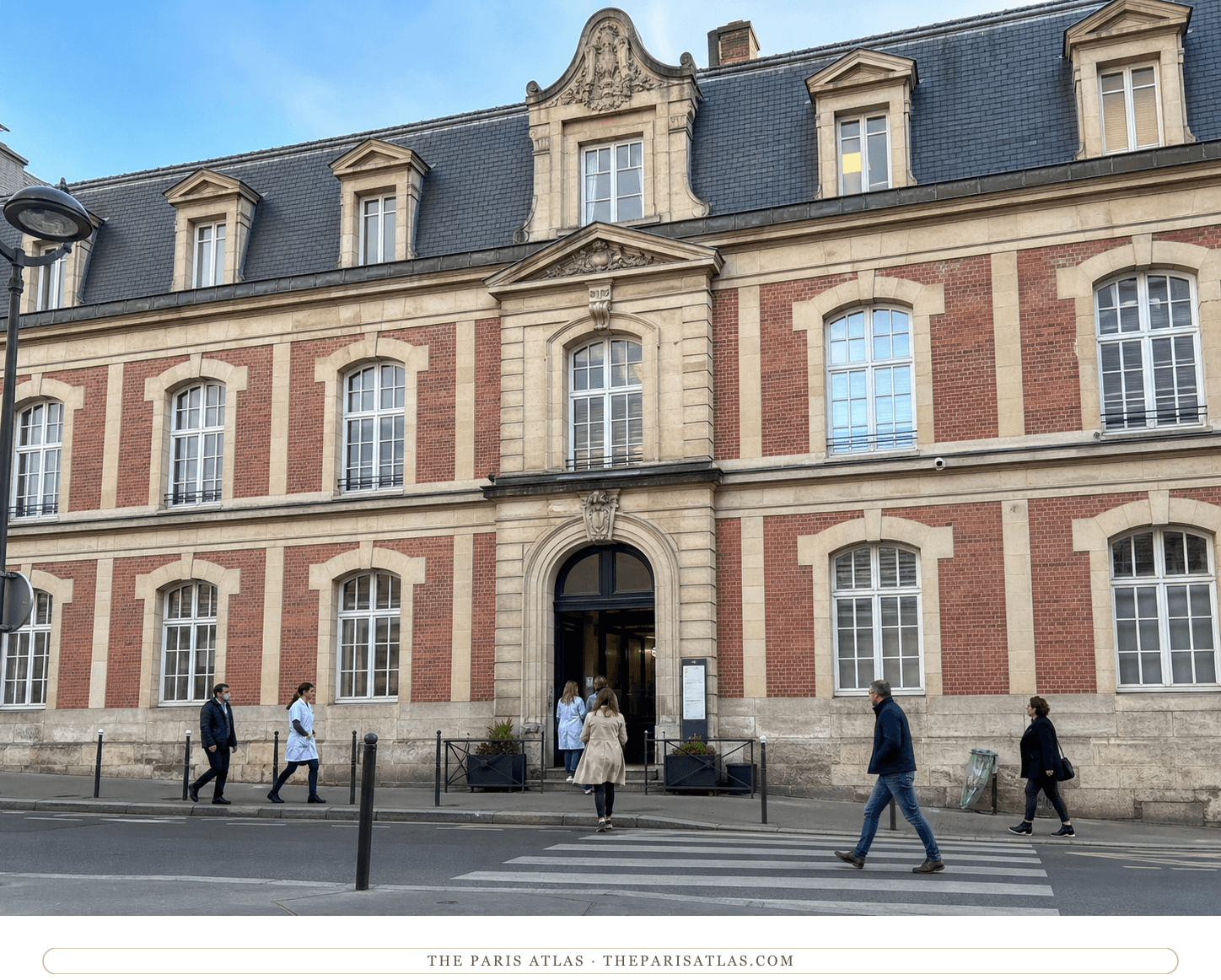
The 19th-century building stands on the quiet rue Jean-Dolent, facing the rear wall of La Santé prison. It remains a private residence.

The Paris apartment where Blaise Cendrars and Raymone Duchâteau settled in 1950 after their marriage — his home for almost nine years, facing the rear wall of La Santé prison.

Address
23 Rue Jean-Dolent, 75014 Paris
Years
1950–1959
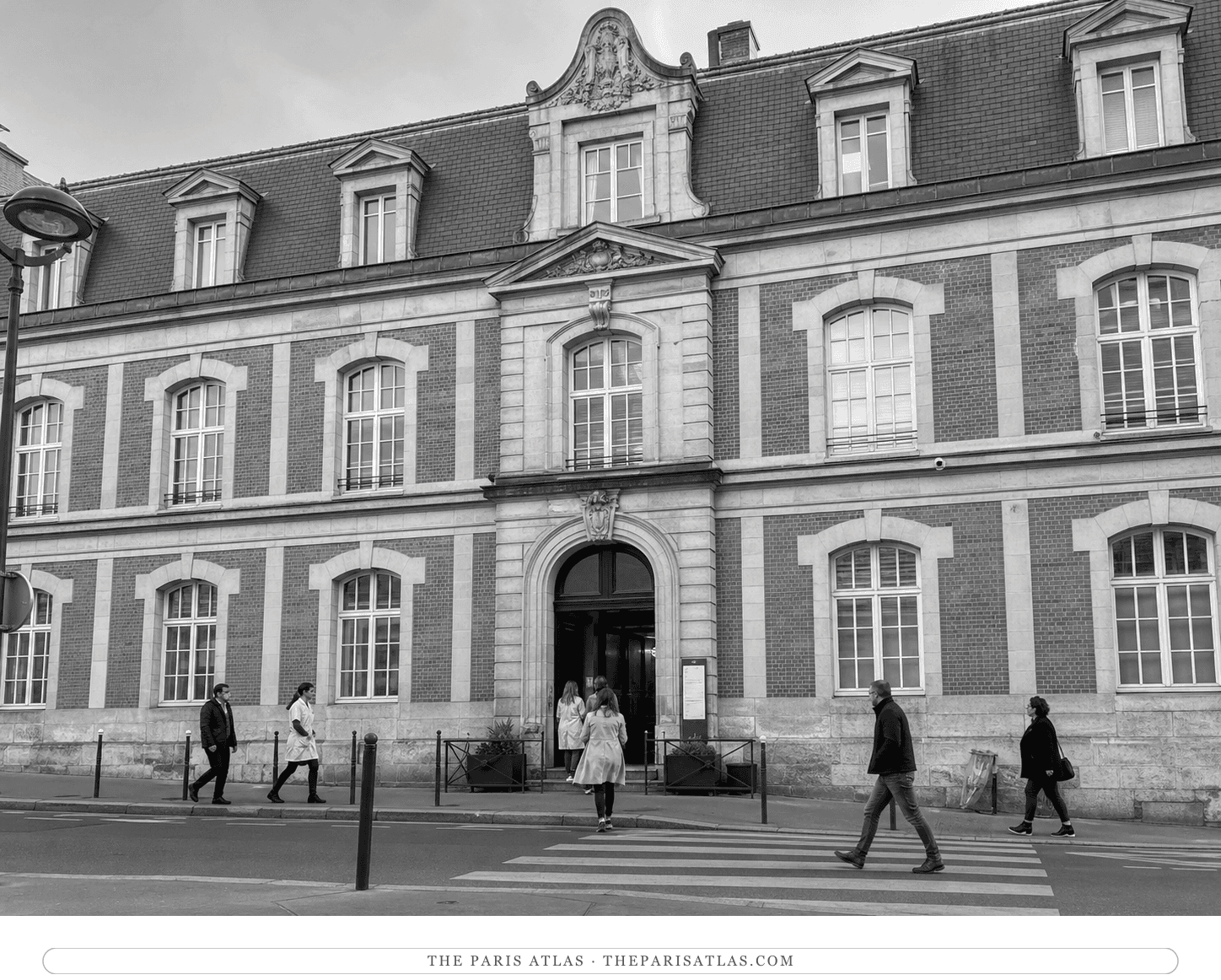
IllustrationThe same rue Jean-Dolent house front in color, cream walls under a grey sky, red-tiled ledges and ivy on the wall beside the lamp post

The same view in color.

Editorial illustration

The story

The last novel

Almost immediately after moving in, Cendrars began his final novel, Emmène-moi au bout du monde!. He started it in October 1950, calling it a roman-roman — a "real novel." The book would take about five difficult years to complete before appearing in January 1956.

Its title — "Take Me to the End of the World!" — carries an almost accidental irony at this address. Cendrars, the writer whose life had been associated with Russia, New York, Brazil, ocean crossings and restless movement, was writing his last novel while looking out onto one of Paris's most famous prisons.

The radio years

At the same time, another side of Cendrars was reaching a large new audience: his voice. From 15 October to 15 December 1950, only weeks after settling at Jean-Dolent, Cendrars recorded a series of radio conversations with the poet Michel Manoll. The broadcasts were highly successful. Rather than delivering formal literary lectures, Cendrars talked about his life, travels, friendships, books and memories, transforming decades of experience into spoken stories. In March 1952, a reworked version of the conversations appeared in book form as Blaise Cendrars vous parle….

Radio suited the older Cendrars remarkably well. His writing had always blurred memory, invention and autobiography, and now listeners could hear him perform that mixture in his own voice. Jean-Dolent became the home of a writer who was increasingly famous not only for what he had written, but for the extraordinary life he could recount.

The radio work continued. On 25 December 1951, Cendrars and Raymone made Noëls du monde entier for Paris-Inter, and 1955 brought the radio pieces Serajevo and Gilles de Rais. He was also working during these years on Des hommes sont venus…, written to accompany Jean Manzon's photographs of Brazil, published as Le Brésil in June 1952.

Friends and visitors

Jean-Dolent was also a place of friendships. Henry Miller, one of Cendrars's great admirers and literary friends, spent New Year 1953 with Cendrars and Raymone. Cendrars remained close to artists from earlier periods of his life as well. In August 1954 he and Raymone spent eight days — in the rain — at Fernand Léger's farm in Normandy, and that October Cendrars recorded a conversation with Léger and the dealer Louis Carré. Léger's death on 17 August 1955 affected him deeply.

The house where Renoir painted

The address already had an artistic history before Cendrars arrived. In February 1951 the weekly Arts ran an article by Georges Pillement asking whether the country house where Auguste Renoir once painted would be demolished; the clipping is preserved in the press dossier of the Blaise Cendrars archive. The article identified the property as a former country house and noted that Renoir had painted there.

Two very different periods of modern art met at the same address: Renoir's Paris and Cendrars's Paris, separated by decades.

Illness

By the middle of the 1950s, Cendrars's health was beginning to fail. After five years of difficult work, Emmène-moi au bout du monde! appeared in January 1956. Its controversial reception disappointed him. Then, at about three in the morning on 21 July 1956, Cendrars suffered a serious cerebral attack. He was partially paralyzed and began an extensive rehabilitation.

The archive preserves a particularly moving trace of his recovery: five pages of difficult handwriting made between 1 August and 7 September 1956, immediately after the attack — among them a note of Raymone's birthday, a mention on 25 August of his "commotion cérébrale" a month earlier, and a small drawing beside the record of his own sixty-ninth birthday on 1 September.

His health remained fragile throughout 1957. A second attack in the summer of 1958 was more decisive: after it, Cendrars stopped writing.

The honor, and the departure

One of the great public honors of his career nevertheless came to him at Jean-Dolent. On 7 January 1959, André Malraux came to rue Jean-Dolent and presented Cendrars with the insignia of Commander of the Légion d'honneur. A few months later, on 1 May 1959, Cendrars converted to Catholicism and he and Raymone celebrated a religious marriage at the Église Saint-Dominique in the 14th arrondissement.

By then his physical world had become increasingly limited. On 25 August 1959, Cendrars and Raymone left Jean-Dolent and moved across the Seine to 5 rue José-Maria-de-Heredia in the 7th arrondissement. The chronology describes Cendrars by that point as bedridden. It would be his final home.

The building at 23 rue Jean-Dolent still stands as a private residence. Across the street remains the massive presence of La Santé prison. For Cendrars, these nine years represented a final transformation. He arrived newly married and returned permanently to Paris. He wrote his last novel here, became a familiar voice on French radio, received friends and fellow writers, revisited Brazil and his earlier adventures in new forms, endured the stroke that partially paralyzed him, struggled to write again, and finally received the Commander of the Légion d'honneur.

The great traveler had become more stationary, but his imagination had not. From this quiet house opposite a prison, Cendrars spent much of his final creative decade turning an entire lifetime of movement into stories.

Key facts

Lived here
1 September 1950 – 25 August 1959, with Raymone Duchâteau
Across the street
The rear wall of La Santé prison
Written here
His final novel Emmène-moi au bout du monde!, begun in October 1950 and published in January 1956
Radio years
The conversations with Michel Manoll, broadcast 15 October – 15 December 1950, became Blaise Cendrars vous parle… in 1952
Famous visitor
Henry Miller spent New Year 1953 with Cendrars and Raymone
Earlier artistic connection
A 1951 Arts article preserved in the Cendrars archive reported that Auguste Renoir had painted at the property, a former country house
First major stroke
21 July 1956; partially paralyzed, Cendrars underwent extensive rehabilitation
Writing ends
After a second attack in the summer of 1958, Cendrars ceased writing
Honor received here
André Malraux presented Cendrars with the insignia of Commander of the Légion d'honneur at rue Jean-Dolent on 7 January 1959
Today
A private residence
The house front on rue Jean-Dolent as it stands today — the quiet street where Blaise Cendrars and Raymone settled in 1950, opposite the wall of La Santé prison.Editorial illustration
The same view in color.Editorial illustration

Timeline

  1. 1949

    Cendrars and Raymone Duchâteau marry civilly at Sigriswil on 27 October, after a relationship stretching back more than thirty years. They travel through Luxembourg, the Netherlands and Belgium before returning to France.

  2. 1950

    In March, Cendrars returns permanently to Paris and becomes increasingly active in French radio.

  3. 1950

    On 1 September, Cendrars and Raymone settle at 23 rue Jean-Dolent, opposite La Santé prison.

  4. 1950

    In October, Cendrars begins Emmène-moi au bout du monde!, his final novel, which will occupy him for approximately five years. From 15 October to 15 December, his radio conversations with Michel Manoll are broadcast to considerable success.

  5. 1951

    Cendrars divides his work between Emmène-moi au bout du monde! and Des hommes sont venus…, his text accompanying Jean Manzon's photographs of Brazil. On Christmas Day, he and Raymone broadcast Noëls du monde entier on Paris-Inter.

  6. 1952

    Blaise Cendrars vous parle…, adapted from the Manoll radio conversations, is published in March. Le Brésil, with Jean Manzon's photographs, follows in June.

  7. 1953

    Henry Miller spends New Year with Cendrars and Raymone.

  8. 1954

    In August, Cendrars and Raymone spend eight days in the rain at Fernand Léger's farm in Normandy; on 28 October, Cendrars records a conversation with Léger and the dealer Louis Carré.

  9. 1955

    Cendrars continues working for radio with Serajevo and Gilles de Rais and writes the preface to Robert Doisneau's Instantanés de Paris. Fernand Léger dies on 17 August; the loss affects him deeply.

  10. 1956

    Emmène-moi au bout du monde! is published in January after five years of difficult work. Its controversial reception disappoints Cendrars.

  11. 1956

    On 21 July, at about three in the morning, Cendrars suffers a cerebral attack. Partially paralyzed, he begins a long rehabilitation; pages in the Cendrars archive preserve his difficult attempts at handwriting from the first weeks after the attack.

  12. 1958

    A second attack in the summer leaves Cendrars in still poorer health, and he stops writing.

  13. 1959

    On 7 January, André Malraux comes to rue Jean-Dolent and presents Cendrars with the insignia of Commander of the Légion d'honneur.

  14. 1959

    On 1 May, Cendrars converts to Catholicism and celebrates a religious marriage with Raymone at the Église Saint-Dominique in the 14th arrondissement.

  15. 1959

    On 25 August, Cendrars and Raymone leave Jean-Dolent and move to 5 rue José-Maria-de-Heredia, his final Paris home.

On the map

Writers who knew this place

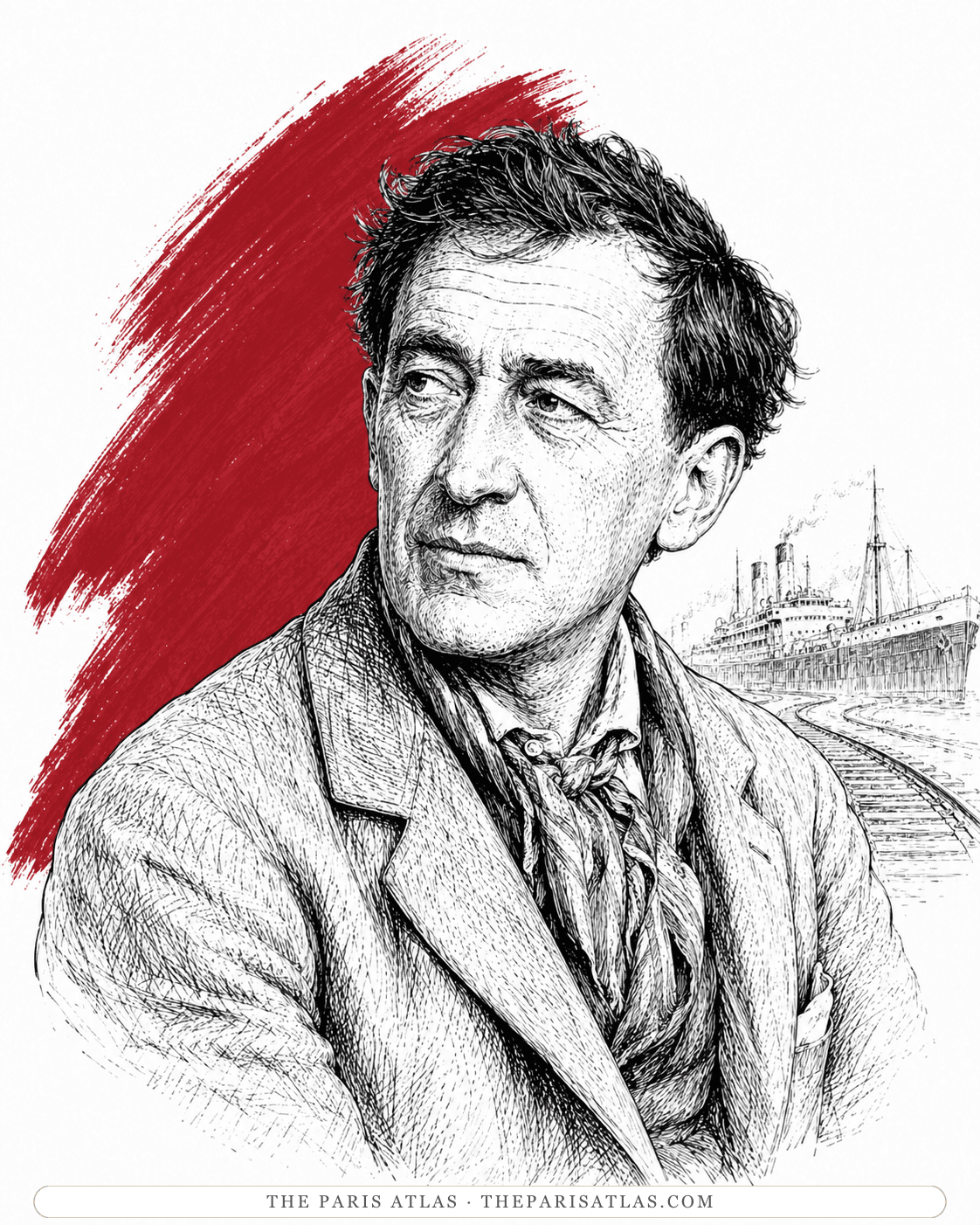
Illustrated portrait of Blaise Cendrars

Blaise Cendrars

Swiss-born; naturalized French in 1916 · The one-armed adventurer-poet of the Paris avant-garde — La Prose du Transsibérien, Moravagine, the memoir tetralogy — and the living writer Henry Miller ranked above all others.

Lived here · 1950–1959

The Bibliothèque de la Ville de La Chaux-de-Fonds, holder of a major Cendrars archive, records that after their honeymoon Cendrars and Raymone settled at 23 rue Jean-Dolent, facing La Santé prison; the Leroy-credited chronology dates the move out to 25 August 1959.
Bibliothèque de la Ville de La Chaux-de-Fonds — dossier Blaise Cendrars : « Tout ça, c'est digne d'être vécu »; Rencontres de Chaminadour — Blaise Cendrars chronology (prepared with thanks to Claude Leroy)

Within walking distance

The Friday Letter

Paris, one address at a time.

The cafés, studios, and walk-up flats where the work was made — one story from the map in every letter.

One email a week. No spam, no selling your address. Unsubscribe anytime.