
Big Sur and the Oranges of Hieronymus Bosch
The book this story was later folded into, as its final section.
Read our take
by Henry Miller
Henry Miller's account of inviting a destitute Paris astrologer to live with him at Big Sur, and of how badly it went.
In 1947 Henry Miller invited Conrad Moricand, an astrologer he had known in Paris in the 1930s, to live out his days as a guest at Miller's home in Big Sur. Moricand was destitute in postwar Europe and accepted. Within months the arrangement had made both men miserable. Miller published his account of it in 1956; it is the closest thing he wrote to a conventional novella. (The full story is below; the ending is behind the accordion.)
Conrad Moricand was an astrologer and occultist Miller met in Paris in the 1930s, part of the circle around the Villa Seurat that also appears in Anaïs Nin's diary. He cast horoscopes for the whole group and lived, even then, in genteel poverty. After the war he was destitute. In 1947 Miller, by then settled at Big Sur and earning enough to help, offered to support him as a houseguest for the rest of his life. Moricand accepted and arrived that winter.
The book tells what happened next. Moricand, a city man in his sixties, was unsuited to a cabin on Partington Ridge: he suffered from the damp and the isolation, developed a severe itch that no treatment relieved, and grew more demanding and more resentful as the months passed. Miller published the account in 1956 as a paperback original, and later included it in Big Sur and the Oranges of Hieronymus Bosch as its final section. Many readers consider it his most controlled piece of storytelling: one story, one arc, no digressions.
Moricand arrives from Europe in the winter of 1947 with his trunks, his pomades, and his astrological charts. The household adjusts around him badly: he is a formal, nocturnal man in a house of children and kerosene lamps, and he dislikes the food, the weather, and the informality. Then the itch begins — a skin condition no doctor can diagnose or cure. It confines him indoors, scratching, taking codeine, increasingly convinced his miseries are someone else's fault.
The second half of the book follows the collapse of the arrangement: Miller's patience turns to guilt, Moricand's dependence turns to accusation, and both men keep up the forms of generosity and gratitude after the substance is gone. Miller asks directly whether his rescue was kindness or vanity, and does not fully acquit himself.
Miller moves Moricand off the ridge — first to Monterey, then to San Francisco — paying for his lodging while Moricand writes him letters of reproach. Moricand tells officials and acquaintances that he was lured to America and abandoned. Passage back to Europe is eventually arranged, and the letters continue after he sails. Moricand ends where he began, poor in Paris, and dies there a few years later in a charity home. Miller closes the account without excusing either man.
Miller introduces Moricand through a contrast between an imposing exterior and an unsettled inner life. The opening description turns his stillness into something almost sculptural, then imagines the agitation beneath it. Yet Miller also admits uncertainty about whether Moricand's disciplined routine is chosen or endured. That hesitation matters: a vivid portrait is not the same as complete access to another person. Beside the arrival scene, it asks us to distinguish the guest's visible presence from the motives and disappointments his host assigns to him.
The quarrel has an imbalance that the lively storytelling can conceal: Miller controls the portrait through which his guest is remembered. Sillage's editorial note points readers toward earlier letters of admiration and Moricand's own counteraccounts, materials that complicate a simple verdict of ingratitude. This does not settle which man was right. It changes the question the memoir invites us to ask, from whether the guest deserved hospitality to how an injured host turns a failed relationship into a persuasive story about another person's character.
The book is built around one man, and Moricand comes through in full: the manners, the charts, the grievances.
Miller questions his own motives as much as his guest's ingratitude. Neither comes out well, and he does not pretend otherwise.
Moricand came out of the 1930s Paris circle, and the story takes place in 1950s Big Sur — two eras of Miller's world in a single book.
1947
Miller invites Conrad Moricand, destitute in postwar Europe, to live as his guest at Big Sur. Moricand arrives that winter, and the arrangement collapses within months.
1956
Miller publishes the account as a Signet paperback original. He later includes it in Big Sur and the Oranges of Hieronymus Bosch.
1957
The account is incorporated into Big Sur and the Oranges of Hieronymus Bosch.
The book this story was later folded into, as its final section.
Read our take
Moricand appears in the diary's 1930s Paris pages, casting charts for the same circle.
Read our take
Henry Miller. It was published in 1956 as a Signet paperback original, later folded into Big Sur and the Oranges of Hieronymus Bosch.
Miller's attempt to rescue Conrad Moricand, an astrologer he had known in 1930s Paris. In 1947 Miller invited him, destitute after the war, to live as his guest at Big Sur for the rest of his life. The arrangement collapsed within months, and the book is Miller's account of it.
An astrologer and occultist Miller met in Paris in the 1930s. He cast horoscopes for the circle around the Villa Seurat, and he also appears in Anaïs Nin's diary.
It is the closest thing Miller wrote to a conventional novella: one story, one arc, no digressions. It is also unusually self-critical — Miller examines his own motives as hard as his guest's behavior.
Yes. Miller later included it in Big Sur and the Oranges of Hieronymus Bosch as that book's final section.
Explore authors with a similar voice, perspective, and influence.

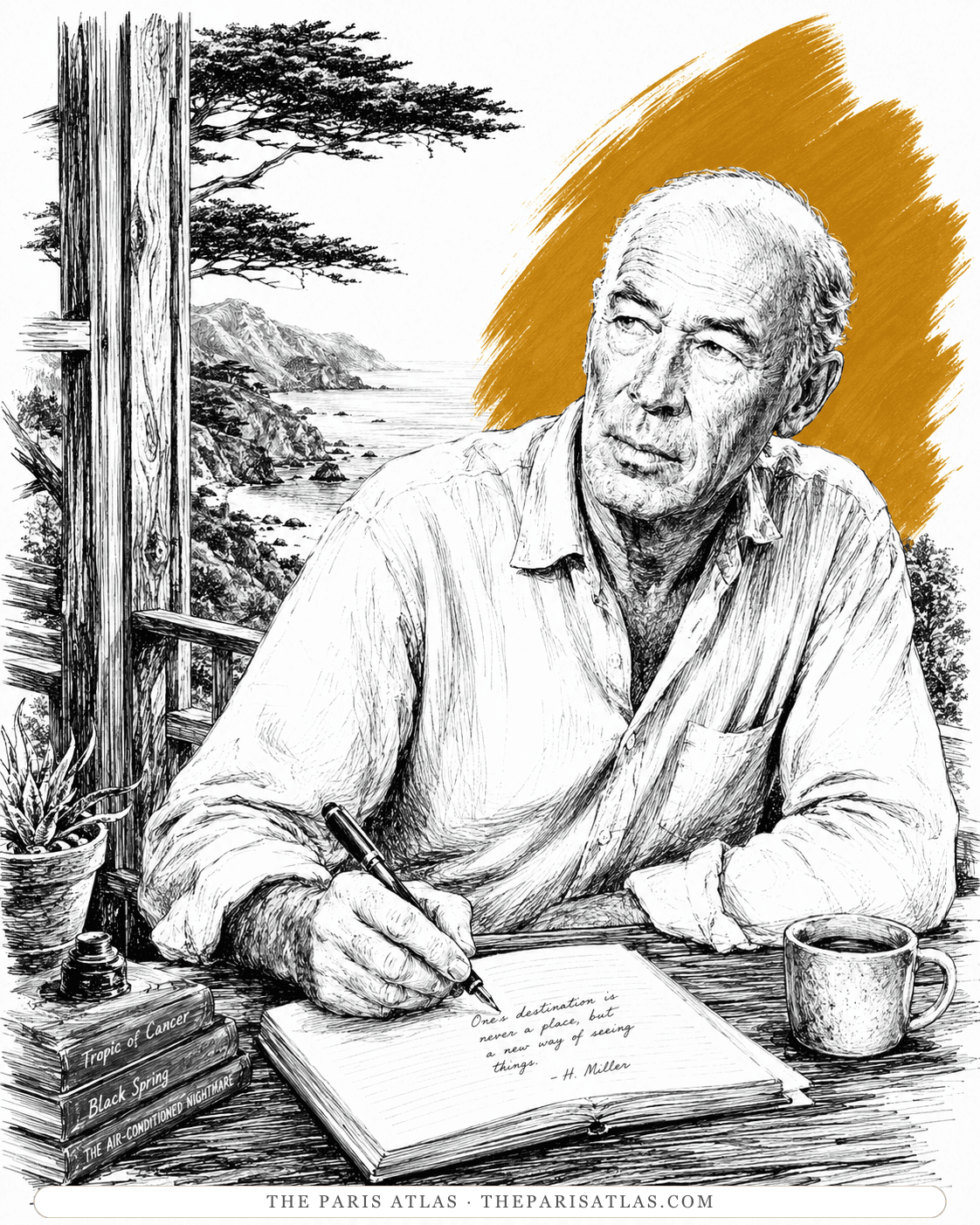
Miller's acknowledged master at making literature out of the gutter. Journey gave him permission; Cancer is what he did with it.
View author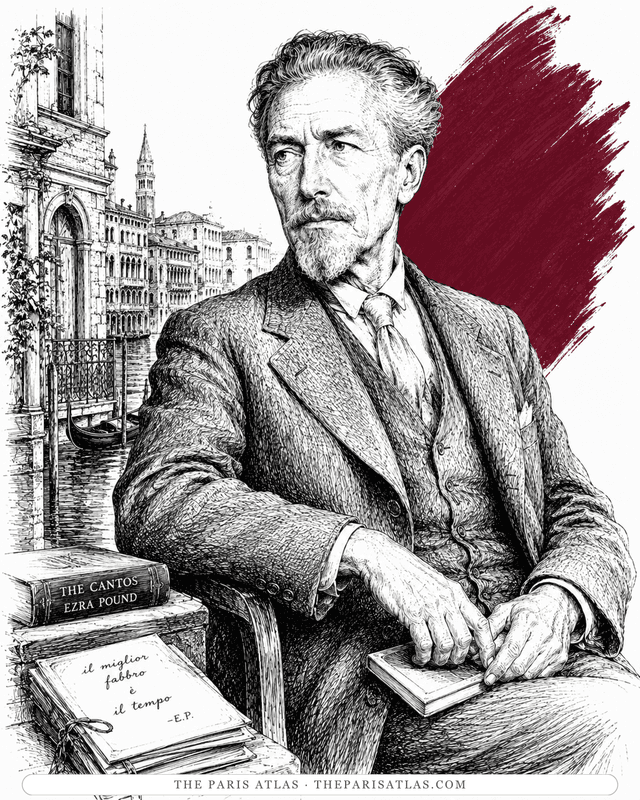
Pound read Cancer and sent Miller a famously backhanded postcard. Both believed literature's job was to wake the reader by any means necessary.
View author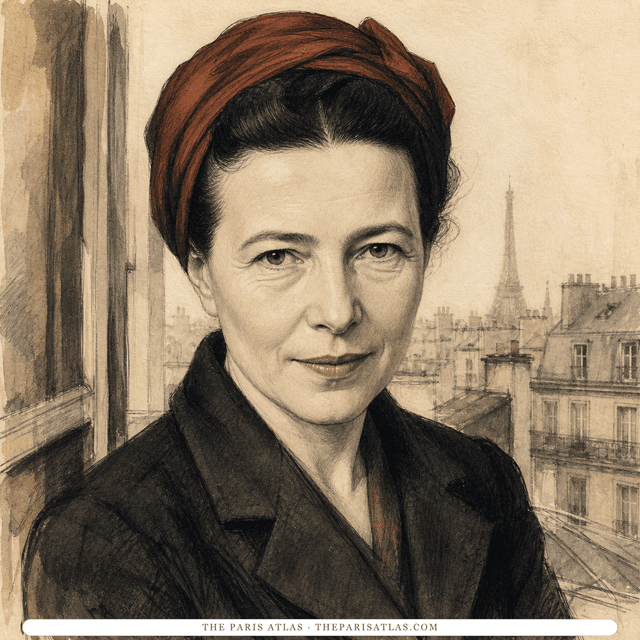
French writer and philosopher whose novels, memoirs, and social analysis examined freedom, gender, responsibility, aging, and the material conditions that shape a life.
View authorThe sources below include the primary text, editions, scholarship, archival materials, and other records that informed this page. They document A Devil in Paradise, its publication, and its place in literary history.


The primary text represented by this page, used for descriptions of the work’s contents and for any quoted passages shown here.
Used to verify A Devil in Paradise's bibliographic context and its place within Henry Miller's published work.

Used for independent archival, institutional, or historical context surrounding Henry Miller and A Devil in Paradise.

Used to cross-check chronology, publication history, and the circumstances in which A Devil in Paradise appeared.
Used for an additional scholarly or biographical perspective on A Devil in Paradise and Henry Miller's wider career.
Publicly displayed excerpts from pp. 1–2 of the 1993 edition support a reading of the opening portrait; these are not the complete opening or memoir.
The publisher's complete editorial note supports the discussion of retrospective narration and competing accounts; the original letters and pamphlets were not independently collated.
The primary text is the baseline reference for every book page. Additional references document publication history, interpretation, and historical context where that evidence is available.
 Explore more resources