
The Theatre and Other Pieces
The mixed prose collection often mistaken for Miller’s dramatic book.
Read our take
by Henry Miller
Miller’s only play sends a heartless American through seven absurd, slapstick scenes toward mortality, love, and reluctant feeling.
Just Wild About Harry is Henry Miller’s only play, a ‘melo-melo in seven scenes’ begun in Europe in 1960 and published by New Directions in 1963. Drawing on Eugène Ionesco, the Theatre of the Absurd, and American slapstick, it follows Harry, a hard, self-protective man forced into contact with life, death, and love. The theatrical form lets Miller turn philosophical confrontation into broad physical comedy and deliberate instability.
Harry begins as a man defended against feeling. Each scene loosens the social and logical rules around him, using farce and repetition to make his certainty increasingly untenable.
Miller called the work a melo-melo rather than a conventional drama. Its collision of melodrama, vaudeville, absurdist dialogue, and metaphysical argument distinguishes it from the autobiographical prose for which he is best known.
Miller moves the action through a street, Jeanie’s room, a bar, and the bar girl’s flat. The final scenes remain in that flat while ordinary time gives way to a supernatural situation. The setting changes less than the characters’ understanding of what has happened.
Harry is attractive and pleased with himself, but emotionally careless. Jeanie demands that he confront the consequences of their relationship. The bar girl and a young man called Romeo help shape the later encounter. Around them, street performers and broad comic business keep the play from settling into naturalistic domestic drama.
The poolroom entrance makes Harry’s confidence visibly destructive. He demands an audience for his shot, tears the cloth by accident, then deliberately rips it off. A second failed shot ends with a broken cue. Instead of mastering the game, he attacks the equipment that exposes his failure. The other players quietly replace the cloth and continue. Their unhurried response makes his frantic display look both ridiculous and routine: everyone else absorbs the disturbance. When his attempt to build with matchboxes also ends in a sweep of destruction, the repetition turns mishap into a pattern.
The confrontation ends in gunfire. After death, Harry comes to acknowledge his love for Jeanie. The final declaration supplies a reconciliation that his conduct in ordinary life had withheld.
The device raises an uncomfortable question: why must a woman’s suffering become the means of a man’s enlightenment? Reviewing a Vancouver production in 1967, P. E. Heron attacked precisely this redemptive pattern as sentimental and conventional. That criticism complicates the publisher’s emphasis on the play’s liberating exuberance.
The closing exchange briefly opens a question that its tenderness does not answer. Harry asks how Jeanie died; the young man resists discussing it, and Jeanie smiles without replying. Harry then crosses to her, touches her shoulder and begins his confession. Music and gestures carry the scene toward the repeated declaration of love, shifting attention from an explanation to an emotional release. Jeanie’s accepting words complete that movement. The audience receives a convincing pattern of theatrical closure, but the question raised just before it has been displaced, not resolved.
New Directions identifies Ionesco and the Theatre of the Absurd among Miller’s influences, alongside an American tradition of slapstick. The combination permits abrupt changes of register: broad comedy can turn into an argument about love, death, and responsibility without a realistic transition.
The theatrical experiment does not automatically make the treatment of relationships equally unconventional. The contrast between disruptive stage action and a familiar story of male redemption is a useful way to assess the play. Readers can enjoy its unruly energy while questioning the emotional bargain its ending asks them to accept.
Dialogue and physical comedy show how Miller handles characters without the narrator who dominates his autobiographical books.
The play combines absurdist exchanges with American slapstick, vaudeville, and melodrama.
Harry’s treatment of Jeanie invites readers to question whether a declaration of love can answer for earlier cruelty.

The self-satisfied protagonist whose emotional carelessness drives the action.

Harry’s former lover, who demands an honest acknowledgment of their relationship.

The unnamed woman whose flat becomes the setting for the final confrontation.

A participant in the concluding scenes who explains Harry’s altered condition.
1960
Miller begins the play while in Europe.
1963
New Directions publishes the seven-scene melo-melo.
1967
A Vancouver production prompts P. E. Heron’s review in The Martlet, which criticizes the play’s treatment of Harry’s redemption.

The mixed prose collection often mistaken for Miller’s dramatic book.
Read our take
Another fable-like departure from his autobiographical realism.
Read our take
A compact philosophical work concerned with love, appetite, and transformation.
Read our takeYes. It is his sole standalone dramatic work.
Miller’s playful label signals a hybrid of melodrama, farce, vaudeville, and absurdist theatre.
He began it in Europe in 1960; New Directions published it in 1963.
It has seven scenes, moving between a street, Jeanie’s room, a bar, and the bar girl’s flat.
No. Just Wild About Harry is a play; The Theatre and Other Pieces is a later collection of short prose.
Explore authors with a similar voice, perspective, and influence.

Miller's acknowledged master at making literature out of the gutter. Journey gave him permission; Cancer is what he did with it.
View author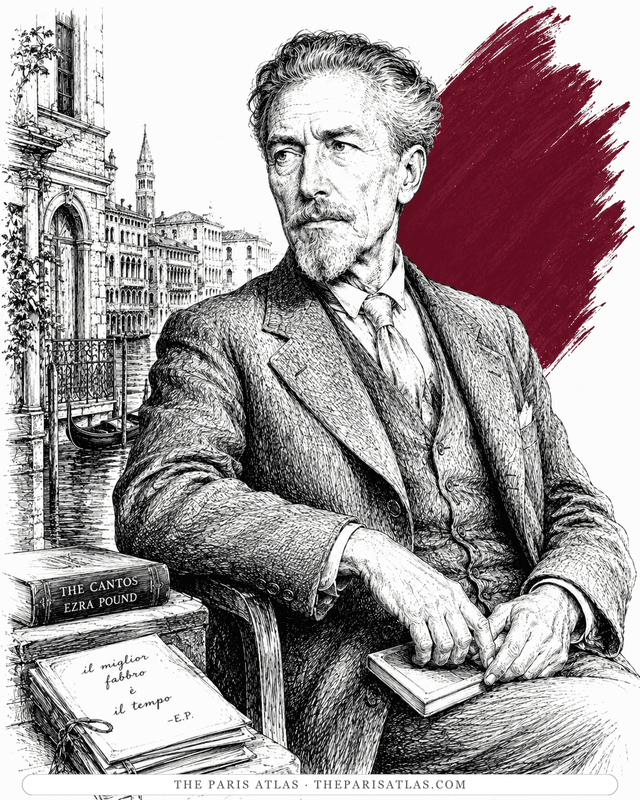
Pound read Cancer and sent Miller a famously backhanded postcard. Both believed literature's job was to wake the reader by any means necessary.
View author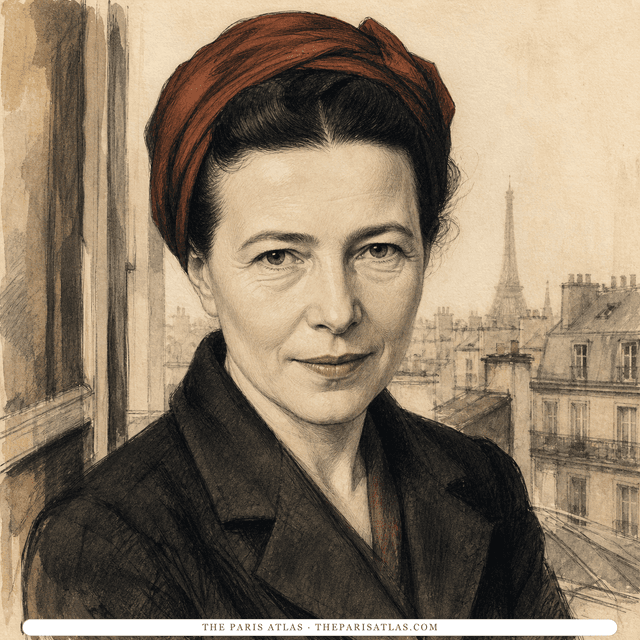
French writer and philosopher whose novels, memoirs, and social analysis examined freedom, gender, responsibility, aging, and the material conditions that shape a life.
View authorThe sources below include the primary text, editions, scholarship, archival materials, and other records that informed this page. They document Just Wild About Harry, its publication, and its place in literary history.


The primary text represented by this page, used for descriptions of the work’s contents and for any quoted passages shown here.
Web source consulted for documented facts and historical context presented on the Just Wild About Harry page.
Web source consulted for documented facts and historical context presented on the Just Wild About Harry page.

Official record used to verify names, dates, institutional details, or other factual information on this page.
Official record used to verify names, dates, institutional details, or other factual information on this page.
Biographical evidence used to verify chronology, relationships, and historical context connected to Just Wild About Harry.
Biographical evidence used to verify chronology, relationships, and historical context connected to Just Wild About Harry.
The primary text is the baseline reference for every book page. Additional references document publication history, interpretation, and historical context where that evidence is available.
 Explore more resources