

Quiet Days in Clichy
The Perlès years themselves — the friendship this letter is addressed to.
Read our take
by Henry Miller
One long letter to Alfred Perlès — Miller sails to New York in 1935, hates it magnificently, and sails back. A round trip, as the title says.
In 1935 Miller went back to New York for the first time since Tropic of Cancer had made him notorious, and wrote the trip up as a single enormous letter to his Paris crony Alfred Perlès. Obelisk printed 150 copies at the author's expense. It is his funniest and angriest travel book: America seen by a man who has just discovered he no longer lives there.
The subtitle of the 1935 original says exactly what the book is: the account of a voyage to New York and back, exactly as recorded in a letter to Alfred Perlès. Miller crossed in early 1935, saw the city he had fled five years before, and turned the return crossing into one of the great sustained rants in American prose — written to the friend who shared his Clichy years and understood every reference.
The letter form is the engine. Freed from chapters and plot, Miller moves by association: the streets and speakeasies of a changed New York, old Brooklyn ghosts, the ship's Dutch stolidity, and above all the argument — that America is a sanitized machine and that his own country no longer has room for the likes of him. Critics have read it since as the dry run for The Air-Conditioned Nightmare, the full-scale American reckoning he wrote in the forties.
Obelisk Press issued it in October 1935 as Siana Series no. 1 — the imprint named for Anaïs spelled backwards — in 150 copies printed at the author's expense; a private American printing followed in 1945, and New Directions finally gave it a trade edition in 1993. It is the shortest good door into Miller's nonfiction voice: everything the essays do, at letter length, addressed to someone he loved.
A single book-length letter. Miller sails from Europe, lands in the New York of 1935, and walks it with the double vision of a native who has become a foreigner: Broadway and the automat, the old neighborhoods, the speed and the sterility, friends aged into strangers. The city that made him now strikes him as a brilliant, heartless apparatus — and the comedy of the book is that he cannot stop admiring the apparatus while he curses it.
The return crossing gives the book its shape and its title — aller retour, a round-trip ticket. On the boat back to Europe the letter widens into the theme of the rest of his decade: what it means that he can only be an American abroad. There is no plot to spoil; the pleasure is the voice at full pressure, with Perlès — and the reader over his shoulder — as its audience.
Miller's wish to hear American popular songs as a foreigner is more revealing than a simple rejection of home. He finds their mixture of melancholy and optimism fascinating, and wants to bring a song back with him. Distance has not made him indifferent: he wants the freshness of an outsider's hearing without losing an insider's recognition. This small admission complicates the larger performance of escape. The returning traveler can condemn the city and still take pleasure in the culture that formed him.
The passage moves from street violence to automatic doors, patent medicines and promises of prosperity, making convenience feel increasingly coercive. Miller's rapid catalogue starts to imitate the advertising language it mocks: every discomfort has a product, every anxiety an instruction to stay cheerful. The comic exaggeration makes ordinary routines look strange. Its target is a system that sells reassurance while keeping people hurried and dissatisfied. The city's machinery thus includes the phrases its inhabitants repeat, not only the devices that open doors for them.
One hundred and forty-nine pages, one addressee, no structure but momentum. If the essay collections feel like a commitment, start here.
A first-rank prose writer walking the city at the bottom of the Depression, comparing it block by block with the town he grew up in.
Everything is pitched to Perlès — the shared jokes, the Clichy shorthand — and the intimacy is the form. Quiet Days in Clichy shows the friendship; this shows its correspondence voice.

The addressee — Miller's closest Paris friend and Clichy flatmate, to whom the entire book is written. New Directions calls it Miller's longest and best letter.
1935
Miller sails to New York early in the year — his first return since leaving for Paris in 1930.
1935
Obelisk publishes the letter in October as Siana Series no. 1, 150 copies at the author's expense.
1945
A privately printed American edition appears.
1993
New Directions issues the first trade edition.


The Perlès years themselves — the friendship this letter is addressed to.
Read our take
The same argument with America, made book-length after the 1940s road trip.
Read our take
The book whose success stood between Miller and the New York he revisits here.
Read our take
A book-length letter from Henry Miller to his friend Alfred Perlès, recounting his 1935 round trip from Paris to New York and back — part travelogue, part rant, part homesickness in reverse. Obelisk Press published it in Paris that October in an edition of 150 copies.
It's French for a round trip — literally 'going returning' — the ticket Miller bought. The shape of the book matches the ticket: out, around New York, and back to Europe.
Nonfiction — an actual letter, expanded to book length. The subtitle of the first edition says it records the voyage 'exactly as recorded in a letter to Alfred Perlès.'
An Austrian writer and Miller's closest Paris friend — they shared a flat in Clichy in the early thirties, the years Quiet Days in Clichy describes. The letter form works because Perlès already knows every reference.
Between the Tropics — after Cancer (1934), before Capricorn (1939) — and at the head of his quarrel with America, which The Air-Conditioned Nightmare finished in 1945.
Explore authors with a similar voice, perspective, and influence.

Miller's acknowledged master at making literature out of the gutter. Journey gave him permission; Cancer is what he did with it.
View author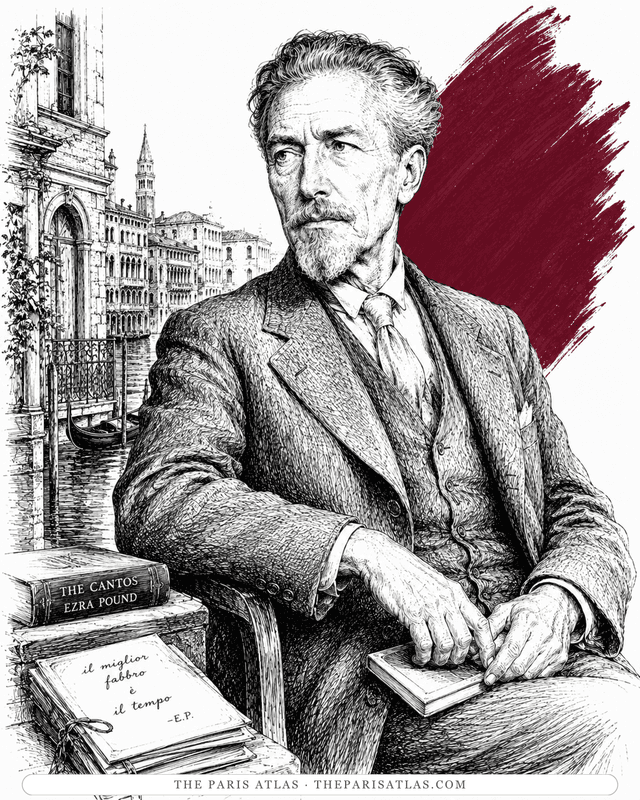
Pound read Cancer and sent Miller a famously backhanded postcard. Both believed literature's job was to wake the reader by any means necessary.
View author
French writer and philosopher whose novels, memoirs, and social analysis examined freedom, gender, responsibility, aging, and the material conditions that shape a life.
View authorThe sources below include the primary text, editions, scholarship, archival materials, and other records that informed this page. They document Aller Retour New York, its publication, and its place in literary history.


The primary text represented by this page, used for descriptions of the work’s contents and for any quoted passages shown here.

Archival evidence used to document the historical record connected to Aller Retour New York.
Used for the Obelisk Press context and the publication history of Miller’s privately printed Paris books.
Used to cross-check the 1935 journey, chronology, and the letter’s place in Miller’s career.
Used for an independent biographical account of Miller’s New York return and Paris period.
Two publicly displayed passages from the magazine's republication of an Aller Retour New York excerpt support readings of popular songs and advertising; no complete book or edition comparison is claimed.
The primary text is the baseline reference for every book page. Additional references document publication history, interpretation, and historical context where that evidence is available.
 Explore more resources