
Mea culpa
The 1936 pamphlet that precedes it; Mea culpa's argument about human nature widens into the racial and political programme of Bagatelles a year later.
Read our take
Louis-Ferdinand Céline's 1937 political pamphlet — a hybrid work in which fictional dialogue, three ballet scenarios and an extended racial and political monologue interrupt one another.
Bagatelles pour un massacre is a large hybrid work combining fictional dialogue, three ballet scenarios, literary satire, political argument and racial polemic. Its loose narrative begins with Ferdinand — alternatively identified as Céline — discussing his frustrated attempts to have his ballets produced. Conversations with the physician Léo Gutman and other acquaintances become the framework for increasingly extensive discussions of French cultural life, literature, the press, communism, international politics, race, Germany and the possibility of another European war. Three complete ballet scenarios frame and interrupt the political material: La Naissance d'une fée, Voyou Paul. Brave Virginie, and, at the very end, Van Bagaden.
Despite traditionally being called a pamphlet, Bagatelles is substantial — about 113,000 words in Wyatt Mason's count — and has a recognisable fictional frame. Ferdinand considers himself a man of artistic refinement and wants his ballets staged.
He discusses dance and theatrical contacts with Léo Gutman, a physician connected with the cultural world. Ferdinand presents La Naissance d'une fée, but his attempts to have it performed fail. He then turns to another ballet, Voyou Paul. Brave Virginie, associated with his hopes of obtaining a production around the 1937 Paris Exposition.
These frustrations supply the narrative mechanism through which Ferdinand launches into a much broader polemic. His grievances expand from artistic institutions into claims about French cultural and political life. Large portions concern Jews and advance Céline's racial and political arguments; other sections discuss communism and the USSR, France's political system, Germany, literature, journalism, cinema and the prospect of a new war.
The physician-narrator Ferdinand / Céline begins by asserting his own refinement and, particularly, his understanding of dance. This leads naturally to his unrealised ambitions as a writer of ballets.
He brings the problem to Léo Gutman. The first ballet scenario, La Naissance d'une fée, is inserted directly into the book. Attempts to get it accepted come to nothing.
A second project, Voyou Paul. Brave Virginie, follows. Once again, Ferdinand hopes his contacts can help place the work, and once again the project does not reach the stage.
These theatrical disappointments become the springboard for the much larger body of the book. Ferdinand begins trying to explain not merely why his ballets have failed but why, in his view, contemporary France and Europe function as they do.
His monologue ranges across publishing, theatre, journalism, cinema, advertising and literary reputation; Soviet communism and the aftermath of his trip to the USSR; French parliamentary politics; international alliances; Germany; racial theories; and above all his contention that Jewish influence shapes political, economic and cultural life. Alice Kaplan's source study demonstrated that many of the statistics, historical assertions, quotations and ideas used in these sections were taken or adapted from contemporary newspapers, political tracts and other printed sources Céline was reading in 1937.
Ferdinand's extended monologue is periodically broken by conversations with Gutman, his cousin Gustin Sabayot and other acquaintances. These interlocutors give the enormous polemic the loose form of conversation rather than a continuous treatise.
The book eventually circles back to its starting point: artistic creation and ballet.
There is no resolution of Ferdinand's political arguments or theatrical ambitions.
Instead, Bagatelles returns to ballet and ends with Van Bagaden. The ballet centres on a subordinate figure labouring over the accounts of a wealthier master and turns economic hierarchy into a stylised theatrical allegory.
Structurally, this matters: the political polemic occupies most of the book, but dance brackets the entire work. The disappointed ballet writer of the opening becomes, by the final pages, the ballet writer who stages his work on paper instead.
The ending makes Bagatelles more formally complicated than a conventional political tract.
Ferdinand's claim to artistic refinement is part of the argument, not a neutral introduction. In the opening translated by Wyatt Mason, he denies that other supposedly cultivated people possess what he confidently grants himself. Ballet's rejection therefore threatens an identity he has already declared beyond dispute. His response is to blame Jews, turning wounded vanity into antisemitic conspiracy. The conversational voice can make that jump sound casual; recognizing its comic swagger does not make the accusation harmless or true.
The closing accounts answer a warning placed at the book's entrance. Mason links the opening epigraph about unsettled debts to the clerk's labour in Van Bagaden. That return makes valuation a question enacted onstage: who works, who possesses, and who judges what another life is worth? The ballet is not simply a refuge from the preceding polemic. As Régis Tettamanzi cautions, these scenarios combine vulnerability and beauty with Céline's hostility toward outsiders. Their gentler form does not place them outside the book's ideological tensions.
The unusual feature of Bagatelles is the way aesthetic frustration and political explanation become connected. Ferdinand begins with a seemingly private problem — nobody will stage his ballets — and turns that experience into an explanation of the culture surrounding him.
The book is also highly composite. Alice Kaplan's detailed source study traced Céline's use and alteration of contemporary newspapers, political literature, historical works, racial theories and propaganda. His own voice surrounds and transforms material gathered from a much larger print culture.
War is another major organising concern. Céline's First World War experience had made opposition to another European conflict central to his political writing. Bagatelles repeatedly interprets politics in terms of an approaching war and argues for a different relationship between France and Germany. Its arguments about race are repeatedly incorporated into that geopolitical explanation.
Finally, the ballet frame should not be treated as an irrelevant curiosity. Céline republished all three ballets separately in 1959 in Ballets sans musique, sans personne, sans rien. They were genuine parts of his artistic project, not simply decorations added to the pamphlet.
What the book explores:
Whatever one thinks of Bagatelles, it is the fullest single record of the political and racial position Céline had reached by 1937, and it belongs on the shelves as a documented work rather than a rumour about one.
Bagatelles is the only one of the three that brackets its polemic with theatrical form — three ballet scenarios and a narrator who never stops thinking about how the work will be performed.
Alice Kaplan's Relevé des sources et citations dans Bagatelles pour un massacre (1987) is still the essential companion for anyone who wants to know where each apparent "fact" in the polemic came from.
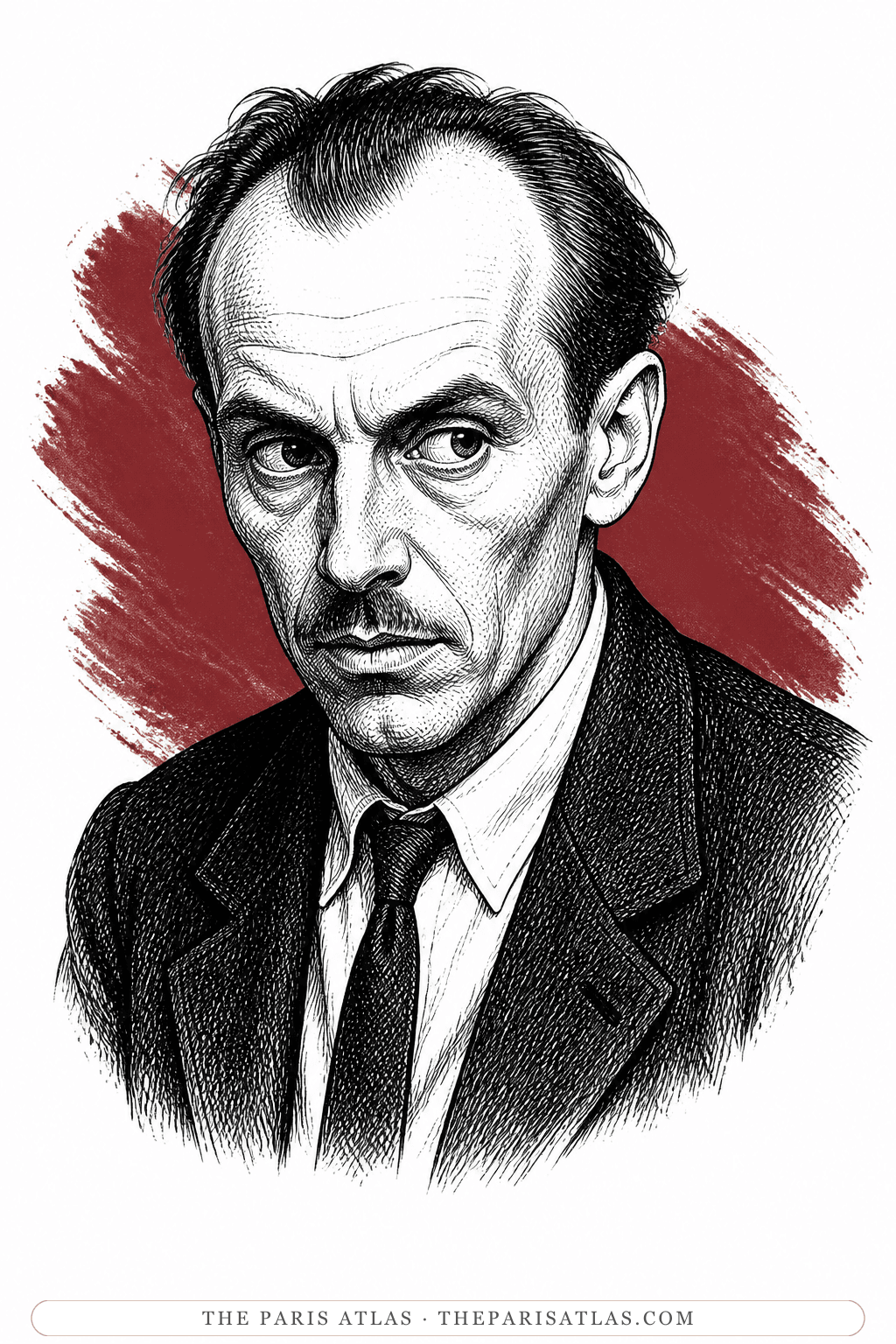
Physician, narrator and central speaker; the frame in which the whole polemic is voiced.
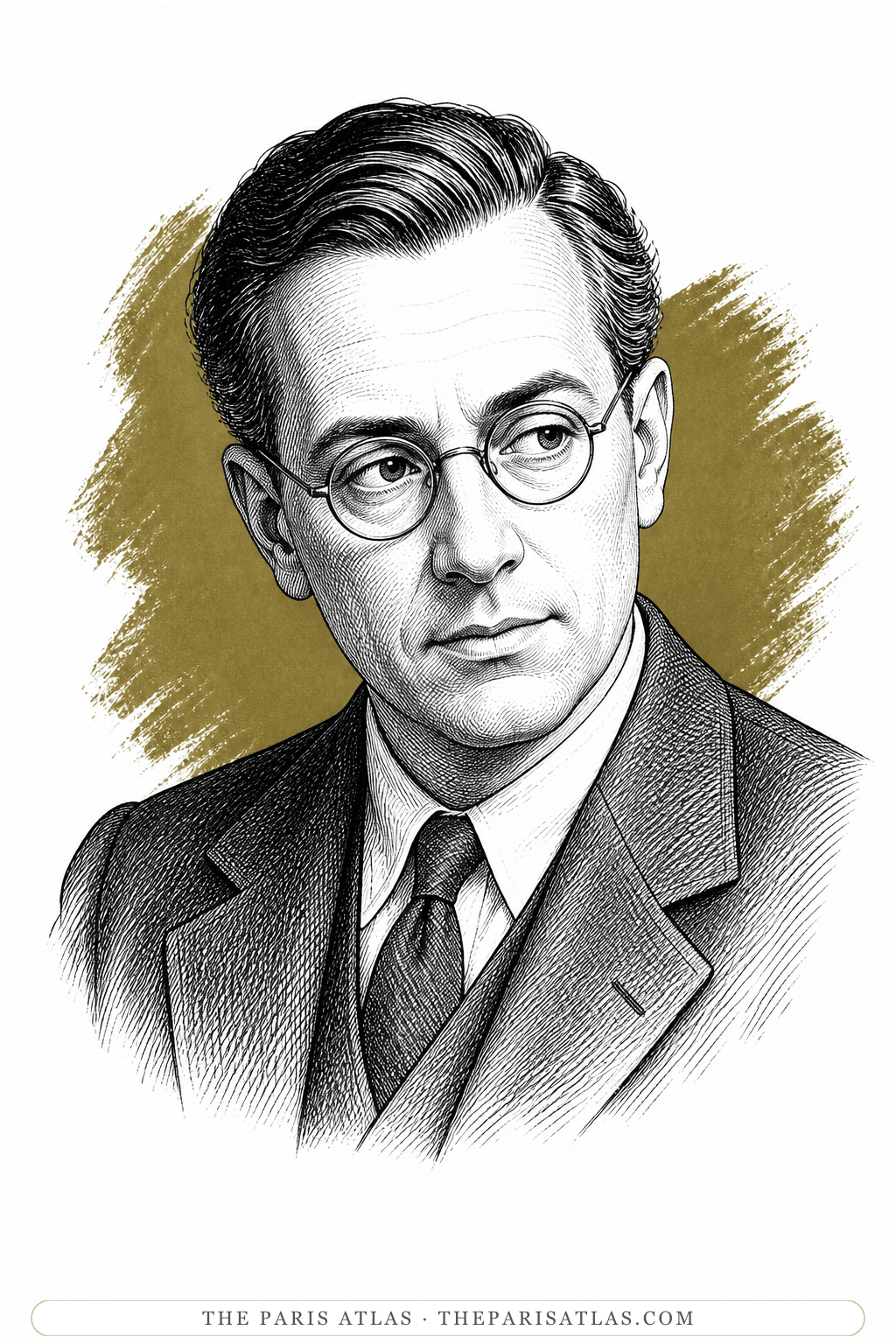
Physician and interlocutor connected with the world of dance; based on Céline's real acquaintance René Gutmann.
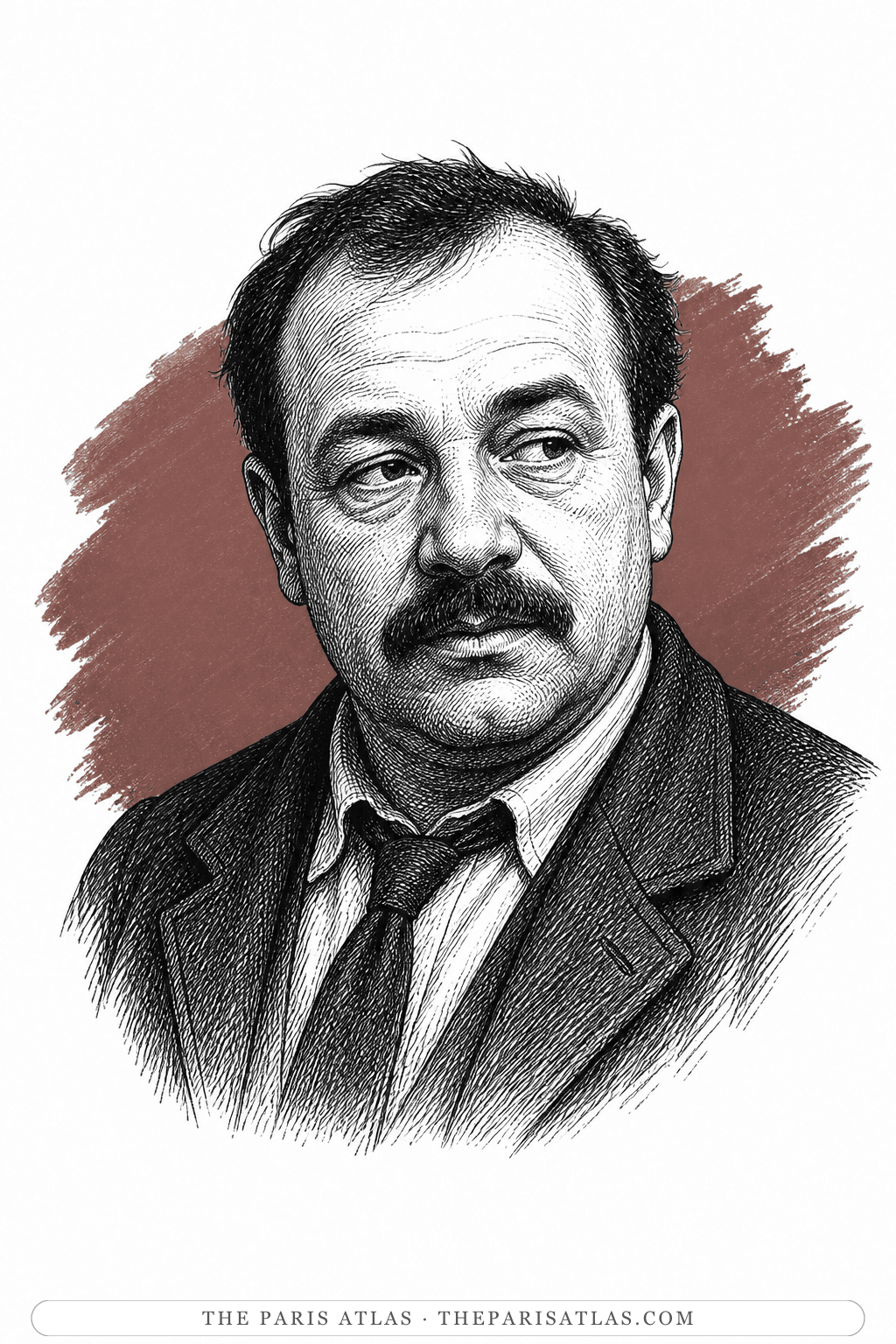
Ferdinand's cousin, also appearing in Death on the Installment Plan.
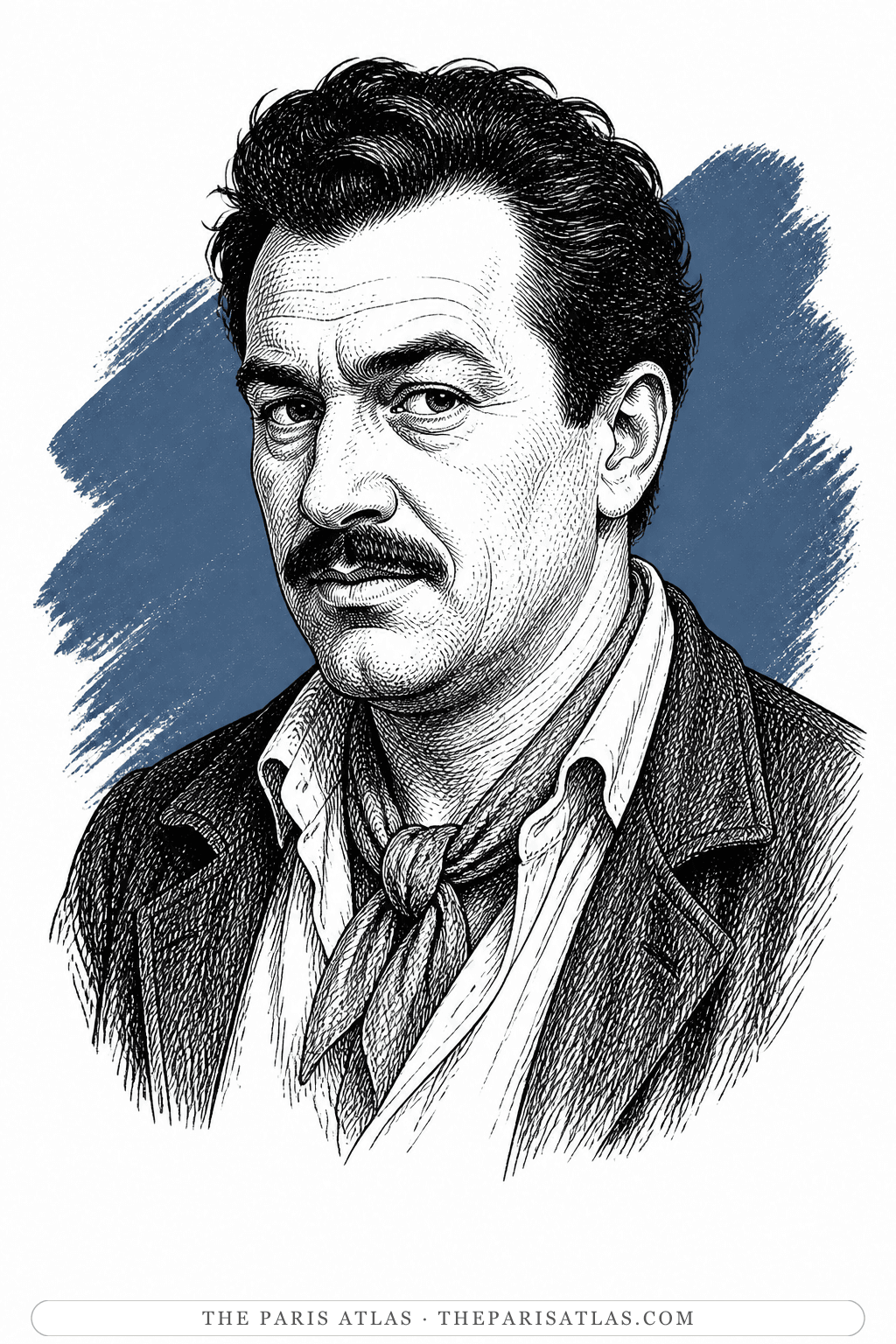
Interlocutor associated with Céline's friend the painter Gen Paul.
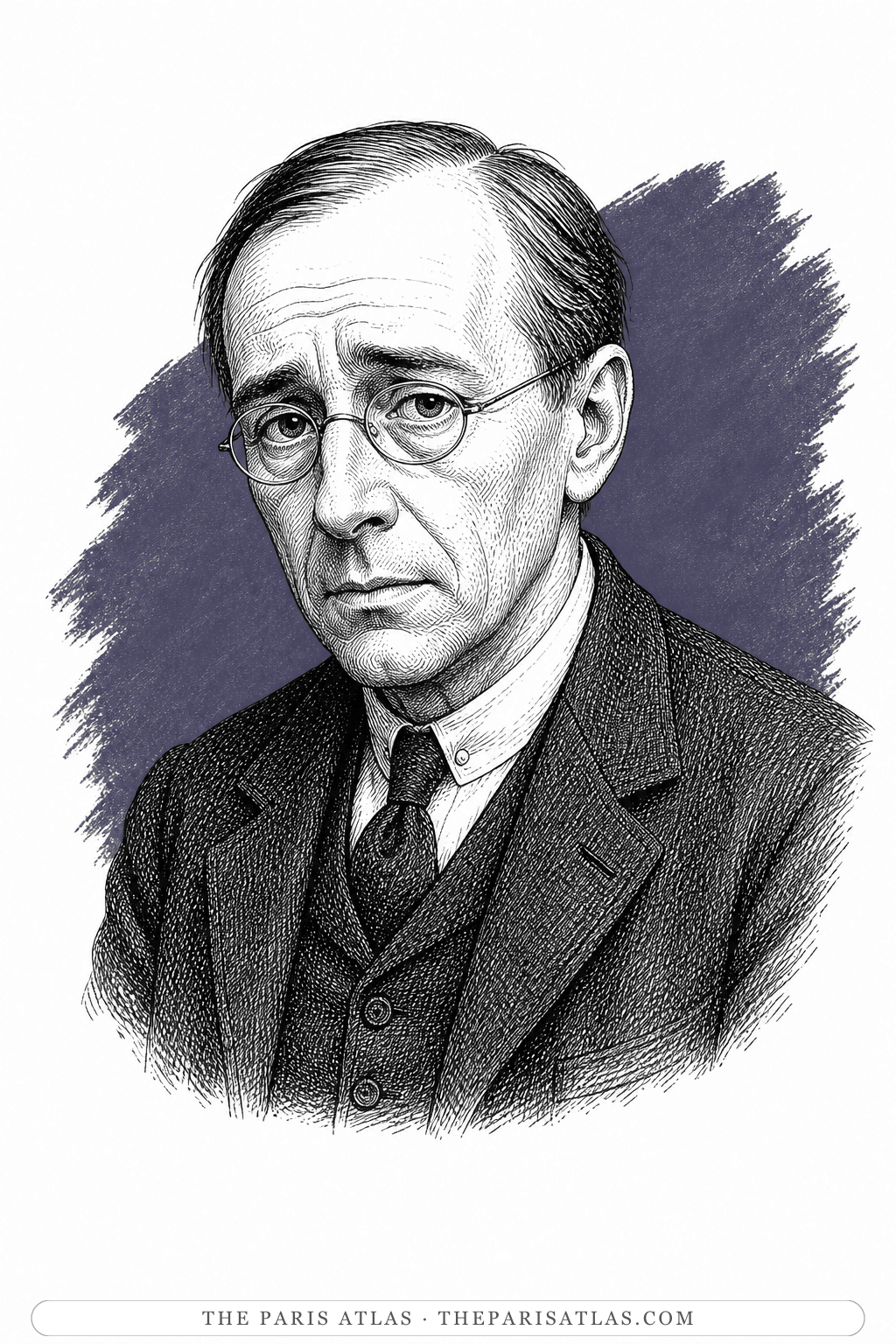
The subordinate clerk who labours over his master's accounts in the closing ballet scenario Van Bagaden.
1937
Denoël publishes the antisemitic pamphlet Bagatelles pour un massacre.
1945
A January government directive places the book among works to be withdrawn from sale.
2018
Gallimard suspends a proposed critical reissue of Céline’s political pamphlets.
The 1936 pamphlet that precedes it; Mea culpa's argument about human nature widens into the racial and political programme of Bagatelles a year later.
Read our take
The 1938 continuation; L'École des cadavres drops much of the ballet material and concentrates on Franco-German geopolitics.
Read our take
The 1941 wartime pamphlet; the third piece in what is usually treated as Céline's polemical trilogy.
Read our take
Céline's 1932 debut; the fiction from which the polemic often quotes and against which it often positions itself.
Read our takeIt is traditionally classified as one, but it is much longer and more formally complicated than an ordinary pamphlet. Bagatelles combines political polemic with dialogue and three complete ballet scenarios; Wyatt Mason counts about 113,000 words.
The book ranges across French politics, international relations, literature, communism, culture and the possibility of another European war, while advancing extensive racial and political arguments.
Céline had genuine ambitions to have ballets produced. Their rejection provides the narrative starting point for the book, and three ballet scenarios — La Naissance d'une fée, Voyou Paul. Brave Virginie and Van Bagaden — are embedded in the text.
Not in the simple sense of a continuing blanket statutory ban. It was placed on a government list of works to be withdrawn from sale in January 1945. Céline subsequently refused to authorise new editions; his widow eventually permitted a planned Gallimard critical edition, which Gallimard suspended in 2018.
It was an important part of his political record, but the formulation is too simple. Céline left Paris on 17 June 1944 as the Liberation approached. His later legal dossier covered several activities and publications. In the final prosecution, Les Beaux draps was especially significant, while one prosecutor concluded that the 1943 republication of Bagatelles did not itself fall under Article 75. Céline was convicted in absentia in February 1950.
No. After his return to France, Céline did not authorise the three major political pamphlets to be reprinted.
Explore authors with a similar voice, perspective, and influence.
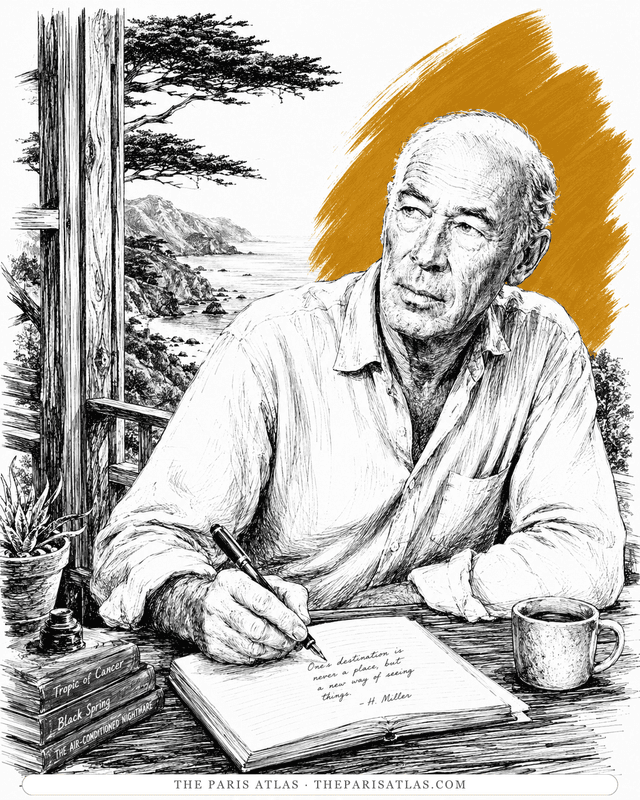
Miller read Journey in manuscript while writing Tropic of Cancer and never recovered — the two books are the era's twin gutter-testaments.
View author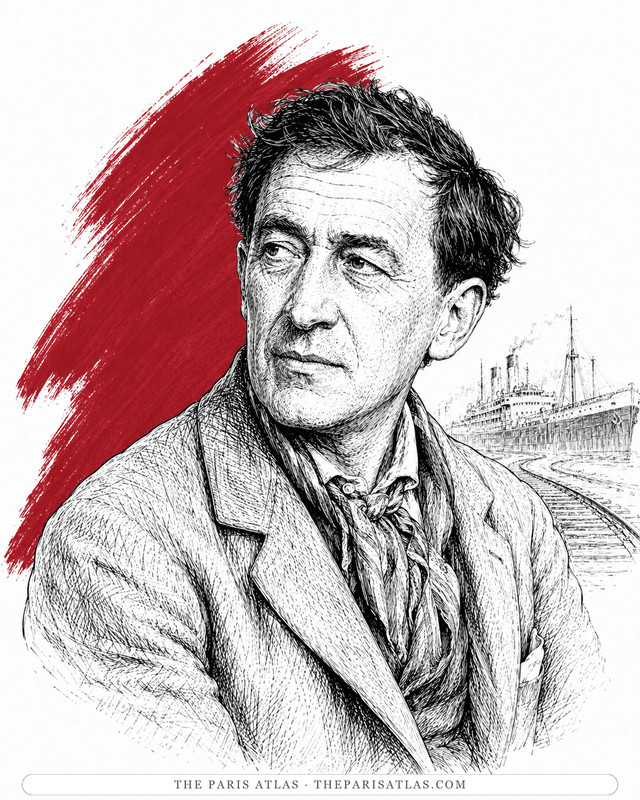
The other French modernist Céline could not look away from: a war-wounded amputee whose spoken prose ran ahead of grammar and whose Moravagine anticipates Bardamu's tour of the century's slaughterhouses.
View author
The same war, the same refusal of the big words — delivered in whispers where Céline delivers it in screams. Both writers died in the same week of July 1961.
View authorThe sources below include the primary text, editions, scholarship, archival materials, and other records that informed this page. They document Bagatelles pour un massacre, its publication, and its place in literary history.

The primary text represented by this page, used for descriptions of the work’s contents and for any quoted passages shown here.

Published analysis and historical context used in preparing the Bagatelles pour un massacre page.
Published analysis and historical context used in preparing the Bagatelles pour un massacre page.
Published analysis and historical context used in preparing the Bagatelles pour un massacre page.
Published analysis and historical context used in preparing the Bagatelles pour un massacre page.
Published analysis and historical context used in preparing the Bagatelles pour un massacre page.
Published analysis and historical context used in preparing the Bagatelles pour un massacre page.
The primary text is the baseline reference for every book page. Additional references document publication history, interpretation, and historical context where that evidence is available.
 Explore more resources