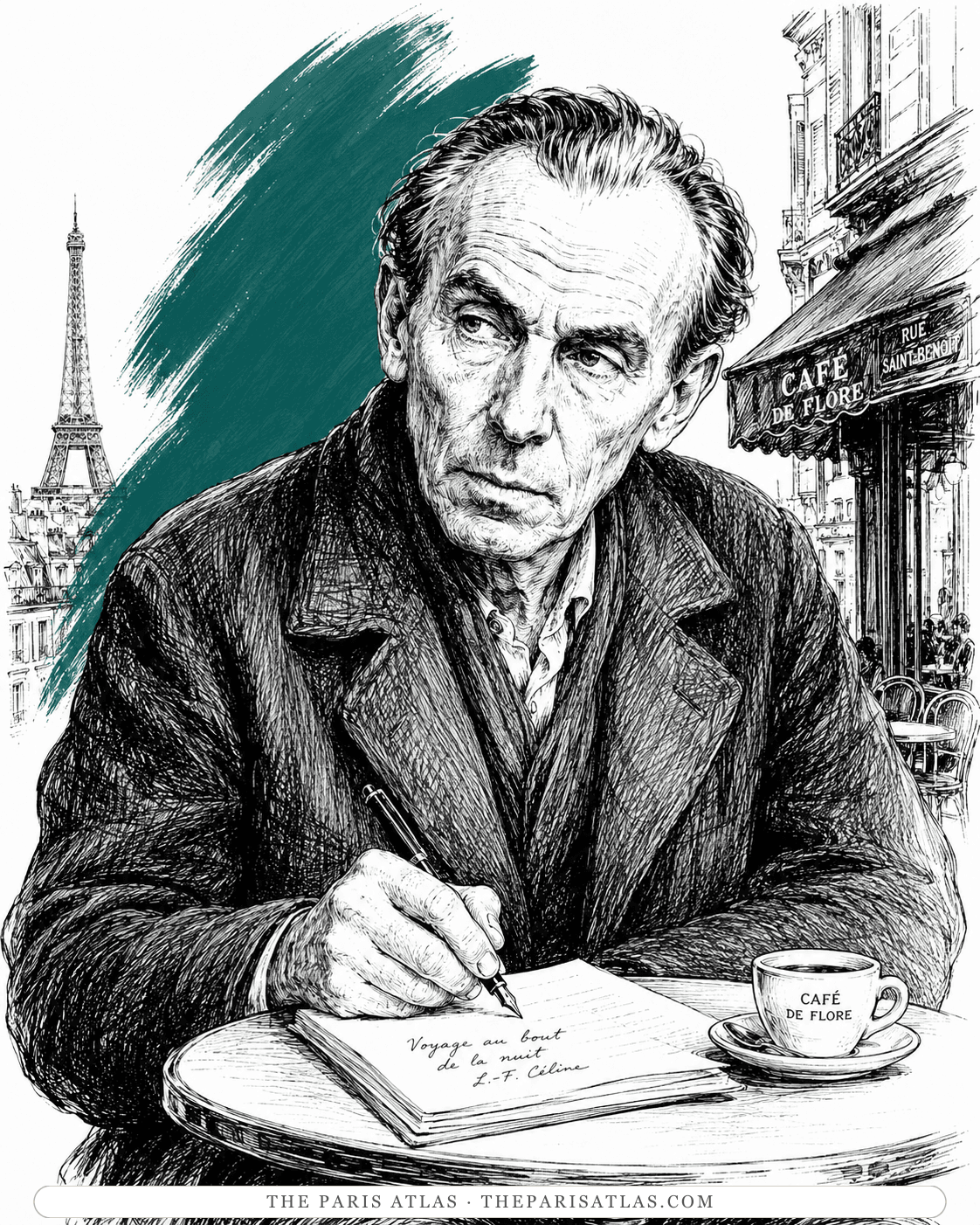


Qu'on s'explique
Louis-Ferdinand Céline's 1933 article in Candide — his first concentrated public explanation of what his writing is trying to do, six months after Journey to the End of the Night.
- 1933
About Louis-Ferdinand Céline
The story, briefly
Spoiler-freeQu'on s'explique is Céline's first concentrated public explanation of how he believes his writing works. The immediate trigger was not exactly "the Renaudot committee." Journey had already lost the 1932 Goncourt and won the Renaudot. In early 1933, a forest officer wrote that he physically cut unwanted pages from books and had retained very little of either Guy Mazeline's Goncourt winner or Céline's Journey. Journalist Émile Zavie mocked that reader in L'Intransigeant. Céline responded by defending not only the reader but his own idea of literature. The article appeared in Candide on 16 March 1933.
The story, in more detail
Céline begins with the supposedly unsophisticated reader. The controversy provides him with a useful contrast between professional literary opinion and the reaction of someone who simply reads according to personal need.
He then turns toward his own book. Rather than apologise for Journey's violence, slang, pessimism or ugliness, he argues that these effects follow from the material being represented.
For Céline, literature has to seize life in all its contradictory physical and emotional force and then reshape it. The language readers complain about is therefore not accidental vulgarity. He presents it as part of the method.
The full progression
First comes the dispute about reading. Who decides what a book is worth — literary professionals or an ordinary reader who feels perfectly entitled to keep only what matters to him? Céline sides, provocatively, with the reader.
Then he shifts from reading to writing. He describes life as something the writer must seize and work over rather than politely reproduce.
Violence in the material produces violence in language.
The writer stretches, reshapes and reconstructs lived experience chapter by chapter.
He therefore refuses the distinction between "beautiful literary language" and the ugly realities supposedly beneath it. The argument becomes a small manifesto for the aesthetics that Journey has already demonstrated.
How it ends — spoilers ahead
Céline does not retract anything.
Instead, Qu'on s'explique converts criticism of Journey into an assertion of artistic method.
The controversy that was supposed to make him justify the novel becomes an opportunity to say, in effect, that the language is inseparable from the reality he is trying to transmit.
Themes and analysis
The reader with the scissors
The scissors turn private taste into a comic tribunal. The reader cuts whatever displeases him; Céline imagines the surviving pages as each author's baggage for eternity. This puts famous dead writers and a newly successful novelist through the same humiliating inspection. His envy of Mazeline's larger surviving portion keeps the joke from becoming a simple celebration of ordinary readers. He admires the reader's severity while performing his own wounded pride: the argument concerns not only who judges literature, but how little control writers have over what remains of them.
Life remade as language
Writing reverses the reader's operation: instead of cutting life down to agreeable pieces, Céline describes collecting memories, bodily failures, half-forgotten songs and awkward details into an unruly mixture. He then imagines stretching that material until it cries out. The sequence makes rough language an effect of pressure, rather than a faithful recording of everyday speech. Under threat, a person tries different roles and vocabularies; the resulting voice contains competing versions of the self. Yet Céline admits that the process can fail. His method promises intensity, not reliable mastery.
This piece is especially valuable alongside Entretiens avec le professeur Y. Qu'on s'explique is Céline immediately after Journey, explaining himself before his later theory of the "emotive style" has been fully developed.
Professor Y, two decades later, provides a much more elaborate retrospective theory. Read together, the two texts allow you to see how Céline's explanation of his own technique evolves.
What the article explores:
- Writing & literary style
- Readers vs. critics
- Reality & representation
- Slang & nonstandard language
- Literary scandal
- Authorship & self-explanation
Why we recommend it
The manifesto immediately after Journey
The article catches Céline at the moment his first novel has just landed — arguing publicly, before he has settled his later account of his own method.
The pair with Entretiens avec le professeur Y
Qu'on s'explique (1933) and Entretiens avec le professeur Y (1955) are Céline's two most direct statements about his writing. Read one after the other, they show how the account of his own technique evolves.
The Zavie / forestry-officer episode
A small but revealing 1933 literary controversy — an ordinary reader, a journalist mocking him, and Céline defending both the reader and the novel that got him talked about.
What this book explores
Timeline
1932
Journey to the End of the Night loses the Goncourt and wins the Renaudot, setting the context for the later public dispute.
Early 1933
Émile Zavie mocks a reader who has cut pages from the competing prize novels; Céline responds to that argument.
March 1933
Candide publishes Qu’on s’explique on 16 March.
Book editions
Paperback
- Paperback
- Candide, 16 March 1933 (original article)
Reader reviews
Readers may also like

Entretiens avec le professeur Y
Céline's 1955 aesthetic manifesto — Qu'on s'explique is its earliest cousin, in miniature.
Read our take
Hommage à Zola
The Médan speech of 1 October 1933 — the other place where Céline argues, months later, about literature's relationship to reality.
Read our takeQu'on s'explique: frequently asked questions
Why did Céline write Qu'on s'explique?
It grew out of the controversy surrounding Journey and, specifically, a public dispute about an ordinary reader who physically cut unwanted passages from books.
When was it first published?
In Candide on 16 March 1933.
Is it a preface to Journey?
Not originally. It was an article. A later separate edition called it a "Postface au Voyage au bout de la nuit."
What does Céline explain?
His conception of writing as the transformation of lived reality into an emotionally forceful literary language.
Is the separate 1933 edition unquestionably from 1933?
No. Jean-Pierre Dauphin and Pascal Fouché raised serious doubts because copies apparently did not surface until decades later.
Why is it important?
Because it is one of Céline's earliest explicit statements about his own literary method.
If you like Louis-Ferdinand Céline
Explore authors with a similar voice, perspective, and influence.
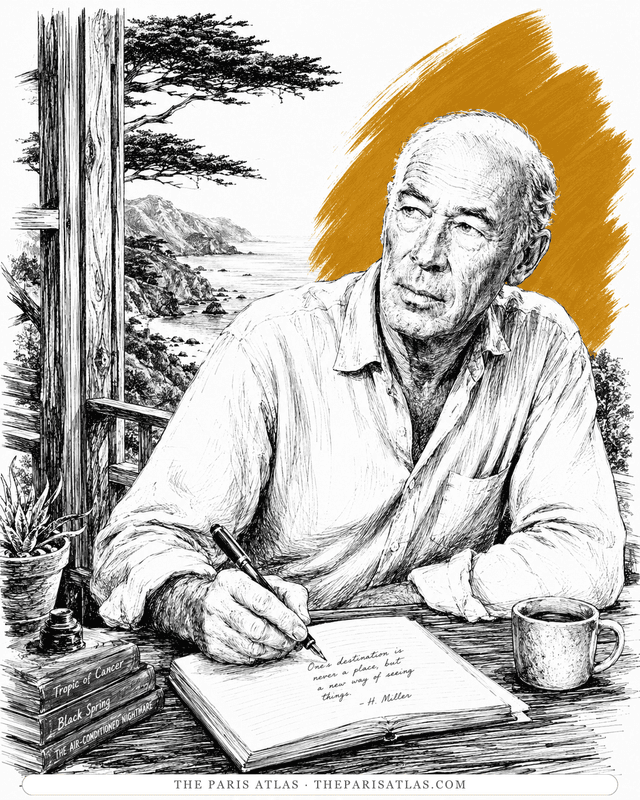
Henry Miller
Miller read Journey in manuscript while writing Tropic of Cancer and never recovered — the two books are the era's twin gutter-testaments.
View author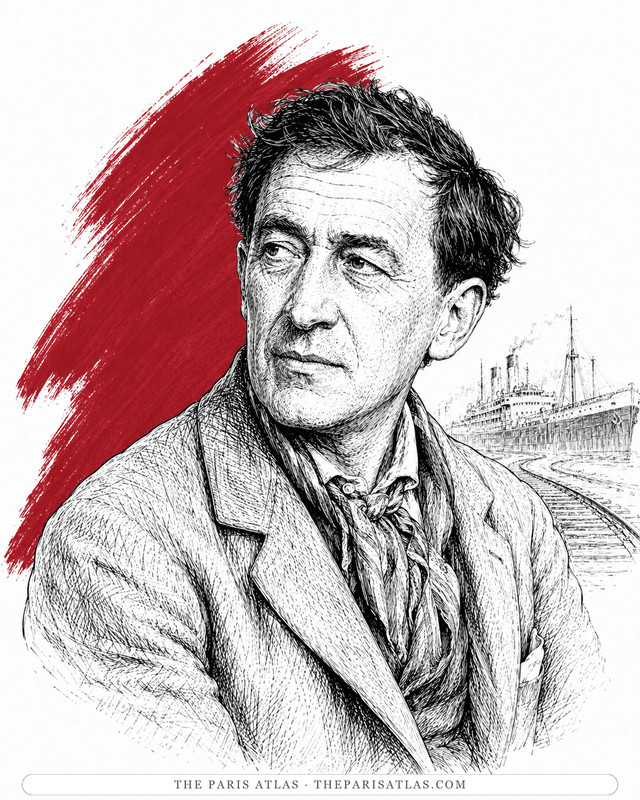
Blaise Cendrars
The other French modernist Céline could not look away from: a war-wounded amputee whose spoken prose ran ahead of grammar and whose Moravagine anticipates Bardamu's tour of the century's slaughterhouses.
View author
Ernest Hemingway
The same war, the same refusal of the big words — delivered in whispers where Céline delivers it in screams. Both writers died in the same week of July 1961.
View author
References
References
The sources below include the primary text, editions, scholarship, archival materials, and other records that informed this page. They document Qu'on s'explique, its publication, and its place in literary history.


1Qu'on s'explique
NovelLouis-Ferdinand Céline, 1933Used forThe primary text represented by this page, used for descriptions of the work’s contents and for any quoted passages shown here.

2ALDE — signed typescript of Céline's Qu'on s'explique with autograph corrections, describing the circumstances of the article: publication in Candide on 16 March 1933, the forestry-officer reader and Émile Zavie's L'Intransigeant piece that triggered Céline's response
EssaysALDEUsed forPublished analysis and historical context used in preparing the Qu'on s'explique page.
3ALDE — separate Qu'on s'explique edition subtitled Postface au Voyage au bout de la nuit, with the bibliographical questions Jean-Pierre Dauphin and Pascal Fouché raised about the print's actual date
EssaysALDEUsed forPublished analysis and historical context used in preparing the Qu'on s'explique page.
4Qu'on s'explique — five-page modern transcription of the 1933 essay
EssaysFichier-PDF (public transcription)Used forPublished analysis and historical context used in preparing the Qu'on s'explique page.
5ALDE — Céline sale catalogue, lot 27: Qu'on s'explique, textual excerpt and edition history
EssaysALDEUsed forPublished analysis and historical context used in preparing the Qu'on s'explique page.
6Céline (biography) — esp. p. 484 (Normance), p. 486 (Féerie), pp. 489–490 and 495
BiographyGallimard, 2011Used forGodard's biography supplies independent context for Céline's early public statements about his literary method.
7Bibliothèque de la Pléiade Céline catalogue — scholarly editions including Entretiens avec le professeur Y, La Volonté du roi Krogold, La Légende du Roi René, Guerre and Londres
EssaysÉditions GallimardUsed forThe Gallimard catalogue provides authoritative bibliographic context for the text and its later collection history.
i
Why these sources are here
The primary text is the baseline reference for every book page. Additional references document publication history, interpretation, and historical context where that evidence is available.
 Explore more resources