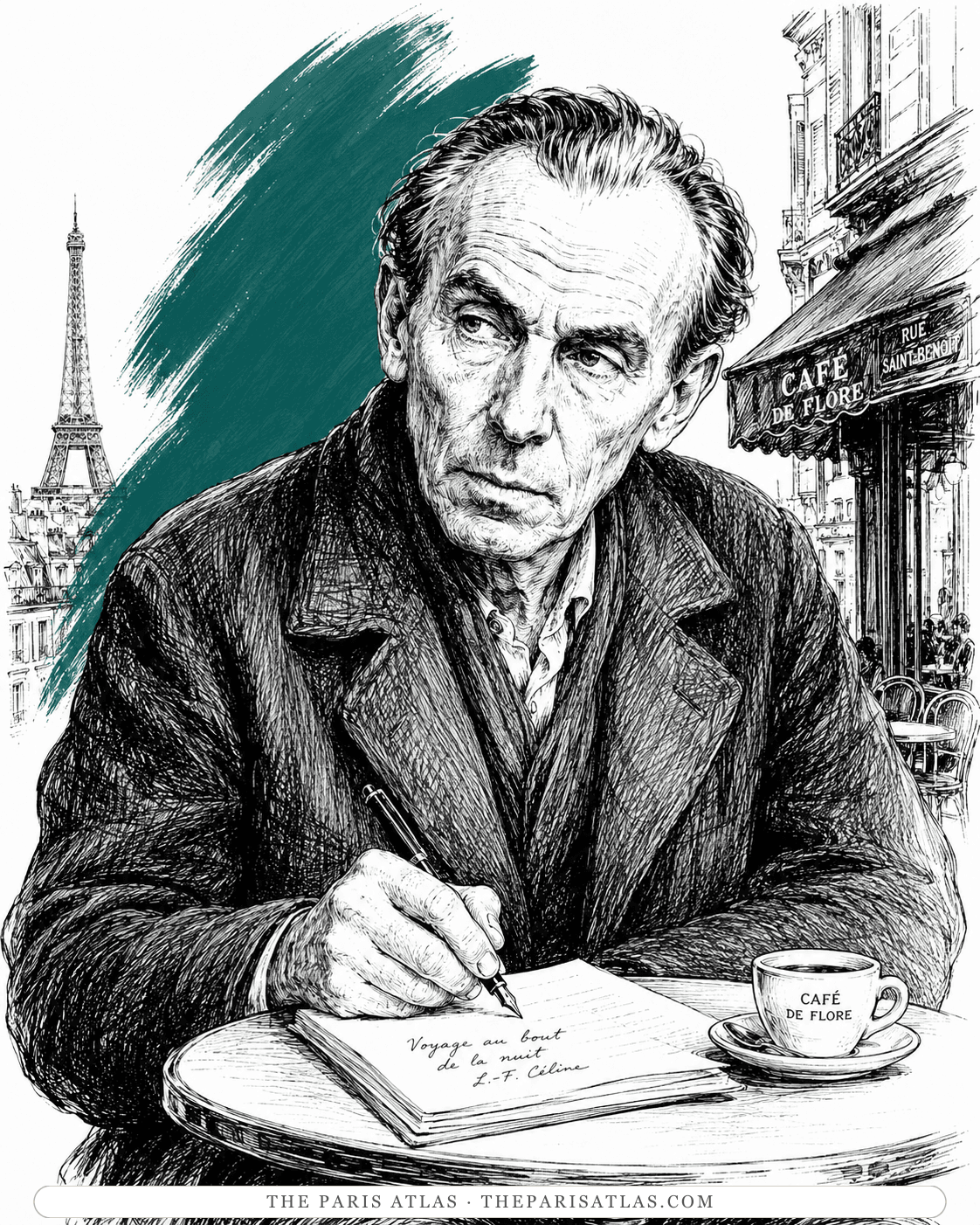

Journey to the End of the Night
Louis-Ferdinand Céline's 1932 first novel, which follows one man from the First World War through colonial Africa and industrial America to the Paris slums.
Read our take
Cahiers Céline 4 — the young Louis Destouches's surviving letters and earliest known writing from the Sangha-Oubangui trading post in French Equatorial Africa, 1916–1917, the year Journey to the End of the Night's Bikomimbo chapters were quarried from.
In May 1916, Louis Destouches — twenty-two years old, still a soldier medically discharged from the front two years earlier, not yet a physician and not yet Céline — took a job with the Compagnie Forestière Sangha-Oubangui and shipped out to the French colonial post of Bikomimbo, in what is now the Central African Republic. He stayed roughly a year, contracted dysentery and malaria, and was shipped back to France in April 1917. This 1978 Gallimard volume in the Cahiers Céline documentary series prints his surviving correspondence from the African year — letters home to his parents and to a small handful of others — together with the earliest known writings he attempted while there. It is the direct documentary source for Journey to the End of the Night's Bikomimbo chapters: the trading post with a fake ledger, the fever, the boredom, the racism of the settlers, the collapse of the colonial ambition into isolated absurdity.
Destouches sails from Marseille in May 1916, arrives at Douala, and travels upriver into French Equatorial Africa to the Sangha-Oubangui basin. He is employed by the Compagnie Forestière as a trading-post agent responsible for gathering rubber and forest products from the interior.
The letters to his parents in Paris are frequent, detailed and — in the early months — cheerful. He describes the climate, the food, the mail schedule, the price of a horse and the price of a shirt.
Illness arrives quickly. Dysentery and malaria dominate the middle letters. The isolation of the post and the racial hierarchy of the colonial administration take up more and more of the correspondence.
The earliest surviving prose experiments date from this year. They are short, fragmentary, and mostly descriptive — the first pages of a writer testing what he can do with a French sentence when nobody is looking.
By late 1916 the letters home are asking about repatriation. Destouches's health has deteriorated. In April 1917 he is discharged from the Compagnie Forestière on medical grounds and sails back to France.
Edited by Jean-Pierre Dauphin for Gallimard's original Cahiers Céline sequence and published as vol. 4 in 1978.
The volume is a year in the life of a not-yet-writer, told in the letters he sent home and the fragments he wrote for himself.
The African year is where Céline's later material begins to accumulate — the trading post, the isolated white manager, the fake ledger, the fever, the racial cruelty of the colonial administration, the sense of an ambition collapsing in on itself in a place that will not cooperate.
The letters are not the novel; they are the raw material. Reading them next to Journey to the End of the Night is the closest look the record gives of Céline transforming his own experience into fiction.
The earliest prose fragments are more interesting as evidence than as literature — a young writer trying out sentences, most of them still conventional.
The African correspondence stops when Destouches sails home from Douala in April 1917.
He will spend the rest of the year recovering in France. Medical school, the Semmelweis thesis, the League of Nations years and the writing of Journey are all ahead of him. This volume prints the year that supplied the material for the African chapters of that novel, fifteen years before he wrote them.
In the letter to Simone Saintu of 14 July 1916, the fear of knocking a spoon against a pan reduces a vast, unsettling forest to one small movement. The scene then changes meaning: remembering the scrutiny and regulation of European social life makes isolation feel protective rather than frightening. Solitude is neither simply freedom nor simply suffering; the letter moves between both. His camp includes sleeping porters, so the loneliness he describes should not be mistaken for an empty landscape or a journey made without others.
The letter to his parents of 14 September 1916 presents a different kind of distance. Reports of earnings and improved comfort sit beside requests for books, stationery and other supplies. The gramophone and records being sent by London friends suggest that life abroad still depends on connections elsewhere. Mentioning their value also helps him present himself as prosperous and well liked to readers at home. The illustration evokes that reported gift; it does not establish its arrival, the recordings chosen or a particular occasion when anyone listened.
The Bikomimbo section of Voyage au bout de la nuit is one of the most searing passages in French colonial literature. This is where the material came from — the actual letters home, sent in 1916.
The voice in the letters is not yet the voice of the novels. Watching it not-yet-arrive is one of the interesting things reading this correspondence lets you do.
Céline did not write about the African year until Journey. The letters were written in the moment, to his parents, without any thought of publication — which makes them the closest kind of witness the record has.
1916
Louis Destouches leaves for his African trading-company appointment in May and writes letters home.
1917
Illness ends the appointment, and he returns to France in April.
1978
Gallimard publishes Jean-Pierre Dauphin’s edition of the letters and early African writings as Cahiers Céline 4.
Louis-Ferdinand Céline's 1932 first novel, which follows one man from the First World War through colonial Africa and industrial America to the Paris slums.
Read our take
Louis-Ferdinand Céline's recovered 2022 novel — a young Ferdinand comes to on a battlefield, survives a military hospital, and starts moving toward London.
Read our take
Cahiers Céline 5 — Céline's correspondence with the women in his life beyond Lucette: the American dancer Elizabeth Craig, Karen Marie Jensen, Cillie Pam and others, from the pre-Journey years through exile.
Read our takeAt the Sangha-Oubangui trading post of the Compagnie Forestière, in what is today the Central African Republic. Then part of French Equatorial Africa.
Roughly a year — May 1916 to April 1917. He was discharged on medical grounds after contracting dysentery and malaria.
The Bikomimbo colonial-Africa chapters of the 1932 novel are drawn directly from this year. The letters are the primary documentary source for what Céline was actually seeing when he later wrote the novel.
Jean-Pierre Dauphin, for the original Cahiers Céline sequence. Published as volume 4 in 1978.
No. The African correspondence has not been translated. English readers who want it must read it in French or through the biographies (Godard 2011, Vitoux) that quote from it.
The Compagnie Forestière Sangha-Oubangui — a French colonial trading company gathering rubber and forest products for export. The company itself, and the ledger practices it ran on, are the direct model for the Bikomimbo trading post in Journey.
Explore authors with a similar voice, perspective, and influence.
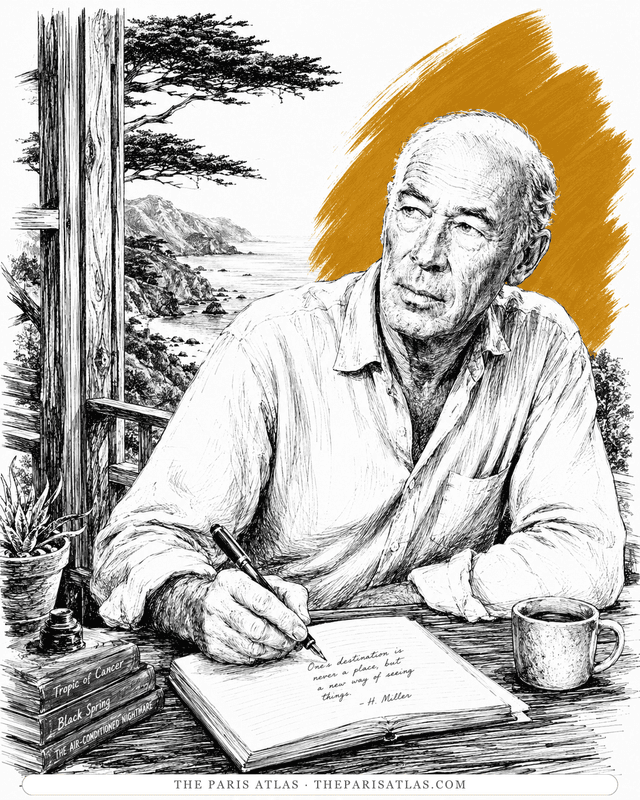
Miller read Journey in manuscript while writing Tropic of Cancer and never recovered — the two books are the era's twin gutter-testaments.
View author
The other French modernist Céline could not look away from: a war-wounded amputee whose spoken prose ran ahead of grammar and whose Moravagine anticipates Bardamu's tour of the century's slaughterhouses.
View author
The same war, the same refusal of the big words — delivered in whispers where Céline delivers it in screams. Both writers died in the same week of July 1961.
View authorThe sources below include the primary text, editions, scholarship, archival materials, and other records that informed this page. They document Lettres et premiers écrits d'Afrique, its publication, and its place in literary history.


The primary text represented by this page, used for descriptions of the work’s contents and for any quoted passages shown here.

Published analysis and historical context used in preparing the Lettres et premiers écrits d'Afrique page.
Biographical evidence used to verify chronology, relationships, and historical context connected to Lettres et premiers écrits d'Afrique.
The Pléiade correspondence catalogue establishes the publication and editorial history of Céline's early letters.
The scholarly review evaluates the correspondence edition and its use of the African letters as biographical evidence.
Letters 27 and 39 were read in Jan Versteeg's Dutch translations. The journal identifies the selection as drawn from Cahiers Céline 4; the French volume was not collated.
The primary text is the baseline reference for every book page. Additional references document publication history, interpretation, and historical context where that evidence is available.
 Explore more resources