
Depicted in its pages
Journey to the End of the Night
The novel turns Céline's municipal medicine in Clichy into Bardamu's practice in fictional La Garenne-Rancy; the real dispensary is transposed rather than named.
The surviving 1920s municipal dispensary where Louis-Ferdinand Céline — Dr Destouches to his patients — practiced general medicine from 1929 to 1937 while writing the novel that fictionalized the suburb as Rancy.
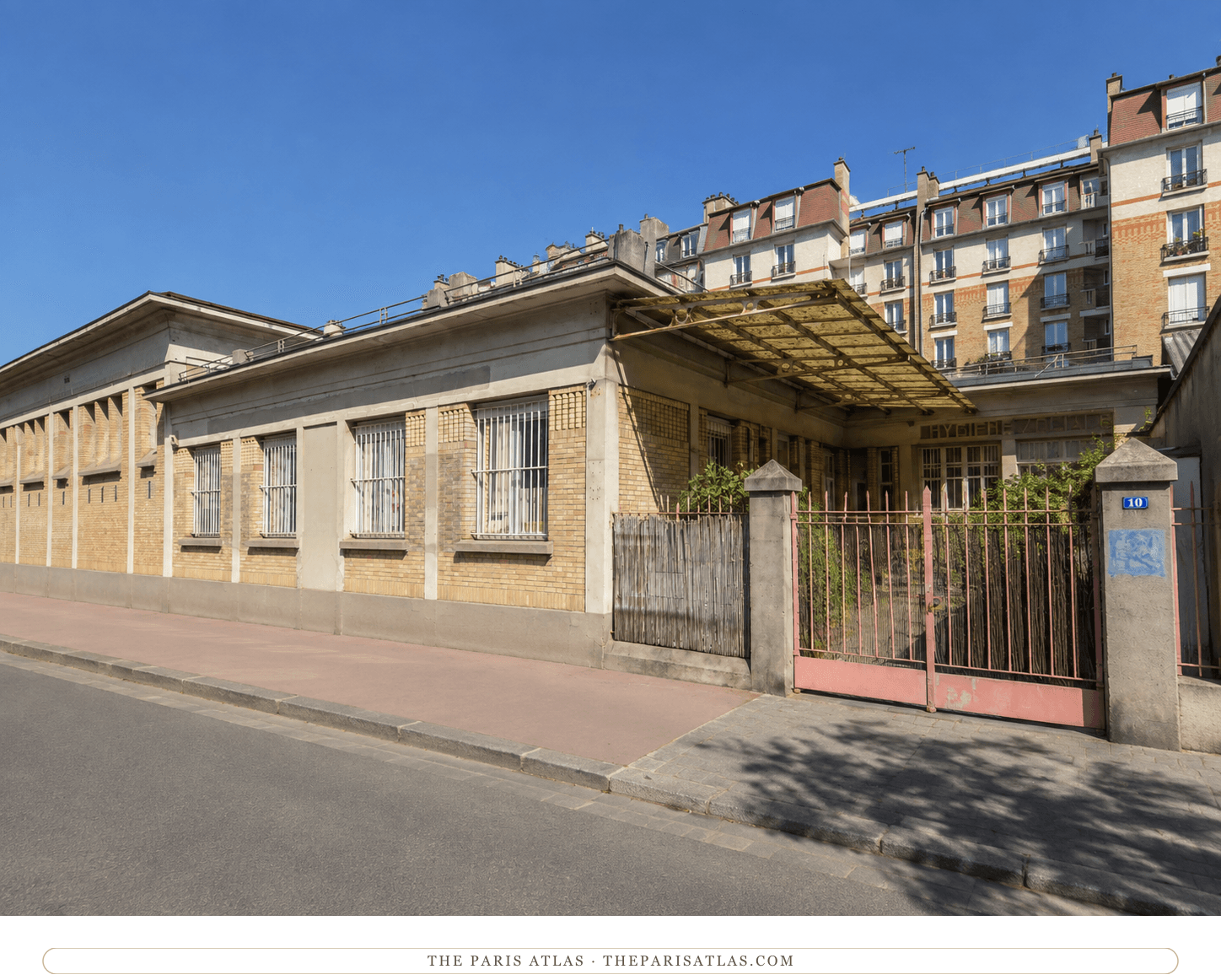
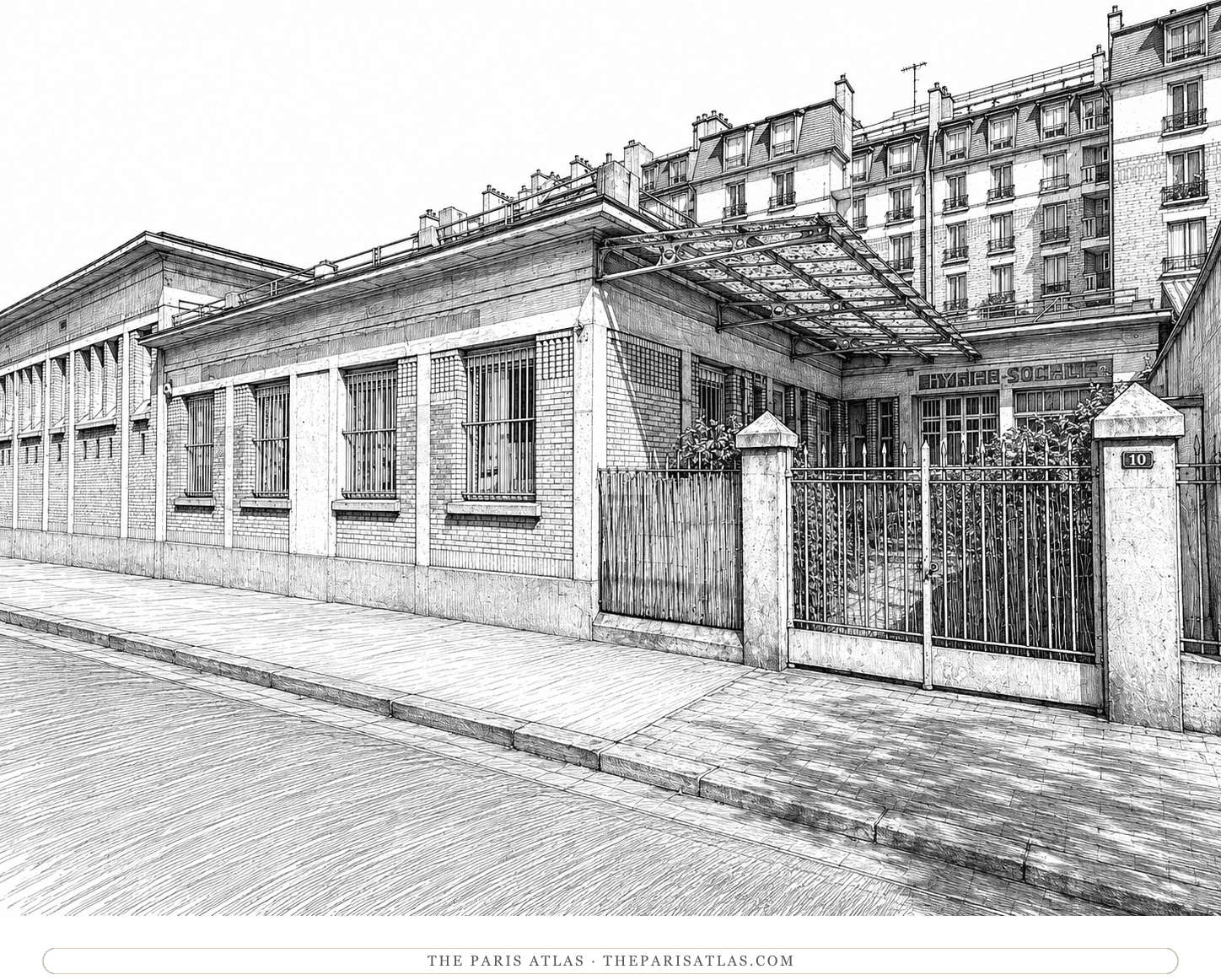
Begin with what is still here. The long, low brick-and-concrete building behind the gate at 10 rue Fanny is the actual 1925–1926 dispensary complex, not a replacement on the same plot. The number 10 remains on the gatepost, the projecting glass-and-metal canopy still marks the entrance, and the old Hygiène Locale lettering can be read above the doors. That institutional sign records the building's municipal sanitary function; it does not by itself prove that Céline's clinic still operates here. France's official heritage inventory identifies the dispensary and public baths as parts of the complex designed by architect André Berry.
Before Céline existed, there was Dr Louis Destouches — and after his private practice failed, the doctor took a salaried post at the brand-new municipal dispensary of Clichy, opened on the rue Fanny in January 1929. He joined the founding team on 8 January 1929 and stayed nearly nine years, seeing the working poor of the industrial suburb daily: consultations, dispensary medicine, the unglamorous general practice of a factory town pressed against the northwestern edge of Paris.
The day job produced the century's unlikeliest double life. Through those same years Destouches was writing at night, and in 1932 the dispensary doctor published Journey to the End of the Night under his grandmother's name, Céline. The novel's long Parisian movement is set in 'La Garenne-Rancy' — a suburb fictionalized from the Clichy he walked to work in — and its portrait of doctoring among the poor, where medicine collides daily with poverty, is the dispensary transposed nearly whole. The most famous French novel of its decade was written by a municipal clinic employee, and the clinic is in it everywhere.
Céline left the dispensary at the end of 1937, his second novel published and his life beginning its turn toward the catastrophes of the following decade. The Clichy years remain the ones his medical colleagues remembered — the competent, punctual Dr Destouches — and the town has since claimed its place in the novel's history.
The building and the institution now have to be described separately. Clichy's municipal records say that the Marc Chagall health center and its maternal-and-child health services were consolidated at 2 rue Gaston-Paymal in March 2019. An online medical directory still lists a Marc Chagall service at 10 rue Fanny, but current official municipal information places those services at Gaston-Paymal. For a literary visit, the safe and useful answer is simple: the historic building survives and can be seen from rue Fanny, but it is not an open Céline museum or a visitor attraction. View it from outside unless you have legitimate business at the address.
Architect André Berry builds the civic complex at 10–12 rue Fanny and 14–18 rue Simoneau, including the dispensary and public baths.
The municipal dispensary opens in January; Dr Destouches joins the founding team on the 8th, his private practice behind him.
Céline publishes Journey to the End of the Night — Clichy fictionalized as La Garenne-Rancy, the dispensary's medicine in its pages.
His Death on the Installment Plan follows, still written around the day job.
Céline leaves the dispensary at year's end, after nearly nine years.
Clichy consolidates the municipal Marc Chagall and Goüin health-center activities at 2 rue Gaston-Paymal.
The interwar building remains at 10 rue Fanny. It is an exterior literary stop, not an open historic interior.
Depicted in its pages
The novel turns Céline's municipal medicine in Clichy into Bardamu's practice in fictional La Garenne-Rancy; the real dispensary is transposed rather than named.
Worked here · 1929–1937
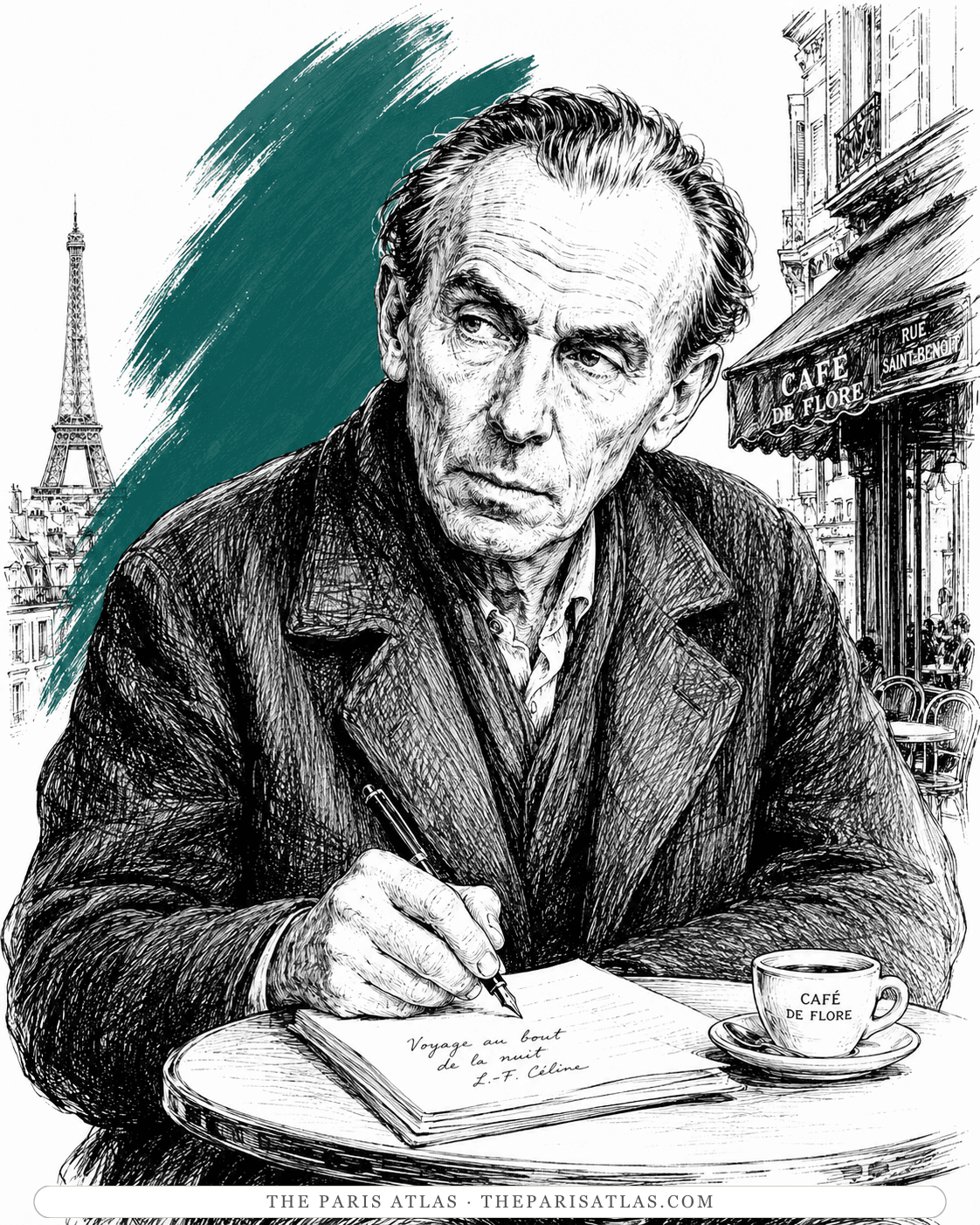
Dr Louis Destouches joined the new municipal dispensary's founding team on 8 January 1929 and practiced there nearly nine years — the day job behind Journey to the End of the Night, whose Rancy fictionalizes Clichy.
The sources below include histories, archival materials, scholarly research, and official records that informed this page. They document Dispensaire de Clichy, the people connected to it, and its place in Clichy.


Web source consulted for documented facts and historical context presented on the Dispensaire de Clichy page.
Biographical evidence used to verify chronology, relationships, and historical context connected to Dispensaire de Clichy.

Official record used to verify names, dates, institutional details, or other factual information on this page.
Official record used to verify names, dates, institutional details, or other factual information on this page.
Web source consulted for documented facts and historical context presented on the Dispensaire de Clichy page.
Map data used to verify addresses, geographic coordinates, and the placement associated with Dispensaire de Clichy.
Official record used to verify names, dates, institutional details, or other factual information on this page.
These references provide the documented foundation for this page's history and context. Claim-level citations remain attached to the specific claims they support.
 Explore more resources
Newsletter
The cafés, studios, and walk-up flats where the work was made — one story from the map in every letter.