
The Ego and the Id
Sigmund Freud
The Ego and the Id
The 1923 sequel, which Freud's own blurb described as continuing the train of thought begun here.
Read our takeBeyond the Pleasure Principle
Sigmund Freud
The 1920 essay in which Freud watched his grandson throw a wooden reel out of his cot and concluded that something in us wants to repeat, and something wants to die.
Sigmund Freud had built psychoanalysis on the idea that the mind seeks pleasure and avoids pain. In 1920 he published a short book saying that this could not be the whole story. Soldiers back from the war kept dreaming their way back to the moment of the shell. His grandson, at eighteen months, played a game of making a toy vanish and return, over and over. Patients in analysis kept living out their worst experiences rather than remembering them. From these Freud argued for a compulsion to repeat that lies deeper than pleasure, and from that, in a passage he called speculation, for a drive in every living thing to return to the lifeless state it came from.[1] He called it the death instinct, and set it against Eros.
The book has seven short sections. The first restates what Freud calls the pleasure principle and its adjustment to reality. The second gathers the evidence against it: the dreams of men with what was then called traumatic neurosis, and a child's game. The third adds the consulting room, where patients repeat their old defeats in their relation to the analyst. The fourth builds a picture of a living organism as a vesicle with a hardened outer layer, a protective shield, and defines trauma as a breach of that shield.[1]
The fifth section makes the leap. If instincts are conservative, if what they want is to restore an earlier state, then the earliest state of all is the lifeless one, and Freud writes that the goal of all life is death. The sixth section tests the idea against the biology of the day, August Weismann's germ-plasm above all, and against Plato's myth in the Symposium of humans cut in half and searching for their other halves. The seventh admits how little has been settled.[1]
Freud began the book in March 1919 and had it finished by May 1920. In between, on 25 January 1920, his daughter Sophie Halberstadt died of influenza in Hamburg at twenty-six. The child in the reel game was her son Ernst.[2][3] Freud anticipated the obvious reading. He wrote to Max Eitingon in July 1920 that the book was finally finished and asked him to certify that it had been half finished while Sophie was alive and flourishing.[2] The second German edition of 1921 added a footnote saying that when the boy was five and three-quarters his mother died, and that he showed no grief.[4]
The Internationaler Psychoanalytischer Verlag, Freud's own press, published the book in 1920. C. J. M. Hubback's English translation followed in 1922 from the International Psycho-Analytical Press in London, edited by Ernest Jones, and is the public-domain text quoted here. James Strachey's translation came in 1950 and again in the Standard Edition in 1955. Within the movement the death instinct divided people at once, and it still does; Melanie Klein built on it, and most American analysts set it aside.[5]
The observation at the centre of the book is domestic. Freud lived for some weeks under the same roof as a boy of eighteen months and his parents, and noticed that the child, otherwise placid and good, had a habit of throwing his toys into corners and under the bed. As he threw them he made a long drawn-out sound, o-o-o-oh, which his mother and Freud agreed meant fort, the German for gone. Freud realised the child was playing at making things be gone.
Then he saw the complete game. The boy had a wooden reel with a string wound round it. He would throw the reel over the edge of his curtained cot so that it vanished, say his o-o-o-oh, then pull it back by the string and greet it with a joyful da, there. Freud's reading is that the child had let his mother leave the room for hours without complaint, and was staging her going and coming back with a toy he could control. The game turned an experience he had suffered into one he directed. Freud notes that the going, the unpleasant half, was played far more often than the return.
The passage has been read more than anything else in the book, partly because of what stands behind it. The boy was Ernst Halberstadt, born in March 1914, and the mother was Freud's daughter Sophie, who died in January 1920 while the book was being finished. Freud added a footnote in the 1921 edition recording that the child, now really without his mother, showed no grief for her. He offers the game only as evidence about repetition, and refuses to let the reader decide from it alone that repetition is beyond pleasure, since the child might simply be mastering the situation or taking revenge on the mother.
The first evidence Freud offers is not from a child but from the war. Men who had survived shell explosions and railway accidents kept dreaming of the moment of the accident, waking each time in fresh fright. On the wish theory of The Interpretation of Dreams that made no sense: no wish is fulfilled by reliving a shell burst. Freud had defended the wish theory for twenty years. Here he concedes that these dreams are an exception and sets out to explain what they are doing instead.
The third section brings the same pattern into the consulting room. Patients, Freud writes, do not remember their forgotten past as a memory; they repeat it as a present experience, and they repeat it in their dealings with the analyst. The child's love that ended in rejection is lived again as rejection by the doctor. He then widens the frame to people outside treatment whose lives seem to follow a fate, the friend betrayed by every friend in turn, the woman who nurses three husbands to their deaths. All of this he gathers under one name, the compulsion to repeat, and says it looks more primitive and more instinctual than the pleasure it overrides.
In the fourth section Freud announces that what follows is speculation, often far-fetched, which each reader may accept or ignore. He then asks the reader to imagine the simplest living thing as a small bubble, a vesicle, exposed on all sides to stimulation. Its outer layer, he suggests, has been so battered that it has died and hardened, and now serves as a shield through which only a fraction of the outside world's energy can pass. Consciousness, on this picture, sits at that surface.
Trauma is then defined by the picture: an excitation strong enough to break through the shield. Freud describes the mind's response as an emergency, with energy summoned from everywhere to bind the flood that has poured in, and every other activity impoverished meanwhile. The soldier's recurring dream is that binding work, done after the fact, again and again, because there was no time for fright to prepare the shield when the shell came. On this reading the dream is not fulfilling a wish but trying to catch up. The section is where the book's biology is most speculative and where readers most often lose patience; Freud says as much himself.
The fifth section draws the conclusion the earlier ones have been circling. If an instinct is a push to restore an earlier condition, Freud argues, then instincts are conservative, and the condition they want to restore is the one before life began. He writes, in C. J. M. Hubback's rendering, that the goal of all life is death, and that the inanimate was there before the animate. The detours a living creature takes on the way, its whole biography, are on this account the organism's insistence on dying only in its own fashion.
Freud then has to explain why anything stays alive at all, and the answer is the sexual instincts, which he now gathers under the name Eros, the force that holds living matter together and makes more of it. The sixth section goes looking for support in the biology of the day, in August Weismann's distinction between mortal body and immortal germ-plasm, and does not find much. The section ends with Plato's story from the Symposium of the original double humans cut in two by Zeus, each half searching for the other, offered half seriously as a myth of what Eros wants. Later analysts split on the whole construction. Freud kept it, and built The Ego and the Id and Civilization and Its Discontents on it.
The goal of all life is death.Das Ziel alles Lebens ist der Tod.
This was therefore the complete game, disappearance and return, the first act being the only one generally observed by the onlookers, and the one untiringly repeated by the child as a game for its own sake, although the greater pleasure unquestionably attached to the second act.
What follows now is speculation, speculation often far-fetched, which each will according to his particular attitude acknowledge or neglect.
The wish theory of dreams and the pleasure principle were his own. Here he lists the cases they cannot explain and follows them somewhere he did not expect.
One of the most quoted observations in twentieth-century thought, told in two pages as a grandfather watching a child. The passage is worth reading in the original for how modest it is.
Melanie Klein, Jacques Lacan and much later critical theory begin from this book. Reading it explains what they were building on and how tentative it was.
Under a hundred pages in Hubback's edition. Of Freud's major books it is the quickest to read and the hardest to settle.
1919
Freud begins the essay in March, with the war just over and the dreams of shell-shocked soldiers in the medical literature.
1920
On 25 January his daughter Sophie Halberstadt dies of influenza in Hamburg, aged twenty-six. Her son Ernst is the child of the reel game.
1920
The essay is finished by May. In July Freud writes to Max Eitingon that it was half done while Sophie was alive and flourishing. The Internationaler Psychoanalytischer Verlag publishes it later that year.
1921
Second, revised German edition, with a footnote recording that the child's mother died when he was five and three-quarters.
1922
C. J. M. Hubback's English translation is published in London by the International Psycho-Analytical Press, edited by Ernest Jones.
1923
The Ego and the Id continues the argument, and the death instinct becomes a permanent part of Freud's theory.
1955
James Strachey's translation appears in volume 18 of the Standard Edition, following his 1950 version.


The Ego and the Id
Sigmund Freud
The 1923 sequel, which Freud's own blurb described as continuing the train of thought begun here.
Read our takeCivilization and Its Discontents
Sigmund Freud
Where the death instinct becomes aggression, and the argument turns from biology to society.
Read our takeThe Interpretation of Dreams
Sigmund Freud
The wish theory that the war dreams in this book force Freud to qualify.
Read our takeThree Essays on the Theory of Sexuality
Sigmund Freud
The sexual instincts that Freud here regroups under the name Eros.
Read our takeSigmund Freud argues that the mind does not only seek pleasure. Recurring war dreams, a child's game and patients who relive rather than remember all show a compulsion to repeat. From that he proposes, as speculation, a death instinct in every living thing, opposed by Eros.
A game Freud watched his eighteen-month-old grandson play, throwing a wooden reel on a string out of his cot with a sound meaning gone, then pulling it back with a joyful there. Freud reads it as the child staging his mother's absence and return so as to control it.
Ernst Halberstadt, born in March 1914, the son of Freud's daughter Sophie. Sophie died in January 1920, while the book was being finished, and a 1921 footnote records that the boy showed no grief.
Freud's proposal that instincts are conservative, that each wants to restore an earlier state, and that the earliest state is lifelessness. He calls the tendency the death instinct and sets the sexual instincts, renamed Eros, against it. He presents the idea as speculation.
James Strachey's, in the Norton edition, is the standard one, and John Reddick's Penguin Modern Classics translation is newer. C. J. M. Hubback's 1922 translation is free online and is the one quoted here.
Freud said not. He wrote to Max Eitingon in July 1920 that the book had been half finished while Sophie was alive and well. The sections on the death instinct were completed after her death, and readers have argued about the connection ever since.
Explore authors with a similar voice, perspective, and influence.
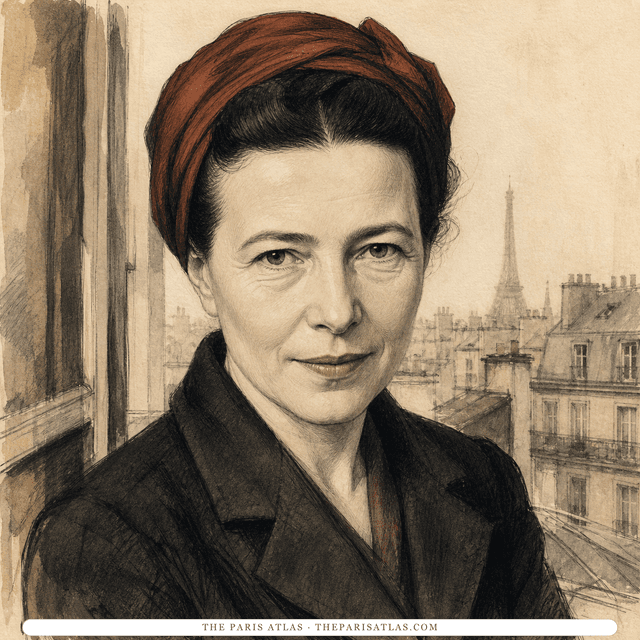
French writer and philosopher whose novels, memoirs, and social analysis examined freedom, gender, responsibility, aging, and the material conditions that shape a life.
View author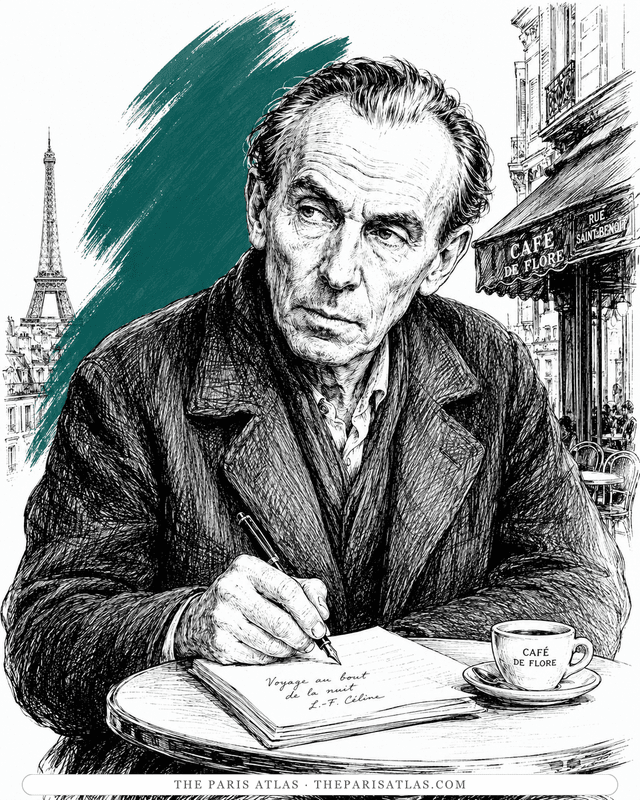
The doctor of the Paris slums who wrote the century's blackest, funniest novel — and changed the sound of French prose.
View author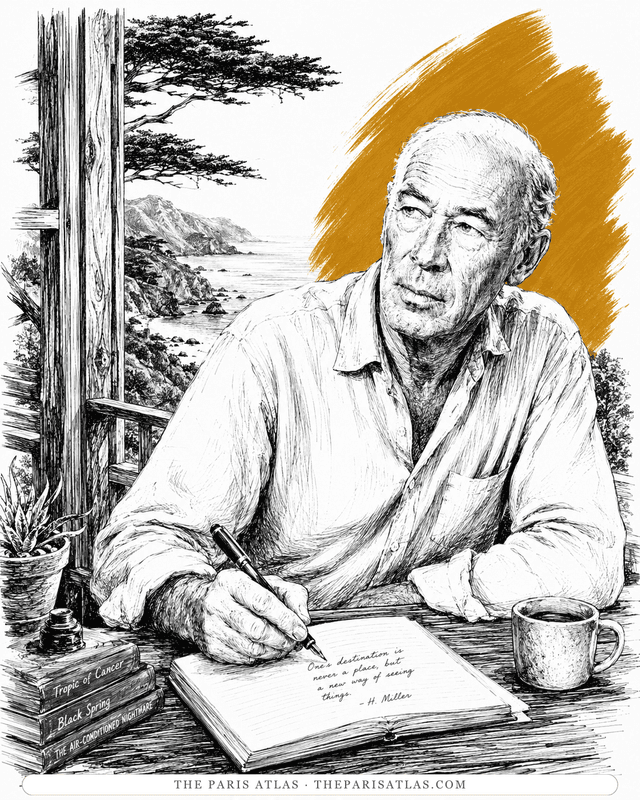
The Brooklyn dropout who arrived in Paris broke at thirty-eight and wrote the exuberant, banned books that ended American censorship.
View authorThe sources below include the primary text, editions, scholarship, archival materials, and other records that informed this page. They document Beyond the Pleasure Principle, its publication, and its place in literary history.


The International Dictionary of Psychoanalysis entry, for Sophie Halberstadt's dates and her son Ernst's birth.

The German second edition of 1921, used for the original wording and for the footnote on the child's mother.
Peter Gay's biography, for the reception of the death instinct inside the movement.
Ernest Jones's biography, the other standard account; Jones also edited Hubback's translation.
Open Library edition records, used to verify the ISBNs listed above.
The primary text is the baseline reference for every book page. Additional references document publication history, interpretation, and historical context where that evidence is available.
 Explore more resources