
Beyond the Pleasure Principle
Sigmund Freud
Beyond the Pleasure Principle
The book this one continues, and the source of the death instinct its fourth chapter assumes.
Read our takeThe Ego and the Id
Sigmund Freud
The 1923 book that redrew the mind as three parts, the I, the It and the Over-I, and gave English its ego, id and super-ego.
Sigmund Freud published this short book in April 1923, the month he was first operated on for the cancer of the jaw that would kill him sixteen years later.[1] In it he replaces his earlier map of the mind, drawn as conscious, preconscious and unconscious, with three agencies. The ego is the part that deals with the world and thinks of itself as the person. The id is the part a person cannot see into, where the drives live. The super-ego is the part that watches and judges, built in childhood out of the parents. Freud's German words were plain ones, the I, the It and the Over-I. The Latin terms are the English translators' choice.[2]
The book has five chapters. The first explains why the old map no longer served. Freud had divided the mind into what a person knows, what they could know if they tried, and what is kept from them. In treatment, though, the part of the patient that resisted knowing was itself hidden from them. Part of the ego was unconscious. So the line between conscious and unconscious no longer marked the line between the agencies, and a new map was needed.[2]
The second chapter draws the map. Freud borrows the word Es, the It, from the physician Georg Groddeck, whose Book of the It appeared the same year and who liked to say that people do not live but are lived by unknown forces. Freud gives Groddeck's insight a place in the system by naming the unknown region the id and setting the ego on its surface, like the germinal disc on an egg. The ego, he writes, is first and foremost a bodily ego, a mind's picture of the surface of its own body. Its relation to the id he compares to a rider on a horse stronger than himself.[2]
The third chapter introduces the super-ego, which Freud here mostly calls the ego ideal. A child gives up its first loves, its parents, and in giving them up takes them inside, where they become a standing authority. The super-ego is the heir of the Oedipus complex, in Freud's phrase, and it is harsher than any real parent. The fourth chapter carries the death instinct over from Beyond the Pleasure Principle. The fifth describes the ego as a servant with three masters, the world, the id and the super-ego. It also explains why some patients get worse when they are told they are getting better: an unconscious sense of guilt will not let them.[2]
Joan Riviere translated the book for the Hogarth Press in 1927, and it was her version that fixed the terms ego, id and super-ego in English.[3] James Strachey revised her translation for the Standard Edition in 1961, and the Norton edition prints that revision. The German original is in the public domain everywhere. Riviere's translation entered the American public domain in 2023 but remains in copyright in Britain and the European Union until 2032, so the lines quoted here are rendered fresh from the 1923 German and marked as such.[4]
Freud opens by restating the distinction that psychoanalysis had rested on: some of what goes on in the mind a person knows about, and some they do not. He had already split the second group in two, into what could become conscious with a little effort, the preconscious, and what was kept out by force, the repressed. The trouble came from the consulting room. A patient fighting the treatment does not know they are fighting it. The resistance comes from the ego, the part that is supposed to be the knowing part, and it is unconscious.
That observation is the whole reason for the book. If part of the ego is unconscious, then unconscious cannot be the name of a region, only of a quality that regions may or may not have. Freud draws the conclusion in the first chapter and spends the rest redrawing the mind by function rather than by awareness. Readers who know the three-part scheme as a diagram often miss that it began as a problem in treatment: a person who could not see the part of themselves that was refusing to be helped.
The second chapter's most quoted image is a comparison. The ego, Freud writes, normally has control of the routes to movement, and in relation to the id it is like a rider who has to rein in the superior strength of a horse. The difference, he adds, is that the rider does this with his own strength and the ego with borrowed strength. He pushes the comparison one step further. A rider who does not want to be thrown often has no choice but to guide the horse where the horse wants to go. The ego likewise turns the id's will into action as if it were its own.
The image is usually quoted to show the ego as weak, and it does. What it also shows is the direction of borrowing. In Freud's account the ego has no energy of its own; everything it uses comes from the id, which is why he calls the ego's strength borrowed. A few pages later he adds the sentence that the ego is first and foremost a bodily ego, not merely a surface entity but itself the projection of a surface. A person's sense of being someone, on this account, begins as the mind's picture of the outside of its own body. The two passages together are the book's answer to what the ego is: a surface, in charge of movement, run on someone else's power.
The third chapter explains where the judging part of the mind comes from, and the explanation runs through loss. When a person has to give up someone they loved, Freud had argued in an earlier paper on mourning, they often deal with it by becoming like the lost person, taking the person into the ego as a copy. Here he generalises the mechanism. Every small child has to give up its first loves, the mother and the father, and it does so by setting up copies of them inside. Those copies do not fade. They become an agency that watches the ego and tells it what it ought to be.
Freud's sentence is that the ego ideal is the heir of the Oedipus complex, and so the expression of the most powerful impulses and most important fortunes of the id's desire. Two things follow that readers often find surprising. The super-ego is not the voice of reason; it is built from the id's own material and can be as savage as any drive. And the super-ego is not the real parents but the child's version of them, which is why it is often harsher than they ever were. Later analysts, Melanie Klein above all, pushed the origin of this agency much earlier in childhood than Freud did. The disagreement is still open.
The last chapter returns to the consulting room. Some patients, Freud reports, get worse at exactly the point when the analyst tells them they are making progress. Every step toward recovery is answered by a worsening of symptoms. He rules out defiance and concludes that something in these people needs to be ill, that the illness is a punishment they cannot do without. He names the cause an unconscious sense of guilt, and locates it in the super-ego's hold over an ego that cannot see the accusation being made against it.
The chapter closes with the ego's position summed up. The ego serves three masters at once, the outside world, the id and the super-ego, and is threatened by each. Freud's earlier books had made the ego the site of reason and the analyst's ally. This one leaves it squeezed, borrowing its strength, judged from inside by a version of its parents it cannot argue with. Freud wrote it while his jaw was being cut open for the first time. He said nothing about that in the text, and the biographers have said a good deal.
In its relation to the id it is like a rider who has to rein in the superior strength of the horse, with the difference that the rider tries to do this with his own strength, the ego with borrowed strength.Es gleicht so im Verhältnis zum Es dem Reiter, der die überlegene Kraft des Pferdes zügeln soll, mit dem Unterschied, daß der Reiter dies mit eigenen Kräften versucht, das Ich mit geborgten.
The ego is first and foremost a bodily one; it is not merely a surface entity but is itself the projection of a surface.Das Ich ist vor allem ein körperliches, es ist nicht nur ein Oberflächenwesen, sondern selbst die Projektion einer Oberfläche.
The ego ideal is therefore the heir of the Oedipus complex, and so the expression of the most powerful impulses and the most important fortunes of the id's desire.Das Ichideal ist also der Erbe des Ödipuskomplexes und somit Ausdruck der mächtigsten Regungen und wichtigsten Libidoschicksale des Es.
Ego, id and super-ego come from here. The book is short, and the definitions are more tentative and more interesting than the textbook diagram suggests.
Civilization and Its Discontents and the papers on anxiety and guilt assume this map. The super-ego chapter is where the late Freud's account of conscience begins.
The gap between Freud's plain German, the I and the It, and the English Latin has been argued over for decades. The book is the place to see what was gained and lost.
1920
Beyond the Pleasure Principle proposes the death instinct, the idea this book takes for granted in its fourth chapter.
1923
Georg Groddeck's Das Buch vom Es appears from Freud's own press. Freud takes the word Es, the It, from him and says so in a footnote.
1923
The Internationaler Psychoanalytischer Verlag publishes Das Ich und das Es in the third week of April. The same month Freud has the first operation on his jaw.
1927
Joan Riviere's English translation is published by the Hogarth Press in London, introducing the terms ego, id and super-ego.
1961
James Strachey's revision of Riviere's translation appears in volume 19 of the Standard Edition.
2003
John Reddick's new translation appears in Penguin Modern Classics, bound with Beyond the Pleasure Principle.


Beyond the Pleasure Principle
Sigmund Freud
The book this one continues, and the source of the death instinct its fourth chapter assumes.
Read our takeCivilization and Its Discontents
Sigmund Freud
The super-ego defined here becomes, seven years later, the guilt that Freud says civilisation runs on.
Read our takeThe Interpretation of Dreams
Sigmund Freud
The earlier map of the mind, drawn in chapter VII of the dream book, that this one replaces.
Read our takeThree Essays on the Theory of Sexuality
Sigmund Freud
The childhood attachments that the super-ego chapter says are given up and taken inside.
Read our takeSigmund Freud's 1923 redrawing of the mind into three agencies: the ego, which deals with the world; the id, the hidden region where the drives live; and the super-ego, the judging part built in childhood from the parents. The book explains why his earlier division into conscious and unconscious no longer worked.
No. He wrote das Ich, das Es and das Über-Ich, the I, the It and the Over-I. Joan Riviere chose the Latin terms for her 1927 English translation and James Strachey kept them. The word Es Freud borrowed from Georg Groddeck.
Freud compares the ego's control of the id to a rider reining in a horse stronger than himself, with the difference that the rider uses his own strength and the ego borrowed strength. He adds that such a rider often ends up going where the horse wants.
From the child's first loves. In Freud's account a child gives up its parents as objects of desire and takes copies of them inside, where they become a standing authority. He calls the super-ego the heir of the Oedipus complex and says it is often harsher than the real parents.
The Norton edition prints Joan Riviere's translation as revised by James Strachey for the Standard Edition, which is the standard text. John Reddick's Penguin Modern Classics version is newer. The German original is free online; Riviere's 1927 version is free in the United States.
It helps. The fourth chapter assumes the death instinct argued for in the 1920 book, and Freud's own blurb for the 1923 edition described it as continuing that train of thought. The first three chapters stand on their own.
Explore authors with a similar voice, perspective, and influence.
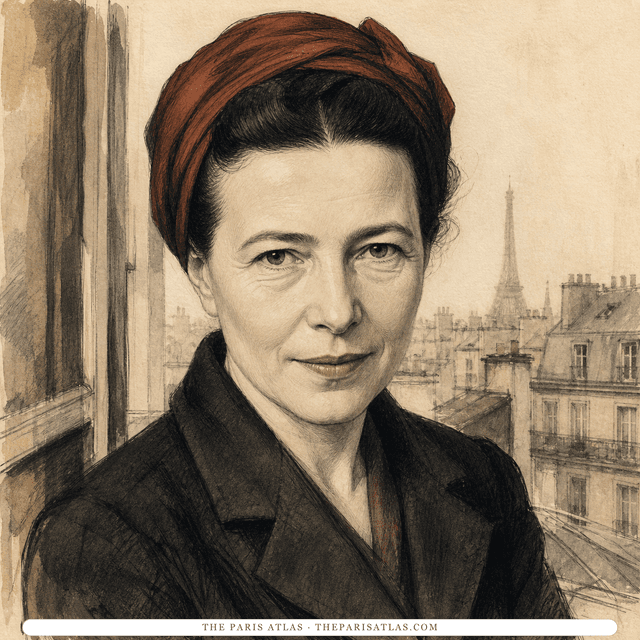
French writer and philosopher whose novels, memoirs, and social analysis examined freedom, gender, responsibility, aging, and the material conditions that shape a life.
View author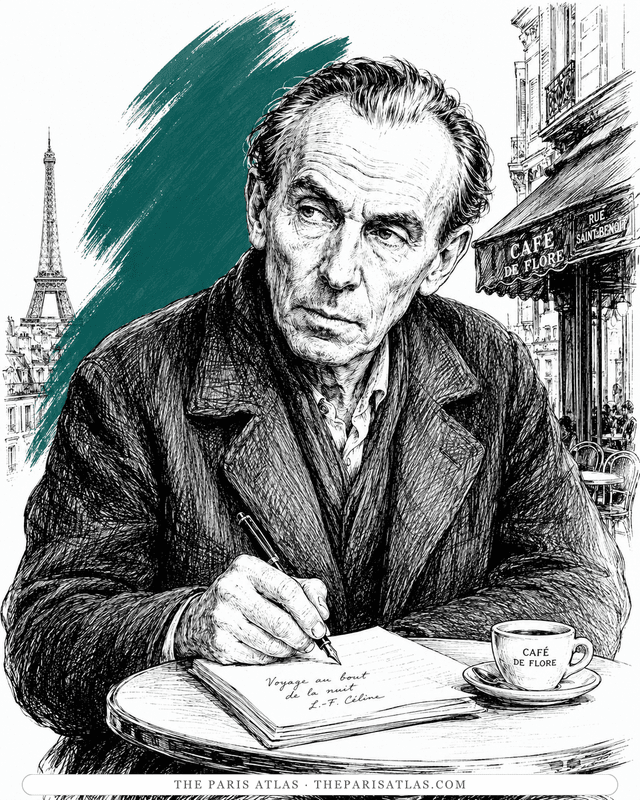
The doctor of the Paris slums who wrote the century's blackest, funniest novel — and changed the sound of French prose.
View author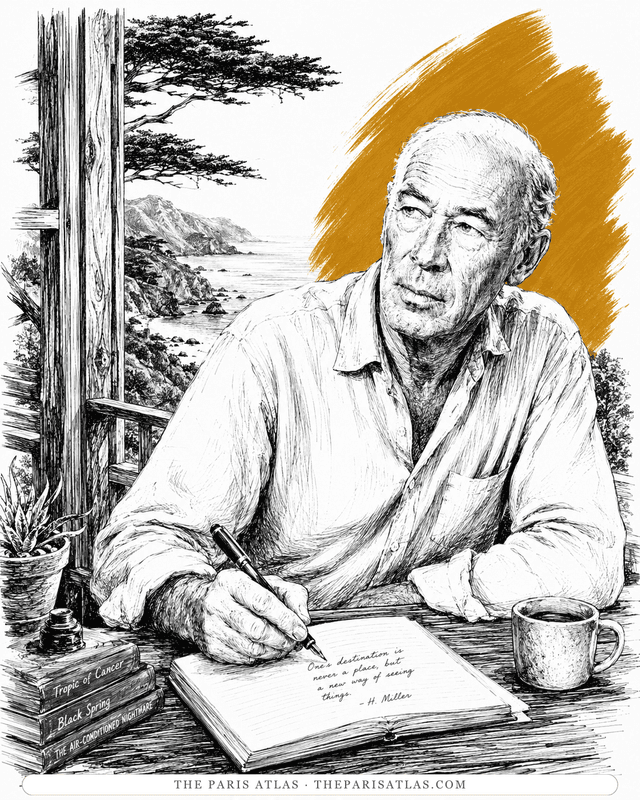
The Brooklyn dropout who arrived in Paris broke at thirty-eight and wrote the exuberant, banned books that ended American censorship.
View authorThe sources below include the primary text, editions, scholarship, archival materials, and other records that informed this page. They document The Ego and the Id, its publication, and its place in literary history.


Peter Gay's biography, for the April 1923 operation and the reception of the book.

Joan Riviere's 1927 translation, used to check the readings above and as the record of the English terms.
Norton's catalogue page for the Standard Edition text, the source for that edition's translator, editor and ISBN.
Ernest Jones's biography, the other standard account of 1923.
Open Library edition records, used to verify the ISBNs listed above.
The primary text is the baseline reference for every book page. Additional references document publication history, interpretation, and historical context where that evidence is available.
 Explore more resources