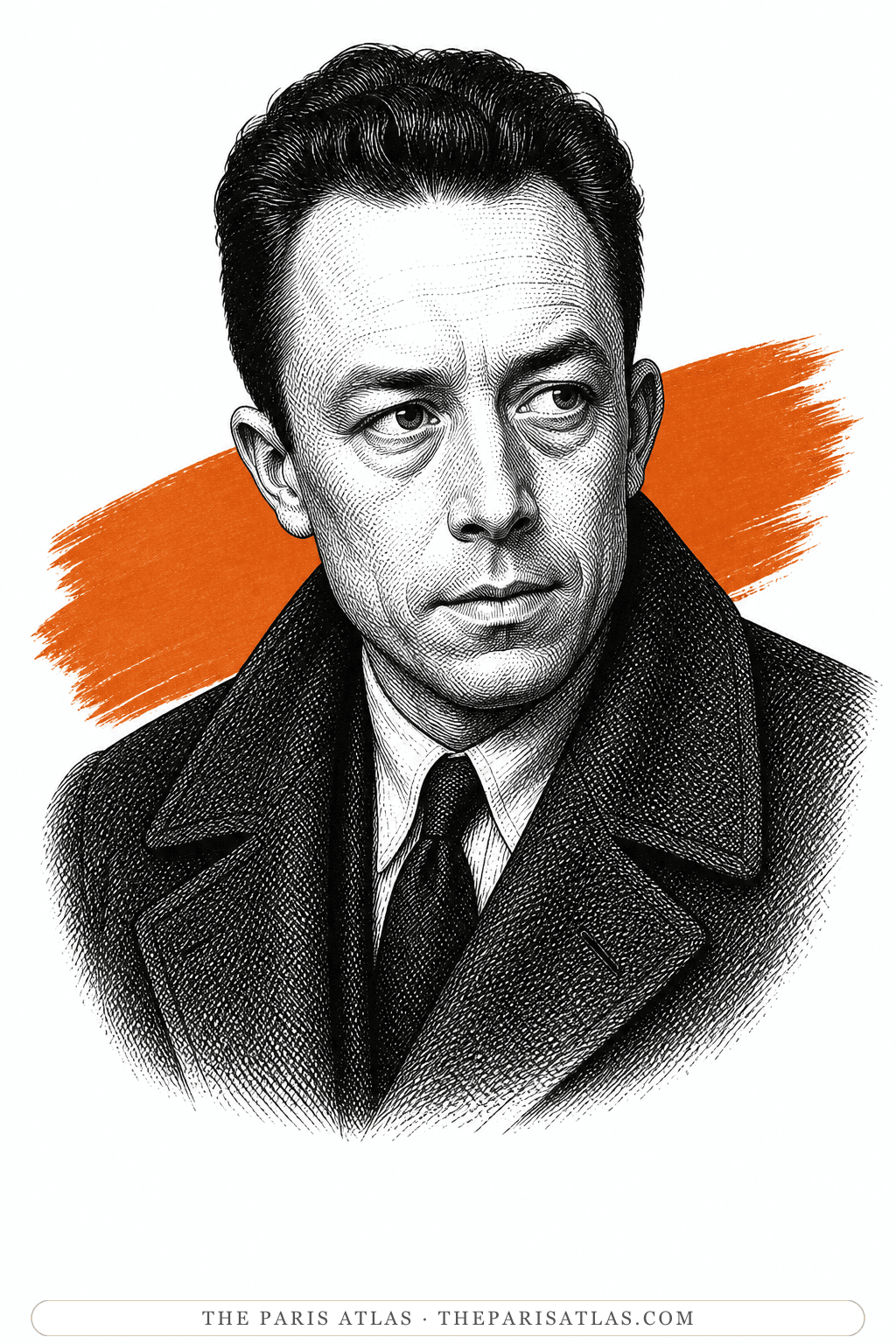

Answered by
The Rebel
The Rebel begins where The Myth of Sisyphus leaves off, carrying Camus's argument from individual absurdity and the refusal of suicide into revolt, solidarity, political violence, and murder.

by Albert Camus
Camus asks whether life is worth living when the universe supplies no final meaning.
A book-length philosophical essay published in 1942 and written alongside The Stranger. Camus begins with suicide, defines the absurd as a confrontation between the human demand for meaning and the world’s silence, criticizes escapes into faith or theory, and ends with Sisyphus continuing his labor in full awareness.
Albert Camus begins with a direct question: if life has no final meaning, why not die? His answer is not that life secretly has a higher purpose. He argues that suicide removes one side of the conflict instead of living with it.[1]
Camus calls that conflict the absurd. Human beings want clarity, unity and reasons; the world does not answer those demands. The absurd is therefore not a property of a person or of the world alone. It appears in the confrontation between them.[1]
The essay then asks what life looks like after a person refuses both suicide and a leap into religious or philosophical certainty. Camus proposes lucid awareness, freedom from a promised future and intense engagement with present experience. The final image is Sisyphus returning to his stone while fully knowing his condition.[1]
'An Absurd Reasoning' defines the central problem and rejects suicide as its solution. Camus also criticizes thinkers who describe the absurd but then escape it through faith, transcendence or a theory that restores ultimate meaning.[1]
'The Absurd Man' studies lives organized around present experience rather than eternal justification. Camus discusses Don Juan, the actor and the conqueror as examples, not as moral models every reader should imitate.[1]
'Absurd Creation' turns to art. Camus argues that a novel can describe experience without pretending to explain the universe. His discussion of Fyodor Dostoevsky asks whether a writer can remain faithful to the absurd conclusion.[1]
The title essay retells the Greek myth of Sisyphus, condemned to push a stone uphill forever. Camus concentrates on the conscious walk back down the mountain: Sisyphus knows his fate, and that knowledge prevents the gods from owning his inner response.[1]
Camus slows the ascent into a sequence of bodily adjustments: cheek, shoulder, foot and hands each take their turn against the stone. The precision makes the strain palpable; its futility lies in what happens after it succeeds. Sisyphus reaches the summit, but reaching it cannot change the conditions of his task. The contrast between prolonged effort and the stone’s rapid fall makes punishment a structure of repetition, not a simple inability to perform the work. Skill and persistence remain real even without a lasting result.
The walk downhill interrupts the physical struggle without ending the punishment. Camus gives this interval to awareness: Sisyphus can contemplate the pattern that his labor continually repeats. That clarity does not guarantee a cheerful mood, since the essay allows the descent to carry sorrow as well as joy. The final happiness is therefore not a prediction that the stone will stay at the summit next time. It is Camus’s defiant way of imagining a life whose value need not wait for its impossible task to be completed.
There is but one truly serious philosophical problem, and that is suicide.
The struggle itself toward the heights is enough to fill a man's heart. One must imagine Sisyphus happy.Il faut imaginer Sisyphe heureux.
There is no fate that cannot be surmounted by scorn.
Answered by
The Rebel begins where The Myth of Sisyphus leaves off, carrying Camus's argument from individual absurdity and the refusal of suicide into revolt, solidarity, political violence, and murder.
The essay explains that the absurd is the conflict between our demand for meaning and the world's refusal to supply a final answer.
Camus does not stop at diagnosing meaninglessness. He asks how a person can continue living, choosing and creating without denying what they know.
The famous final image of Sisyphus makes more sense after the sections on suicide, freedom and creation have established what conscious endurance means.
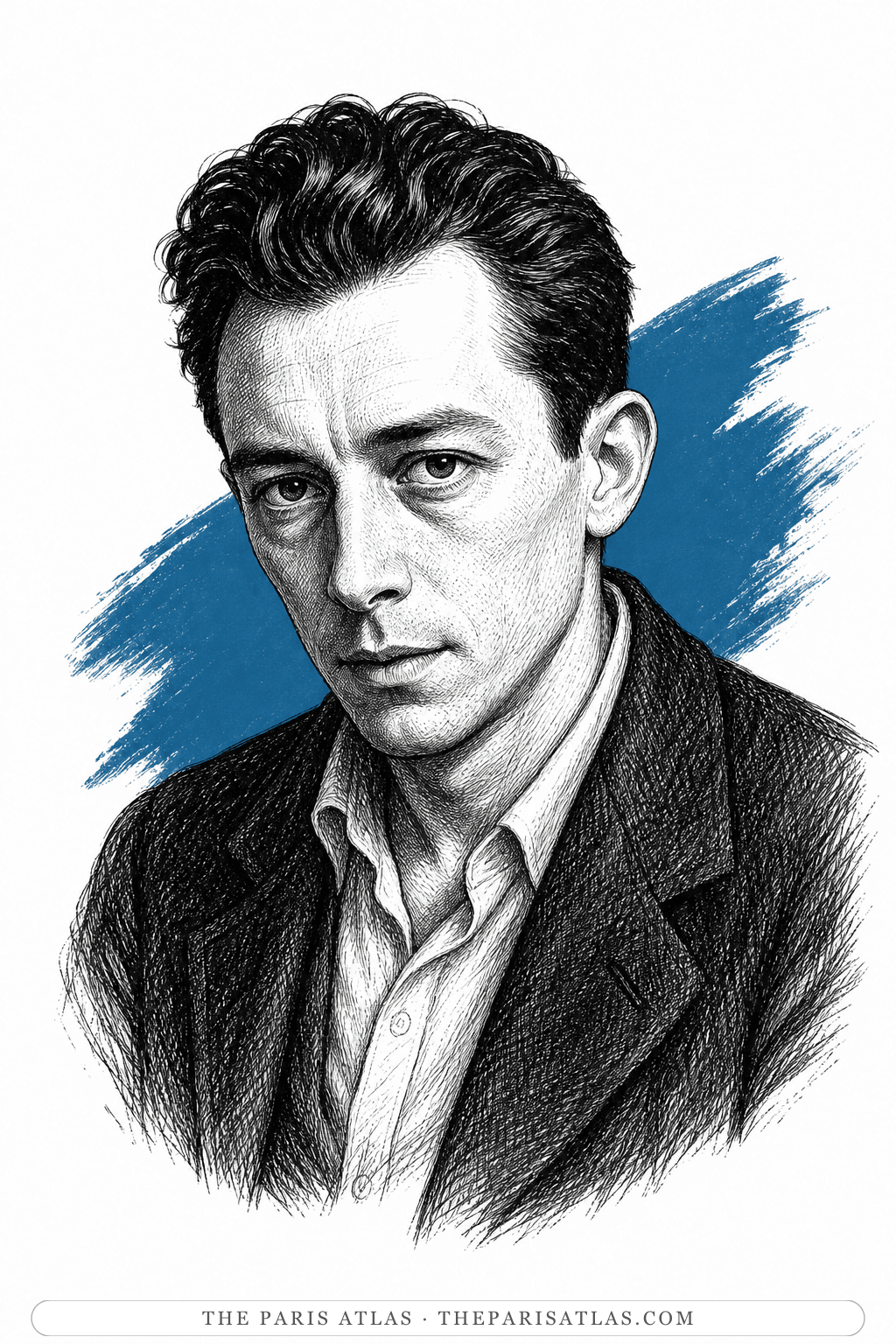
The essay's 'I' — Camus at twenty-eight, working on The Myth of Sisyphus alongside The Stranger and Caligula in what he called his 'cycle of the absurd.' He wrote most of the book in occupied France in 1940–41.
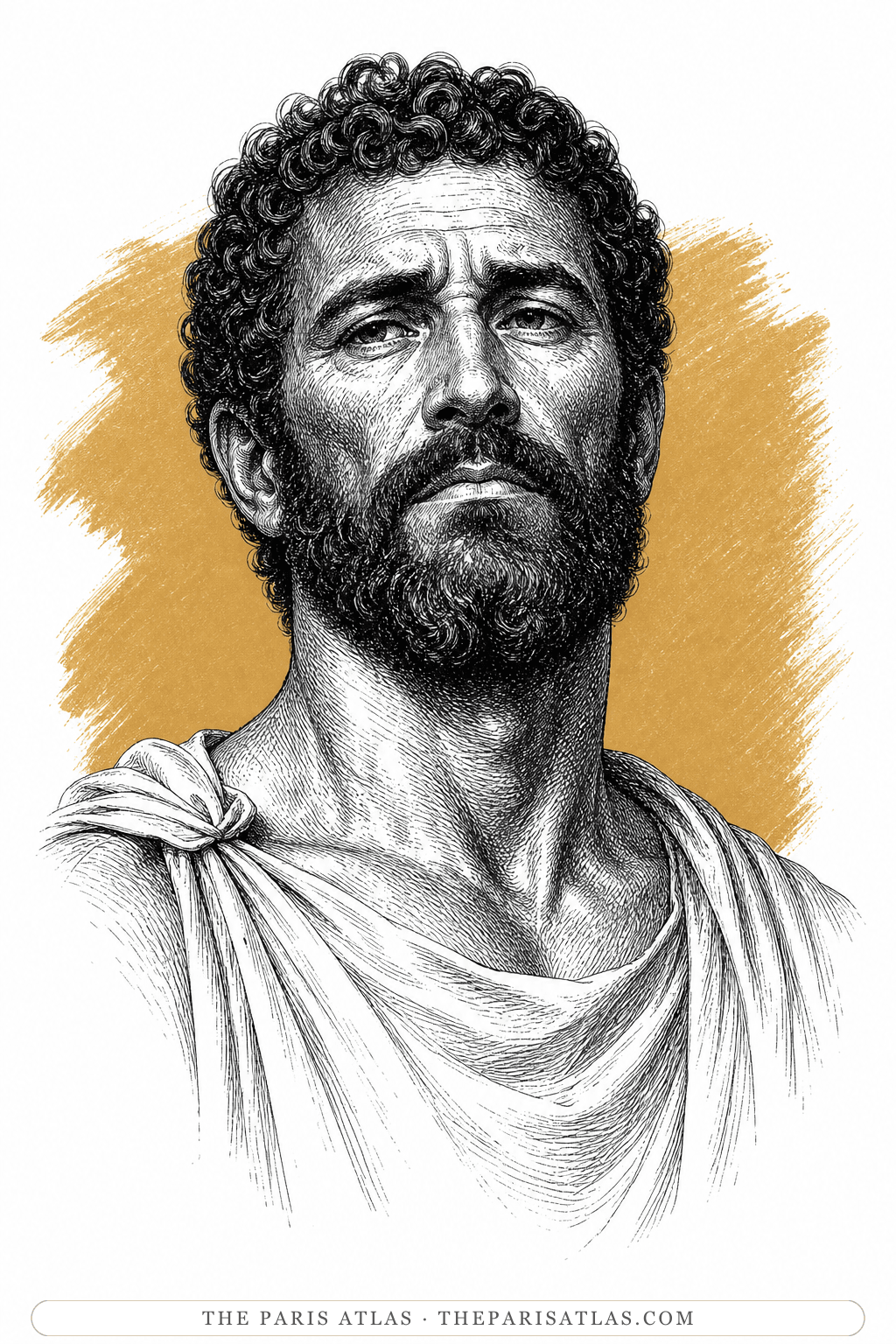
The Greek king in Homer's Odyssey (Book XI) and Apollodorus's Bibliotheca (I.9.3), condemned by the gods to push a boulder up a mountain forever — the boulder rolling back down each time he reaches the top. Camus's title essay treats the conscious walk back down the mountain as the crucial moment: Sisyphus knows his fate, and the knowledge is what the gods cannot take.
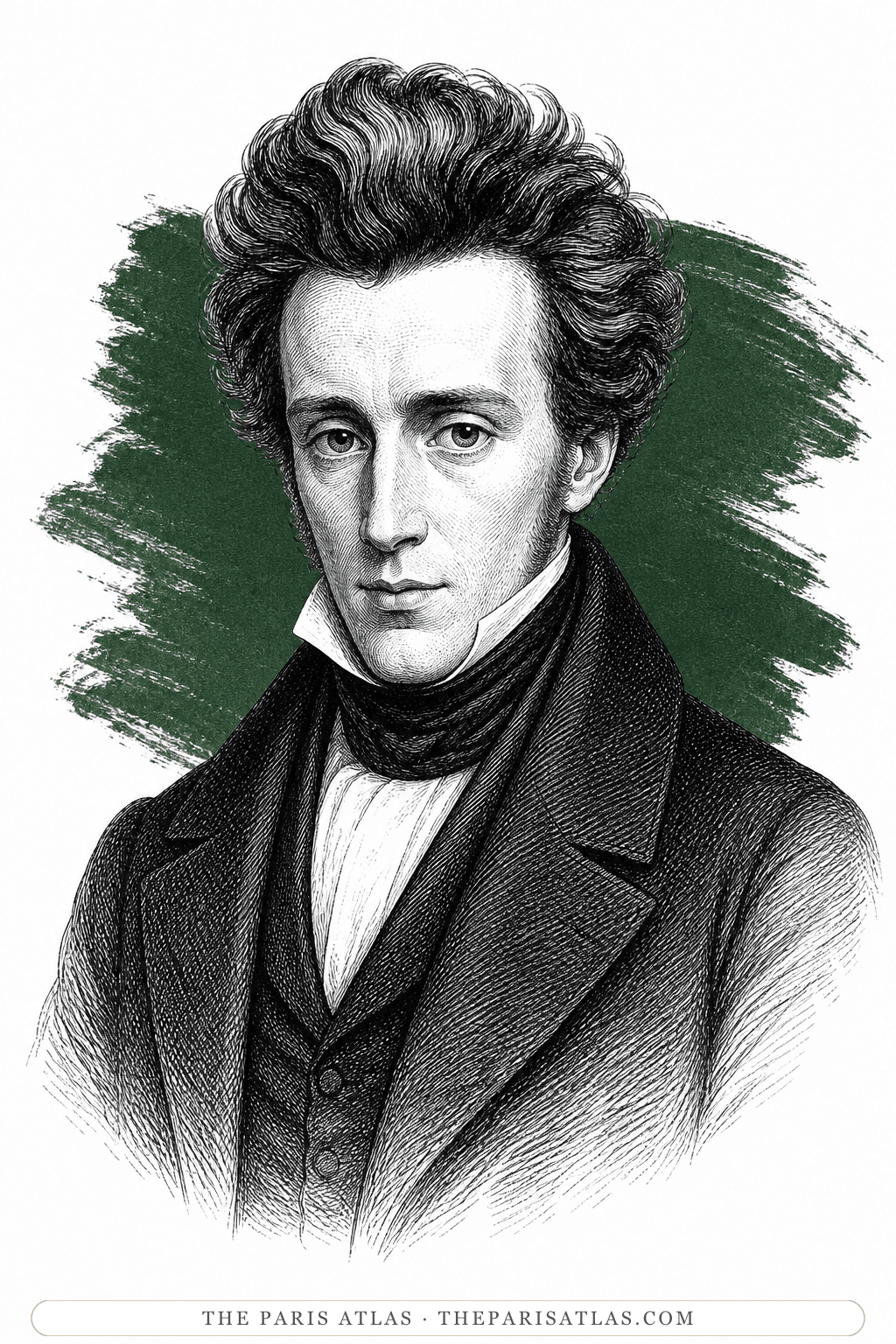
The nineteenth-century Danish philosopher (1813–1855), whom Camus treats in the essay as the exemplar of the 'philosophical suicide' — a thinker who diagnoses the absurd honestly but then leaps into religious faith to escape it. Camus reads Kierkegaard's Fear and Trembling and The Sickness Unto Death as case studies of the escape he refuses.
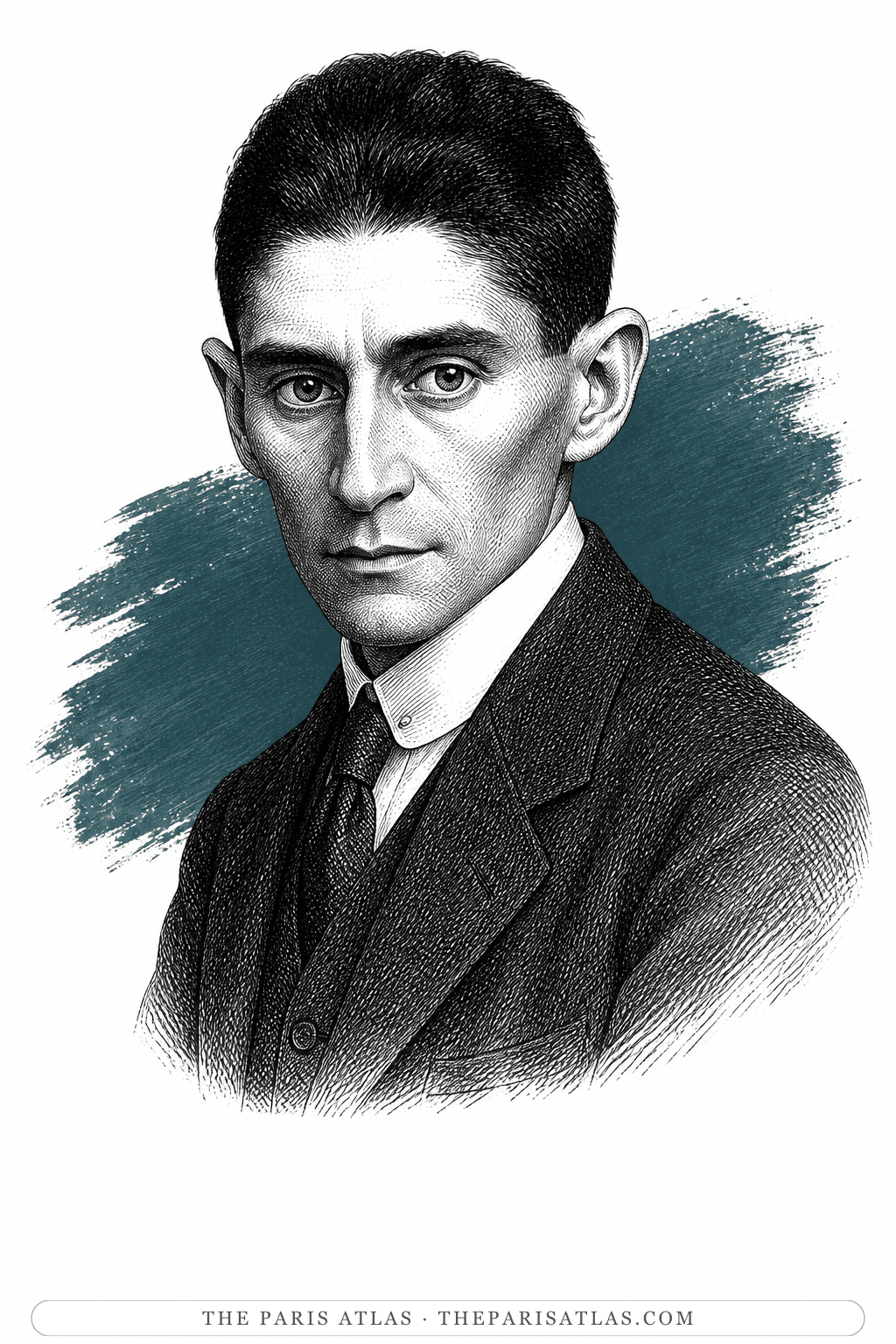
The Czech-Jewish writer (1883–1924). Camus's chapter 'Hope and the Absurd in the Work of Franz Kafka' was censored from the 1942 first French edition — the Nazi authorities did not permit favourable mentions of Jewish writers — and restored in the 1943 second edition. Camus reads The Trial and The Castle as absurd works whose conclusions Kafka nonetheless breaks by allowing hope back in.
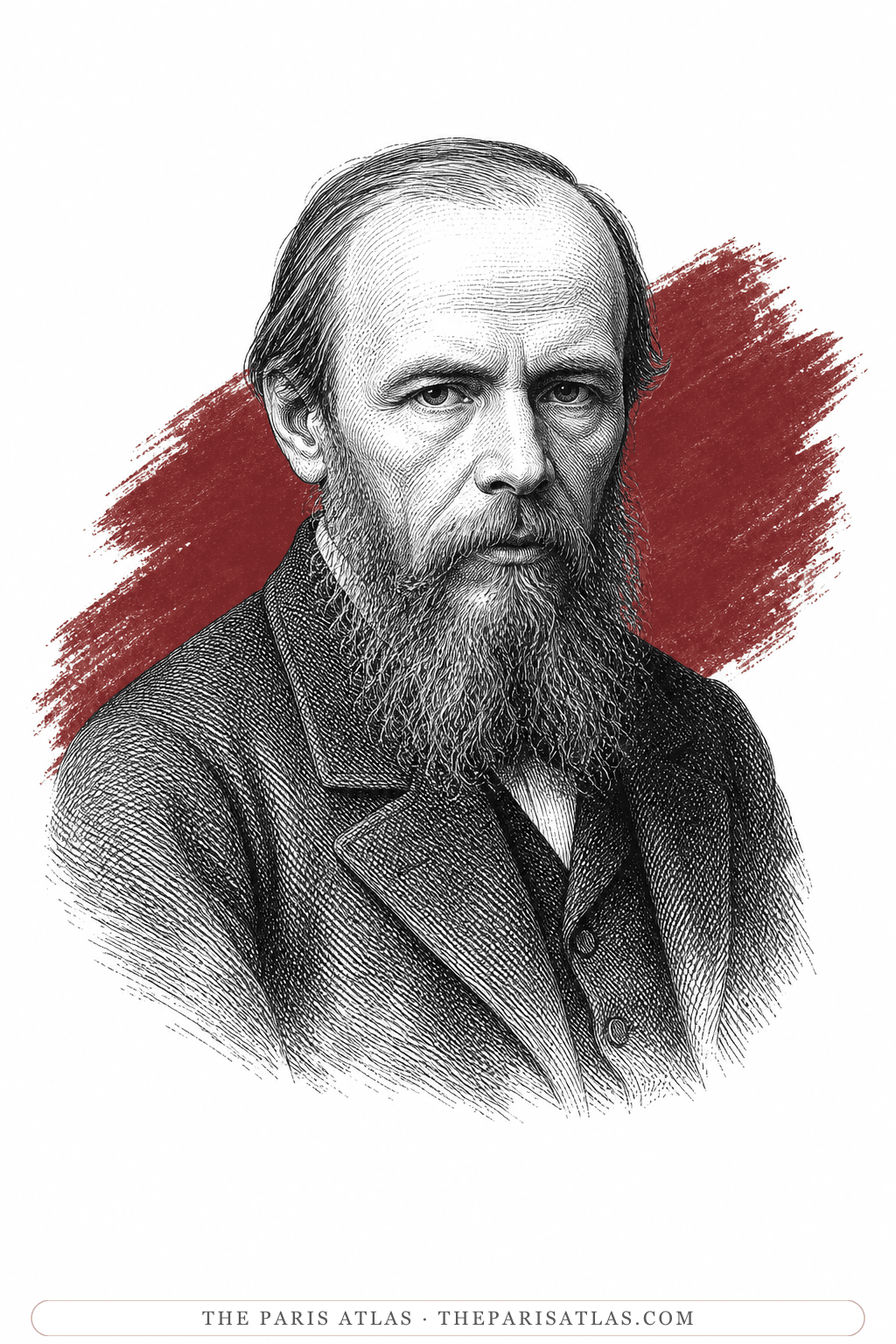
The nineteenth-century Russian novelist (1821–1881), whose novel The Possessed and character Kirilov Camus reads in the 'Absurd Creation' section as an incomplete version of his own argument. Kirilov is the character who commits suicide to prove his freedom; Camus takes the character seriously and refuses the conclusion.
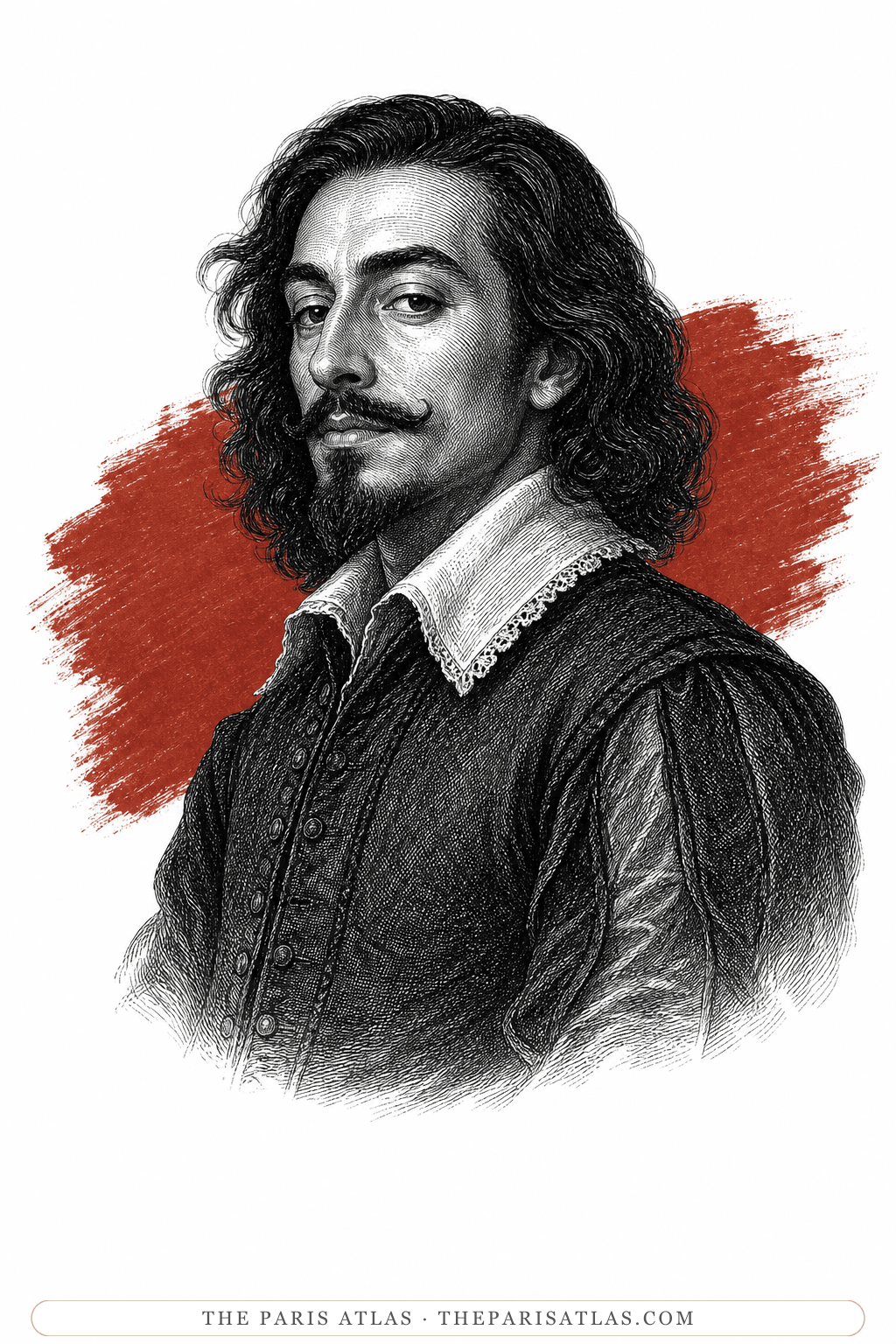
The seventeenth-century Spanish fictional seducer, in the version Molière and Mozart made famous in France. Camus's 'Absurd Man' chapter reads Don Juan as a life organised around present pleasures rather than eternal reward — not as a moral model to imitate, but as one clear example of what an absurd life can look like in practice.
1940–1941
Albert Camus develops the essays while moving between Algeria and France.
1942
Gallimard publishes Le Mythe de Sisyphe in France, the same year as The Stranger.
1943
A second edition restores the chapter on Franz Kafka that wartime censorship had kept out of the first edition.
1955
Justin O'Brien's English translation appears in the United States.


Published in the same year, the novel gives the absurd a voice and situation while the essay defines it directly.
Read our takeThe later essay moves from the individual's absurd condition to collective resistance, solidarity and political limits.
Read our take
The earlier Mediterranean essays provide the bodily attention to sun, sea and present life that the philosophical argument later names.
Read our takeThe Myth of Sisyphus asks how to live when human beings want meaning but the world provides no final answer. Camus rejects suicide and argues for conscious, active life without false certainty.
Usually not. Start with The Stranger, then read The Myth of Sisyphus when you want this part of Camus’s work.
Gallimard first published Le Mythe de Sisyphe in France in 1942.
The absurd is the conflict between the human need for meaning, order and explanation and a world that does not answer those demands.
No. The essay begins with suicide because Camus treats it as the urgent test of his philosophy, then argues that the proper response is to live consciously without inventing a final explanation.
Camus argues that Sisyphus's clear knowledge of his fate prevents the punishment from controlling his inner judgment. His happiness is not comfort; it is conscious ownership of the life he has.
Explore authors with a similar voice, perspective, and influence.
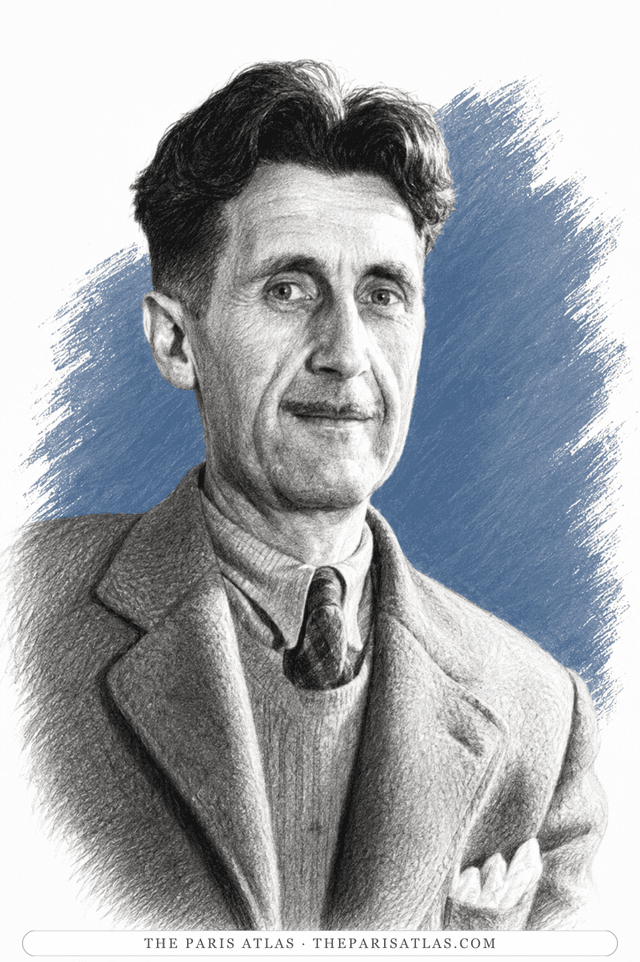
Both joined literary clarity to moral and political argument, and both distrusted systems that excuse present violence with a promised future.
View author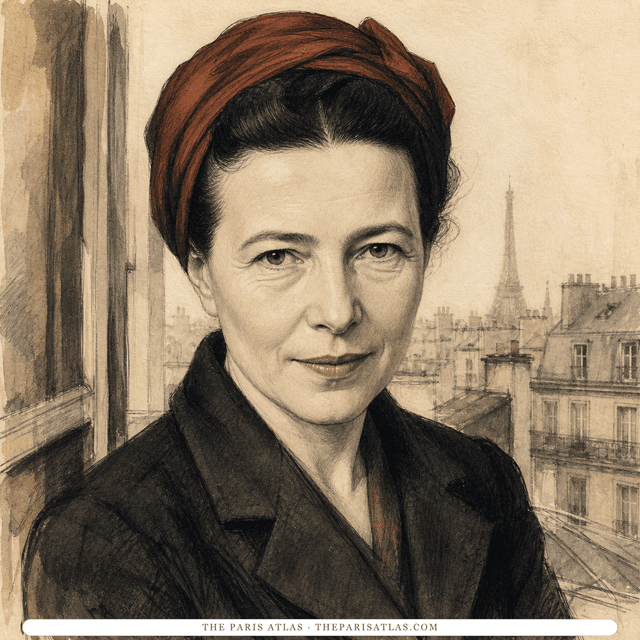
The third figure in the postwar Sartre-Beauvoir circle Camus argued with through the 1940s. Her later memoir Force of Circumstance gives one of the closest first-person accounts of Camus's Paris years and the 1952 break over The Rebel.
View author
The doctor of the Paris slums who wrote the century's blackest, funniest novel — and changed the sound of French prose.
View authorThe sources below include the primary text, editions, scholarship, archival materials, and other records that informed this page. They document The Myth of Sisyphus, its publication, and its place in literary history.


Primary concluding title-essay excerpt for the bodily labor and conscious descent; the hosting page does not identify a particular English print edition.
Used to place The Myth of Sisyphus within Albert Camus's published work and verify its bibliographic context.

Used for independent biographical, archival, or historical context surrounding Albert Camus's career and the period in which The Myth of Sisyphus appeared.
Used to cross-check authorship, chronology, and the work's place in Albert Camus's wider catalogue.
Used to verify Albert Camus's bibliography and place The Myth of Sisyphus within the broader chronology of Albert Camus's career.
Library catalog record used to verify Justin O'Brien as translator and the second Vintage International edition statement.
The primary text is the baseline reference for every book page. Additional references document publication history, interpretation, and historical context where that evidence is available.
 Explore more resources