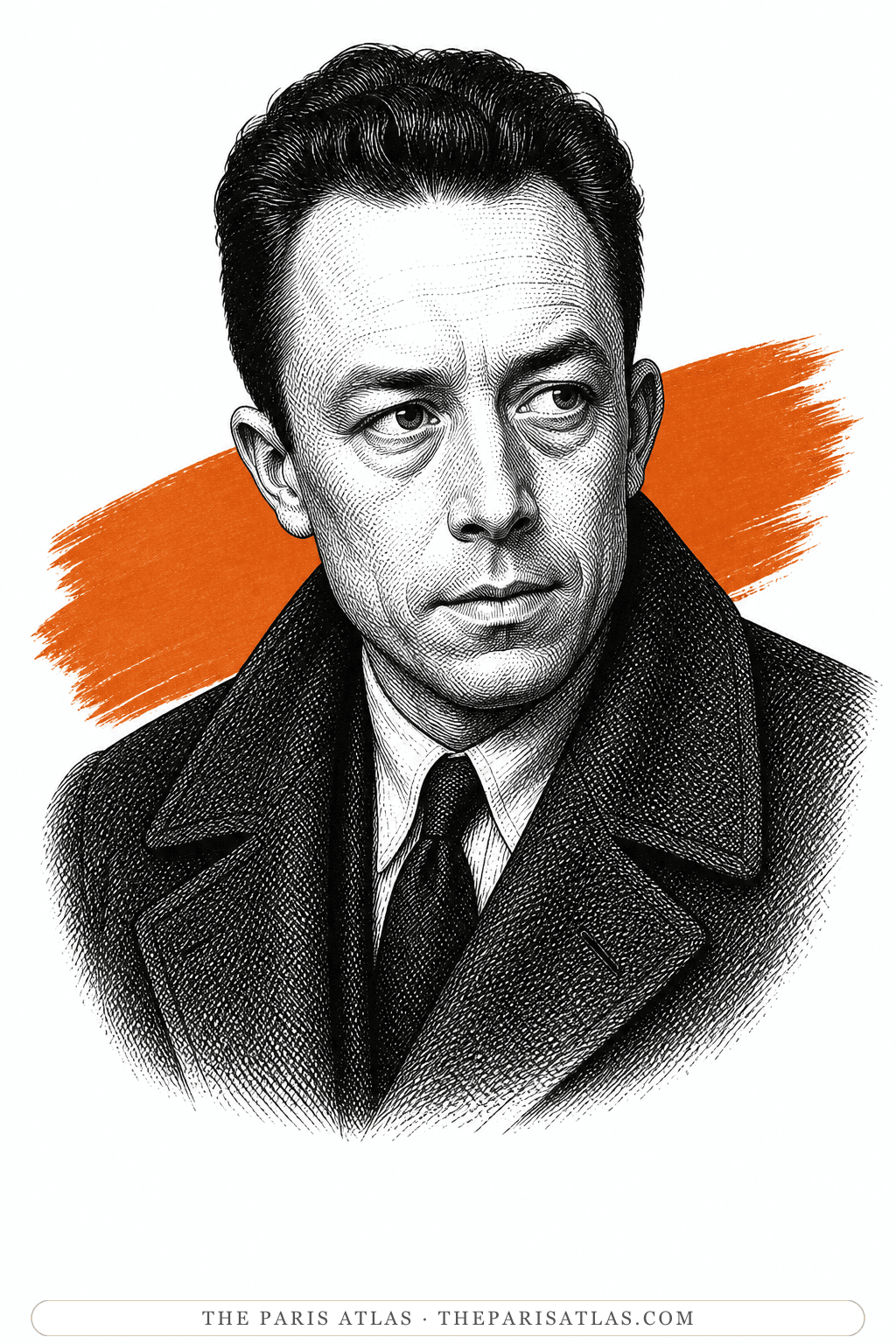

The Wrong Side and the Right Side
The two early collections pair poverty and family memory with Mediterranean beauty and are commonly read together.
Read our take
by Albert Camus
Four Mediterranean essays about bodily happiness, ruins, summer and the refusal to postpone life.
Four lyrical essays first published in Algiers in 1939. Camus writes from Tipasa, Djémila, Algiers and Florence, using heat, sea, stone and the body to argue for attention to the present world. The book is often paired with The Wrong Side and the Right Side as his early lyrical writing.
These four essays are grounded in places rather than a continuous argument. At the Roman ruins of Tipasa, Albert Camus joins sunlight, sea, wild plants and the body in a celebration of present life. At Djémila, wind and ruins make mortality impossible to ignore.[1]
The Algiers essay observes summer life, popular entertainment and the city's working-class relationship to beauty. The final essay turns to Florence and the tension between the living world and art that tries to preserve it.[1]
'Nuptials at Tipasa' describes a day among Roman ruins west of Algiers and argues for an immediate, bodily consent to the world.[1]
'The Wind at Djémila' confronts death in an exposed ruined city where wind strips away comforting abstractions.[1]
'Summer in Algiers' considers the city's beaches, dances, youth and poverty without pretending that physical beauty removes social limits.[1]
'The Desert' moves through Italian painting and Florence, asking how art relates to a world whose beauty is inseparable from death and time.[1]
At Tipasa, the ruins become part of a living encounter rather than monuments kept apart for contemplation. Plants cover the old streets and buildings; carved stones return to the material world from which they came. Camus’s narrator answers this movement through touch, scent and breathing, trying to stop being merely a spectator. The historical remains do not deliver a neat lesson about vanished greatness. They make room for a bodily happiness in the present, one that depends on renewed attention rather than possession of the place.
The wind first makes the narrator intensely aware of his body, then seems to wear away the boundary between that body and the surrounding stones. The resulting openness is not simply peaceful: it brings mortality closer and strips comfort from the prospect of a future elsewhere. Camus links this refusal of consolation to attachment, not indifference, to living. The narrator fears losing the flowers, bodies and sensations he loves. Djémila’s beauty matters because it sharpens that vulnerability, rather than supplying an answer that would make death harmless.
Tipasa, Djémila, Algiers and Florence are not decorative settings; each place produces a different encounter with happiness and death.
The essays make bodily pleasure and attention to the present as central as the absurdity for which Camus later became famous.
Heat, stone, sea, and bodily sensation give readers a concrete entrance into Camus’s early essays.

The essays' 'I' — Camus in his mid-twenties, born and living in Algiers, working as a journalist for Alger républicain and writing evenings and weekends. He was twenty-six when Charlot published Noces in 1939.

The Algiers publisher (1915–2004) who published Noces in 1939 through his small press Éditions Charlot. Charlot had been Camus's classmate and would publish Camus's first three books before the war disrupted his Algiers operations and Camus moved to Gallimard.
1930s
Camus visits and writes about Tipasa, Djémila, Algiers and Italy.
1939
Edmond Charlot publishes Noces in Algiers.
1950
Camus returns to related Mediterranean subjects in the essays later collected as Summer.
1967–1970
English-language collections make the early lyrical essays widely available in translation.

The two early collections pair poverty and family memory with Mediterranean beauty and are commonly read together.
Read our take
The philosophical essay turns this book's commitment to present physical life into an explicit response to the absurd.
Read our takeNuptials is a collection of four essays about Tipasa, Djémila, Algiers and Florence. Camus uses landscape, weather, ruins and the body to think about happiness and mortality.
Edmond Charlot first published Noces in Algiers in 1939.
Usually not. Start with The Stranger, then read Nuptials when you want this part of Camus’s work.
There are four: 'Nuptials at Tipasa,' 'The Wind at Djémila,' 'Summer in Algiers' and 'The Desert.'
No. It is a collection of lyrical essays rooted in Camus's travel and experience of Mediterranean places.
Nuptials celebrates attention to present physical life. The Myth of Sisyphus later turns that commitment into a philosophical response to a world without final meaning.
Explore authors with a similar voice, perspective, and influence.
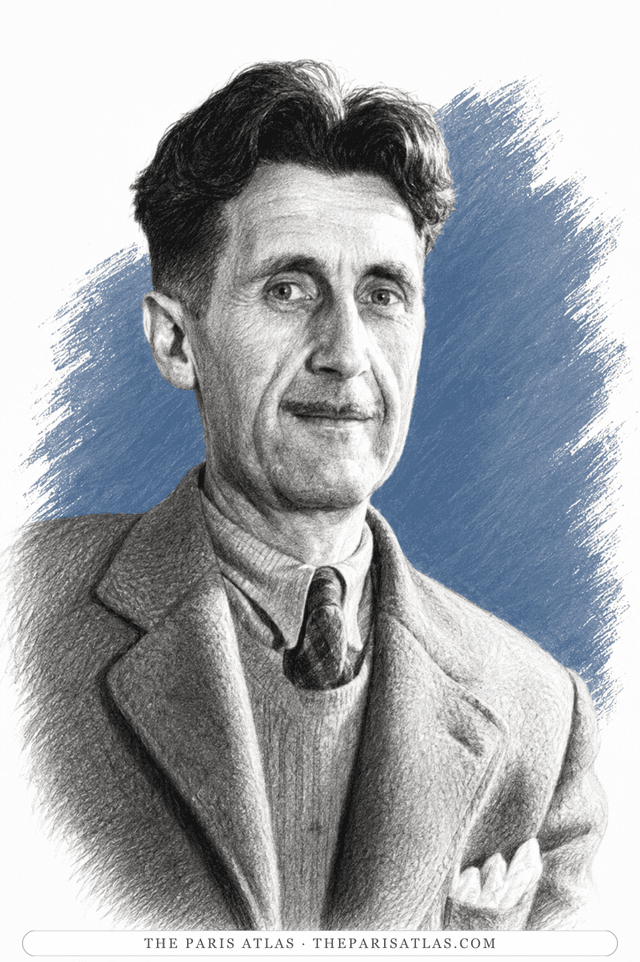
Both joined literary clarity to moral and political argument, and both distrusted systems that excuse present violence with a promised future.
View author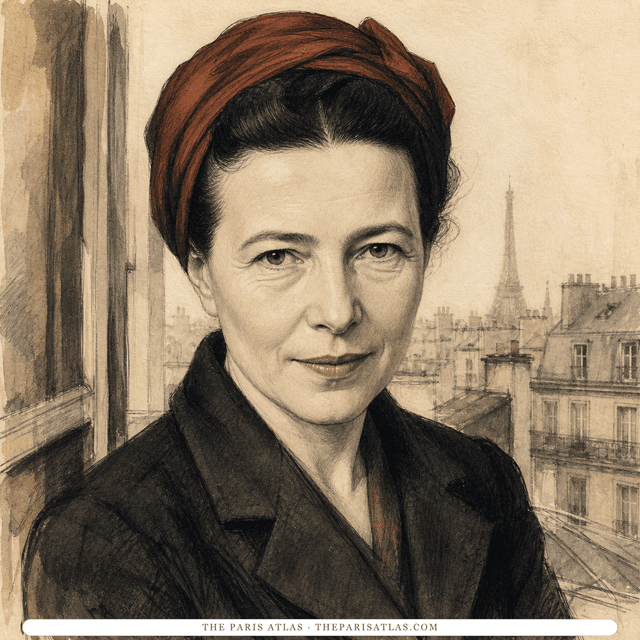
The third figure in the postwar Sartre-Beauvoir circle Camus argued with through the 1940s. Her later memoir Force of Circumstance gives one of the closest first-person accounts of Camus's Paris years and the 1952 break over The Rebel.
View author
The doctor of the Paris slums who wrote the century's blackest, funniest novel — and changed the sound of French prose.
View authorThe sources below include the primary text, editions, scholarship, archival materials, and other records that informed this page. They document Nuptials, its publication, and its place in literary history.


Primary English transcription for the illustrated Tipasa and Djémila essays. A precise English print edition is not identified, so no match to the listed Kennedy edition is asserted; the source’s 1938 header is not used to revise the page’s publication chronology.
Used to place Nuptials within Albert Camus's published work and verify its bibliographic context.

Used for independent biographical, archival, or historical context surrounding Albert Camus's career and the period in which Nuptials appeared.
Used to cross-check authorship, chronology, and the work's place in Albert Camus's wider catalogue.
Used to verify Albert Camus's bibliography and place Nuptials within the broader chronology of Albert Camus's career.
The primary text is the baseline reference for every book page. Additional references document publication history, interpretation, and historical context where that evidence is available.
 Explore more resources