
The Quotable Anaïs Nin, Volume Two
The 2021 companion — 365 more, same verification rule.
Read our take
by Anaïs Nin
A quotations collection with receipts: 365 verified Nin lines, each with its citation — the antidote to the internet's fake Nin.
Few modern writers are misquoted as industriously as Anaïs Nin — the internet attributes to her whole genres of inspirational prose she never wrote. This collection is the corrective: 365 quotations drawn from the diaries, fiction, and essays, every one verified and cited to its source, collected and edited by the Nin scholar Paul Herron. First released digitally in 2014 and in paperback in 2015, it is a reference collection rather than an original work — and we shelve it as such. (Quotations — nothing to spoil.)
The famous 'blossom' line — the risk to remain tight in a bud — is genuinely hers; much of what circulates under her name is not, and the gap is what this book exists to close. Herron, editor of the unexpurgated diaries and steward of the Sky Blue Press list, assembled a year's worth of daily quotations under the rule that makes the book citable: nothing enters without a verified source, and every entry carries its citation.
The result serves two readers: the browser who wants the distilled Nin — on love, writing, growth, the diary — one day at a time, and the researcher who needs to check whether a line attributed to Nin is real. A second volume followed in 2021 on the same rules. We classify both as quotations collections: genuine books of Nin's words, shaped by an editor's selection rather than written as unified works.
365 quotations — one for each day, if taken as the design suggests — drawn from the diaries, the fiction, and the essays, each with a citation to its published source. The selection runs Nin's permanent subjects: love and desire, writing and the diary practice, growth, fear, and the examined life. An introduction by the editor frames the problem of Nin misattribution the collection was built to solve.
The kitchen passage is strikingly expansive for a quotation book. Its accumulating actions turn food preparation into combat, with utensils and ingredients made to resist the cook. Energy becomes inseparable from domination: nourishment reaches the table through a language of force. Placed under the collection's life-affirming opening theme, the excerpt complicates the idea that vitality is always gentle or reassuring. Its length also preserves something an isolated maxim would lose: the gathering rhythm through which an ordinary task becomes a revealing portrait of temperament.
The brief selection from the first Diary volume makes heightened experience a deliberate pursuit, not a gift the world reliably supplies. Its rejection of the ordinary sounds decisive when detached from the larger diary. Herron's citation offers a route back to that surrounding life, where a declaration belongs to a changing person rather than a timeless rule. The collection can therefore be read in two directions: forward through memorable sentences, or outward into their sources. Reverie invites attention, but the reference prevents the fragment from pretending to be the whole self.
Nin is a favorite victim of invented quotes; this is the citable corrective.
Love, writing, growth, the diary — the lifelong themes at aphorism length.
The citations make it usable — for readers, writers, and anyone quoting her in print.
2014
The collection appears digitally from Sky Blue Press.
2015
The paperback edition follows.
2021
A second volume extends the project.
The 2021 companion — 365 more, same verification rule.
Read our take

A collection of 365 verified Nin quotations, each with a citation to its source, collected and edited by Paul Herron — released digitally in 2014 and in paperback in 2015.
The words are hers; the book is not. It is a quotations collection assembled by an editor from her diaries, fiction, and essays — we classify it accordingly.
Because Nin is heavily misquoted — many lines circulating under her name are invented. This collection admits nothing without a verified published source.
Yes — the line about the risk it took to blossom is genuinely Nin's, and collections like this one let you cite it properly.
Yes — The Quotable Anaïs Nin, Volume Two (2021) adds another 365 sourced quotations under the same rules.
Explore authors with a similar voice, perspective, and influence.

The entangled careers of the Villa Seurat: she financed and prefaced his scandal, he detonated her prose — and each wrote the other into the century's record.
View author
The doctor of the Paris slums who wrote the century's blackest, funniest novel — and changed the sound of French prose.
View author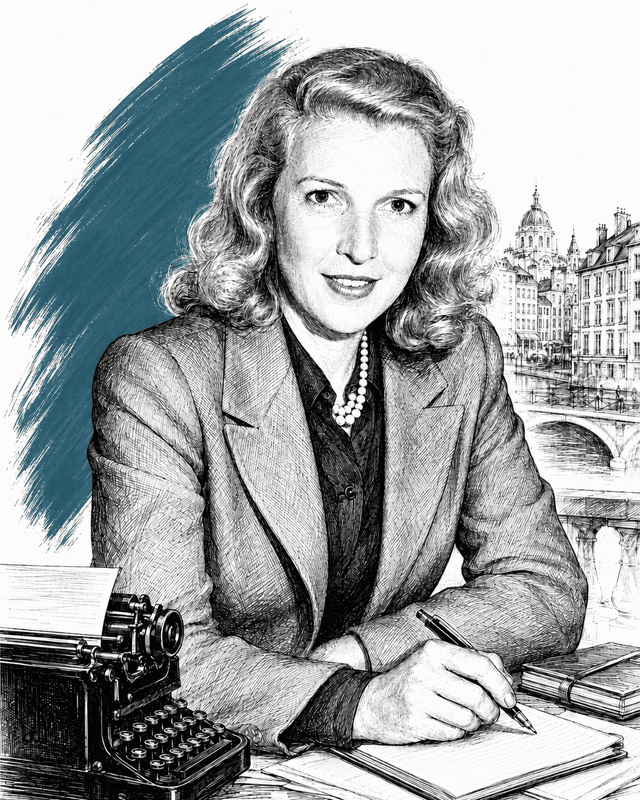
War correspondent who covered the Spanish Civil War, D-Day, and conflicts across five more decades; Hemingway's third wife, 1940–1945.
View authorThe sources below include the primary text, editions, scholarship, archival materials, and other records that informed this page. They document The Quotable Anaïs Nin, its publication, and its place in literary history.
The primary text represented by this page, used for descriptions of the work’s contents and for any quoted passages shown here.
Used to verify The Quotable Anaïs Nin's bibliographic context and its place within Anaïs Nin's published work.
Used for independent archival, institutional, or historical context surrounding Anaïs Nin and The Quotable Anaïs Nin.
Used to cross-check chronology, publication history, and the circumstances in which The Quotable Anaïs Nin appeared.
Used for an additional scholarly or biographical perspective on The Quotable Anaïs Nin and Anaïs Nin's wider career.
Uses Herron's June 2014 introduction and opening selections 2 and 4 with their citations. Neither the complete collection nor all original sources were independently collated.
The primary text is the baseline reference for every book page. Additional references document publication history, interpretation, and historical context where that evidence is available.
 Explore more resources