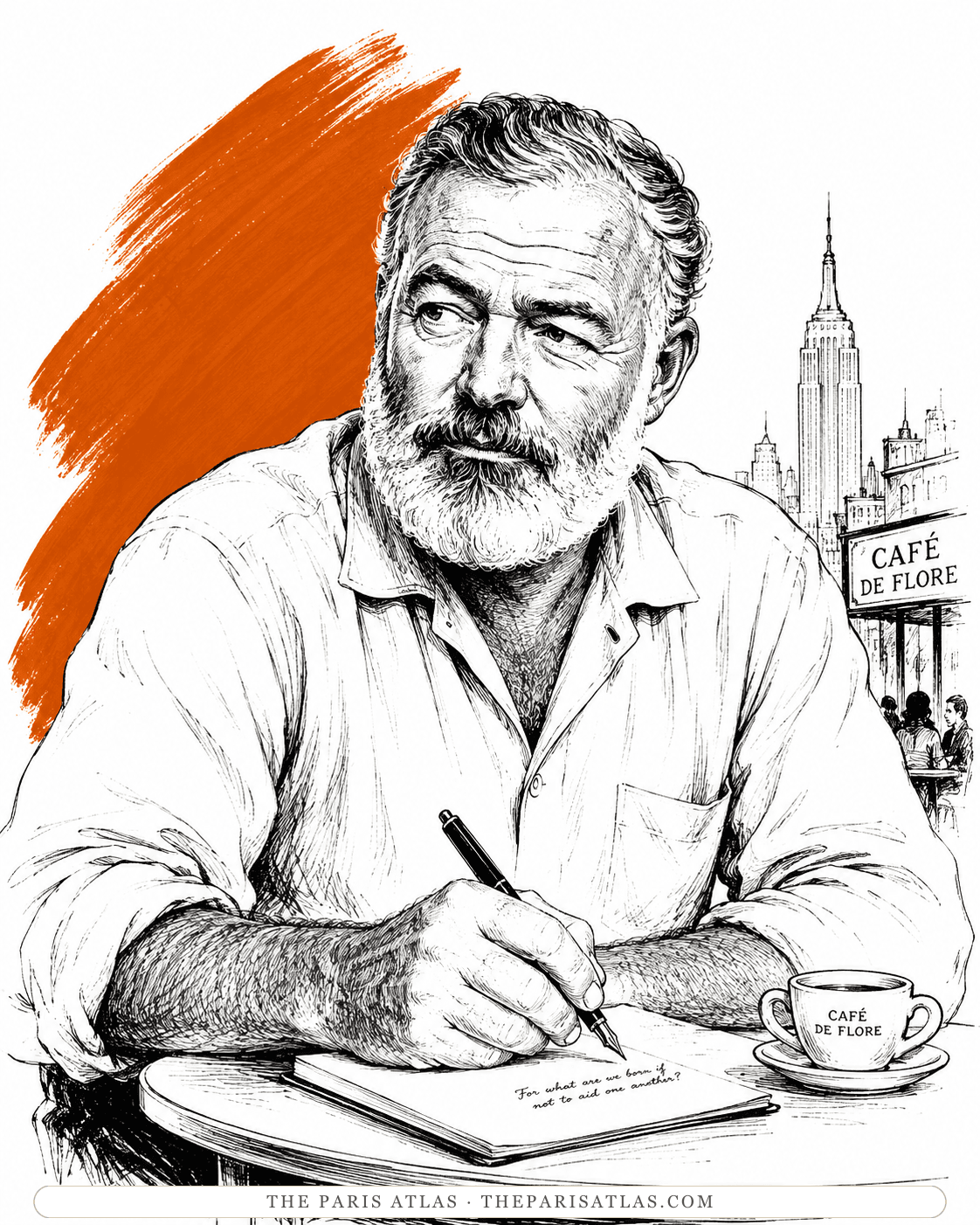

A Moveable Feast
The working-rules chapters quoted here at length — the doctrine in memoir form.
Read our take
The craft doctrine, extracted: every passage where Hemingway explains the work — icebergs, morning hours, and stopping while it's going good.
Hemingway refused to write a book about writing — talking the mystery away, he insisted, killed it — but he wrote about writing constantly, in asides: novels, letters, interviews, Esquire pieces. Larry W. Phillips's 1984 compilation harvests those passages into one short volume, arranged by theme: working habits, the iceberg, character, cutting, critics, and the dangers of talking about work in progress. The most-thumbed craft book in the language, assembled from a man who swore he'd never write one. (A compilation — nothing here to spoil.)
The sources span the shelf: Death in the Afternoon's iceberg statement; Green Hills of Africa's campfire seminar on what destroys American writers; A Moveable Feast's working rules — the morning hours, the one true sentence, stopping when you know what happens next so tomorrow starts moving; the Paris Review interview's flintier formulations; and the letters, where the advice came person-to-person with the profanity intact. Phillips's arrangement turns the scattered asides into a coherent doctrine — which, read together, they turn out always to have been.[1]
The book's charm is its self-contradiction: an author who held that writers who talk about craft are spending capital, caught having talked about it his whole life, brilliantly. It became the standard graduation gift and workshop staple within a season of publication, and its core instructions — write one true sentence; stop while it's going good; never think about the story after hours so the well refills — have passed so deep into writing culture that people quote them without knowing the source. This volume is the source, organized.[1]
Thirteen thematic sections: What Writing Is and Does; The Qualities of a Writer; Working Habits; the iceberg chapter (Knowing What to Leave Out); characters, titles, and other writers; the perils of talking about it — each built from short passages with their sources cited, letters and books and interviews interleaved so the doctrine argues with itself agreeably.[1]
An hour to read, a career to apply — and the rare craft book whose every page was written by the century's most imitated stylist without knowing it was for this book.[1]
Asked how much to write each day, Hemingway's speaker answers with a stopping point rather than a quota. What matters is preserving a possible continuation, not exhausting the material. The neighboring memoir passage turns that restraint into the image of a well that can refill overnight. Placed together, the extracts make rest part of sustained composition rather than a lapse in discipline. Their accounts of unconscious work remain the writer's explanation of his practice, not a guaranteed cure for every reader's difficulty. Finishing requires returning, and stopping can protect that return.
Phillips's preface describes scattered remarks fitting together when he sorts them into categories. That sense of a continuous message is partly an editorial achievement: statements separated by years and circumstances become neighbors on the page. The source labels let readers notice the joins even as the thematic arrangement encourages agreement between them. The collection can therefore be read both for Hemingway's recurring convictions and for the way selection makes a method visible. Its usefulness does not require imagining that Hemingway planned or delivered this particular book.
Iceberg, omission, the morning discipline — every scattered statement of the method, finally in one place.
Each precept is backed by the books on this shelf that prove it — theory with its receipts attached.
Short enough to reread annually; most who own it do.
1930s–1958
Hemingway scatters his thinking about the craft across the shelf — the iceberg statement in Death in the Afternoon, the Esquire columns, and the flinty formulations of the 1958 Paris Review interview — never the manual he refused to write.
1984
Larry W. Phillips, having combed decades of books, letters, and interviews with the estate's cooperation, arranges the passages by theme; Scribner publishes the result.
1999
A Touchstone paperback from Simon & Schuster fixes its place as a workshop staple.

The working-rules chapters quoted here at length — the doctrine in memoir form.
Read our take
Where the iceberg is stated — the craft passages in their original habitat.
Read our take
The opposite doctrine in the matching volume — discipline against abandon, shelf to shelf.
Read our takeThe passages are all Ernest Hemingway's; Larry W. Phillips compiled them into one volume, which Scribner published in 1984.
A short book harvesting every passage where Hemingway explains the work — from his novels, letters, interviews, and Esquire pieces — arranged by theme: working habits, the iceberg, character, cutting, and critics.
Yes. He held that talking the mystery away killed it — yet he wrote about writing constantly, in asides, and the compilation opens by quoting the warning it violates.
Write one true sentence; stop while it's going good; never think about the story after hours so the well refills — workshop proverbs now quoted without knowing the source, gathered here at that source.
From across the shelf — Death in the Afternoon's iceberg statement, Green Hills of Africa's campfire seminar, A Moveable Feast's working rules, the Paris Review interview, and the letters.
Explore authors with a similar voice, perspective, and influence.
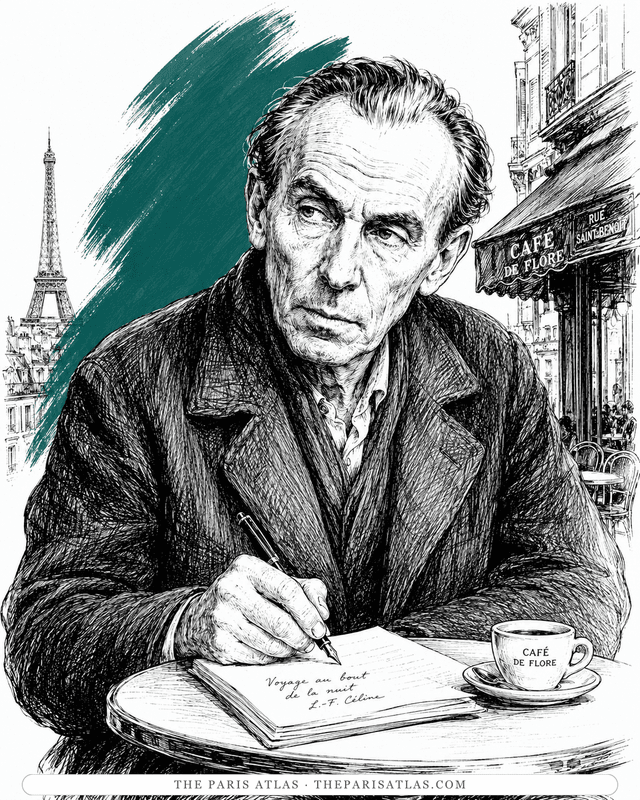
The other great stylist the Great War produced — where Hemingway cut the language down, Céline set it on fire. The same wound, opposite treatments.
View author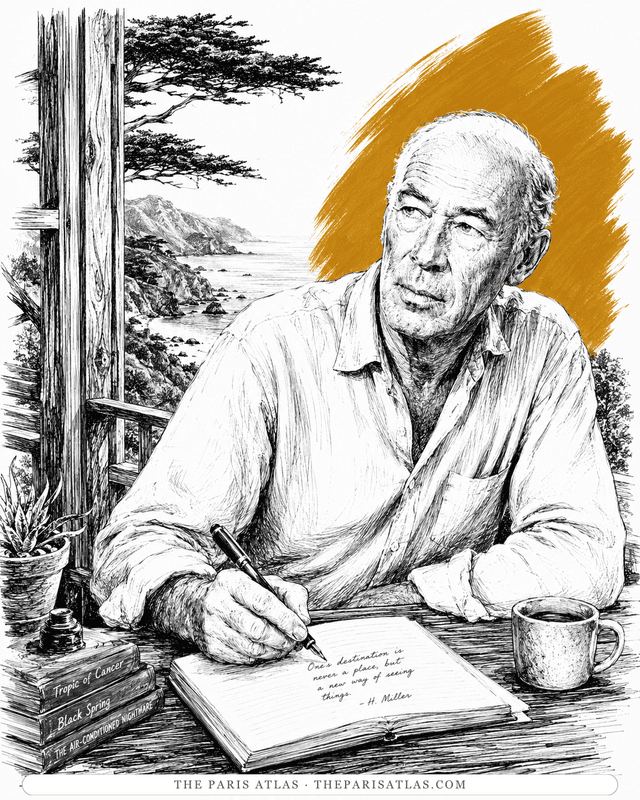
Paris on no money a decade later, with the restraint removed. Miller called Hemingway's Paris a tourist's Paris; readers get to referee.
View author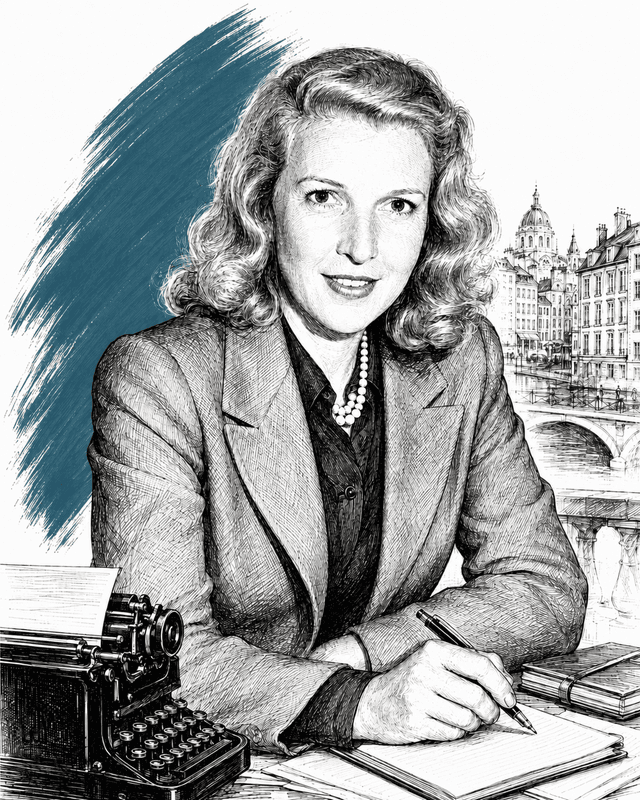
War correspondent who covered the Spanish Civil War, D-Day, and conflicts across five more decades; Hemingway's third wife, 1940–1945.
View authorThe sources below include the primary text, editions, scholarship, archival materials, and other records that informed this page. They document Hemingway on Writing, its publication, and its place in literary history.

PDF front matter identifies the first Scribner ebook edition, 2002, despite the filename's 1999 label. The complete Preface and Working Habits' opening extracts were visually checked (PDF pp. 29–30 and 68–70); not a whole-volume or print-edition collation.
Used to place Hemingway on Writing within Ernest Hemingway's published work and verify its bibliographic context.
Used for independent biographical, archival, or historical context surrounding Ernest Hemingway's career and the period in which Hemingway on Writing appeared.
Used to cross-check authorship, chronology, and the work's place in Ernest Hemingway's wider catalogue.

Used to verify Ernest Hemingway's bibliography and place Hemingway on Writing within the broader chronology of Ernest Hemingway's career.
The primary text is the baseline reference for every book page. Additional references document publication history, interpretation, and historical context where that evidence is available.
 Explore more resources