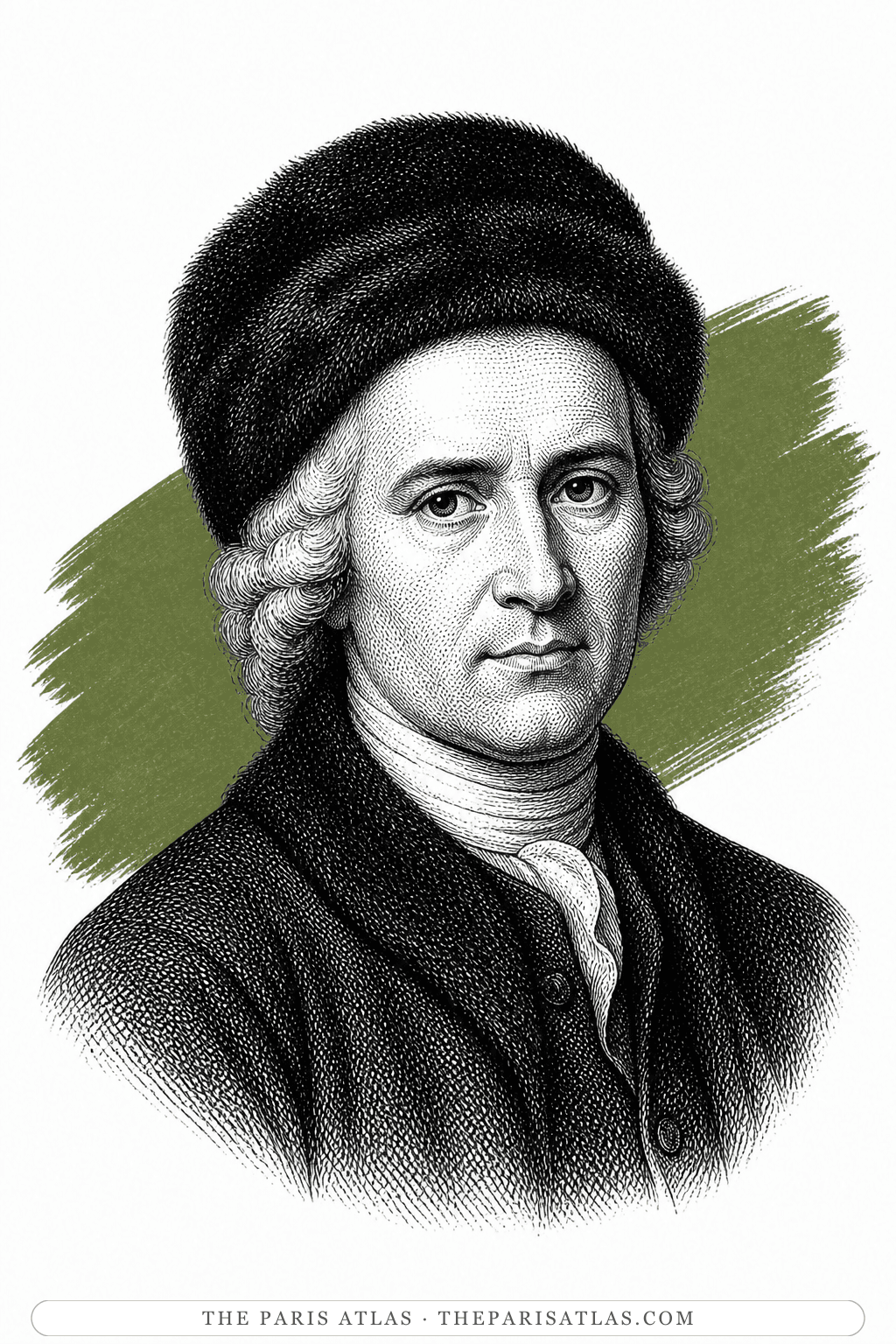
The Social Contract
Jean-Jacques Rousseau
The Social Contract
Published the same year and condemned with it in Geneva. Book V of Emile gives the pupil a summary of it.
Read our takeEmile, or On Education
Jean-Jacques Rousseau
Rousseau raises an imaginary boy from birth to marriage, by nature instead of books, and the Parlement de Paris orders the result burned.
Emile, or On Education is Jean-Jacques Rousseau's long book about bringing up a child, published in four volumes in 1762. The title page says The Hague, Jean Néaulme. The Bibliothèque nationale de France identifies the real printer as Nicolas-Bonaventure Duchesne, in Paris.[1] Rousseau follows an imaginary pupil, Emile, from the cradle to his wedding. The boy learns from things and from experience rather than from books, and his tutor keeps society's habits away from him for as long as possible.[2] Book IV contains the Profession of Faith of the Savoyard Vicar, a case for belief in God without church doctrine. The Savoyard Vicar is why the book was condemned. On 9 June 1762 the Parlement de Paris ordered Emile torn up and burned by the public executioner, and Rousseau fled France to avoid arrest.[3][4]
Rousseau's preface says the book began as a few pages written to please a good mother who thinks for herself. He meant a short tract and was carried away by the subject. The result runs to five parts that he calls books, and in Barbara Foxley's English it fills well over four hundred pages.[5][6]
The book is a treatise that turns into a novel. The early books give rules and arguments, with Emile as an example. By Book V he has a fiancée, Sophie, and the chapters read like a love story. The BnF puts the starting idea plainly: people are born good and made bad by society, so the teacher should let the child find his own way to reason by contact with nature.[2]
Rousseau wrote Emile at Montmorency, north of Paris, in the same years as Julie, or the New Heloise and The Social Contract.[4] The Paris printer put a Dutch imprint on the title page. The BnF catalogue records the edition as printed at La Haye by Jean Néaulme, with the note that the real place and printer were Paris and Duchesne.[1]
Barbara Foxley's translation appeared in Everyman's Library in 1911. Her version is public domain in the United States and free on Project Gutenberg, and every English quotation below comes from it. Foxley spells the heroine Sophy.[5][6]
Book I covers the baby. Rousseau attacks swaddling, the tight bands of cloth that held a newborn's arms and legs straight, and he asks mothers to nurse their own children instead of sending them to wet nurses. Civilised man, he writes, is born and dies a slave: bound in swaddling clothes at the start, nailed into a coffin at the end.[5][2]
Book II takes Emile to about twelve. Rousseau wants him taught by things, not by lectures. He should run, fall, feel heat and cold, and learn what his own body can do. Rousseau warns against reasoning with young children: childhood, he says, has its own ways of seeing, thinking and feeling.[5]
Book III is the age of useful knowledge. Emile learns science by handling objects, and he learns carpentry as a trade. He gets one book, Robinson Crusoe, because Crusoe alone on his island has to work out everything for himself.[5][2]
Book IV brings adolescence, other people, love and religion. Here a poor Savoyard priest gives his Profession of Faith, in which he believes in God and conscience but rejects miracles and church dogma. The book ends with Emile and his tutor leaving Paris to look for a wife.[5][2]
Book V introduces Sophie, brought up to be Emile's wife, and sets out how girls should be educated. Rousseau keeps her in that role and says women are made to please men. The book also gives Emile a summary of The Social Contract before he travels to study other countries.[5][2]
The Parlement de Paris was the sovereign court that registered royal law and censored books. Its decree of 9 June 1762 condemned Emile to be torn up and burned by the executioner. The decree names the book by the false title page Duchesne had printed, Emile ou de l'éducation, printed at The Hague. The Parlement also ordered Rousseau's arrest.
Rousseau tells the night of the warning in Book XI of the Confessions. He was reading the Bible in bed at Montmorency when a messenger arrived with a letter from the Prince of Conti. In the 1903 English translation the prince writes that at seven o'clock in the morning an order will be made to arrest him. The letter came at two in the morning. Rousseau left that same day for Switzerland.
The Church followed. Christophe de Beaumont, the Archbishop of Paris, issued a pastoral letter in 1762 condemning the book, printed in Paris by C.-F. Simon. Rousseau answered him in print the next year. Geneva also ordered Emile burned. The BnF notes that none of this stopped the book: pirated and clandestine editions went round all of Europe.
Book V is where the book is hardest to defend. Rousseau says the man should be strong and active and the woman weak and passive. From that, he writes in Foxley's translation, "it follows that woman is specially made for man's delight." The BnF sums up the rest: Sophie is kept to the role of ideal wife, and Rousseau treats women as intellectually inferior to men.
Thirty years later Mary Wollstonecraft answered him at length in A Vindication of the Rights of Woman (1792). She admired Rousseau's genius and said so. She also called his Sophia captivating but grossly unnatural, and wrote that she meant to attack the principles on which her education was built. Her fifth chapter opens by quoting Rousseau on women in his own words so that she can answer each point.
The BnF calls Rousseau one of the first writers to treat a pupil as a child rather than a small adult. Nineteenth-century educators went on to call him the father of modern education. His advice on babies ran against the customs of his time. Rousseau wanted infants unswaddled and outdoors, and he wanted mothers to feed them, when well-off families sent babies to wet nurses and then to tutors.
Philosophers read it too. The Stanford Encyclopedia of Philosophy repeats the story that Immanuel Kant, famous for his fixed daily walk, missed it only once, on the day he was reading Emile. The encyclopedia calls that a legend. The same entry notes that a portrait of Rousseau was the only picture on display in Kant's house.
God makes all things good; man meddles with them and they become evil.
Plants are fashioned by cultivation, man by education.
Civilised man is born and dies a slave. The infant is bound up in swaddling clothes, the corpse is nailed down in his coffin.
The BnF calls Rousseau one of the first writers to treat a pupil as a child rather than a small adult. Much later teaching took that idea from here.
The decree of 9 June 1762 ordered Emile torn up and burned, and Rousseau fled France before he could be arrested.
Rousseau's own case for belief in God without church doctrine, set inside a book about raising a child.
Book V on Sophie drew Mary Wollstonecraft's A Vindication of the Rights of Woman. Reading the two together shows exactly what she was answering.
1756
Rousseau leaves Paris for Montmorency, where he writes Julie, The Social Contract and Emile.
1762
Emile appears in four volumes. The title page names Jean Néaulme at The Hague; the printer was Nicolas-Bonaventure Duchesne in Paris.
1762
On 9 June the Parlement de Paris orders the book torn up and burned by the executioner. Rousseau flees Montmorency for Switzerland the same day.
1762
Christophe de Beaumont, Archbishop of Paris, publishes a pastoral letter condemning Emile. Geneva also orders it burned.
1763
Rousseau publishes his reply to the Archbishop of Paris.
1792
Mary Wollstonecraft attacks the education of Sophie in A Vindication of the Rights of Woman.
1911
Barbara Foxley's English translation appears in Everyman's Library.

The Social Contract
Jean-Jacques Rousseau
Published the same year and condemned with it in Geneva. Book V of Emile gives the pupil a summary of it.
Read our takeConfessions
Jean-Jacques Rousseau
Rousseau's own account of writing Emile at Montmorency and of the night he fled after the decree.
Read our takeDiscourse on the Origin of Inequality
Jean-Jacques Rousseau
The 1755 argument that society corrupts people who are good by nature. Emile tries to raise a child who escapes that corruption.
Read our takeEmile follows an imaginary boy from birth to marriage and explains how Rousseau would raise him. The child learns from things and experience before books, and his tutor protects him from society's habits. The last book introduces Sophie, the young woman brought up to be his wife.
Because of the Profession of Faith of the Savoyard Vicar in Book IV, which accepts God and conscience but rejects miracles and church dogma. On 9 June 1762 the Parlement de Paris ordered the book torn up and burned and Rousseau arrested. The Archbishop of Paris and the Geneva authorities condemned it too.
A poor Catholic priest from Savoy who explains his religious beliefs to a young man in Book IV. The BnF notes that Rousseau said in the Confessions he based the character on a man he had known, Monsieur Gaime.
Book V says women are made to please men and should be educated for that. Sophie is raised only to be Emile's wife. Mary Wollstonecraft answered the chapter at length in A Vindication of the Rights of Woman in 1792.
Rousseau thinks Crusoe, alone on his island, shows a person working out everything he needs from experience. In Book III he calls it the best treatise on an education according to nature and says it will be Emile's first book and long his whole library.
Yes, though the title page says otherwise. The title page names Jean Néaulme at The Hague. The BnF catalogue identifies the real printer as Nicolas-Bonaventure Duchesne, in Paris.
Barbara Foxley's 1911 Everyman translation is free on Project Gutenberg and public domain in the United States. Allan Bloom's 1979 translation for Basic Books is a common modern choice and is in copyright.
Explore authors with a similar voice, perspective, and influence.
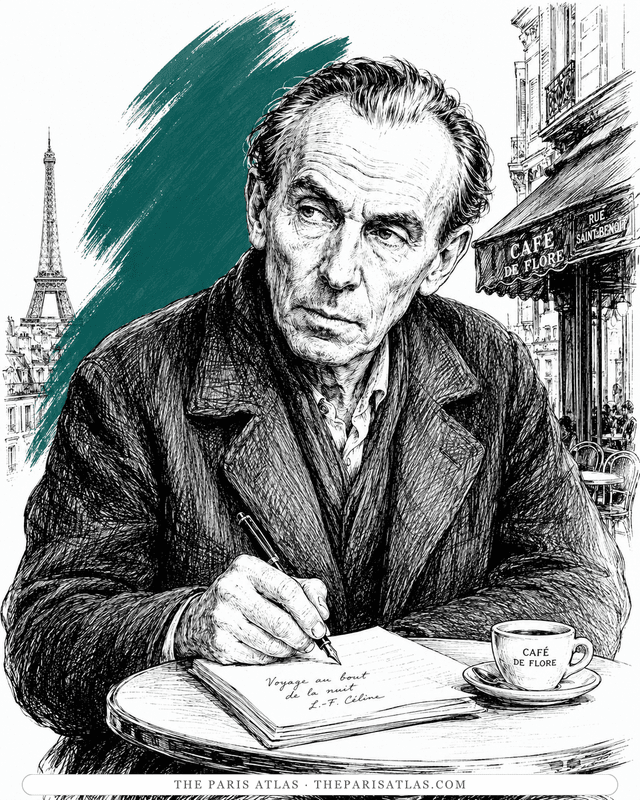
The doctor of the Paris slums who wrote the century's blackest, funniest novel — and changed the sound of French prose.
View author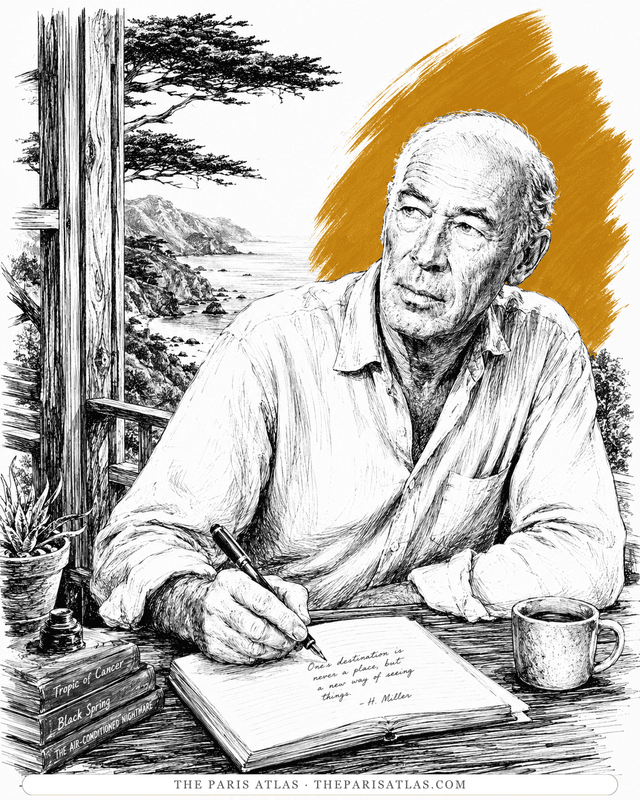
The Brooklyn dropout who arrived in Paris broke at thirty-eight and wrote the exuberant, banned books that ended American censorship.
View author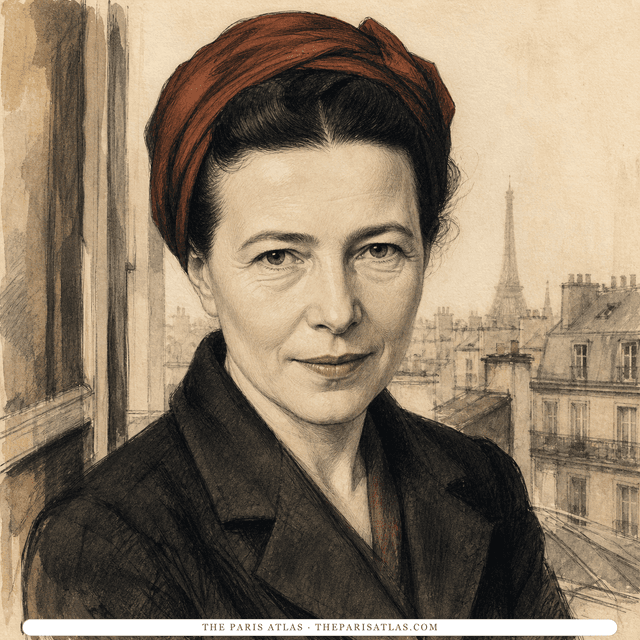
French writer and philosopher whose novels, memoirs, and social analysis examined freedom, gender, responsibility, aging, and the material conditions that shape a life.
View authorThe sources below include the primary text, editions, scholarship, archival materials, and other records that informed this page. They document Emile, or On Education, its publication, and its place in literary history.

The Parlement de Paris decree of 9 June 1762 condemning the book.
The Archbishop of Paris's printed condemnation of 1762.

The BnF chronology, for the move to Montmorency and the flight of 1762.
Rousseau's own account of the warning and the flight, in the 1903 public-domain translation.

Mary Wollstonecraft's 1792 reply to Book V.
Scholarly overview, including the condemnation and the Kant story.
Open Library edition record used to confirm the Basic Books ISBN listed above.
The primary text represented by this page, used for descriptions of the work’s contents and for any quoted passages shown here.
The primary text is the baseline reference for every book page. Additional references document publication history, interpretation, and historical context where that evidence is available.
 Explore more resources