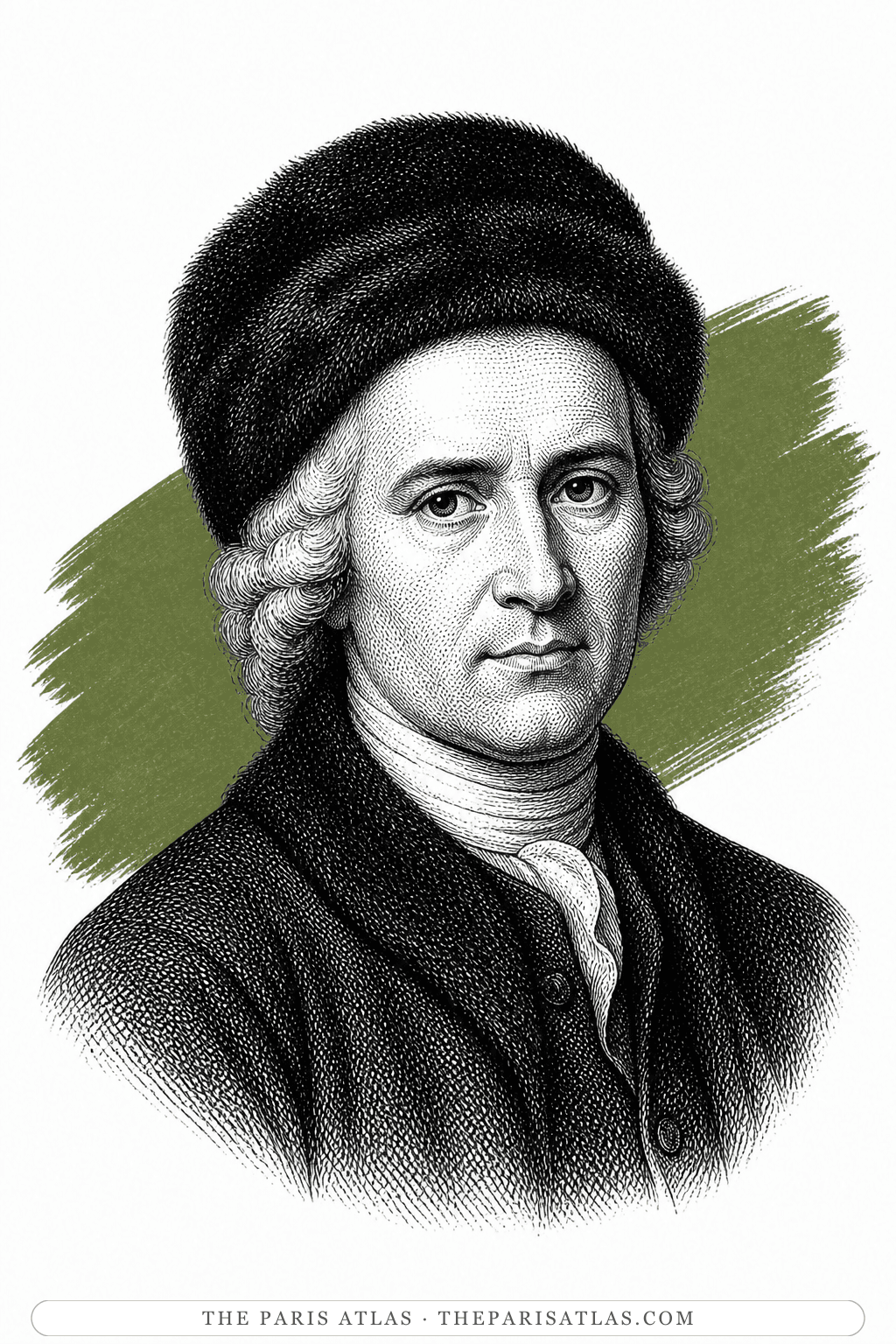
Reveries of the Solitary Walker
Jean-Jacques Rousseau
Reveries of the Solitary Walker
The last thing Rousseau wrote, printed with Part One of the Confessions in 1782. The Reveries picks up where the Confessions stops.
Read our takeConfessions
Jean-Jacques Rousseau
Rousseau tells his own life, the stolen ribbon and the five abandoned children included, and promises to hide nothing.
The Confessions is Jean-Jacques Rousseau's account of his own life, from his birth in Geneva in 1712 to his expulsion from Switzerland in 1765. He wrote it in twelve books between about 1765 and 1770, partly during his stay in England.[1][2] Rousseau promises to show himself exactly as he was, shameful parts included. He tells how he let a servant girl take the blame for a ribbon he had stolen, and how he left his five children at the Paris foundling hospital.[3] He read parts of it aloud in Paris drawing rooms after 1770, until Madame d'Épinay, who appears in it, had the readings stopped.[1] The book came out only after his death. Books I to VI appeared in Geneva in 1782. Books VII to XII, which cover his Paris years, followed in 1789.[4][5]
Rousseau opens by claiming that nothing like his book has been done before, and that nobody will imitate it. He means to show one man in all the truth of nature, and that man will be himself. He imagines standing before God at the Last Judgement with the book in his hand. Let anyone who dares, he says, claim to have been better than that man.[3]
He was writing partly in self-defence. By the mid-1760s Rousseau believed his former friends were plotting against him, and the Stanford Encyclopedia of Philosophy notes that the Confessions shows that fear in how he treats Denis Diderot and Friedrich Melchior Grimm. The French encyclopedia Larousse calls the book an examination of conscience that doubles as a justification.[2][1]
The first six books cover his childhood in Geneva, his years as a runaway in Savoy and Italy, and his life with Françoise-Louise de Warens. The last six follow him to Paris, through fame, the quarrels with the writers around the Encyclopédie, and the flight of 1762. They end in 1765, when he is driven off the island of Saint-Pierre in Lake Bienne.[3][6]
The English text quoted below is the anonymous translation privately printed in London in 1903 for the members of the Aldus Society. The translation is public domain in the United States and free on Project Gutenberg.[3]
Book I begins in Geneva, where Rousseau is born in 1712 and his mother dies soon after. His father, a watchmaker, reads novels with him through the night. After his father leaves the city Rousseau is sent to board with a pastor's family, then apprenticed to an engraver. In 1728 he finds the city gates shut one evening and walks away from Geneva.[3][6]
Books II to VI cover the wandering years. In Savoy he meets Françoise-Louise de Warens, who takes him in. In Turin he becomes a Catholic and works as a servant, and there he steals the ribbon and blames the cook, Marion. He returns to Madame de Warens and lives with her for years, finally at Les Charmettes near Chambéry.[3][6]
Book VII brings him to Paris with a comedy, a new system for writing music and fifteen louis in his purse. He works for a diplomat in Venice, comes back, and meets Thérèse Levasseur. Their first children are left at the foundling hospital. In Book VIII, walking out to visit Denis Diderot in prison at Vincennes, he reads the Academy of Dijon's prize question and becomes, he says, a different man.[3]
Books IX to XII move out of Paris to the Hermitage and Mont-Louis near Montmorency. He falls in love with Sophie d'Houdetot, breaks with Diderot and Madame d'Épinay, and writes Julie, The Social Contract and Emile. The Parlement de Paris condemns Emile and he flees to Switzerland in the night.[3][1]
The last book follows him from refuge to refuge in Switzerland. He is stoned out of Môtiers and finds brief peace on the island of Saint-Pierre in Lake Bienne, until the authorities of Bern order him to leave the island and their territory. He leaves in 1765, and the story stops there.
A short coda records one of his readings of the book in Paris. He finished by declaring that anyone who called him dishonest without examining him in person deserved the gallows. Nobody spoke, he writes, and only Madame d'Egmont seemed moved.
Book II tells the lie that Rousseau says haunted him for the rest of his life. As a young servant in Turin he stole a worn pink and silver ribbon. When it was found on him he said the cook, Marion, had given it to him. She denied it calmly in front of the household, and both were dismissed. Rousseau writes that he still saw her in his dreams, reproaching him as if it had happened yesterday.
The children are in Paris. Rousseau writes in Book VII that Thérèse Levasseur gave birth at the house of a midwife, Mademoiselle Gouin, near the Pointe Saint-Eustache. The baby was left at the foundling hospital with a card in its linen. Rousseau had marked a cipher on two matching cards, and this was one of them. By Book VIII he states the total: five children in all, every one of them handed to the hospital.
He gives several reasons. He says the choice seemed reasonable at the time and that he told his friends openly. He also says, in Book VII, that he had picked the idea up from the talk at a Paris dinner table, where the man who had best filled the foundling hospital won the most applause. Voltaire later made the abandonment public to attack him.
Rousseau writes that he reached Paris in the autumn of 1741, with fifteen louis, a comedy called Narcissus and his music project in his pocket. The BnF chronology dates the arrival to 1742, the year he showed the music project to the Academy of Sciences. The Academy turned it down.
The best-known Paris scene is on the road out of the city. In the hot summer of 1749 Rousseau walked the two leagues to Vincennes every other day to visit Diderot, who was held there. One afternoon he read the Academy of Dijon's question in the Mercure de France. He writes that he seemed to see another world and became a different man. He arrived at Vincennes close to delirium, and Diderot urged him to enter.
From 1745 to 1751 Rousseau was secretary to the Dupin family, in the house that is now 68 rue Jean-Jacques Rousseau. His last Paris address was on the rue Plâtrière, renamed after him, where a plaque at number 52 marks the site. He wrote the last books of the Confessions and read them aloud while living in Paris in the 1770s.
Rousseau came back to Paris in 1770 and was tolerated on condition that he publish nothing. He read the Confessions instead, to small gatherings in private houses. The BnF says the readings were badly received. Larousse says they shocked listeners so much that Madame d'Épinay worked to have them banned.
The book closes on one of those evenings. Rousseau names his audience: the Count and Countess of Egmont, the Prince Pignatelli, the Marchioness of Mesme and the Marquis of Juigné. He ended by saying that anyone who judged him dishonest without examining him in person deserved to be hanged. Everyone was silent. Madame d'Egmont trembled, then recovered herself.
Rousseau died in 1778. The first six books were printed in Geneva in 1782, in the same volumes as the Reveries of the Solitary Walker. The last six came out in 1789, the year the Revolution began. One of the 1789 editions was published in Paris by Poinçot, a bookseller on the quai des Augustins.
I have entered upon a performance which is without example, whose accomplishment will have no imitator. I mean to present my fellow-mortals with a man in all the integrity of nature; and this man shall be myself.
I know my heart, and have studied mankind; I am not made like any one I have been acquainted with, perhaps like no one in existence
Whenever the last trumpet shall sound, I will present myself before the sovereign judge with this book in my hand, and loudly proclaim, thus have I acted; these were my thoughts; such was I.
Rousseau puts in the stolen ribbon, the false accusation and the abandoned children, and says so on the first page.
A young man arrives with fifteen louis and a music project, works as a secretary, copies music and becomes famous overnight.
Rousseau's own account of the afternoon in 1749 when he read the Dijon question and decided what he would write about for the rest of his life.
Twelve books, each a stretch of years. A reader can start with Book I and stop anywhere without losing the thread.
1742
Rousseau settles in Paris; the Confessions places his arrival in the autumn of 1741.
1749
Walking to Vincennes to visit Denis Diderot, he reads the Academy of Dijon's question, the scene Book VIII describes.
1765
Driven off the island of Saint-Pierre in Lake Bienne. The Confessions ends here.
1766
In England at David Hume's invitation, Rousseau works on the Confessions during fourteen months in Staffordshire.
1770
Back in Paris, he reads the book aloud in private houses until Madame d'Épinay has the readings stopped.
1778
Rousseau dies at Ermenonville on 2 July, with the Confessions unpublished.
1782
Books I to VI are published in Geneva, together with the Reveries of the Solitary Walker.
1789
Books VII to XII are published, in Geneva and in Paris by Poinçot on the quai des Augustins.
1903
An anonymous English translation is privately printed in London for the Aldus Society.

Reveries of the Solitary Walker
Jean-Jacques Rousseau
The last thing Rousseau wrote, printed with Part One of the Confessions in 1782. The Reveries picks up where the Confessions stops.
Read our takeEmile, or On Education
Jean-Jacques Rousseau
The book whose condemnation drives the last books of the Confessions.
Read our takeThe Social Contract
Jean-Jacques Rousseau

Lord Byron's poem gives Rousseau several stanzas in Canto III (1816), calling him the self-torturing sophist, wild Rousseau.
Read our takeThe Confessions is Rousseau's own life story, from his birth in Geneva in 1712 to 1765. He covers his childhood, his years with Madame de Warens, his arrival in Paris, his sudden fame, his quarrels with his friends and his flight from France. He sets out to hide nothing, including the things he was most ashamed of.
Rousseau claimed his book was without example and would have no imitator. The Bibliothèque nationale de France places it between Montaigne's Essays and Marcel Proust as a link in the French tradition of writing about the self. Saint Augustine's Confessions, over a thousand years older, shares the title but is a religious work.
He left all five at the Paris foundling hospital, the charity that took in abandoned babies. He says so himself in Books VII and VIII. He also writes that the arrangement seemed reasonable to him at the time and that he told his friends. Voltaire later made it public to attack him.
As a young servant in Turin, Rousseau stole a pink and silver ribbon. When it was found he said the cook, Marion, had given it to him, and both were dismissed. He tells the story in Book II and says the memory tormented him for the rest of his life.
Only after Rousseau's death in 1778. Books I to VI came out in Geneva in 1782. Books VII to XII followed in 1789, in Geneva and in a Paris edition from the bookseller Poinçot.
Yes. Books VII and VIII cover Rousseau's arrival in Paris, his work as a secretary, his children and the road to Vincennes in 1749. Books IX to XI cover the move to Montmorency, north of Paris, and the flight of 1762.
The anonymous 1903 translation printed for the Aldus Society is free on Project Gutenberg and public domain in the United States. J. M. Cohen's Penguin Classics translation, first published in 1953, is a common modern choice and is in copyright.
Explore authors with a similar voice, perspective, and influence.
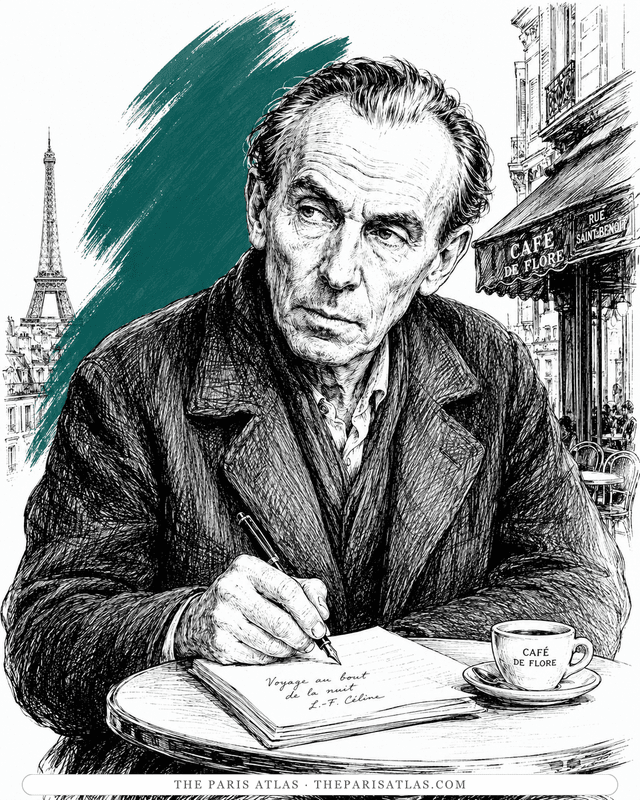
The doctor of the Paris slums who wrote the century's blackest, funniest novel — and changed the sound of French prose.
View author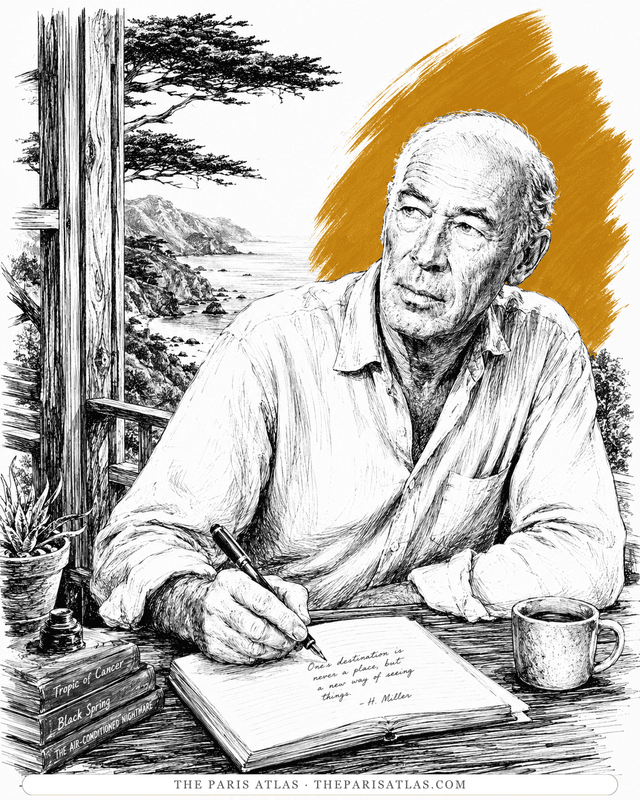
The Brooklyn dropout who arrived in Paris broke at thirty-eight and wrote the exuberant, banned books that ended American censorship.
View author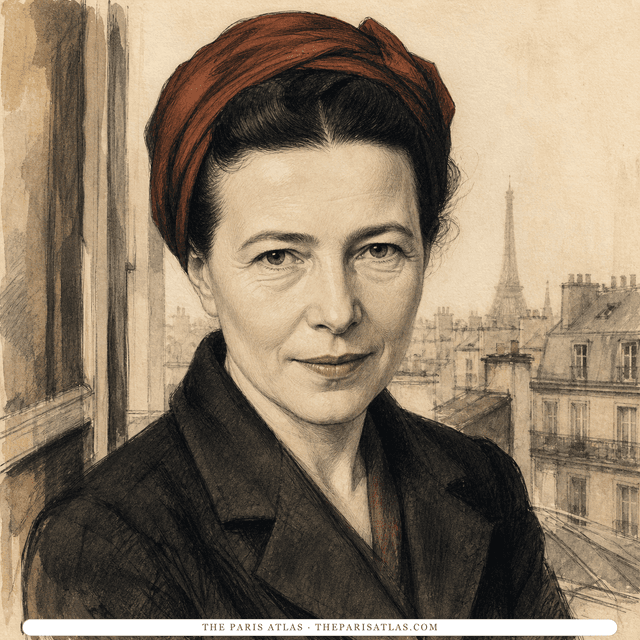
French writer and philosopher whose novels, memoirs, and social analysis examined freedom, gender, responsibility, aging, and the material conditions that shape a life.
View authorThe sources below include the primary text, editions, scholarship, archival materials, and other records that informed this page. They document Confessions, its publication, and its place in literary history.

The national library's record of the 1782 Geneva edition of Books I to VI with the Reveries.
The national library's record of the 1789 Paris edition of Books VII to XII.
The city of Paris register of plaques, for the Dupin house and the rue Plâtrière.

Open Library edition record used to confirm the Penguin Classics ISBN listed above.
The primary text represented by this page, used for descriptions of the work’s contents and for any quoted passages shown here.
The primary text is the baseline reference for every book page. Additional references document publication history, interpretation, and historical context where that evidence is available.
 Explore more resources