Discourse on the Origin of Inequality
Jean-Jacques Rousseau
Discourse on the Origin of Inequality
The 1755 book that explains how people ended up in chains. The Social Contract asks what could make those chains legitimate.
Read our takeThe Social Contract
Jean-Jacques Rousseau
Rousseau's short book on when anyone has the right to rule, which opens with people born free and everywhere in chains.
Jean-Jacques Rousseau published The Social Contract in 1762, through the Amsterdam bookseller Marc-Michel Rey.[1] The book asks one question: when does anyone have the right to rule anyone else? Rousseau's answer is that force never creates that right. Only an agreement can. In that agreement each person hands himself over to the whole community, and the community is then guided by what Rousseau calls the general will.[2] The people make the laws themselves, and a government only carries them out. France barred the book from circulation, and Geneva, Rousseau's home city, ordered it torn up and burned.[3] Thirty years later the leaders of the French Revolution treated it as a founding text, and in 1794 they moved its author into the Panthéon.[4]
Rousseau opens with a short foreword saying the book is part of a longer work he began years earlier and long since abandoned. The longer work was to be a study of political institutions. According to the Bibliothèque nationale de France, the project began in Venice in 1743 and 1744. Rousseau was secretary to the French ambassador there and wrote the embassy's dispatches.[2][3]
An earlier draft survives in the Bibliothèque de Genève. Written between 1756 and 1758, the manuscript runs to 72 leaves, and its title keeps changing. Rousseau wrote Contrat social at the top, crossed it out for Société civile, then put the first title back. The subtitles he tried and dropped include Essay on the Constitution of the State and Essay on the Form of the Republic. The final subtitle, Principles of Political Right, is not in the manuscript at all.[3]
Rousseau left Paris for Montmorency, north of the city, in 1756. He finished the book at Mont-Louis, a house on the Duke of Luxembourg's estate there, in the same years that produced Julie, or the New Heloise and Emile.[4][5] Emile came out in 1762 as well. The two books were condemned together in Geneva, and the trouble over Emile drove Rousseau out of France.[6]
The Social Contract is short: four parts that Rousseau calls books, most chapters only a few pages long. G. D. H. Cole's English translation for Everyman's Library, first published in 1913, is free on Project Gutenberg. Every quotation below comes from it.[2][7]
Book I starts from the sentence everyone knows: man is born free, and everywhere he is in chains. Rousseau says he does not know how that came about. He thinks he can say what would make it legitimate. He rejects the idea that the strongest have a right to rule, and he rejects slavery. Then he sets out the agreement itself. Each person puts himself under the direction of the general will and becomes an indivisible part of the whole.[2]
Book II is about sovereignty, which for Rousseau means the people's power to make law. He argues that it cannot be handed to anyone else and cannot be split up. The general will is always right, he says, but the people can still be misled about what is good for them. The book then introduces the Legislator, a founder who gives a people its first laws, and asks which peoples are ready for laws at all.[2]
Book III turns to government, which Rousseau defines as the body that carries out the laws. He compares democracy, aristocracy and monarchy and says no single form suits every country. A true democracy, he writes, would need a people of gods. Chapter 15 attacks elected representatives: the English, he says, are free only while they are electing their members of parliament.[2]
Book IV covers voting, elections and the assemblies of ancient Rome. The last full chapter is on civil religion, a short list of beliefs the state may require of its citizens. Rousseau says the state may banish anyone who does not hold them. A person who professes them in public and then acts as if he does not believe them may be put to death.[2]
The phrase readers stumble on sits in Book I, Chapter 7. Anyone who refuses to obey the general will, Rousseau writes in Cole's translation, "shall be compelled to do so by the whole body." He then adds that such a person "will be forced to be free." His reason comes in the next clause. Belonging to the whole protects each citizen against "all personal dependence", meaning dependence on some other private person.
The general will is not a majority vote, and Rousseau says so directly. In Book II, Chapter 3 he separates the will of all from the general will. The will of all adds up everyone's private interests. The general will looks only to the common interest. The people, he writes, "is never corrupted, but it is often deceived."
Readers have argued ever since about what the idea allows. The Bibliothèque nationale de France describes the two camps. Some praise Rousseau as a source of direct democracy, and others blame him as a forerunner of totalitarian states. The Stanford Encyclopedia of Philosophy records the same split. Friendly readers connect him with democracy in which citizens take part and deliberate. Hostile writers trace the harsher side of the Revolution, and later fascism and communism, back to him.
Rousseau names Montesquieu three times. In Book II, Chapter 7 he quotes Montesquieu's book on the Romans: at the birth of societies the rulers make the institutions, and afterwards the institutions make the rulers. In Book III, Chapter 8 he accepts Montesquieu's principle that liberty is not a fruit of every climate. In Book IV, Chapter 3 he quotes him on choosing officials by lot as a democratic method. Rousseau agrees with the conclusion but dismisses the argument: "These are not reasons."
Book III, Chapter 4 also takes a swipe without naming him. A famous writer, Rousseau says, made virtue the principle of republics, but that great thinker was often inexact and sometimes obscure. Montesquieu had tied virtue to republics in The Spirit of the Laws.
The Bibliothèque nationale de France records that the book was printed in Holland and barred from circulation in France. In Geneva it was condemned together with Emile. The sentence ordered both books torn up and burned by the executioner in front of the town hall. Rousseau answered the Genevan authorities in 1764 with his Letters Written from the Mountain.
The Revolution borrowed Rousseau's words. Article 6 of the Declaration of the Rights of Man and of the Citizen of 1789 begins: "La loi est l'expression de la volonté générale" (the law is the expression of the general will). The same article then lets citizens make law in person or through representatives. Book III, Chapter 15 of The Social Contract had said that sovereignty cannot be represented.
According to the BnF, the Jacobins, the most radical of the revolutionary clubs, kept The Social Contract by their beds. On 14 April 1794 the National Convention voted to move Rousseau's remains into the Panthéon in Paris. The transfer took place with great ceremony on 11 October. Voltaire had been carried in three years earlier.
Man is born free; and everywhere he is in chains. One thinks himself the master of others, and still remains a greater slave than they.
The strongest is never strong enough to be always the master, unless he transforms strength into right, and obedience into duty.
Each of us puts his person and all his power in common under the supreme direction of the general will, and, in our corporate capacity, we receive each member as an indivisible part of the whole.
Article 6 of the 1789 Declaration of the Rights of Man calls the law the expression of the general will. The phrase is Rousseau's.
Four books of brief chapters, each making one move. Book I sets out the whole agreement in a few pages.
Born free and everywhere in chains, forced to be free, a people of gods: each sits in a chapter that changes how it reads.
Rousseau quotes Montesquieu three times and disagrees with him more than once. Reading the two side by side shows where the eighteenth century split.
1743–1744
Rousseau is secretary to the French ambassador in Venice. The BnF dates the start of his planned study of political institutions to these months.
1756–1758
He drafts the version now held by the Bibliothèque de Genève, trying out titles such as Société civile and Essay on the Form of the Republic.
1762
Marc-Michel Rey publishes Du contrat social in Amsterdam. The book is barred from circulation in France, and Geneva orders it burned with Emile.
1764
Rousseau answers the Genevan authorities in his Letters Written from the Mountain.
1789
Article 6 of the Declaration of the Rights of Man and of the Citizen calls the law the expression of the general will.
1794
The National Convention votes on 14 April to move Rousseau into the Panthéon. The transfer takes place on 11 October.
1913
G. D. H. Cole's English translation appears in Everyman's Library, now public domain in the United States.

Discourse on the Origin of Inequality
Jean-Jacques Rousseau
The 1755 book that explains how people ended up in chains. The Social Contract asks what could make those chains legitimate.
Read our takeEmile, or On Education
Jean-Jacques Rousseau
Published the same year, and condemned with it in Geneva. Book V of Emile summarises The Social Contract for its young pupil.
Read our take
Montesquieu's 1748 comparison of the world's laws, which Rousseau quotes and argues with.
Read our take
The Montesquieu book Rousseau quotes in Book II, Chapter 7, on institutions shaping the rulers who made them.
Read our takeThe book asks when anyone has the right to rule. Rousseau argues that force cannot create that right and only an agreement can. Each person gives himself to the whole community, which is then guided by the general will. The people make the laws, and a government only carries them out.
The sentence opens Book I, Chapter 1. Rousseau means that people are free by nature but live under rulers everywhere. He says he does not know how that came about. What he claims he can explain is what would make such rule legitimate, and the rest of the book tries to answer that.
The general will is the will of the whole people directed at the common interest. Rousseau separates it from the will of all, which is only the sum of private interests. He says the general will is always right, but that a people can be deceived about what it wants.
In Book I, Chapter 7 Rousseau says anyone who refuses to obey the general will shall be compelled to by the whole body, and so forced to be free. His explanation is that belonging to the whole protects each citizen from depending on any other private person. Critics have argued about the phrase ever since.
Yes. The Bibliothèque nationale de France records that the book was barred from circulation in France. Geneva condemned it together with Emile in 1762 and ordered both torn up and burned by the executioner in front of the town hall.
Yes, openly. Article 6 of the 1789 Declaration of the Rights of Man calls the law the expression of the general will. The BnF notes that the Jacobins kept the book by their beds. In 1794 the National Convention moved Rousseau's remains into the Panthéon in Paris.
He finished it at Mont-Louis, near Montmorency north of Paris, where he moved after leaving the city in 1756. The idea began earlier, in Venice in 1743 and 1744. A draft written between 1756 and 1758 survives in the Bibliothèque de Genève.
G. D. H. Cole's 1913 translation is free on Project Gutenberg and is public domain in the United States. Maurice Cranston's Penguin Classics translation is a common modern choice and is in copyright.
Explore authors with a similar voice, perspective, and influence.
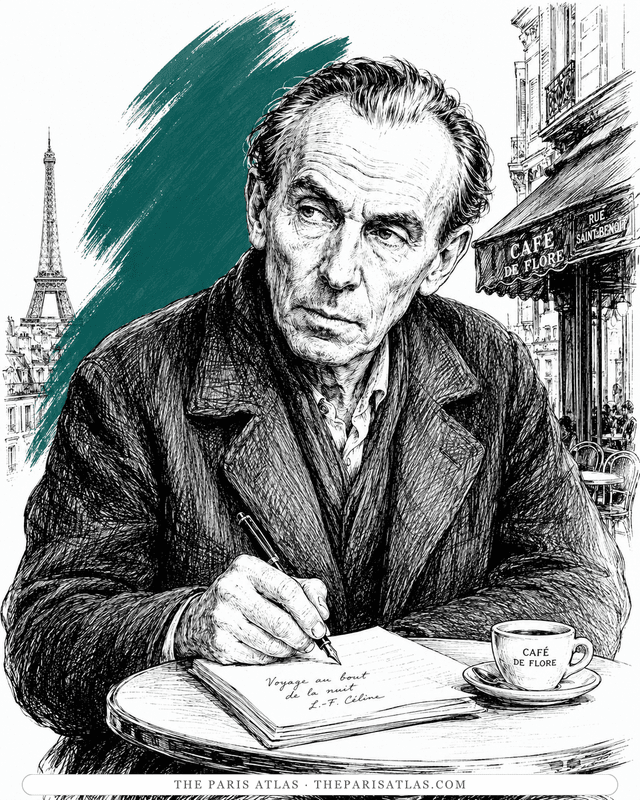
The doctor of the Paris slums who wrote the century's blackest, funniest novel — and changed the sound of French prose.
View author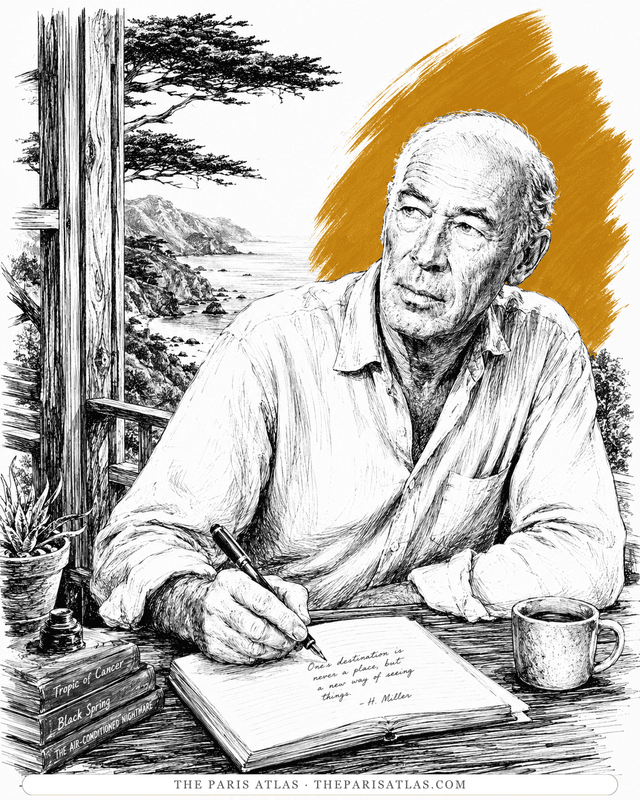
The Brooklyn dropout who arrived in Paris broke at thirty-eight and wrote the exuberant, banned books that ended American censorship.
View author
French writer and philosopher whose novels, memoirs, and social analysis examined freedom, gender, responsibility, aging, and the material conditions that shape a life.
View authorThe sources below include the primary text, editions, scholarship, archival materials, and other records that informed this page. They document The Social Contract, its publication, and its place in literary history.

The national library's record of the 1762 Amsterdam edition published by Marc Michel Rey.

French reference biography, for the house at Mont-Louis where the book was written.
Scholarly overview of the book, its condemnation in Geneva, and the arguments over its legacy.
A library scan dated 1913, confirming the year of Cole's Everyman edition.
For Montesquieu's pairing of republics with virtue, which Rousseau criticises in Book III.
The official text of the 1789 Declaration, for Article 6.
The Panthéon's own history, for Voltaire's entry in 1791 and Rousseau's in 1794.
Open Library edition record used to confirm the Penguin Classics ISBN listed above.
The primary text represented by this page, used for descriptions of the work’s contents and for any quoted passages shown here.
The primary text is the baseline reference for every book page. Additional references document publication history, interpretation, and historical context where that evidence is available.
 Explore more resources