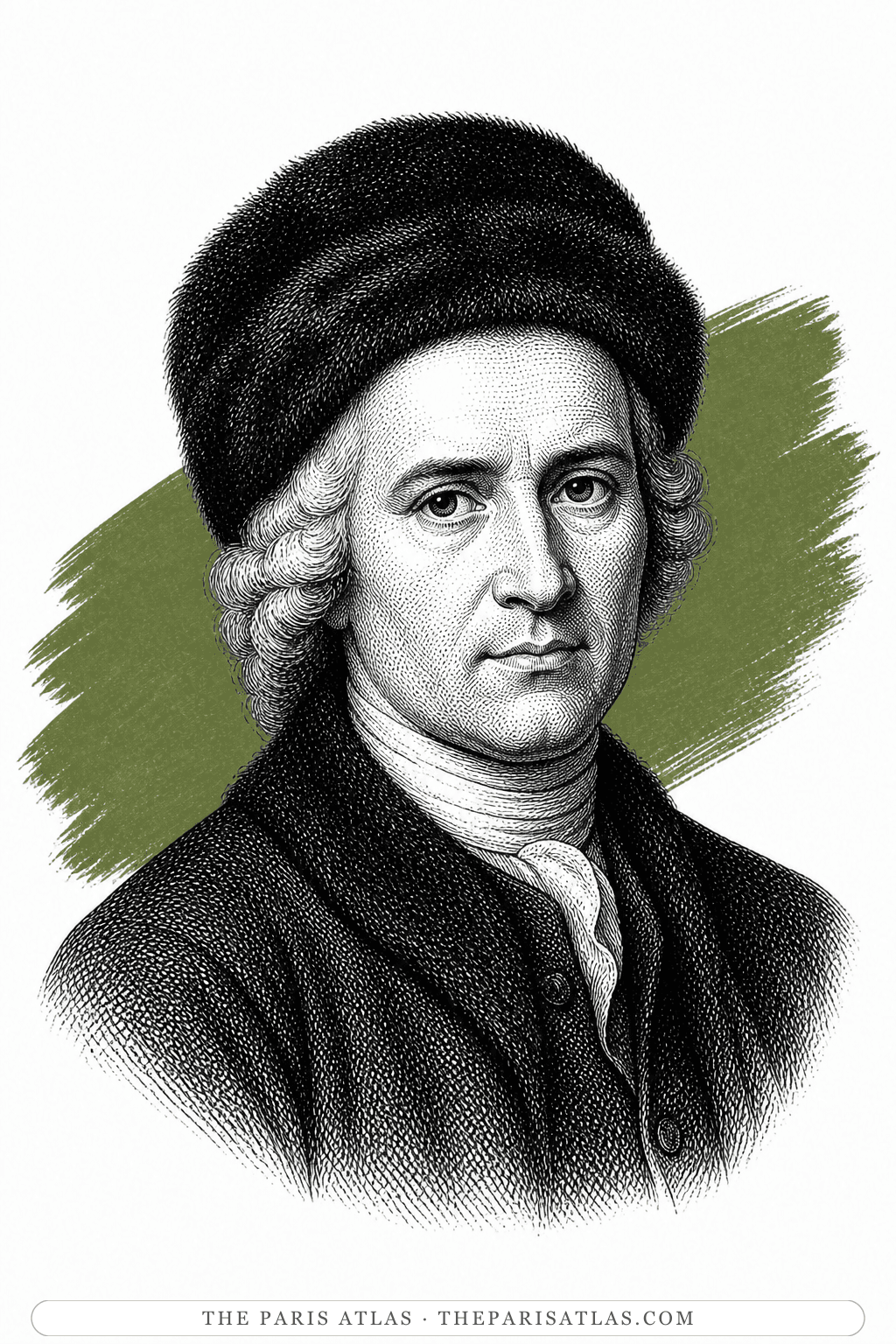
The Social Contract
Jean-Jacques Rousseau
The Social Contract
Seven years later, Rousseau asks what could make the rule that this essay describes legitimate.
Read our takeDiscourse on the Origin of Inequality
Jean-Jacques Rousseau
Rousseau's essay on how people who were born roughly equal ended up rich and poor, masters and servants, starting with the first man to fence off a field.
Jean-Jacques Rousseau wrote the Discourse on the Origin of Inequality for an essay prize set by the Academy of Dijon, a learned society in Burgundy. The question was what the origin of inequality among men is, and whether natural law allows it.[1] Rousseau imagines people before society, living alone, free and without much to fight over. He then traces how settled life, comparison, property and government turned small natural differences into large, fixed ones.[2] The essay did not win.[3] Rousseau came back to Paris in 1754 to get it printed, and Marc-Michel Rey published it in Amsterdam in 1755.[4][5] Voltaire thanked him for his copy with a mocking letter addressed to Rousseau in Paris.[6]
The Academy of Dijon had already given Rousseau its prize once, in 1750, for the Discourse on the Arts and Sciences. The first prize made him famous. He entered again in 1753 with this essay and lost. The Stanford Encyclopedia of Philosophy calls the second discourse the far more accomplished work of the two. The same entry notes that the Scottish philosopher Adam Smith reviewed it for the Edinburgh Review.[3][1]
Rousseau dedicated the book to the Republic of Geneva and signed the dedication at Chambéry on 12 June 1754.[1] He had just gone back to Geneva, returned to the Calvinist church he was born into, and so recovered his citizenship. Larousse records that he then came back to Paris to have the Discourse published.[3][4]
The book has four parts: the dedication, a preface, a first part on people in the state of nature, and a second part on how society and inequality grew. Rousseau added long notes at the back. G. D. H. Cole's 1913 English translation, free on Project Gutenberg, is the source of every English quotation below. The French text on Wikisource was used to check the French wording.[1][7]
The preface says the most useful and least advanced branch of human knowledge is the knowledge of man. To see where inequality came from, Rousseau says, we have to strip away what society has added and imagine people as nature made them. He admits this state of nature may never have existed as he describes it.[7][1]
The first part describes that imagined state. People live scattered, strong, with few needs and no language to speak of. They differ from animals in two ways. They can choose, where an animal simply obeys nature. They can also improve themselves, a capacity Rousseau calls perfectibility. Their only natural virtue is pity, a reluctance to see another creature suffer.[1][2]
The second part opens with the first man who fenced off a piece of ground and said, this is mine. From there Rousseau tells a story of huts, families, singing and dancing under a tree, and comparison. People start wanting to be looked at, and envy and vanity follow. Farming and metalwork create property. The rich then persuade the poor to accept a government that protects what the rich already own.[1][2]
The essay ends with inequality at its furthest point, where a despot rules and all subjects are equal again only because they are all nothing. Rousseau's closing lines say it is against natural law for children to command old men, fools to command wise men, and a privileged few to gorge themselves while the starving lack necessities.[1]
The most quoted passage opens the second part. In Cole's translation: "The first man who, having enclosed a piece of ground, bethought himself of saying This is mine, and found people simple enough to believe him, was the real founder of civil society." Rousseau goes on to imagine someone pulling up the stakes and warning the others that the fruits of the earth belong to everyone and the earth itself to nobody.
The next sentence is quieter and is often left out. Rousseau says that by then things had probably already gone too far to continue as they were. The idea of property, he explains, depends on many earlier ideas that could only be acquired one after another. The fence comes at the end of a long story, and the rest of the second part goes back and tells it.
For the BnF, the idea that society built on property causes inequality and corruption is the heart of the essay. The library's summary adds that Rousseau's later books either defend that idea, as The Social Contract does, or look for a cure, as Emile does.
One of Rousseau's own notes draws a line that runs through all his later books. French has two words for self-love. Amour de soi is the plain wish to stay alive and well, which every animal has. Amour-propre only arises in society and makes each person rate himself above everyone else. Rousseau calls it the real source of what people call honour.
Cole translates the first as self-respect and the second as egoism, so an English reader can miss that the two words belong together. Rousseau's claim in the note is that amour-propre did not exist in the true state of nature. A person alone, with no one to compare himself to, could not feel it.
The phrase noble savage is not in the Discourse, in French or in Cole's English. Rousseau writes of savage man, meaning a person living outside society. He also says plainly that such people are not good in any moral sense. They do no harm because their passions are calm and they know nothing of vice.
Rousseau sent Voltaire a copy. Voltaire's reply is dated 30 August 1755 and addressed to Rousseau in Paris. The English below is translated from the French by the Paris Atlas editors, from the Garnier edition of Voltaire's letters.
Nobody has ever used so much wit trying to turn us into beasts. Reading your book makes one want to walk on all fours.
On n'a jamais employé tant d'esprit à vouloir nous rendre bêtes ; il prend envie de marcher à quatre pattes, quand on lit votre ouvrage.
The letter opens by thanking Rousseau for his new book against the human race. Voltaire adds that he lost the habit of walking on all fours more than sixty years ago and cannot take it up again. He also declines to sail off and join the savages of Canada. The BnF quotes the same walking-on-all-fours line as the best-known reaction to the book.
The mockery grew into a long feud. Larousse records that Voltaire went on to call Rousseau a cynic and a misanthrope. The two men are now buried in the same crypt of the Panthéon: Voltaire since 1791, Rousseau since 1794.
The first man who, having enclosed a piece of ground, bethought himself of saying This is mine, and found people simple enough to believe him, was the real founder of civil society.Le premier qui, ayant enclos un terrain, s'avisa de dire : Ceci est à moi, et trouva des gens assez simples pour le croire, fut le vrai fondateur de la société civile.
Beware of listening to this impostor; you are undone if you once forget that the fruits of the earth, belong to us all, and the earth itself to nobody.
Nature lays her commands on every animal, and the brute obeys her voice. Man receives the same impulsion, but at the same time knows himself at liberty to acquiesce or resist
The book's most famous sentence, about the first man to fence off a field and call it his, still opens arguments about property.
Two parts and a preface. Rousseau makes his case in a few hours of reading.
The BnF calls The Social Contract and Emile Rousseau's attempts to defend this essay's thesis or find a cure for what it describes.
Voltaire's thank-you letter, with its line about walking on all fours, is one of the best-known put-downs of the century.
1750
Rousseau wins the Academy of Dijon's prize with the Discourse on the Arts and Sciences.
1753
He enters the Academy's new competition, on the origin of inequality, and does not win.
1754
He returns to the Calvinist church in Geneva and recovers his citizenship. He signs the dedication to the Republic of Geneva at Chambéry on 12 June, then comes back to Paris to publish.
1755
Marc-Michel Rey publishes the Discourse in Amsterdam.
1755
On 30 August Voltaire writes to Rousseau in Paris thanking him for his new book against the human race.
1913
G. D. H. Cole's English translation appears in Everyman's Library with The Social Contract.

The Social Contract
Jean-Jacques Rousseau
Seven years later, Rousseau asks what could make the rule that this essay describes legitimate.
Read our takeEmile, or On Education
Jean-Jacques Rousseau
Rousseau's attempt to raise a child who escapes the corruption this essay traces.
Read our take
Voltaire's 1759 novel. Four years earlier he had answered this essay with his letter about walking on all fours.
Read our take
Montesquieu's 1748 book explains laws by climate and custom. Rousseau explains inequality by history and property.
Read our takeThe essay asks where inequality among people comes from. Rousseau imagines people before society as free and roughly equal. He then traces how settled life, comparison, property and government turned small natural differences into large, fixed ones between rich and poor.
For an essay competition. The Academy of Dijon asked what the origin of inequality among men is, and whether natural law allows it. Rousseau had won the Academy's earlier prize in 1750. He entered this one in 1753 and lost, then published the essay in 1755.
The sentence opens the second part. Rousseau says the real founder of civil society was the first person who fenced off land, said this is mine, and found people simple enough to believe him. He adds right away that the idea of property took a long time to develop before that moment.
The phrase noble savage does not appear in the Discourse. Rousseau writes of savage man, meaning a person outside society. He says such people do little harm because their passions are calm and they know nothing of vice, not because they are virtuous.
Voltaire thanked Rousseau on 30 August 1755 for his new book against the human race. He wrote that no one had ever used so much wit to turn people into beasts, and that reading it made one want to walk on all fours.
A kind of self-love that only exists in society and makes a person rate himself above others. Rousseau contrasts it with amour de soi, the plain wish to stay alive that every animal has. G. D. H. Cole translates the two as egoism and self-respect.
G. D. H. Cole's 1913 translation is free on Project Gutenberg and public domain in the United States. Maurice Cranston's 1984 Penguin Classics translation is a common modern choice and is in copyright.
Explore authors with a similar voice, perspective, and influence.
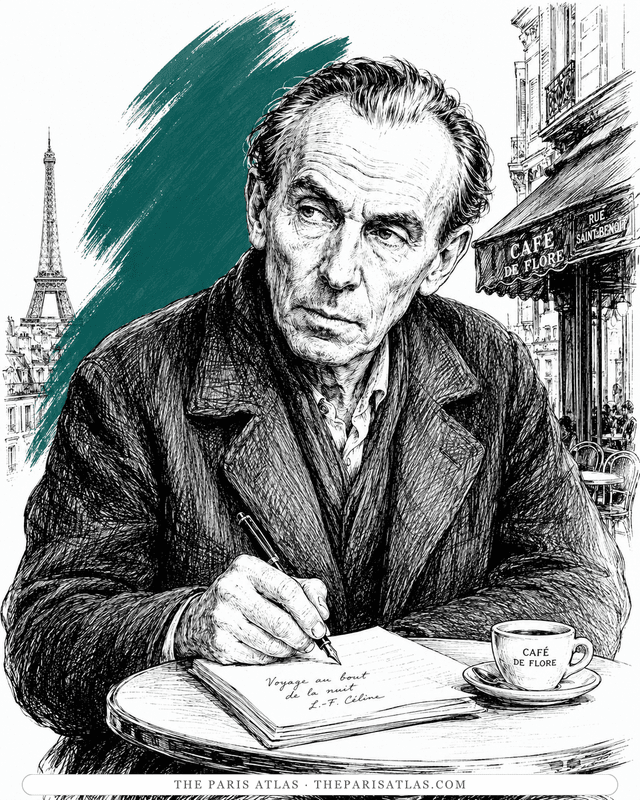
The doctor of the Paris slums who wrote the century's blackest, funniest novel — and changed the sound of French prose.
View author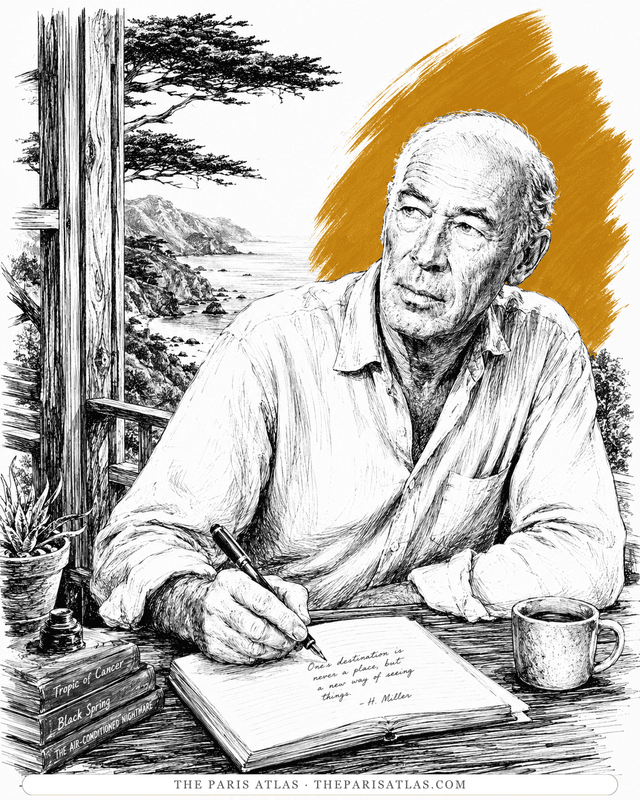
The Brooklyn dropout who arrived in Paris broke at thirty-eight and wrote the exuberant, banned books that ended American censorship.
View author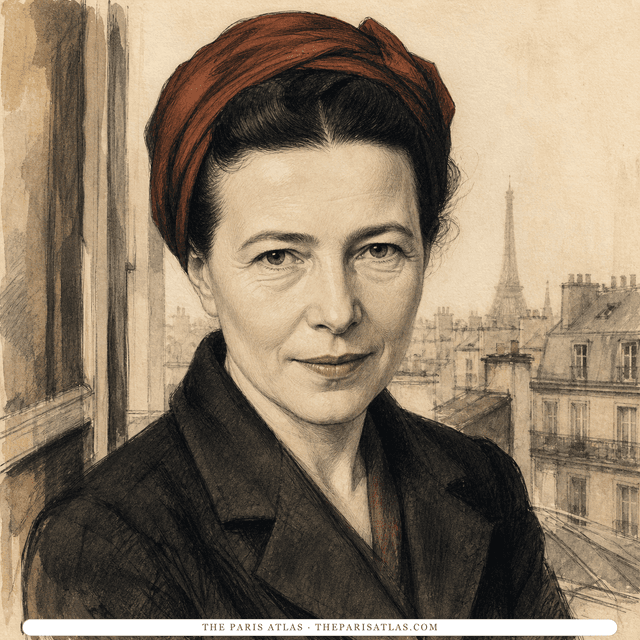
French writer and philosopher whose novels, memoirs, and social analysis examined freedom, gender, responsibility, aging, and the material conditions that shape a life.
View authorThe sources below include the primary text, editions, scholarship, archival materials, and other records that informed this page. They document Discourse on the Origin of Inequality, its publication, and its place in literary history.

The national library's record of the 1755 Amsterdam first edition published by Marc Michel Rey.

Voltaire's letter of 30 August 1755, in the Garnier edition.
The Panthéon's own history, for Voltaire's entry in 1791 and Rousseau's in 1794.
Open Library edition record used to confirm the Penguin Classics ISBN listed above.
The primary text represented by this page, used for descriptions of the work’s contents and for any quoted passages shown here.
The primary text is the baseline reference for every book page. Additional references document publication history, interpretation, and historical context where that evidence is available.
 Explore more resources