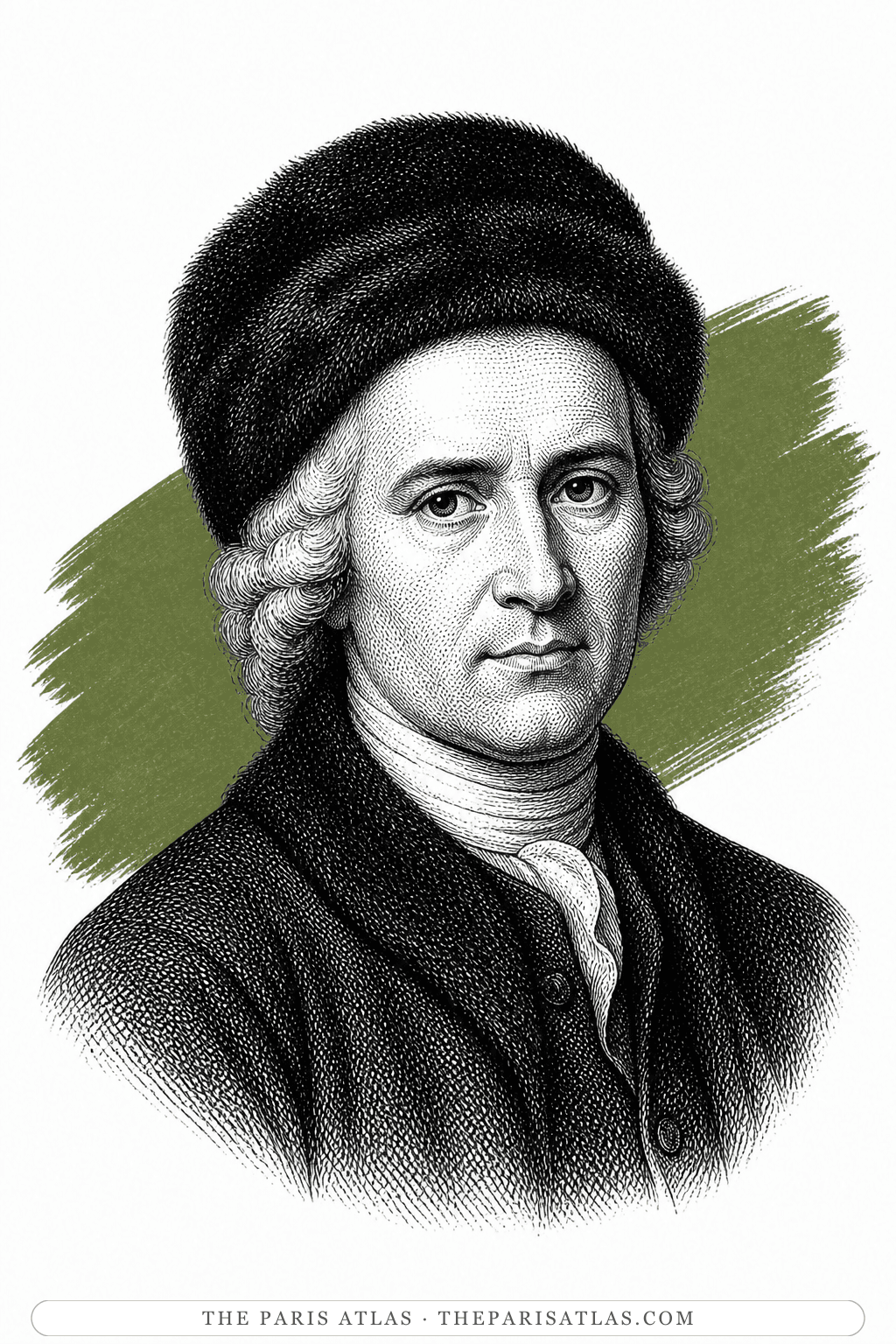
Confessions
Jean-Jacques Rousseau
Confessions
The life story the Reveries continue. The first edition printed the two together in 1782.
Read our takeReveries of the Solitary Walker
Jean-Jacques Rousseau
Rousseau's last book: ten walks around the edge of Paris, a dog that knocks him flat at Ménilmontant, and a boat drifting on a Swiss lake.
Reveries of the Solitary Walker is the last book Jean-Jacques Rousseau wrote. The book is made of ten short pieces he called walks, written between 1776 and his death in 1778.[1][2] Rousseau was in his sixties, living in the middle of Paris and convinced that the whole world had turned against him. He went out on foot to the villages around the city, collected plants and wrote down what he thought about on the way.[3] The Second Walk tells how a Great Dane knocked him down on the hill at Ménilmontant in October 1776. The Fifth remembers lying in a boat on Lake Bienne in Switzerland, in a calm he calls the happiest state of his life. The Tenth breaks off unfinished.[3] The book came out in Geneva in 1782, in the same volumes as the first part of the Confessions.[4]
Rousseau meant the walks as a continuation of the Confessions. In the First Walk he says the pages will be a shapeless diary of his reveries, and that he is writing them only for himself. He says he no longer calls them confessions because he no longer feels he has anything to say that would deserve the name.[3]
He was living on the rue Plâtrière in central Paris, now the rue Jean-Jacques Rousseau, where he had moved in 1774. A plaque at number 52 marks where the house stood.[5][6] In May 1778 he accepted an invitation to Ermenonville, north of Paris, and kept working on the walks there. He died on 2 July with the Tenth Walk unfinished.[2][6]
No public-domain English translation was used for the quotations below. They are new translations by the Paris Atlas editors from the French text of an 1882 Paris edition, which is free on Project Gutenberg. The French original is printed with each one.[3]
The First Walk opens with Rousseau alone on the earth, with no brother, neighbour or friend but himself. For fifteen years and more, he says, he has felt cut off from everyone, as if in a bad dream. He decides to spend what is left of his life studying himself.[3]
The Second Walk tells the accident at Ménilmontant in October 1776, and the rumour of his death that followed. The Third begins with a line he borrows from the Athenian lawmaker Solon, I grow old always learning, and turns into an account of how he settled his beliefs. The Fourth is about lying. Rousseau goes back to Marion, the servant girl he once falsely accused of stealing a ribbon.[3]
The Fifth Walk describes the two months he spent in 1765 on the island of Saint-Pierre in Lake Bienne, drifting in a boat and doing nothing. The Sixth starts from a small puzzle: why he kept taking a detour on his way to collect plants by the river Bièvre. The Seventh is about botany, which he took up again in his sixties.[3]
The Eighth says that nothing his enemies do can reach him any more. The Ninth is about children and the pleasure of watching people enjoy themselves, with walks to Clignancourt, the Bois de Boulogne and the Invalides. The Tenth, dated Palm Sunday, remembers Françoise-Louise de Warens, whom he had met fifty years earlier. The walk stops in the middle.[3][2]
On Thursday 24 October 1776, after his midday meal, Rousseau followed the boulevards to the rue du Chemin-Vert and climbed to the heights of Ménilmontant, then a village outside Paris. He crossed vineyards and meadows to Charonne, looking for plants. He found two he rarely saw around Paris, and a third, rarer still, that he later identified in a book he had with him and added to his collection of dried plants.
Around six in the evening he was coming down the hill at Ménilmontant when the people ahead of him scattered. A Great Dane, a big dog running in front of a carriage, was charging straight at him. He decided to jump so the dog would pass underneath, and he remembers nothing after that idea. The dog hit his legs, he fell face first onto the rough paving stones, and the coachman stopped the horses just in time.
He came round at nightfall in the arms of three or four young men. He saw the sky, a few stars and some greenery, and felt a calm that he says no pleasure he had known could match. He did not know who or where he was. He watched his own blood run like a stream without feeling that it was his. Only on the way back to the boulevard did he remember his name and address.
A stranger told him to take a cab from the Temple. He walked instead, half a league to the rue Plâtrière, and climbed his stairs in the dark. Thérèse Levasseur, by then his wife, screamed when she saw him. His upper lip was split to the nose and four teeth were pushed in, but nothing was broken. Soon a rumour went round Paris that the fall had killed him, and a newspaper, the Courrier d'Avignon, announced his death.
The walks go round the edge of the city Rousseau lived in. In the Eighth he says he lodges in the middle of Paris and longs for the countryside the moment he steps out of his door. He had to go so far to reach it, past so many things that upset him, that half the day went by in distress before he got there.
After the accident he walked in the Tuileries, where people stared at him because they had heard he was dead. The Sixth Walk goes out past the barrière d'Enfer, on the southern edge of the city, towards the river Bièvre and Gentilly. A woman sold fruit and bread at the gate, and her little boy on crutches begged from passers-by and called Rousseau by name. Rousseau realised he had been taking a detour to avoid him.
The Ninth Walk has three more. Near Montmartre, in the village of Clignancourt, a child of five or six hugged his knees, and Rousseau went back to look for him more than once. On a Sunday he and Thérèse crossed the Bois de Boulogne to La Muette. There he paid a wafer-seller so that a whole group of little girls could each have a turn at the man's prize wheel. Rousseau says there were about twenty of them. He also liked to walk near the École Militaire, where old soldiers from the Invalides saluted him.
Of all the places he had lived, Rousseau writes, none made him so happy as the island of Saint-Pierre in Lake Bienne, in Switzerland. He stayed there in 1765 after being driven out of Môtiers, until the Bern authorities ordered him to leave. Fifteen years later he still could not think of it without longing.
The walk tries to say what that happiness was. Rousseau says the best moments of his life were not the most intense ones. Intense pleasures are too short. Even in the keenest of them, he says, there is hardly a moment when the heart can truly wish it would last forever. What he missed was a steady state. He would lie in the boat and let it drift, or sit by the water, with no past and no future, feeling nothing but the fact of being alive.
Larousse describes the reverie in the same terms: a state of mind with no particular object, neither dream nor attention, in which a person feels simply alive and wholly present. The encyclopedia adds that in that state a person feels no regret, desire or worry.
So here I am, alone on the earth, with no brother, no neighbour, no friend, no company but myself.Me voici donc seul sur la terre, n'ayant de frère, de prochain, d'ami, de société, que moi-même.
These hours of solitude and meditation are the only hours of the day when I am fully myself and my own, without distraction or hindrance, and when I can truly say I am what nature meant me to be.Ces heures de solitude et de méditation sont les seules de la journée où je sois pleinement moi et à moi, sans diversion, sans obstacle, et où je puisse véritablement dire être ce que la nature a voulu.
I watched my blood flowing as I would have watched a stream flow, without once thinking that the blood was in any way mine.Je voyois couler mon sang comme j'aurois vu couler un ruisseau, sans songer seulement que ce sang m'appartînt en aucune sorte.
Ten walks, each readable in one sitting. The best way into Rousseau for anyone who finds The Social Contract heavy going.
Ménilmontant, Charonne, the Tuileries, the Bièvre, Clignancourt, the Bois de Boulogne and the Invalides, as an old man walked them.
The Fifth Walk's account of lying in a drifting boat is one of the best-known descriptions of simply being alive in French prose.
The Second Walk describes being knocked unconscious and coming round with no idea who he was, and the strange calm that came with it.
1765
Rousseau spends about two months on the island of Saint-Pierre in Lake Bienne, the stay the Fifth Walk remembers.
1774
He moves to the rue Plâtrière in central Paris, his home while he writes most of the walks.
1776
He begins the walks. On 24 October a Great Dane knocks him down on the hill at Ménilmontant.
1778
He writes the Tenth Walk on Palm Sunday, moves to Ermenonville on 20 May, and dies there on 2 July.
1782
The Reveries are published in Geneva with the first part of the Confessions.
1882
The Librairie des Bibliophiles in Paris reissues the book in its Petits Chefs-d'œuvre series.
1979
Penguin Classics publishes Peter France's English translation.

Confessions
Jean-Jacques Rousseau
The life story the Reveries continue. The first edition printed the two together in 1782.
Read our takeEmile, or On Education
Jean-Jacques Rousseau
Rousseau's other book about learning from nature. In the Reveries he practises what Emile preaches, collecting plants on foot.
Read our take
Lord Byron's Canto III (1816) crosses Switzerland and gives Rousseau several stanzas beside Lake Geneva.
Read our takeThe last book Jean-Jacques Rousseau wrote: ten short prose pieces he called walks. Each starts from a walk around Paris or a memory, and turns into a meditation on happiness, lying, botany, childhood or his own life. He wrote them between 1776 and 1778 and left the last one unfinished.
Mostly in Paris, where he lived on the rue Plâtrière, now the rue Jean-Jacques Rousseau, from 1774. In May 1778 he moved to Ermenonville, north of Paris, and went on working on the walks there until his death on 2 July.
On 24 October 1776, coming down the hill at Ménilmontant, he was knocked over by a Great Dane running ahead of a carriage. He hit the paving stones face first and lost consciousness. He describes waking in a state of deep calm, not knowing who he was. Soon afterwards Paris heard a false report that he had died.
The two months Rousseau spent in 1765 on the island of Saint-Pierre in Lake Bienne, Switzerland. He describes lying in a drifting boat or sitting by the water, thinking of nothing but being alive, and calls it the happiest time of his life.
No. The Tenth Walk, which remembers Madame de Warens fifty years after Rousseau first met her, stops mid-way. The 1882 Paris edition notes it was written less than three months before he died.
Rousseau meant it as a continuation. In the First Walk he explains why he no longer calls his writing confessions. The first edition, published in Geneva in 1782, printed the Reveries in the same volumes as the first six books of the Confessions.
The French text is free on Project Gutenberg, in an 1882 Paris edition. The English quotations here are new translations from that text. Peter France's Penguin Classics translation of 1979 is a widely available English version and is in copyright.
Explore authors with a similar voice, perspective, and influence.
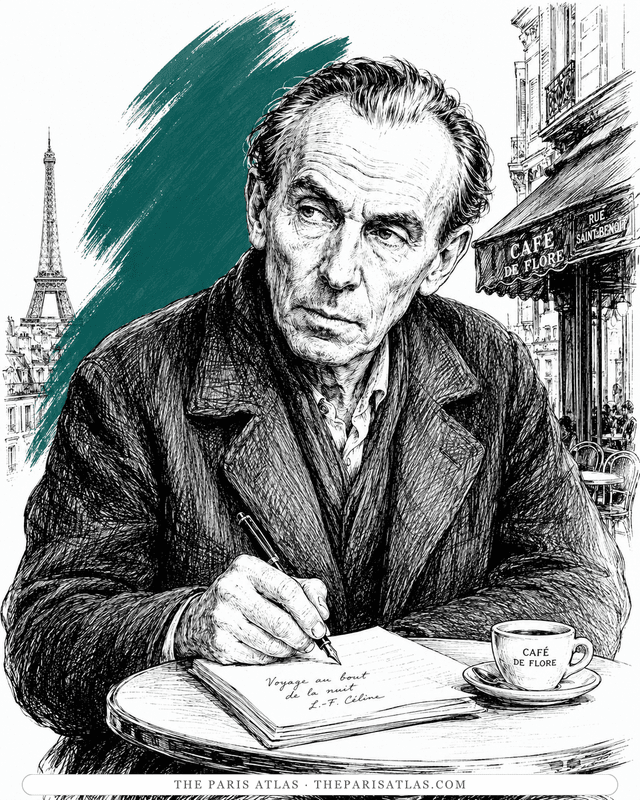
The doctor of the Paris slums who wrote the century's blackest, funniest novel — and changed the sound of French prose.
View author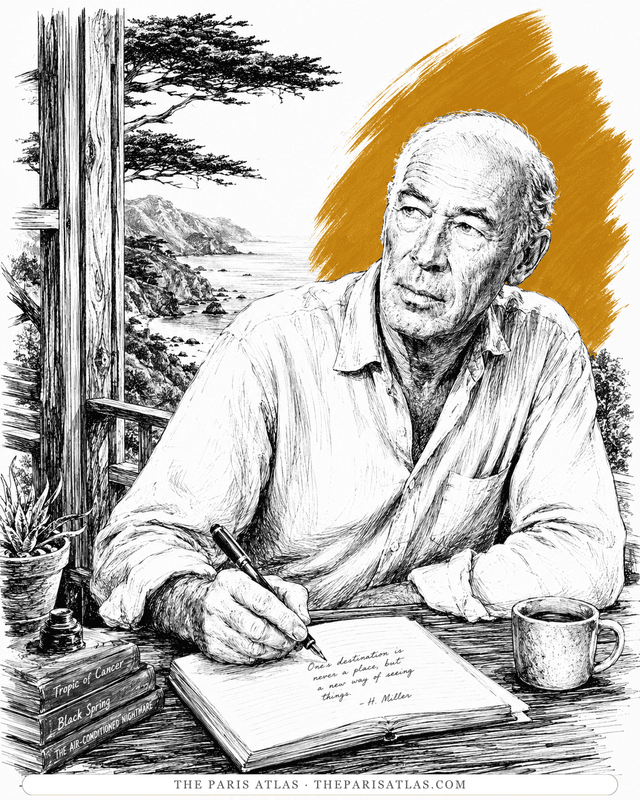
The Brooklyn dropout who arrived in Paris broke at thirty-eight and wrote the exuberant, banned books that ended American censorship.
View author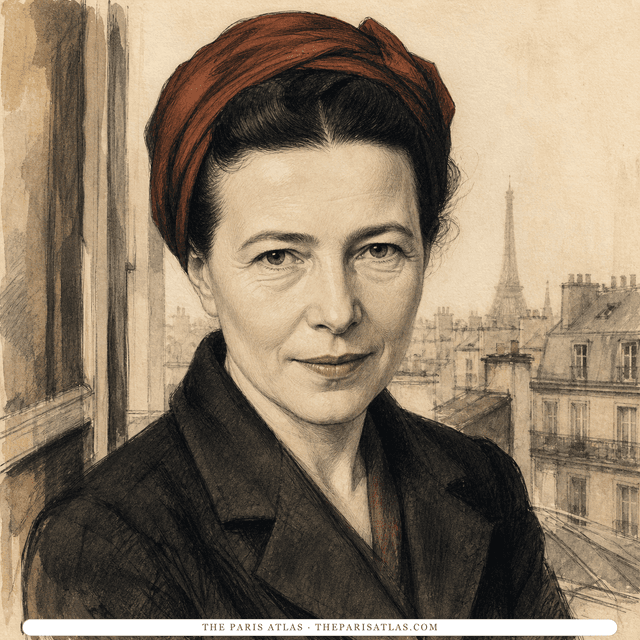
French writer and philosopher whose novels, memoirs, and social analysis examined freedom, gender, responsibility, aging, and the material conditions that shape a life.
View authorThe sources below include the primary text, editions, scholarship, archival materials, and other records that informed this page. They document Reveries of the Solitary Walker, its publication, and its place in literary history.

Scholarly overview, dating the Reveries to Rousseau's last years.
The national library's record of the 1782 Geneva first edition, the Confessions followed by the Reveries.
The city of Paris register of plaques, for the rue Plâtrière address.

Open Library edition record used to confirm the Penguin Classics ISBN listed above.
The primary text represented by this page, used for descriptions of the work’s contents and for any quoted passages shown here.
The primary text is the baseline reference for every book page. Additional references document publication history, interpretation, and historical context where that evidence is available.
 Explore more resources