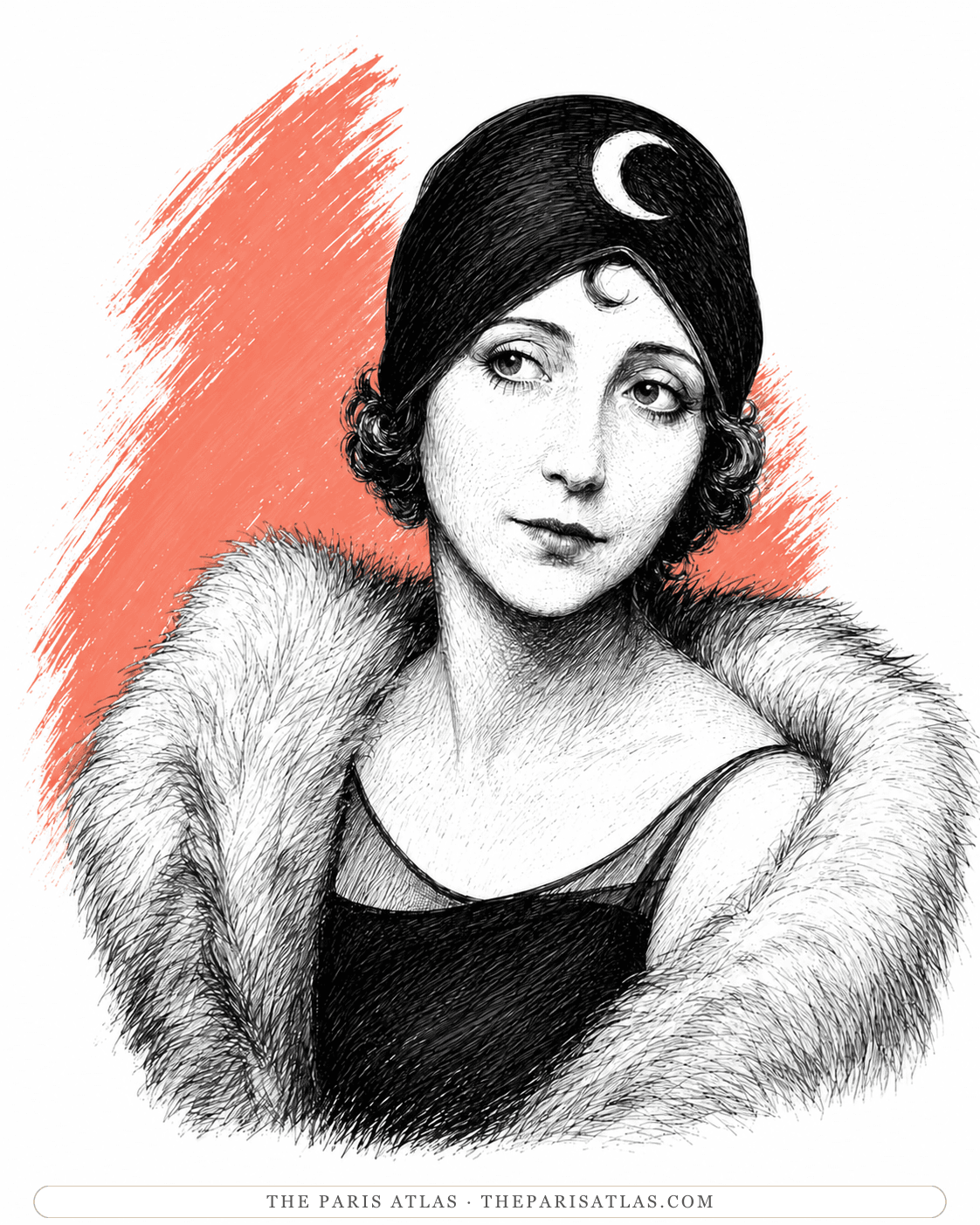


The Novel of the Future
by Anaïs Nin
Her criticism at full length: the case for the poetic, psychological novel, written at the height of the Diary's fame.
- 1968
About Anaïs Nin
The story, briefly
Spoiler-freeNin's one full-length book of criticism, published by Macmillan in 1968 with the Diary's success at her back: a sustained argument for the novel built on dream, symbol, and psychological reality, against the documentary realism she had fought since the forties pamphlets. Drawing on Proust, Lawrence, the Surrealists, her own fiction, and the young writers she championed, it doubles as the fullest guide to reading the continuous novel as she intended it. (Criticism — nothing to spoil.)
The story, in more detail
The book gathers a lifetime's argument at the moment the world was finally listening. The Diary had made Nin a campus figure, and The Novel of the Future is written for those rooms: part aesthetics, part memoir of method, part reading list. The old pamphlet theses — realism versus reality, writing from the unconscious — return at essay length, now illustrated from four decades of her own books and from the moderns she claimed as lineage.
Its reception split on predictable lines: admirers took it as the key to her shelf and a defense of poetic fiction in an age of reportage; skeptics found the science loose and the manifesto's confidence undimmed by counter-argument. Both readings agree on its usefulness — for readers of Nin, it is the author's own map, and its chapters on the diary as a form anticipate the creative-nonfiction arguments of decades later.
What's inside
Chapters on the poetic novel and its lineage; on dream, symbol, and the unconscious as narrative instruments; on the diary as a literary form — the fullest statement of her case for it; on the writers she took as allies, from Proust and Lawrence to the young Americans she promoted; and throughout, the running defense of psychological reality as the novel's future, with her own books as evidence and demonstration.
Themes and analysis
The house they can build
Nin's account of her childhood play turns an apparent exposure of deception into a beginning. When the father regains his sight, the poor room does not become the comfortable home his daughter has described; instead, her words supply a project he wants to realize. The distinction is crucial to the book's argument: imagination need not compete with observation by pretending that something already exists. It can name a possibility that observation alone has not supplied. The play's reversal gives Nin a miniature demonstration of art moving outward into action.
Passageways between levels
Her canal-lock metaphor also places a limit on the appeal of unrestricted flow. The passageways between conscious thought and unconscious imagery require form, just as different water levels require controlled communication. Discipline does not simply shut the dream out; it helps the writer bring its material across without being overwhelmed. That double demand makes the metaphor more exact than a general celebration of spontaneity. Nin asks for openness to images and a structure capable of carrying them, treating artistic freedom as a practiced relation between the two.
Why we recommend it
The full argument
Thirty years of aesthetic combat, finally at the length the case deserved.
The lineage claimed
Proust, Lawrence, the Surrealists — Nin places her shelf in its family tree explicitly.
Ahead on the diary
Its defense of journal-writing as art anticipates arguments the culture reached decades later.
What this book explores
Timeline
1946–1947
The pamphlet arguments that become this book's foundation.
1968
Macmillan publishes the full-length case, with the Diary's fame as its platform.
2014
Swallow Press publishes a new edition with an introduction by Deirdre Bair.
Book editions
Hardcover
- Hardcover
- Macmillan
- 1968
Paperback
- Paperback
- Swallow Press / Ohio University Press
Reader reviews
Readers may also like


D. H. Lawrence: An Unprofessional Study
Her first criticism — the same instincts, thirty-six years earlier.
Read our takeThe Novel of the Future: frequently asked questions
What is The Novel of the Future?
Anaïs Nin's full-length book of criticism, published by Macmillan in 1968 — the sustained case for fiction built on dream, symbol, and psychological reality.
Do I need to know her fiction to read it?
No, but it helps — the book doubles as her own guide to the continuous novel, with her methods explained from the inside.
How was it received?
Admirers took it as the key to her work and a timely defense of poetic fiction; skeptics found the manifesto confident past its evidence. It remains the essential statement either way.
What does it say about the diary?
Its chapters on journal-writing argue the diary is a literary form in its own right — her fullest defense of the practice that produced her most famous work.
How does it relate to her earlier pamphlets?
Directly — Realism and Reality (1946) and On Writing (1947) are its seeds, expanded here at book length with two more decades of evidence.
If you like Anaïs Nin
Explore authors with a similar voice, perspective, and influence.
Henry Miller
The entangled careers of the Villa Seurat: she financed and prefaced his scandal, he detonated her prose — and each wrote the other into the century's record.
View author
Louis-Ferdinand Céline
The doctor of the Paris slums who wrote the century's blackest, funniest novel — and changed the sound of French prose.
View author
Martha Gellhorn
War correspondent who covered the Spanish Civil War, D-Day, and conflicts across five more decades; Hemingway's third wife, 1940–1945.
View author
References
References
The sources below include the primary text, editions, scholarship, archival materials, and other records that informed this page. They document The Novel of the Future, its publication, and its place in literary history.


1The Novel of the Future
NovelAnaïs Nin, 1968Used forThe primary text represented by this page, used for descriptions of the work’s contents and for any quoted passages shown here.
2Anaïs Nin — biography
WebsiteThe Anaïs Nin FoundationUsed forUsed to verify The Novel of the Future's bibliographic context and its place within Anaïs Nin's published work.
3Anaïs Nin Papers — diary, March–September 1938
ArchiveUCLA Library Special CollectionsUsed forUsed for independent archival, institutional, or historical context surrounding Anaïs Nin and The Novel of the Future.
4Anaïs Nin: A Biography
BiographyG. P. Putnam's Sons, 1995Used forUsed to cross-check chronology, publication history, and the circumstances in which The Novel of the Future appeared.
5Anaïs: The Erotic Life of Anaïs Nin
BiographyLittle, Brown, 1993Used forUsed for an additional scholarly or biographical perspective on The Novel of the Future and Anaïs Nin's wider career.
6the novel of the future — edition and reception record
WebsiteOhio University PressUsed forDocuments the dated edition or contemporary reception included in the timeline.
7The Novel of the Future — Sky Blue Press public ebook preview
WebsiteSky Blue Press; preview hosted by Everand, 2014Used forChapter One's childhood-play account and canal-lock metaphor in the public Sky Blue Press preview; used for Nin's aesthetic argument, not as scientific or biographical verification.
i
Why these sources are here
The primary text is the baseline reference for every book page. Additional references document publication history, interpretation, and historical context where that evidence is available.
 Explore more resources