

Conversations with Anaïs Nin
by Anaïs Nin
The interviews, collected: three decades of Nin answering questions, from little magazines to the fame years, in one scholarly volume.
- 1994
About Anaïs Nin
The story, briefly
Spoiler-freeA posthumous gathering of Nin's interviews, edited by Wendy M. DuBow for the University Press of Mississippi's Literary Conversations series in 1994: conversations spanning her American decades, from small-journal exchanges before the fame through the campus and media years after 1966. The format's virtue is the unguarded middle ground — less composed than the essays, more focused than the lectures — with interviewers pressing on the diary, the fiction's reception, women and the movement, and the legend she was living inside. (Interviews — nothing to spoil.)
The story, in more detail
The Literary Conversations series collects interviews whole rather than in quotation, and the treatment suits Nin unusually well: she was interviewed constantly and answered seriously, and the run of full conversations shows the themes hardening into doctrine and occasionally cracking under a good question. DuBow's selection spans the arc — obscurity, arrival, icon — and the introduction places each conversation in its moment.
For readers who know A Woman Speaks, this is the other half of the spoken record: not the lecture platform she controlled but the exchanges she didn't, including interviewers skeptical of the diary project and of the persona. The result is among the most useful single volumes for seeing how Nin explained herself to her century — and where the explanations shifted.
What's inside
Full-text interviews across roughly three decades, arranged chronologically with an editor's introduction: the early exchanges in little magazines, the post-1966 wave of campus, radio, and print conversations, and late interviews from the final years. Recurring ground — the diary and its editing, the fiction's long fight for readers, psychoanalysis, women's lives and the movement — with each interviewer's angle preserved.
Themes and analysis
Before the persona became public property
In his 1976 interview, Jeffrey Bailey asks Nin to reconsider the diary's earlier privacy. Her answer changes the opposition built into his question: diary and novel are not simply a hiding place and an exposure to the world. Looking back, she says that writing fiction improved the diary and that the two forms supported one another. The interview therefore preserves a revised account of her development, not just an early position repeated unchanged. Its question-and-answer form lets readers notice the distance between a past difficulty and the later explanation she gives it.
The diary years face an audience
Asked what she leaves out of the published diary, Nin distinguishes personal responsibility from the publisher's permission requirement. Her example is a portrait whose subject fears consequences she had not anticipated. An affectionate intention, in this account, cannot by itself determine whether publication will harm someone. The exchange makes the public diary a negotiated work: other people can answer back before appearing in it. It also gives readers a reason to examine Nin's explanation of selection, rather than assuming that intimacy guarantees either complete disclosure or an unmediated record.
Why we recommend it
The interview arc
Obscurity to icon in the same format — the persona's development, datable conversation by conversation.
The good questions
The volume keeps the pressing interviewers, and her answers under pressure are the book's best material.
Reference-grade
Full texts, chronology, and context — built for citation as much as reading.
What this book explores
Timeline
1940s–1970s
The interviews accumulate, from little-magazine exchanges to the post-1966 media wave.
1994
DuBow's collection prints them whole for the Literary Conversations series.
2020
Choeisha publishes a Japanese translation of DuBow’s interview collection.
Book editions
Paperback
- Paperback
- University Press of Mississippi
- 1994
Reader reviews
Readers may also like


Conversations with Anaïs Nin: frequently asked questions
What is Conversations with Anaïs Nin?
A 1994 collection of Nin's interviews across three decades, edited by Wendy M. DuBow for the University Press of Mississippi's Literary Conversations series.
Did Nin write or authorize it?
No — it is a posthumous scholarly collection, published seventeen years after her death, printing the interviews in full with an editor's introduction.
What do the interviews cover?
The diary and its editing, the fiction's reception, psychoanalysis, women and the movement, and the fame itself — with each interviewer's own angle preserved.
How does it differ from A Woman Speaks?
A Woman Speaks collects her lectures and seminars — the platform she ran. This volume collects interviews, including skeptical ones, where the questions came from outside.
Who should read it?
Readers past the introductions — it rewards those who know the diaries and want to watch the self-presentation evolve under questioning.
If you like Anaïs Nin
Explore authors with a similar voice, perspective, and influence.
Henry Miller
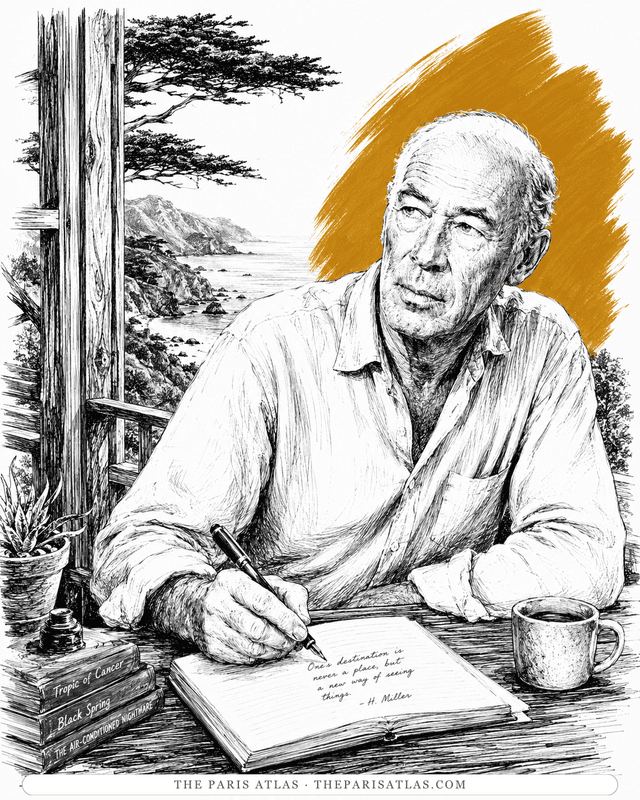
The entangled careers of the Villa Seurat: she financed and prefaced his scandal, he detonated her prose — and each wrote the other into the century's record.
View author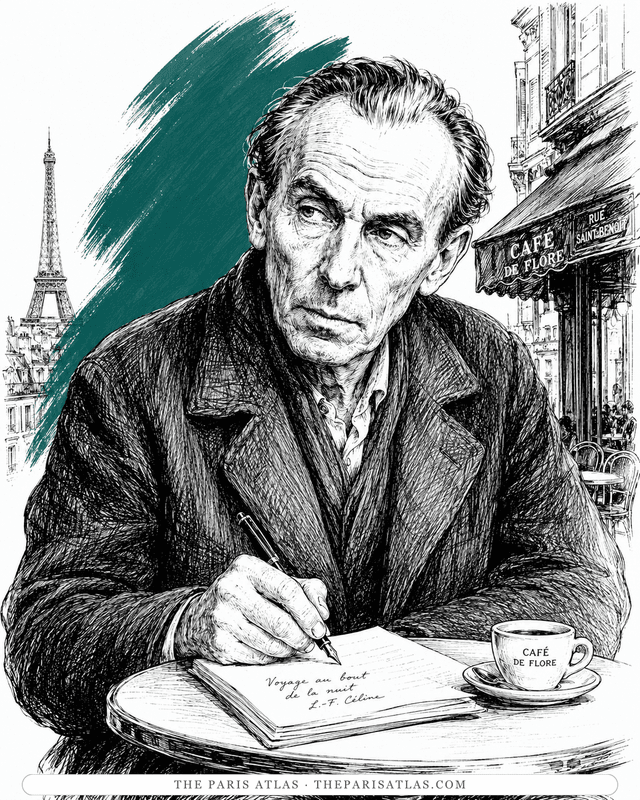
Louis-Ferdinand Céline
The doctor of the Paris slums who wrote the century's blackest, funniest novel — and changed the sound of French prose.
View author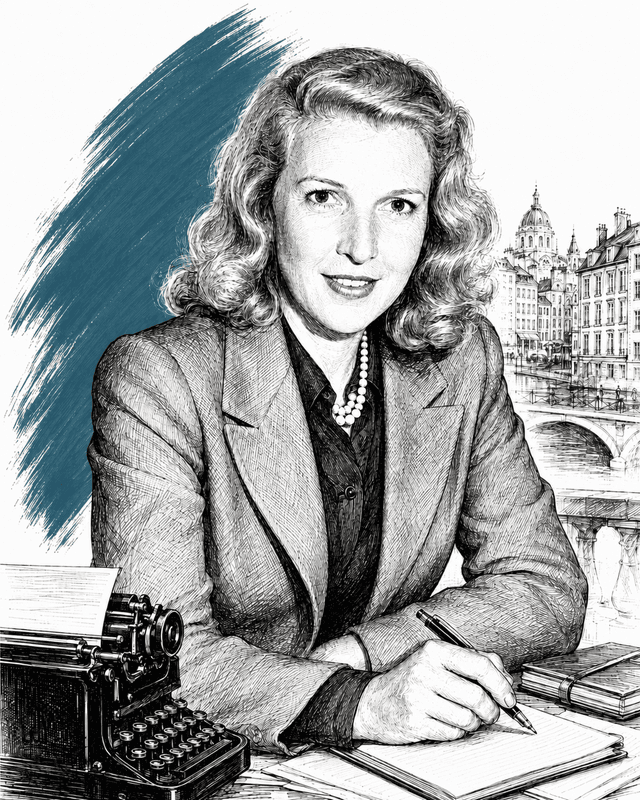
Martha Gellhorn
War correspondent who covered the Spanish Civil War, D-Day, and conflicts across five more decades; Hemingway's third wife, 1940–1945.
View author
References
References
The sources below include the primary text, editions, scholarship, archival materials, and other records that informed this page. They document Conversations with Anaïs Nin, its publication, and its place in literary history.


1Conversations with Anaïs Nin
NovelAnaïs Nin, 1994Used forThe primary text represented by this page, used for descriptions of the work’s contents and for any quoted passages shown here.
2Anaïs Nin — biography
WebsiteThe Anaïs Nin FoundationUsed forUsed to verify Conversations with Anaïs Nin's bibliographic context and its place within Anaïs Nin's published work.
3Anaïs Nin Papers — diary, March–September 1938
ArchiveUCLA Library Special CollectionsUsed forUsed for independent archival, institutional, or historical context surrounding Anaïs Nin and Conversations with Anaïs Nin.
4Anaïs Nin: A Biography
BiographyG. P. Putnam's Sons, 1995Used forUsed to cross-check chronology, publication history, and the circumstances in which Conversations with Anaïs Nin appeared.
5Anaïs: The Erotic Life of Anaïs Nin
BiographyLittle, Brown, 1993Used forUsed for an additional scholarly or biographical perspective on Conversations with Anaïs Nin and Anaïs Nin's wider career.
6Choeisha — Japanese edition
WebsiteUsed forWeb source consulted for documented facts and historical context presented on the Conversations with Anaïs Nin page.
7Anaïs Nin: Link in the Chain of Feeling — 1976 interview, public transcription
WebsiteNew Orleans Review, 1976Used forNew Orleans Review's public transcription of Jeffrey Bailey's interview, recorded in 1976. Used for the opening diary/fiction exchange and the questions about editing and permissions. Some unrelated passages have transcription gaps; no claim of an unedited recording or complete anthology collation is made.
8Anaïs Nin et la quête d'une écriture de l'intime : Étude comparée des influences littéraires de langue française et de langue anglaise — doctoral thesis
WebsiteUniversité de Strasbourg, 2011Used forPrinted p. 283, note 2, visually checked, attributes a passage from Bailey's 1976 interview to DuBow's Conversations with Anaïs Nin, p. 248. Used to establish the interview's inclusion, not as the source of the two analyzed exchanges or a word-for-word version comparison.
i
Why these sources are here
The primary text is the baseline reference for every book page. Additional references document publication history, interpretation, and historical context where that evidence is available.
 Explore more resources