The Paris AtlasCharting the artists, works, and places worth returning to.
Cover of The Lion and the Unicorn by George Orwell

The Lion and the Unicorn

by George Orwell

Written under the Blitz: George Orwell's argument that England could not win the war without becoming a socialist country.

Published
1941
Pages
96
Setting
England, London
Shelf rating
4.5

About George Orwell

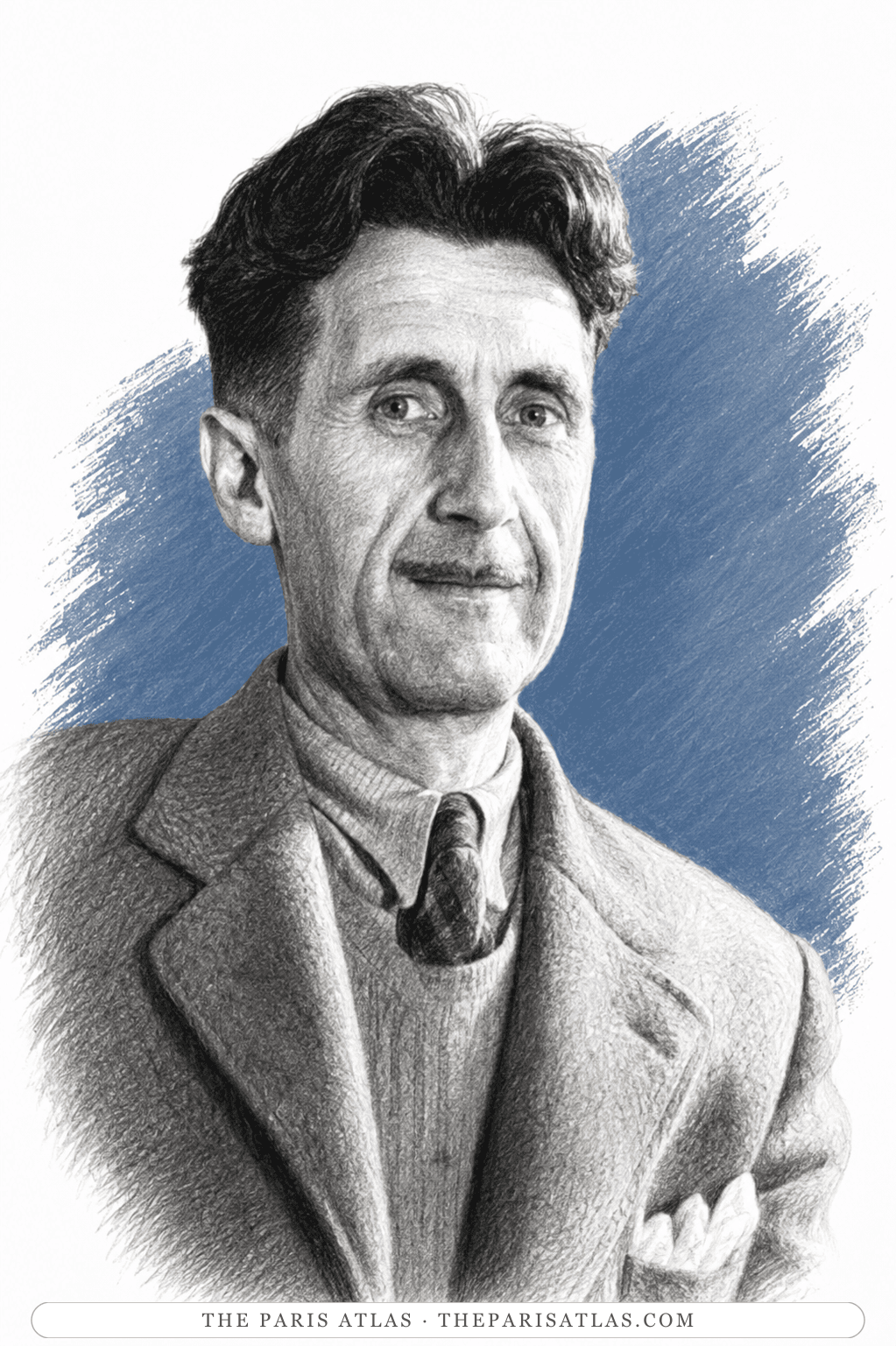
Illustrated portrait of George Orwell
George Orwell

12 books on our shelvesWhere to start

The story, briefly

Spoiler-free

George Orwell wrote this short book in London in the autumn of 1940, under German bombing, and Secker & Warburg published it on 19 February 1941 as the first of the Searchlight Books. The argument is that England could not defeat Nazi Germany without becoming socialist, and could not become socialist in any way that was not recognisably English. Part One, "England Your England", asks what England actually is and answers with bad teeth and flowers, hobbies and pubs, a hatred of uniforms, a faith in law, and a ruling class that has lost the ability to govern. Part Two, "Shopkeepers at War", argues that private capitalism had already failed the test of the war and could not produce the weapons the country needed. Part Three, "The English Revolution", sets out a six-point programme and predicts what an English socialist government would actually look like. (Nothing to spoil: the book argues in the open.)

The story, in more detail

Secker & Warburg published the book on 19 February 1941 as the first volume of the Searchlight Books, a wartime series George Orwell edited with the writer T. R. Fyvel. Seventeen titles were projected and ten appeared across 1941 and 1942, among them Arturo Barea on Spain, Joyce Cary on Africa and Stephen Spender on poetry. German bombing destroyed stock and the printer's paper supply, and the series was discontinued. The first printing of 7,500 copies was followed by a second impression of 5,000 in March 1941, and sales passed 10,000, more than any book Orwell had published to that point.

It was written under the Blitz, and it says so. The first sentence is about bombers overhead. Part Two opens in the noise of the anti-aircraft guns: "I began this book to the tune of German bombs, and I begin this second chapter in the added racket of the barrage." Two of Orwell's own footnotes date the writing. One notes that a passage was set down before the outbreak of the war in Greece, which began on 28 October 1940. The other cites a remark Joseph P. Kennedy, the American ambassador in London, made on returning to New York that same October.

The lion and the unicorn are the supporters of the royal coat of arms of the United Kingdom, and the phrase appears exactly once inside the book. In Part Three, listing what an English socialist government would leave alone, Orwell writes that it "will leave anachronisms and loose ends everywhere, the judge in his ridiculous horsehair wig and the lion and the unicorn on the soldier's cap-buttons." The emblem stands for the parts of England he expected a revolution to keep.

Part One has had a life of its own. "England Your England" is anthologised as a standalone essay, and in 1953 Secker & Warburg used its title for a posthumous collection, England Your England and Other Essays. Harcourt, Brace published a closely related collection in New York the same year as Such, Such Were the Joys; the contents differ, and the school memoir that gives the American book its title was left out of the English one. A reader who knows the essay has read a third of this book, often without knowing there were two further parts.

What's inside

Part One, "England Your England", runs to six numbered sections and is a portrait of the country. George Orwell starts small. Coming back from abroad, the beer is bitterer and the coins are heavier; the crowds have mild knobby faces, bad teeth and gentle manners; the most hated name in an English ear is Nosey Parker. From those he builds a set of claims. The English are not artistic and not intellectual. They are private, addicted to hobbies and gardens and the pub. They hate war and militarism, and the battle poems they actually remember are about defeats: Corunna, Mons, Ypres, Gallipoli, Passchendaele. They believe in law as something above the State while knowing perfectly well that there is one law for the rich and another for the poor. Two of the six sections then turn hostile. The ruling class, Orwell argues, escaped into stupidity because admitting their position was unjustifiable would have meant giving it up. The left-wing intelligentsia became purely negative, Europeanised, and ashamed of their own country. The part ends in the new suburbs of Slough, Dagenham and Hayes, where he thinks the old class markers are dissolving.

Part Two, "Shopkeepers at War", is the economic case, and it is the shortest of the three. Private capitalism, Orwell says, has been physically debunked by the war: it could not shift production to armaments in time, because a manufacturer's first duty is to his shareholders, and British dealers were still selling Germany tin, rubber and copper at the end of August 1939. He then defines his terms. Socialism is common ownership of the means of production plus approximate equality of incomes, political democracy, and the abolition of hereditary privilege in education. Fascism, in the German version, is a form of capitalism that borrows from socialism whatever makes it efficient for war, and Orwell writes flatly that it works. The part closes on what was then called the Fifth Column. He lists the people to whom the idea of a Hitler victory appeals: the very rich, the Communists, Mosley's followers, the pacifists and some Catholics. None of them, he decides, could start a stop-the-war movement on their own. The real danger is from above.

Part Three, "The English Revolution", is the programme. Orwell first asks why English socialism had failed, and works through the Labour Party, the Communists and the smaller Marxist parties in turn: none of them, he says, produced a version of socialism that the mass of people could find desirable. Then he sets out six points. Nationalisation of land, mines, railways, banks and major industries. A limit on incomes so that the highest tax-free income does not exceed the lowest by more than ten to one. Reform of education along democratic lines. Immediate Dominion status for India, with the power to secede once the war is over. An Imperial General Council in which, in his words, "the coloured peoples are to be represented". Formal alliance with China, Abyssinia and the other victims of the Fascist powers. He then amplifies the first four. Land ownership would be capped at about fifteen acres and the competent farmer would carry on as a salaried manager. Education reform would start by abolishing the autonomy of the public schools and the older universities and filling them with State-aided pupils chosen on ability. India would be offered partnership rather than the word freedom, plus an unconditional right to secede. The class he expects to resist, those with more than £2,000 a year, he counts at under half a million people.

How it ends — spoilers aheadThe final movement, ending included. Open when you're ready.

The last two sections predict what an English socialist government would be like, and much of the prediction is about what it would not disturb. It would abolish the House of Lords and probably keep the monarchy. It would disestablish the Church without persecuting religion. It would shoot traitors, Orwell writes, but give them a solemn trial first and occasionally acquit them. It would leave the judge in his horsehair wig and the lion and the unicorn on the soldier's cap-buttons, and would assimilate so much of the past that foreign observers would doubt a revolution had happened at all. He then states the choice as an either-or: England turns the war into a revolutionary war, or it loses the war and a great deal besides. The book ends on the heirs of Nelson and Cromwell, whom he places in the fields and the factories and the four-ale bar rather than the House of Lords, and on a flat declaration: "I believe in England, and I believe that we shall go forward."

Quotes from The Lion and the Unicorn

Quoted verbatim from the text, each line verified against its source.

As I write, highly civilized human beings are flying overhead, trying to kill me.
George Orwell, The Lion and the Unicorn: Socialism and the English Genius (1941), Part I: England Your England
It is simply an affirmation of naked power; contained in it, quite consciously and intentionally, is the vision of a boot crashing down on a face.
George Orwell, The Lion and the Unicorn: Socialism and the English Genius (1941), Part I: England Your England
It is a land where the bus conductors are good-tempered and the policemen carry no revolvers.
George Orwell, The Lion and the Unicorn: Socialism and the English Genius (1941), Part I: England Your England

All 13 The Lion and the Unicorn quotes →

Why we recommend it

  1. The short answer to "what is England"

    In Part One, George Orwell puts the pillar-boxes, the bad teeth, the hanging judge and the goose-step into a single argument. It is the piece of his writing most often reprinted on its own, and it is a third of this book.

  2. The politics arrive with numbers attached

    Most accounts of Orwell's socialism describe a temperament. This is where he wrote the programme down: what to nationalise, what ratio of incomes, what to do about the public schools, and what to offer India.

  3. Written while the outcome was open

    Finished in the autumn of 1940 and published in February 1941, before the Soviet Union or the United States entered the war. Orwell is arguing about what England should do next, with no idea how any of it turns out.

What this book explores

The people in its pages

This is an argument rather than a story, and it has no cast in the ordinary sense. Dozens of real people are named in passing, and only a handful are described. Three of the four below are figures George Orwell actually draws. Adolf Hitler is here because the book contends with him on nearly every page, though it analyses him and never describes him.

  • Neville Chamberlain

    The British Prime Minister of the years the book is trying to explain. George Orwell rejects the idea that he was a schemer selling England to Hitler and calls him a stupid old man doing his best by very dim lights. The sharper half of the argument is that public opinion was behind him at every step.

  • Sir Oswald Mosley

    The leader of the English fascist movement of the 1930s, and half of George Orwell's explanation for why it never amounted to much. Orwell counts the Blackshirts at fewer than 50,000 even at their height and calls Mosley as hollow as a jug.

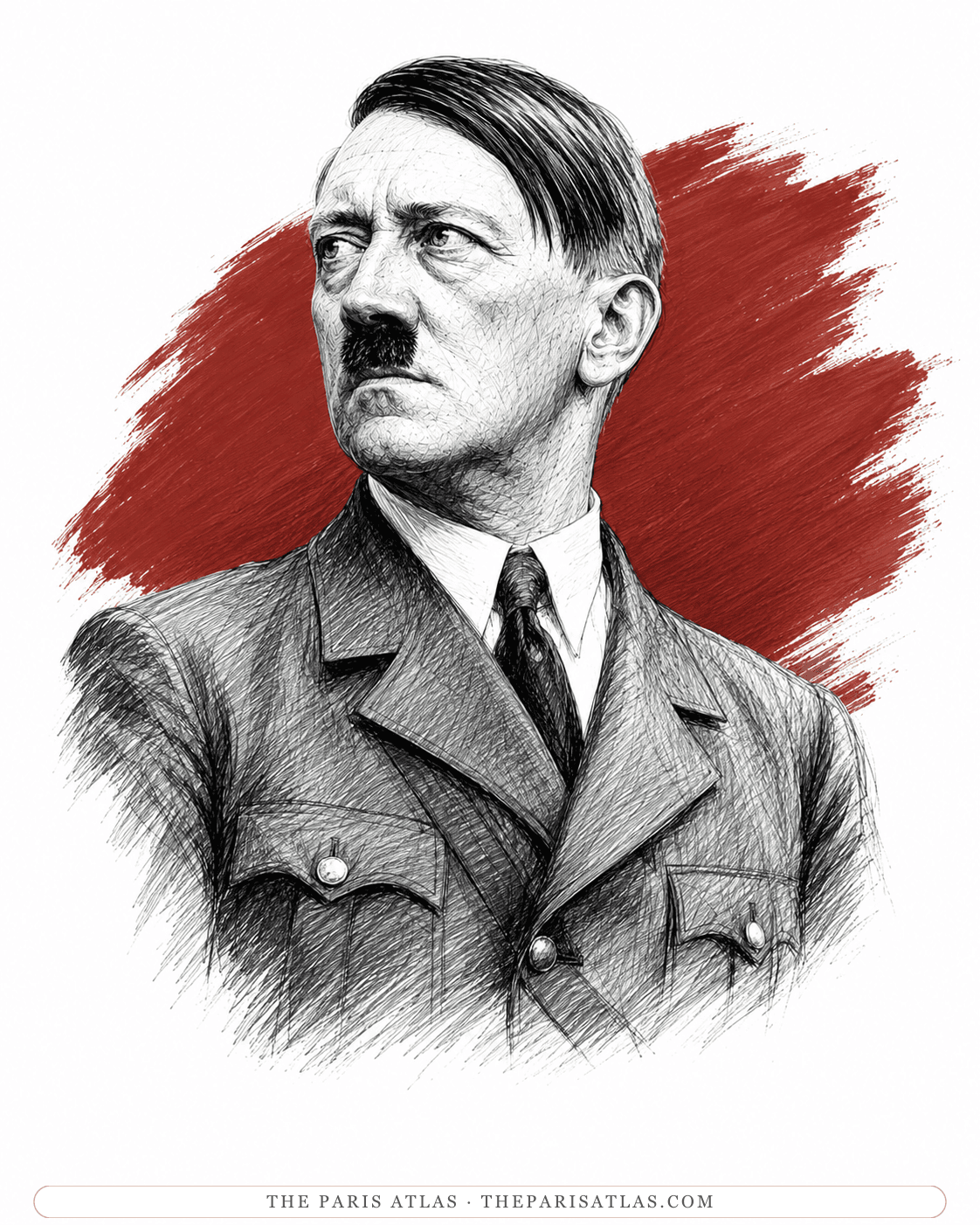
  • Illustrated portrait of Adolf Hitler

    Adolf Hitler

    The book's antagonist, named on nearly every page and never described. George Orwell argues that Hitler's real self is in Mein Kampf and in his actions, that he has never persecuted the rich except when they were Jews or when they actively opposed him, and that what he came into the world to destroy is the idea of human equality.

Also in the book

  • Illustrated portrait of Winston Churchill

    Winston Churchill

    Prime Minister while the book was being written, and in George Orwell's account a leader the country chose because he matched its mood. Orwell credits him with grasping that wars are not won without fighting, and expects nothing beyond that from his government.

Real people in this book

The real people this book portrays, dedicates itself to, or draws from — every connection carries its source.

Illustrated portrait of Adolf Hitler

Adolf Hitler

  • Painter

Depicts

The book's antagonist, named on nearly every page and never described. George Orwell argues that Hitler's real self is in Mein Kampf and in his actions, and that what he came into the world to destroy is the idea of human equality.

George Orwell, The Lion and the Unicorn: Socialism and the English Genius (1941)

Bring it to book club

  • George Orwell's case rests on the claim that patriotism is stronger than class-hatred, and that a socialist movement in England would have to use it rather than sneer at it. Does Part One establish that, or assume it?
  • The six-point programme is specific: nationalisation, a ten-to-one income ratio, an end to the autonomy of the public schools, Dominion status for India with the right to secede. Which of the six now reads most like a description of what happened, and which least?
  • Orwell writes that the English left-wing intelligentsia "take their cookery from Paris and their opinions from Moscow", and that England is perhaps the only great country whose intellectuals are ashamed of their own nationality. What evidence does he offer, and what would count as evidence against it?

A complete discussion guide is on our editorial calendar. Join the letter to hear when it ships.

Timeline

  1. Autumn 1940

    George Orwell writes the book in London during the Blitz. One footnote places a passage before the outbreak of the war in Greece on 28 October 1940; another cites a remark made in New York that same month.

  2. 19 February 1941

    Secker & Warburg publish it in London as the first of the Searchlight Books, the series Orwell edited with T. R. Fyvel. First printing 7,500 copies.

  3. March 1941

    A second impression of 5,000 copies follows. Sales pass 10,000, more than any of his earlier books.

  4. 1941–1942

    Ten of the seventeen projected Searchlight Books appear. Bombing destroys stock and the printer's paper supply, and the series is discontinued.

  5. 1953

    Secker & Warburg give the title of Part One to a posthumous collection, England Your England and Other Essays.

Book editions

Paperback edition cover
Paperback
Penguin Modern Classics
2018
ISBN-13
9780241315682
96 pages, published 25 January 2018. The edition of record here, and where the buy link goes.
Hardcover
Hardcover
Secker & Warburg
1941
The first edition, published in London on 19 February 1941 as Searchlight Books No. 1.

Reader reviews

Loading reviews…

The Lion and the Unicorn: frequently asked questions

What is The Lion and the Unicorn about?

It argues that England could not defeat Nazi Germany without becoming a socialist country. George Orwell wrote it in London in the autumn of 1940, during the Blitz, and it runs in three parts: a portrait of English national character, a case that private capitalism had failed the test of the war, and a six-point programme for what he calls the English revolution.

When was The Lion and the Unicorn published?

On 19 February 1941, by Secker & Warburg in London. It was the first of the Searchlight Books, a wartime series George Orwell edited with the writer T. R. Fyvel; ten of a projected seventeen titles appeared before bombing ended it.

Is "England Your England" the same thing as The Lion and the Unicorn?

"England Your England" is Part One of it, roughly a third of the book. It is reprinted on its own often enough that many readers meet it as a freestanding essay, and Secker & Warburg used its title for a posthumous collection of George Orwell's essays in 1953. The other two parts are "Shopkeepers at War" and "The English Revolution".

What is Orwell's six-point programme?

Nationalisation of land, mines, railways, banks and major industries; a limit on incomes so the highest tax-free income is no more than ten times the lowest; democratic reform of education; immediate Dominion status for India with the power to secede once the war is over; an Imperial General Council with representation for the peoples of the Empire; and formal alliance with China, Abyssinia and the other victims of the Fascist powers. George Orwell sets them out in Part Three and then amplifies the first four.

Where does the title come from?

From the royal coat of arms of the United Kingdom, whose supporters are a lion and a unicorn. The phrase appears once inside the book: George Orwell writes that an English socialist government would leave anachronisms everywhere, including "the lion and the unicorn on the soldier's cap-buttons".

Is it a book or an essay?

It was published as a book and George Orwell calls it one in the text — "I began this book to the tune of German bombs". It is short, and the current Penguin Modern Classics edition runs to 96 pages, which is part of why it is often described as a long essay. The other reason is that Part One circulates separately.