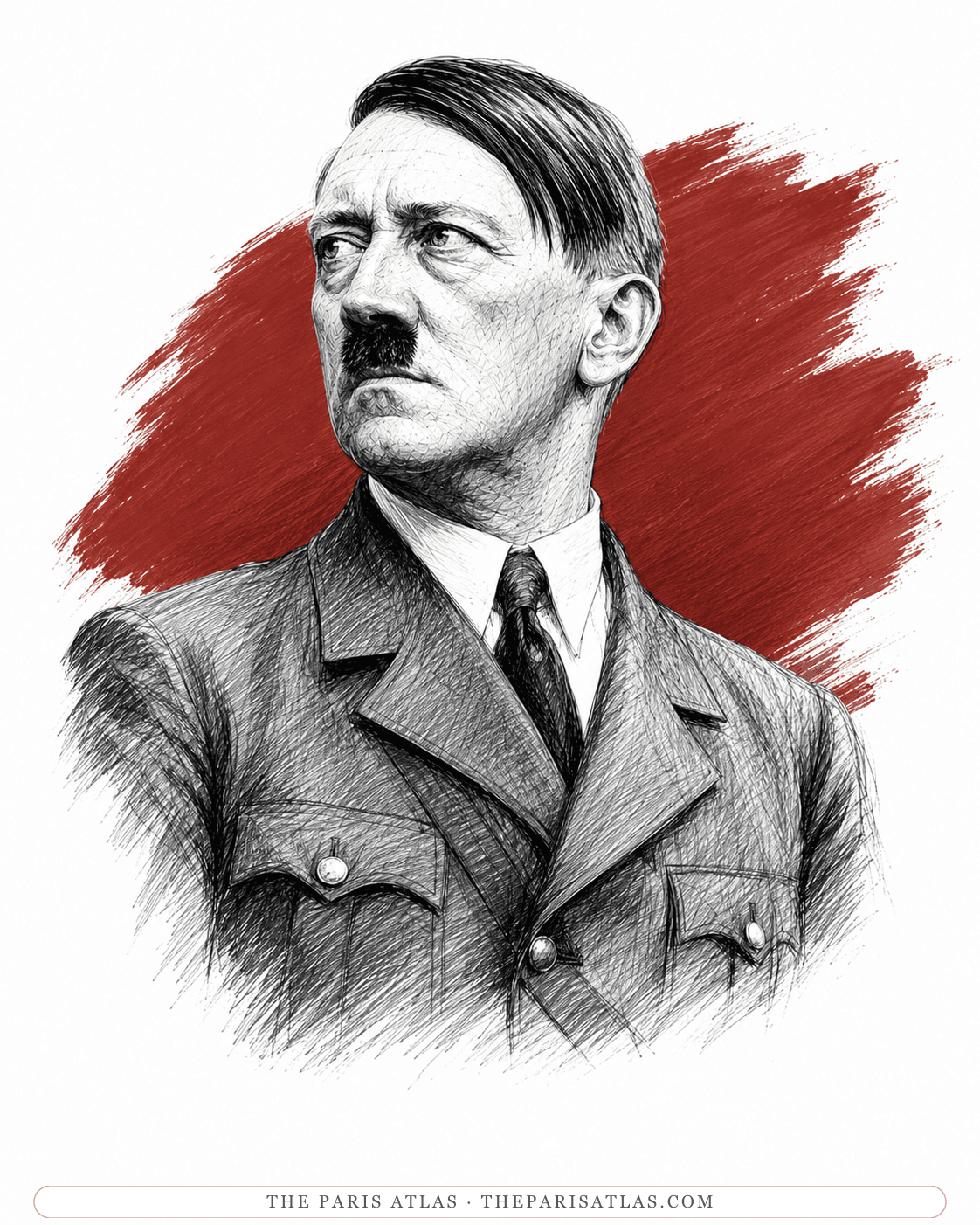
Adolf Hitler
The book's antagonist, named on nearly every page and never described. George Orwell argues that Hitler's real self is in Mein Kampf and in his actions, that he has never persecuted the rich except when they were Jews or when they actively opposed him, and that what he came into the world to destroy is the idea of human equality.
In Orwell's account, to destroy the idea of human equality and to put a graded caste society in its place. The book says the talk of being the friend of the poor man should be ignored, and that his real self is in Mein Kampf and in his actions.
The book

At a glance
- The antagonist, named on nearly every page and never described
- Mein Kampf, and his actions
- A centralised economy that leaves rich and poor, masters and men, in place
- The idea of human equality
- A graded caste society, with the colonised peoples reduced to slavery
- The very rich, the Communists, Mosley's followers, the pacifists, some Catholics
- Throughout; the analysis is concentrated in Part Two, section iii, and Part Three, section iii
Who they are in the book
Spoiler-freeAdolf Hitler led the Nazi Party and, from 1933, Germany. George Orwell wrote The Lion and the Unicorn in London in the autumn of 1940, under German bombing and with German armies holding most of western Europe, and Hitler is named on nearly every page of it. The book never describes him. It analyses him instead, and the analysis is aimed at English readers who Orwell thinks have been getting him wrong for ten years.
The most direct statement comes in Part Two, where Orwell is working out who in England might welcome a German victory. He tells the reader to pay no attention to Hitler's recent line of talk about being the friend of the poor man and the enemy of plutocracy. Hitler's real self, he writes, is in Mein Kampf and in his actions. What follows is an argument about economics. Hitler has never persecuted the rich except when they were Jews or when they tried actively to oppose him. He stands for a centralised economy that takes most of the capitalist's power and leaves the structure of society much as it was, with rich and poor, masters and men, still in place. Orwell's conclusion is that the moneyed class have always been on his side against genuine socialism, and that the danger to England is therefore from above rather than from the obscure lunatics being jailed for making speeches in his favour. He also doubts that Hitler wants to garrison England with a million men, and says a puppet British government would suit him better. He leaves the names of its members blank and invites the reader to fill them in.
Part Three states what Orwell thinks is at stake. It is precisely the idea of human equality, he writes, the "Jewish" or "Judaeo-Christian" idea of equality, that Hitler came into the world to destroy, and he adds that Hitler has said so often enough. The forecast that goes with it is specific. Hitler would consolidate his rule over Europe, Africa and the Middle East, take vast territories from Soviet Russia, and set up a graded caste society in which the German Herrenvolk ruled Slavs and other peoples and the colonised peoples were reduced to outright slavery. Part Two describes the same arrangement as four castes and gives England its place in it: if England were conquered, its job would be to manufacture weapons for Hitler's next wars, against Russia and America.
Orwell does not present him as a fool. Hitler and Mussolini rose to power very largely because they could grasp the strength of patriotism when their opponents could not. The Nazi system works, he writes, because it is planned and geared to one purpose, world conquest, and lets no private interest stand in its way. Against that he sets the English record. The governing class lived through 1931 to 1939 without discovering that Hitler was dangerous. They had grasped only that he and Mussolini were hostile to Communism, and inferred that they must therefore be friendly to the British shareholder. As late as the beginning of 1939 Lord Rothermere was describing him in the press as "a great gentleman".
How Adolf Hitler Is Portrayed
- Where Orwell says the real man is"Hitler's real self is in Mein Kampf, and in his actions." The sentence comes with an instruction: pay no attention to the recent line of talk about being the friend of the poor man and the enemy of plutocracy.
- Never persecuted the richOrwell's reading of the economics. Hitler has never persecuted the rich except when they were Jews or when they tried actively to oppose him, and the centralised economy he stands for robs the capitalist of most of his power while leaving the structure of society much as before. Orwell's inference is that the moneyed class have always been on his side against genuine socialism.
- What Orwell says he came to destroyThe idea of human equality, which Orwell calls the "Jewish" or "Judaeo-Christian" idea, and which he says Hitler came into the world to destroy and has said so often enough. Orwell writes that a world in which black men were as good as white men and Jews were treated as human beings would bring him the horror that the thought of endless slavery brings to the rest of us.
- The order he would build if he wonPart Three's forecast. Rule consolidated over Europe, Africa and the Middle East, vast territories taken from Soviet Russia, and a graded caste society with the German Herrenvolk above Slavs and other lesser peoples, the colonised peoples reduced once and for all to outright slavery.
- England's place in itPart Two sets out four castes: the Nazi party, then the mass of the German people, then the conquered European populations, then the colonised peoples. If England were conquered, Orwell writes, its job would be to manufacture weapons for Hitler's forthcoming wars with Russia and America.
- Who a Hitler victory appealed toOrwell's list of English pro-Fascists: the very rich, the Communists, Mosley's followers, the pacifists, and certain sections among the Catholics. He decides that none of them could start a stop-the-war movement on their own, and that the real danger is from above.
- The years he was not taken seriouslyOrwell's charge against the English governing class. They lived through 1931 to 1939 without discovering that Hitler was dangerous, they had grasped only that he and Mussolini were hostile to Communism and concluded that they must be friendly to the British dividend-drawer, and as late as the beginning of 1939 Lord Rothermere was describing him in print as "a great gentleman".
- The remark Orwell endorses"Hitler said once that to accept defeat destroys the soul of a nation." Orwell's comment is that this sounds like a piece of claptrap but is strictly true, and he uses it to argue that going down fighting and surrendering without a fight are not the same thing.
- Why no peace with him is possibleStrategically, Orwell writes, the war could end with Hitler in secure possession of Europe and the British Empire intact. Ideologically it could not, because English-speaking civilisation is the only large obstacle in his path, and an offer along those lines could only be made treacherously.
If you like The Lion and the Unicorn


If you like George Orwell
Explore authors with a similar voice, perspective, and influence.

Henry Miller
The Brooklyn dropout who arrived in Paris broke at thirty-eight and wrote the exuberant, banned books that ended American censorship.
View author
Louis-Ferdinand Céline
The doctor of the Paris slums who wrote the century's blackest, funniest novel — and changed the sound of French prose.
View author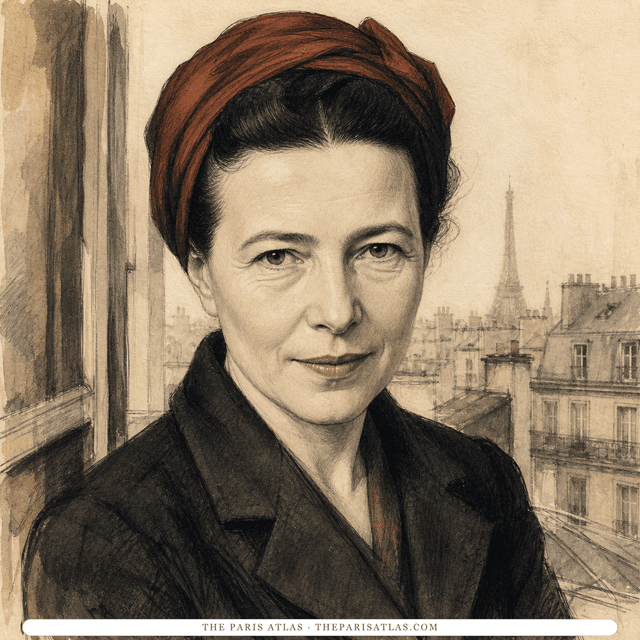
Simone de Beauvoir
French writer and philosopher whose novels, memoirs, and social analysis examined freedom, gender, responsibility, aging, and the material conditions that shape a life.
View author