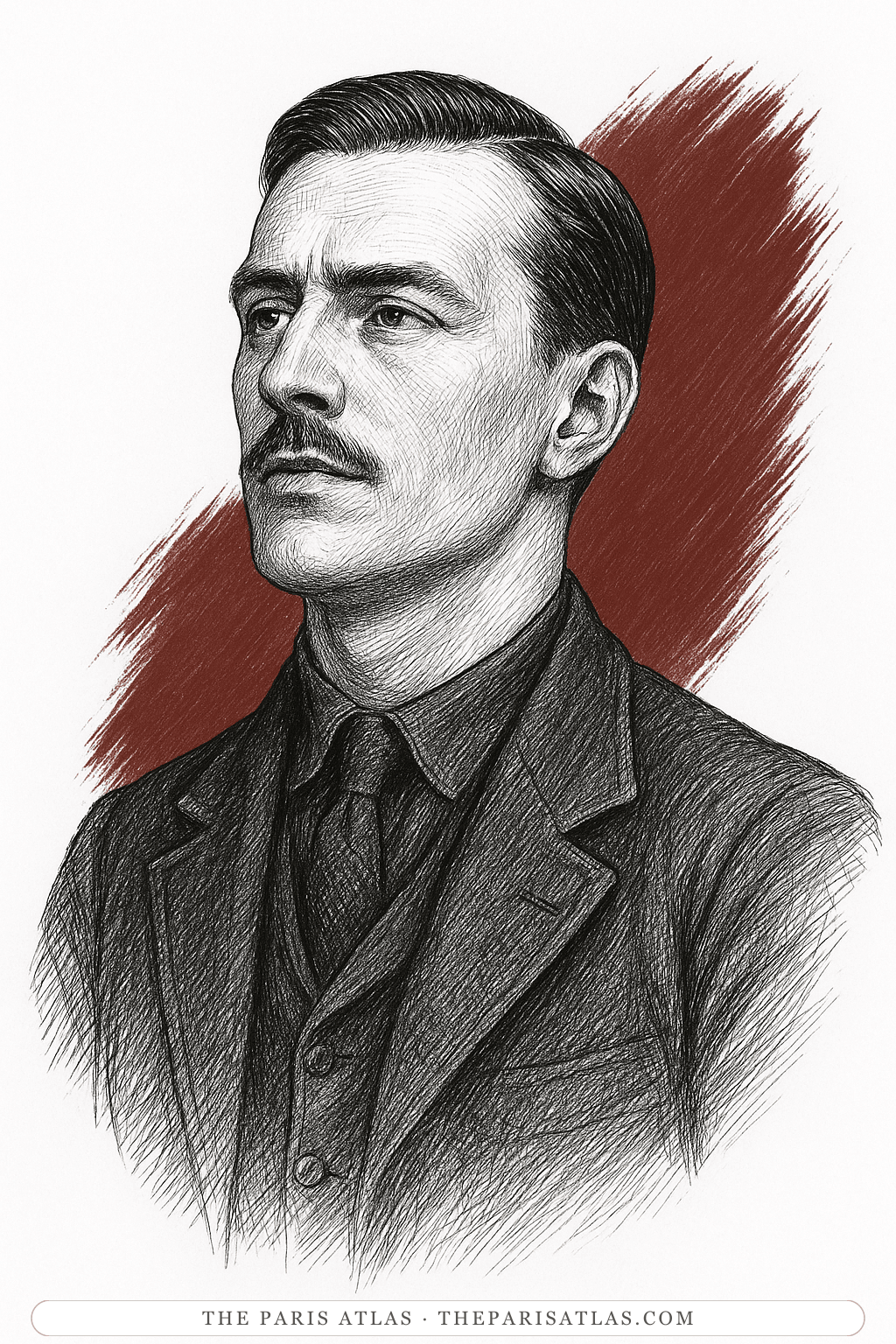
Sir Oswald Mosley
The leader of the English fascist movement of the 1930s, and half of George Orwell's explanation for why it never amounted to much. Orwell counts the Blackshirts at fewer than 50,000 even at their height and calls Mosley as hollow as a jug.
In Orwell's account, to lead an English mass movement on a model taken from abroad. The book says the uniform and programme came from Italy and the salute from Germany, and that Mosley never grasped that a movement built out of imports could not appeal to national feeling.
The book

At a glance
- The English fascist leader, used to explain why English fascism failed
- The Blackshirts, lying very low at the time of writing
- Hardly 50,000 even at its height, by Orwell's estimate
- Italy for the uniform and programme, Germany for the salute
- The footing his movement probably had in the armed forces
- Part Two, section iii; Part Three, section i
Who they are in the book
Spoiler-freeSir Oswald Mosley led the Blackshirts, the English fascist movement of the 1930s, and George Orwell brings him in twice: once at the end of Part Two, weighing up who in England might welcome a German victory, and once in Part Three, explaining why no serious native fascist movement grew up in the country at all.
The answer has two halves. One is material: conditions in England were never bad enough. The other is Mosley. Orwell writes that one would have had to look a long time to find a man more barren of ideas, and that he was as hollow as a jug. The specific charge is that the movement was borrowed wholesale. The uniform and the party programme came from Italy and the salute from Germany, and the persecution of Jews was tacked on as an afterthought by a man who had started out with Jews among his most prominent followers. What escaped him, Orwell says, was the elementary point that fascism must not offend national sentiment. A movement assembled out of foreign parts could not do anything else.
None of which makes Orwell dismiss him. Writing in 1940, with the Blackshirts lying very low, he rates them the most serious of the groups that might help a treacherous government negotiate a surrender, because of the footing they probably possessed in the armed forces. He also leaves the door open on the general question. A man of the stamp of Horatio Bottomley or David Lloyd George, he suggests, could perhaps have brought a real British fascist movement into being, and such leaders appear when the psychological need for them exists.
How Sir Oswald Mosley Is Portrayed
- The sentence people quote"One would have had to look a long time to find a man more barren of ideas than Sir Oswald Mosley. He was as hollow as a jug." It is the whole of Orwell's assessment of him as a thinker.
- Imported entireOrwell writes that the movement was imitated slavishly from abroad: the uniform and the party programme from Italy, the salute from Germany.
- The afterthoughtThe persecution of Jews, in Orwell's account, was added to the programme later, by a man who had started his movement with Jews among his most prominent followers.
- The elementary mistake"Even the elementary fact that Fascism must not offend national sentiment had escaped him." Orwell treats this as the reason the whole enterprise failed in England.
- The numbersEven in its palmiest days, Orwell reckons, Mosley's following can hardly have numbered 50,000. The figure comes in his assessment of who in England might welcome a German victory.
- Still counted as a dangerLying very low in 1940, the Blackshirts are the group Orwell rates most seriously among the potential pro-Fascists, because of the footing they probably possess in the armed forces. He does not think they could start a stop-the-war movement alone.
- The leader who did not arriveOrwell suggests that a man of the stamp of Horatio Bottomley or David Lloyd George might have built a genuine British fascist movement, and that such leaders only appear when the need for them exists. In England it did not.
If you like The Lion and the Unicorn


If you like George Orwell
Explore authors with a similar voice, perspective, and influence.

Henry Miller
The Brooklyn dropout who arrived in Paris broke at thirty-eight and wrote the exuberant, banned books that ended American censorship.
View author
Louis-Ferdinand Céline
The doctor of the Paris slums who wrote the century's blackest, funniest novel — and changed the sound of French prose.
View author
Simone de Beauvoir
French writer and philosopher whose novels, memoirs, and social analysis examined freedom, gender, responsibility, aging, and the material conditions that shape a life.
View author