The Spirit of the Laws
Montesquieu
The Spirit of the Laws
The same argument about power, made straight and at length twenty-seven years later, by a writer who no longer needed a disguise.
Read our takePersian Letters
Montesquieu
by Montesquieu
Two Persian travellers loose in Paris, writing home about a city they cannot make sense of — and the household one of them left behind, coming apart while he is away.
Charles-Louis de Secondat, baron de Montesquieu, published his first book anonymously in May 1721, and it made him the most talked-about writer in Paris. The book is a novel built entirely of letters. Usbek and Rica, two Persian noblemen, travel to France and write home about what they see: the crowds, the coffee-houses, the fashions that change twice a year, the theatre, the king, the pope, the convents. Because they do not know what any of it means, they describe it exactly, and the exactness is what makes it funny.[1] Running underneath is a second story. Usbek has left a seraglio in Isfahan — an enclosed household of wives and eunuchs he still governs by letter — and over nine years it falls apart.[2] The first edition carried 150 letters and a false imprint naming a printer in Cologne who did not exist; the real printer was in Amsterdam, out of reach of the French censors.[2]
Nineteen people write letters in the book, and the two who matter most are the travellers. Usbek sends sixty-seven of them and Rica forty-seven. Rica is young, delighted and merciless; Usbek is older, graver, and the one who turns observations into arguments. They leave Isfahan in 1711, reach Paris in 1712, and the correspondence runs to 1720. Montesquieu dates every letter by a Persian lunar calendar that maps, month for month, onto the ordinary European one.[2]
The Paris letters are the reason the book sold. Rica reports that the houses are so high you would swear astrologers lived in them, and that nobody walks anywhere. He gets spun round by the crowds until he is bruised. He is stared at as a curiosity while he wears Persian clothes and becomes invisible the moment he buys European ones. He calls the King of France a magician who can make his subjects believe a piece of paper is money. The pope is a greater magician still, since he can make the king believe that three are no more than one.[1]
The seraglio thread is held back almost to the end. Philip Stewart, writing in the Dictionnaire Montesquieu, notes how little of it appears until the final run of letters. Those letters then deliver the whole collapse at once: revolt among the wives, the eunuchs killed, and Roxana's suicide in the last letter of all. Readers of the 1720s treated the Persian household as scenery. A reappraisal that began in the 1950s, through Paul Verniere's annotated edition and Robert Shackleton's work on the book's chronology, put it back at the centre of what the novel means.[2]
Montesquieu kept working on the book. A second printing appeared in October 1721 with thirteen letters cut and three added, for reasons nobody has established. An edition supervised by his son in 1758 raised the total to 161 letters, using notebooks of corrections Montesquieu left behind, and added a short piece called A few reflections on the Persian Letters. Montesquieu's own verdict on all this survives in his notebooks: of all the editions of this book, only the first is good. The 2004 Oxford complete works went back to the first edition as its base text.[2]
The method is simple and it never stops working. Rica reports what is in front of him without knowing what it is for, and a reader who does know is left holding the gap. Paris, he writes, is as big as Isfahan, and the houses are so high that you would swear they must be inhabited by astrologers. He is not making a joke about tall buildings. He is reaching for the only explanation he has for why anyone would want to live that far off the ground.
The street scene is the same trick applied to a body. Nobody in Paris walks, Rica complains, and the ones who do go at a speed he cannot account for. A man coming up behind him passes him and turns him half round, he writes, and then another crossing the other way spins him back to where he started. He arrives home more bruised than if he had gone ten leagues. A Parisian would have called that Tuesday.
Where the device turns dangerous is money and religion, and Montesquieu puts both in one passage. If the king has a costly war on hand and is short of money, Rica writes, he simply suggests to his subjects that a piece of paper is coin of the realm, and they are straightway convinced of it. That is the paper money of John Law's bank, which had collapsed the year before the book appeared, described by someone who assumes it is witchcraft. The pope gets the harder line: sometimes he makes the king believe that three are no more than one, that the bread which he eats is not bread, and the wine which he drinks not wine. Set down as reportage, the Trinity and the Mass become conjuring tricks.
Letter 30 turns the lens round. While Rica wears Persian clothes he is mobbed — old and young, men, women and children all agog to see him — and finds his portrait in every shop window. So he buys a European suit, and vanishes. He then overhears the sentence the book is best known for: oh, ah, a Persian, is he, most amazing, however can anybody be a Persian? The people who had queued to look at him cannot imagine being him. Montesquieu has spent thirty letters making Paris strange, and here he shows the Parisians unable to perform the same operation once.
Usbek spends nine years explaining France to his correspondents and governing a household in Isfahan by post. The household holds his wives and the eunuchs who guard them, and he rules it through written orders carried across a continent. Philip Stewart's account of the book stresses how thinly this thread is fed to the reader. For most of the novel the seraglio is a few letters of domestic business, easy to read past on the way to the next joke about Paris.
Then the last stretch of letters delivers everything at once. Order in the seraglio has gone; the wives have revolted; the guards are dead. The final letter is from Roxana, and she has poisoned herself. Yes, I have deceived you, she writes to Usbek. I have led away your eunuchs, I have made sport of your jealousy, and I have known how to turn your frightful seraglio into a place of pleasure and delight. The lines that follow are the plainest political statement in the book: I have lived in slavery, and yet always retained my freedom; I have remodeled your laws upon those of nature; and my mind has always maintained its independence.
Roxana's charge against Usbek is that he wanted a monopoly on desire. How could you think that I was such a weakling as to imagine there was nothing for me in the world but to worship your caprices, she asks. That while you indulged all your desires, you should have the right to thwart me in all mine? She tells him he was never loved and never noticed: you were amazed never to find in me the transports of love, she writes — had you known me better you would have found all the violence of hate. The letter ends mid-collapse, with the poison working and the pen dropping from her hand.
Put the two halves together and the book stops being a comic travelogue. Usbek is the man who criticises French despotism in letter after letter while running an absolute despotism of his own by remote control, and who cannot see the contradiction until it kills the people in it. That reading is what the 1950s reappraisal restored. Paul Verniere's annotated edition and Robert Shackleton's chronological work made the seraglio central to the novel's meaning rather than oriental decor, and the standard reading has followed them since.
The form was not new in 1721 and the achievement was not inventing it. What Montesquieu did was make a set of letters behave like a plot. He said so himself, in a passage Philip Stewart quotes. Nothing caused more pleasure in the Persian Letters, he wrote, than to discover in it unexpectedly a sort of novel. One can see the beginning, the development, the end, with the various characters placed in a chain that connects them. His summary of the effect was blunter still — my Persian Letters taught people how to make a novel in letters.
The claim is about sequence. A letter cannot tell a reader anything its writer does not know, which means the reader learns about the seraglio only as fast as Usbek's post travels, and finds out what has happened there in the same order he does. The delay Stewart describes is not a slow start; it is the only way the story can reach a reader who is confined to the mail. The last letters land as an interruption because that is how they land on Usbek.
The imitations began almost at once, and they are how the form became a genre. Letters from a Jew, Chinese Letters and Letters of a Peruvian Woman all follow the same recipe of a foreign correspondent reporting on Europe. Their collective success turned a one-off trick into the epistolary novel as later readers understood it.
Which text a reader is holding is a live question, and the letter numbers depend on the answer. The first edition of May 1721 has 150 letters. The edition Montesquieu's son brought out in 1758 has 161, assembled from his father's correction notebooks. John Davidson's 1899 English translation follows the 1758 arrangement, so Roxana's suicide is letter 161 there and letter 150 in the first edition. Montesquieu preferred the first: of all the editions of this book, he wrote in his notebooks, only the first is good.
The title page of the first edition names Pierre Marteau of Cologne. No such printer existed. Philip Stewart's account identifies the real shop as the Amsterdam house of Jacques Desbordes, then run by Susanne de Caux, Desbordes' widow. Publishing in France meant getting a licence from the royal censors, and no censor was going to licence a book in which the pope is a conjuror and the king counterfeits money. Printing abroad under an invented imprint was the standard way round that, and the Persian Letters used it.
Montesquieu's name was not on the book, and he was a sitting judge when it appeared. He had inherited the office of president a mortier in the parlement of Bordeaux, a senior judgeship in one of the sovereign law courts of provincial France. A magistrate publicly mocking the church and the coinage would have had a problem; a magistrate who had merely found some Persian correspondence had a hit.
The disguise did not last and was not really meant to. The Catholic Encyclopedia of 1913 records eight editions inside a year. The salons opened to him, and in 1728 the Academie francaise elected him, over objections from churchmen who had read the book and from academicians who had noticed that it mocked the Academie too. In 1726 he traded the work of the judgeship for an annual income and wrote full time.
English readers got the book quickly. A translation by John Ozell was printed for J. Tonson in London in 1730, nine years after the French, and it is still the earliest complete English version. John Davidson's translation of 1899 is the public-domain English text quoted here. The modern editions — C. J. Betts for Penguin in 1973, Margaret Mauldon for Oxford in 2008 — are in copyright, and nothing here is quoted from them.
The houses are so high that you would swear they must be inhabited by astrologers.
If he has a costly war on hand, and is short of money, he simply suggests to his subjects that a piece of paper is coin of the realm, and they are straightway convinced of it.
Sometimes he makes the king believe that three are no more than one; that the bread which he eats is not bread; the wine which he drinks not wine.
Rica's Paris letters describe tall houses, rushing crowds, paper money and the Mass as a bewildered foreigner would, and the accuracy is what makes them funny. Nothing about the humour needs explaining.
Montesquieu made a bundle of correspondence behave like a plot, and said so: my Persian Letters taught people how to make a novel in letters. The imitations that followed turned the trick into a genre.
The case against absolute power that Montesquieu made straight in 1748 is here already in 1721, made by sarcasm and by the collapse of Usbek's household.
A woman kept for nine years by a man who criticises tyranny for a living tells him exactly what he is, and dies mid-sentence. The letter is two pages and free to read online.
The graver of the two travellers, who sends sixty-seven of the letters. He criticises French despotism for nine years while running an absolute household in Isfahan by post.
The younger traveller, forty-seven letters, and the funniest voice in the book. Paris baffles and delights him, and he reports it exactly as it looks.
Usbek's favourite wife, silent for most of the novel, who writes the final letter after taking poison. Hers is the plainest statement of freedom in the book.
The friend at Smyrna to whom Rica sends his two most quoted Paris letters, including the one about the astrologers and the magician king.
1717
Montesquieu, a year into the Bordeaux judgeship he had inherited, installs himself in Paris for the first time on 31 March and begins seeing the city the book will describe.
1721
The Persian Letters is published in May with 150 letters, anonymously, under the false imprint of Pierre Marteau of Cologne. The real printer is the Amsterdam house of Jacques Desbordes, run by Susanne de Caux.
1721
A second printing follows in October from the same house, described as revised, corrected, shortened and augmented by the author: thirteen letters removed and three added. Scholars have not established why.
1722
Eight editions appear within a year of publication, and the anonymous author becomes the most talked-about writer in Paris.
1726
Montesquieu exchanges the work of his Bordeaux judgeship for an annual income and writes full time.
1728
The Academie francaise elects him, over objections from churchmen who had read the book and from academicians who had noticed it mocked the Academie too.
1730
John Ozell's translation, the first complete English version, is printed for J. Tonson in London.
1758
Three years after his death, an edition supervised by his son expands the book to 161 letters from his correction notebooks and adds A few reflections on the Persian Letters.
1899
John Davidson's English translation appears, following the 161-letter arrangement. It is the public-domain text quoted here.
1950s
Paul Verniere's annotated edition and Robert Shackleton's work on the novel's chronology move the seraglio plot from oriental decoration to the centre of what the book means.
2004
The Oxford complete works returns to the first edition of 1721 as its base text, following Montesquieu's own judgement of it.


The Spirit of the Laws
Montesquieu
The same argument about power, made straight and at length twenty-seven years later, by a writer who no longer needed a disguise.
Read our takeConsiderations on the Causes of the Greatness of the Romans and their Decline
Montesquieu
Montesquieu's next book, and the one where he stopped joking: one country over two thousand years, and what liberty cost it.
Read our takeTwo Persian noblemen, Usbek and Rica, travel to France and write home about Paris: the crowds, the coffee-houses, the fashions, the king, the pope, the convents. They describe it all exactly as it looks to someone who has no idea what it means. A second thread follows the household Usbek left in Isfahan, which falls apart over the nine years he is away and ends in revolt and suicide.
Because it let him say things that were dangerous to say in his own voice. He was a sitting judge in Bordeaux, and mocking the king's coinage and the pope's theology in 1721 France brought real trouble. Coming from a bewildered visitor, the mockery is just a traveller's honest report. The device also makes a reader see Paris from outside, as strange rather than normal.
Yes, and evasively. The first edition of May 1721 carries no author's name and names Pierre Marteau of Cologne as printer — a person who did not exist. The book was printed in Amsterdam by the house of Jacques Desbordes, beyond the reach of the French royal censors, who would never have licensed it.
That depends on the edition. The 1721 first edition has 150. The 1758 edition his son produced after his death has 161, built from Montesquieu's own notebooks of corrections. Most English translations follow the 1758 numbering, which is why Roxana's final letter is numbered 161 in some editions and 150 in others.
Usbek governs his household of wives and eunuchs in Isfahan by letter while he is in Paris. The novel feeds a reader very little of it until the final stretch. Those last letters deliver the whole collapse: the wives revolt, the guards are killed, and the final letter is Roxana's, written while the poison she has taken is working.
Usbek's favourite wife, almost silent until the end. Her letter tells him she deceived him for years, hated him throughout, and kept her mind free the whole time — I have lived in slavery, and yet always retained my freedom. It is the clearest statement about liberty in the novel, and it is aimed at the man who spent nine years criticising French tyranny.
Margaret Mauldon's for Oxford World's Classics and C. J. Betts's for Penguin are the two current English versions, and both are in copyright. John Davidson's 1899 translation is public domain, free on Wikisource, and is the one quoted here. John Ozell's of 1730 is the earliest complete English version.
Both, and Montesquieu enjoyed the ambiguity. He wrote that readers took the most pleasure in discovering a sort of novel in it unexpectedly, with a beginning, a development and an end, and characters placed in a chain that connects them. The Paris letters read as satire; the seraglio letters make it a plot.
Explore authors with a similar voice, perspective, and influence.
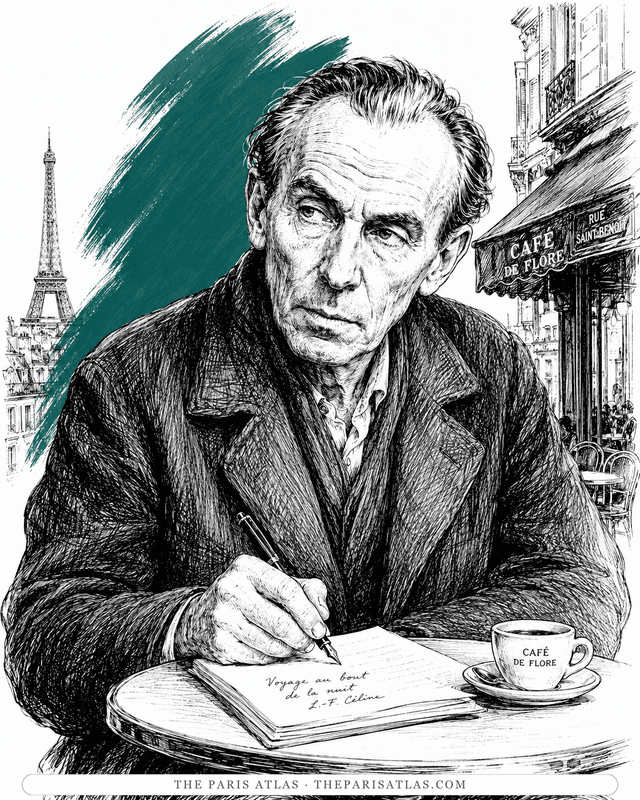
The doctor of the Paris slums who wrote the century's blackest, funniest novel — and changed the sound of French prose.
View author
The Brooklyn dropout who arrived in Paris broke at thirty-eight and wrote the exuberant, banned books that ended American censorship.
View author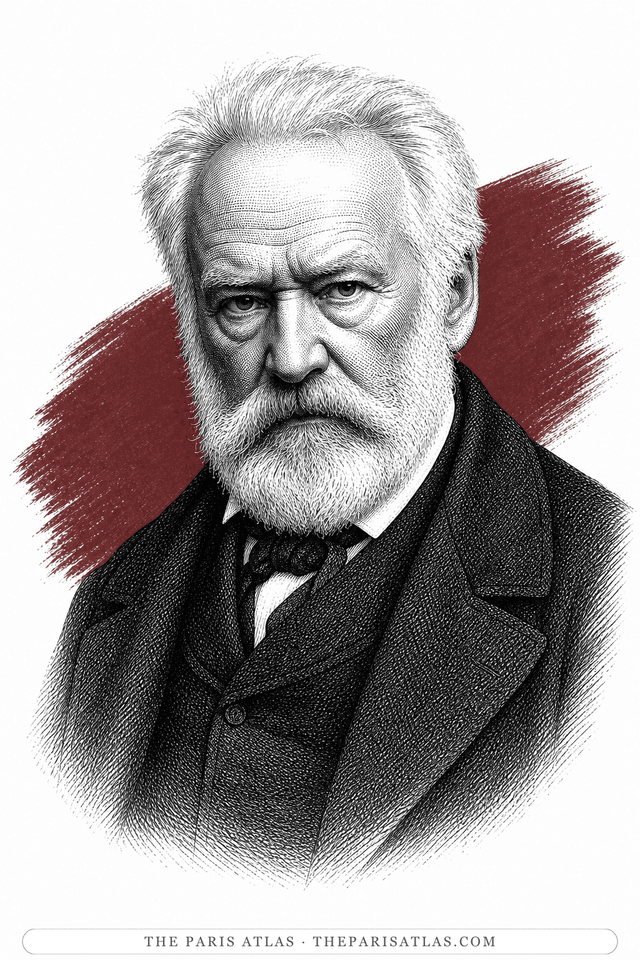
Poet, novelist and playwright who spent sixteen years in an apartment on the Place des Vosges that is now his museum, wrote a novel about Notre-Dame that shamed France into repairing the cathedral, spent nineteen years in exile for opposing the emperor Napoleon III, and was buried in the Panthéon — the Paris monument where France buries its most honoured dead — in 1885 after a funeral that brought roughly two million people into the streets of Paris.
View authorThe sources below include the primary text, editions, scholarship, archival materials, and other records that informed this page. They document Persian Letters, its publication, and its place in literary history.

Philip Stewart's scholarly article: the false imprint, the Amsterdam printer, the editions of 1721, 1758 and 2004, the nineteen correspondents, the secret chain, and the post-1950 reappraisal of the seraglio plot.

The earliest complete English translation, printed for J. Tonson in London, scanned on the Internet Archive.
The French national library on the book's publication and on the liberalism it sets against the despotism of Louis XIV.
A Catholic reference work of 1913, for the Amsterdam publication and the eight editions within a year.
Francois Cadilhon's scholarly life, for the Bordeaux judgeship Montesquieu held when the book appeared, the 1726 annuity and the 1728 election.
The philosophical summary, for the book's place in Montesquieu's work and its instant success.
Open Library edition records, used to resolve and confirm the Penguin and Oxford ISBNs listed above.
The primary text represented by this page, used for descriptions of the work’s contents and for any quoted passages shown here.
The primary text is the baseline reference for every book page. Additional references document publication history, interpretation, and historical context where that evidence is available.
 Explore more resources