Hamlet
How Michael appears in its pages: The other correspondent — writer, Carrefour publisher, and the original of Boris in Tropic of Cancer. His death-haunted philosophy is the position every Miller letter pushes against.
Read the character guideWriter, publisher of the Carrefour imprint, and Miller's philosophical sparring partner — the other half of the two-volume Hamlet correspondence, begun at 18 Villa Seurat, and Boris in Tropic of Cancer.
Michael Fraenkel is the man in the opening pages of Tropic of Cancer: he is Boris, the gloomy prophet of the 'Villa Borghese,' announcing that the weather will continue bad. In life he was the landlord of that scene and the philosopher behind it — a Lithuanian-born New Yorker who made enough money in the book trade to retire at thirty, moved to Paris to write, and spent the rest of his life elaborating a single idea: that modern civilization was spiritually dead, and that admitting it was the beginning of rebirth. Henry Miller absorbed the idea, argued with it for a decade, and filed its author into three of his books.[1]
Fraenkel was born in Kopul, Lithuania, in 1896 and came to New York with his parents in 1903. He graduated from the City College of New York, where, as a freshman in 1916, he read Goethe's The Sorrows of Young Werther and — by his own account, repeated to Anaïs Nin twenty years later — suffered the transforming pain of his existence: a calamitous love for his elder brother's sweetheart. Out of the two came the idea he never put down, the discovery of what he called his inner death.[2]
The other thing he acquired was money. He entered the book trade selling encyclopedias and remaindered books, and by 1926 had earned enough to stop working and move to Paris to write. The first formulation of the death idea became his first book, Werther's Younger Brother, drafted by 1929 and published in 1930 in an edition of four hundred copies.[2]
He met the poet Walter Lowenfels in 1928, and by 1929 the two had a manuscript each and no publisher. Their answer was to found one — the Carrefour Press — and to open it with a manifesto, Anonymous: The Need for Anonymity (1930), arguing that art should be published without names, the writer dissolving into what they called the total creative consciousness of the world. Carrefour's first books, Fraenkel's novel and Lowenfels's play USA with Music, duly appeared unsigned.[3][2]
The experiment ended in court, though not the way the story is usually told. In 1932 Lowenfels sued George S. Kaufman and George Gershwin, charging that Of Thee I Sing had lifted the plot of his anonymous play — and a plaintiff cannot stay anonymous. Carrefour credited its authors from then on.[3]
Lowenfels introduced Fraenkel to Henry Miller, and in 1931 Miller moved into Fraenkel's apartment at 18 Villa Seurat for about a month — broke, unpublished, and working toward the book that would open in that flat. The three writers shared the conviction that the West was dead and ran what they called a school of death through most of the thirties. Fraenkel's part in Tropic of Cancer is double: he is in it as Boris, and his urging — drop the literary conventions, write the raw spoken truth — is part of the standard account of how the book found its voice. He made the case himself in a 1947 essay, 'The Genesis of Tropic of Cancer.'[4][5]
The retirement fortune did not survive Paris. By the end of 1932 the money was nearly gone, and Fraenkel went back to what he knew: he spent three years selling books in the Philippines, returning to Paris in 1935. The following year Carrefour published his two central statements — Death in a Room, fifteen poems written between 1927 and 1930, and Bastard Death: The Autobiography of an Idea, whose introduction is addressed to Miller.[2]
In 1935 Fraenkel, Miller, and Alfred Perlès agreed to write a book of letters about death — a thousand pages, Miller proposed, 'the longest funeral sermon in history.' Perlès objected that death was too abstract and quit within a month; at Miller's suggestion the subject narrowed to Shakespeare's Hamlet, and on that pretext Fraenkel and Miller corresponded until November 1938. Carrefour published the exchange as Hamlet in two volumes, 1939 and 1941 — Fraenkel holding the position that modern man is spiritually dead and Hamlet the first autopsy, Miller answering with appetite and scorn for systems. It was republished in 1962 as The Michael Fraenkel–Henry Miller Correspondence Called Hamlet.[6][4]
Fraenkel left France in 1939, the year London published Death Is Not Enough — his first book under someone else's imprint — and spent the war years in Mexico, keeping the journal that surfaced as Land of the Quetzal (1946) and The Day Face and the Night Face (1947). In 1946 a literary quarterly named DEATH dedicated its first issue to him. He married Daphne Moschos Gillam in 1953 and died in 1957. Daphne ran Carrefour until her own death in 1991, and his papers — passports, autobiographical notes, the Mexican Journal typescripts — are now at Yale's Beinecke Library.[7][1]
Fraenkel's online record is thin and partly garbled. What circulates, against what the archives support:
Born in Kopul, Lithuania.
Immigrates to New York City with his parents.
Reads Goethe's The Sorrows of Young Werther as a City College freshman — the beginning, by his own account, of the death idea.
Having made his money selling encyclopedias and remaindered books, retires from the trade and moves to Paris to write.
Founds the Carrefour Press with Walter Lowenfels; publishes the manifesto Anonymous: The Need for Anonymity and, unsigned, his first book, Werther's Younger Brother — four hundred copies.
Henry Miller moves into his apartment at 18 Villa Seurat for about a month; the flat opens Tropic of Cancer as the 'Villa Borghese,' with Fraenkel as Boris.
Anonymity ends when Lowenfels sues the authors of Of Thee I Sing under his own name. Nearly broke, Fraenkel leaves to sell books in the Philippines.
Back in Paris. The death correspondence with Miller and Perlès begins; Perlès quits within a month, and the subject narrows to Hamlet.
Carrefour publishes Death in a Room and Bastard Death, the introduction addressed to Miller.
Leaves France. Hamlet, volume one, appears; London publishes Death Is Not Enough, his first book from another press.
Hamlet, volume two. The war years pass in Mexico, journal in hand.
Land of the Quetzal, drawn from the Mexican journal; the quarterly DEATH dedicates its first issue to him. The Day Face and the Night Face follows in 1947.
Marries Daphne Moschos Gillam.
Dies. Daphne runs Carrefour until 1991; his papers go to Yale's Beinecke Library.
How Michael appears in its pages: The other correspondent — writer, Carrefour publisher, and the original of Boris in Tropic of Cancer. His death-haunted philosophy is the position every Miller letter pushes against.
Read the character guide
How Michael appears in its pages: A small, ill, relentlessly talkative writer who lived on the ground floor of the Villa Seurat and believed the modern world was already dead. Nin found him impossible and could not look away.
Read the character guide
How Michael appears in its pages: The weather prophet of the opening pages — 'the weather will continue bad,' more calamities, more death: the speech the book's title walks out of. Michael Fraenkel, renamed.
Read the character guide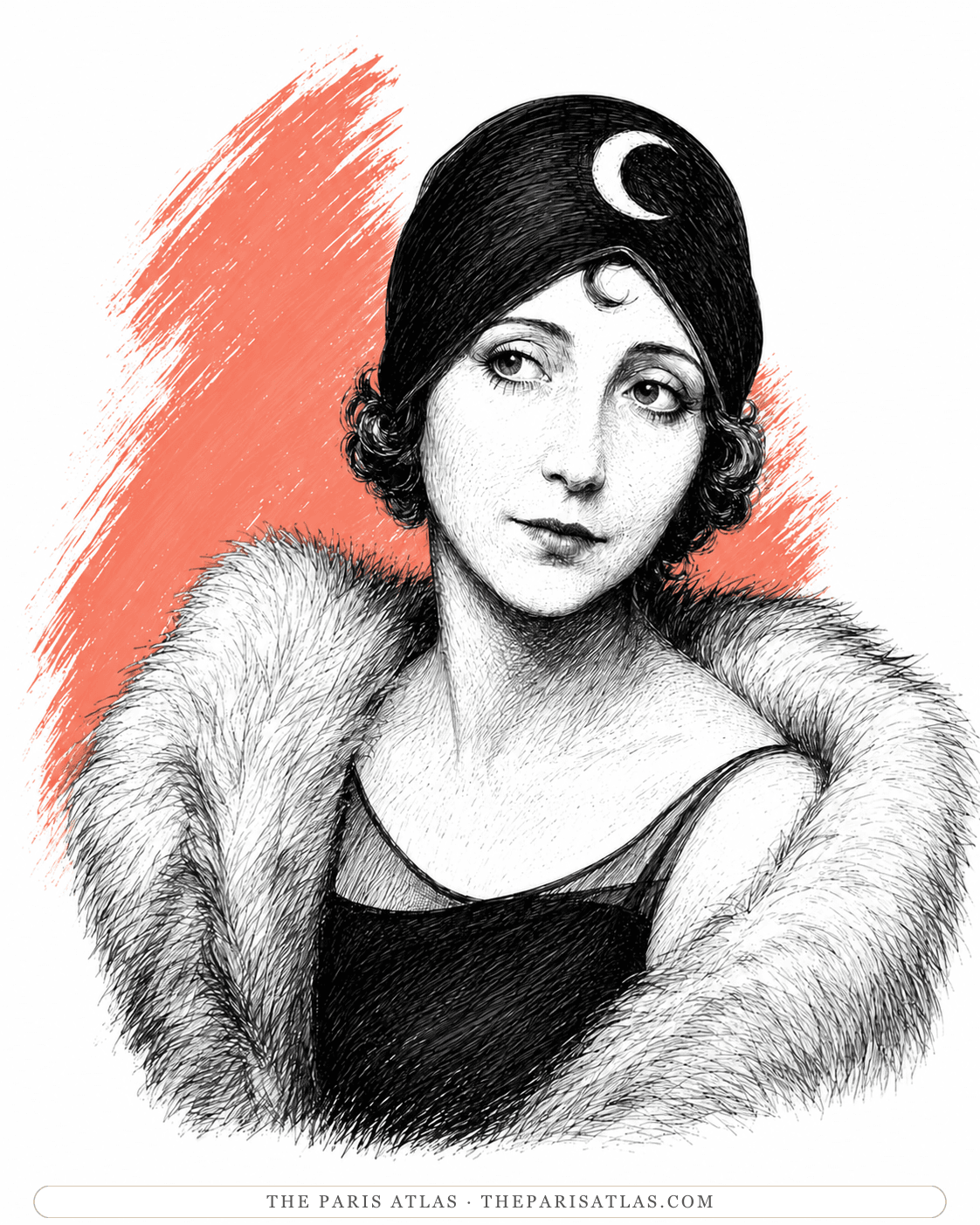
Met
Nin belonged to his Paris circle alongside Miller, Lowenfels, and Perlès — and it was to her that Fraenkel, twenty years on, still described his 1916 first love as the transforming pain of his existence.

Met · 1928
Met in 1928, close friends by 1929 — each with an unpublished manuscript, which is why Carrefour exists. It was Lowenfels who later introduced Fraenkel to Henry Miller.
Met · 1931
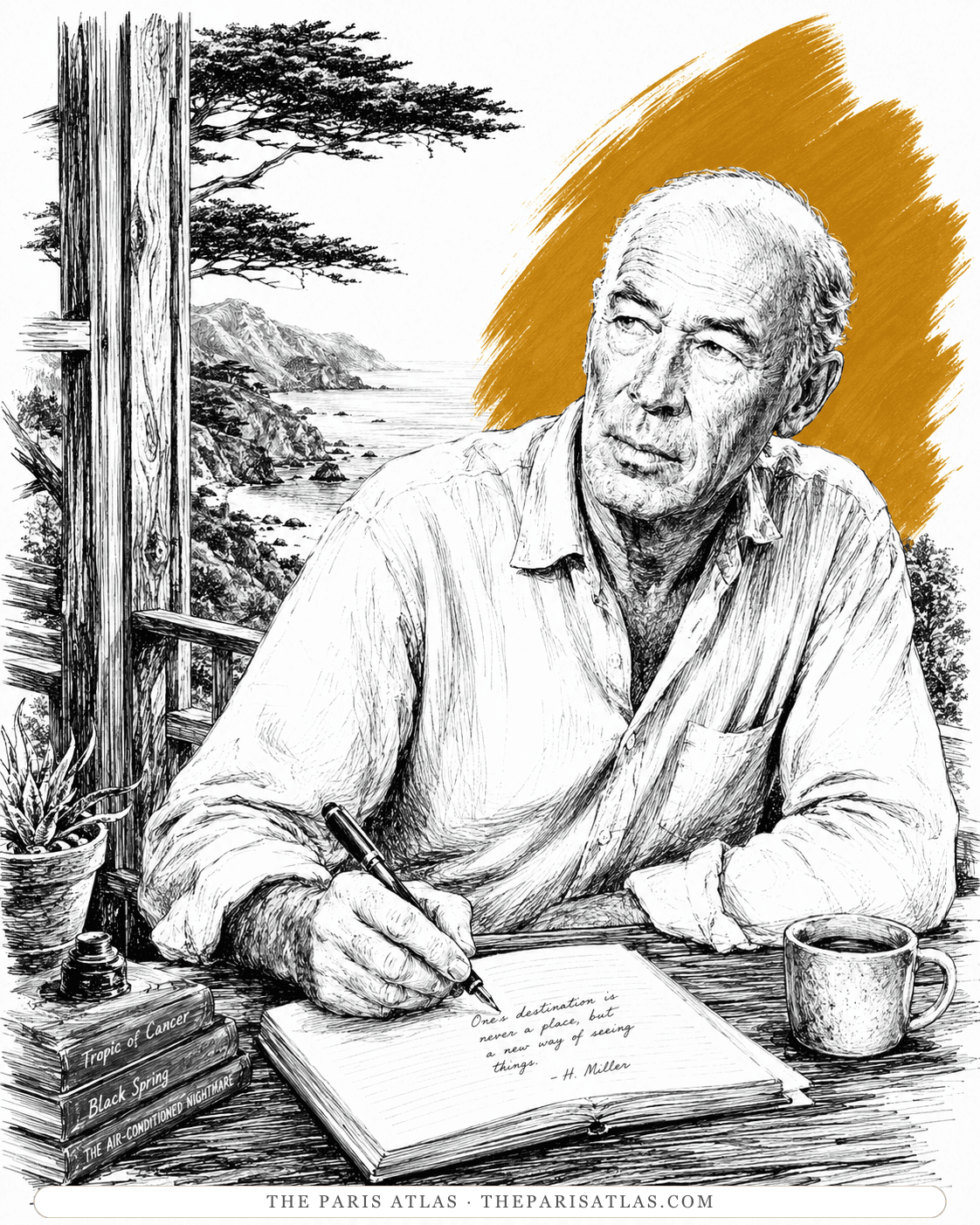
Fraenkel put Miller up at 18 Villa Seurat in 1931, appears in Tropic of Cancer as Boris, and later ran a years-long philosophical correspondence with Miller, published as the two Hamlet volumes.
A thousand pages of argument by mail — Miller and Michael Fraenkel start with Shakespeare and end with everything, from the Villa Seurat to the war.
Founded · 1930
Founded with Walter Lowenfels in 1930 to publish their own books anonymously, opening with the manifesto Anonymous: The Need for Anonymity. The press later issued the two Hamlet volumes; Fraenkel's widow Daphne ran it until 1991.
An American writer and publisher (1896–1957), born in Lithuania and raised in New York, who retired on a book-trade fortune at thirty, moved to Paris, and built a small body of work around one idea: the spiritual death of modern civilization. He is best remembered as Henry Miller's host, sparring partner, and co-author.
Michael Fraenkel. Miller's biographers make the identification, and the novel's opening pages set him in his own flat — 18 Villa Seurat, renamed the 'Villa Borghese' — prophesying rain and the death of the world.
A book of letters Fraenkel and Miller wrote to each other from 1935 to 1938, nominally about Shakespeare's Hamlet, actually about death, art, and everything else. Fraenkel's Carrefour Press published it in two volumes in 1939 and 1941.
The imprint Fraenkel founded with the poet Walter Lowenfels in 1930 to publish their own books — anonymously at first, on principle. It published Fraenkel's works and the Hamlet volumes, and survived under his widow Daphne until 1991.
That modern Western civilization was already spiritually dead, and that recognizing this death in oneself was the precondition of any rebirth. He traced the idea to reading Goethe's Werther during a ruinous first love in 1916, and spent his books — Werther's Younger Brother, Bastard Death, the Hamlet letters — restating it.
Walter Lowenfels introduced them in Paris, and in 1931 Fraenkel took the broke, unpublished Miller into his apartment at 18 Villa Seurat. Fraenkel's encouragement to abandon literary convention is part of the standard account of how Tropic of Cancer found its voice.
Founded · 1930
Founded with Walter Lowenfels in 1930 to publish their own books anonymously, opening with the manifesto Anonymous: The Need for Anonymity. The press later issued the two Hamlet volumes; Fraenkel's widow Daphne ran it until 1991.
Lived at · 1931
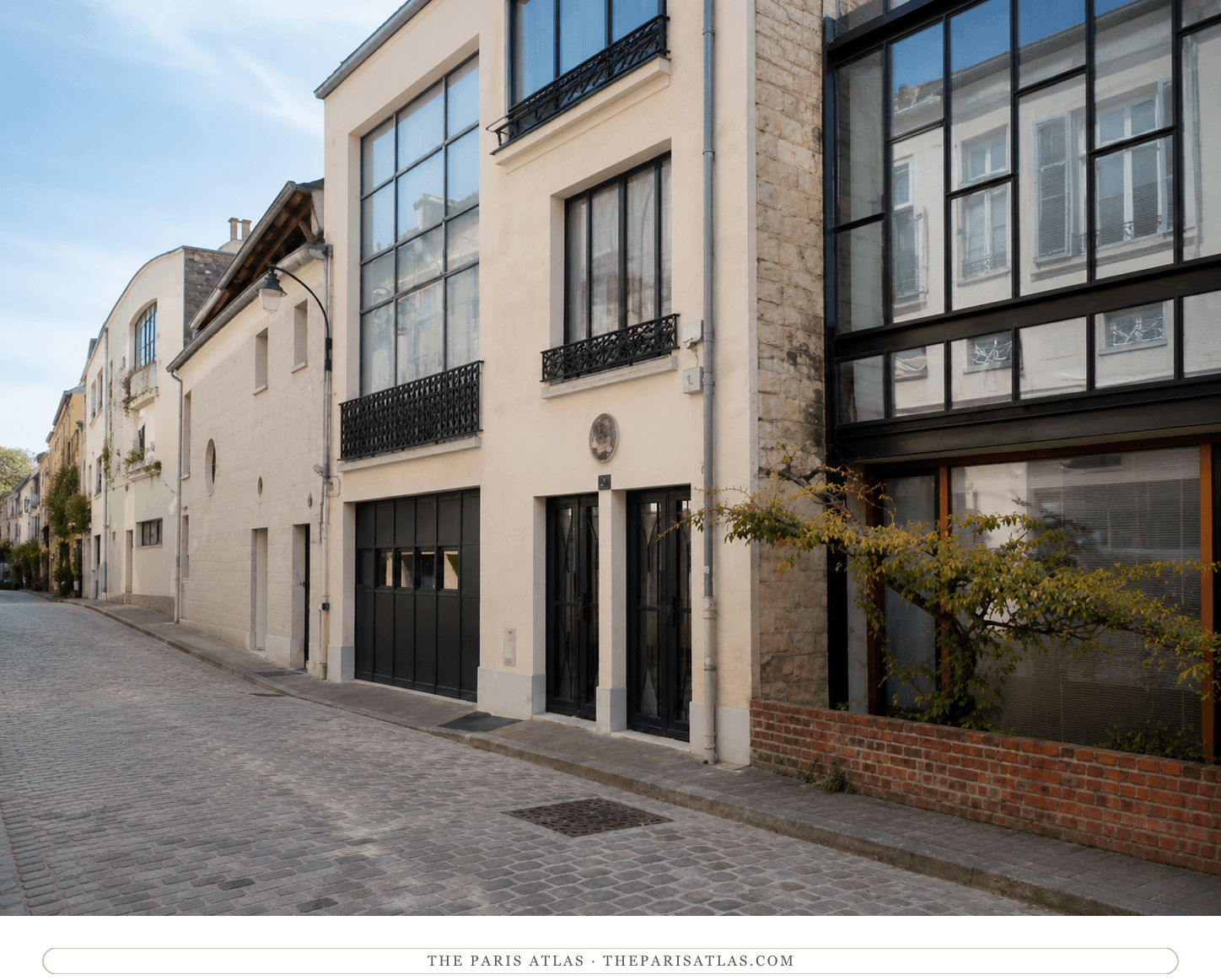
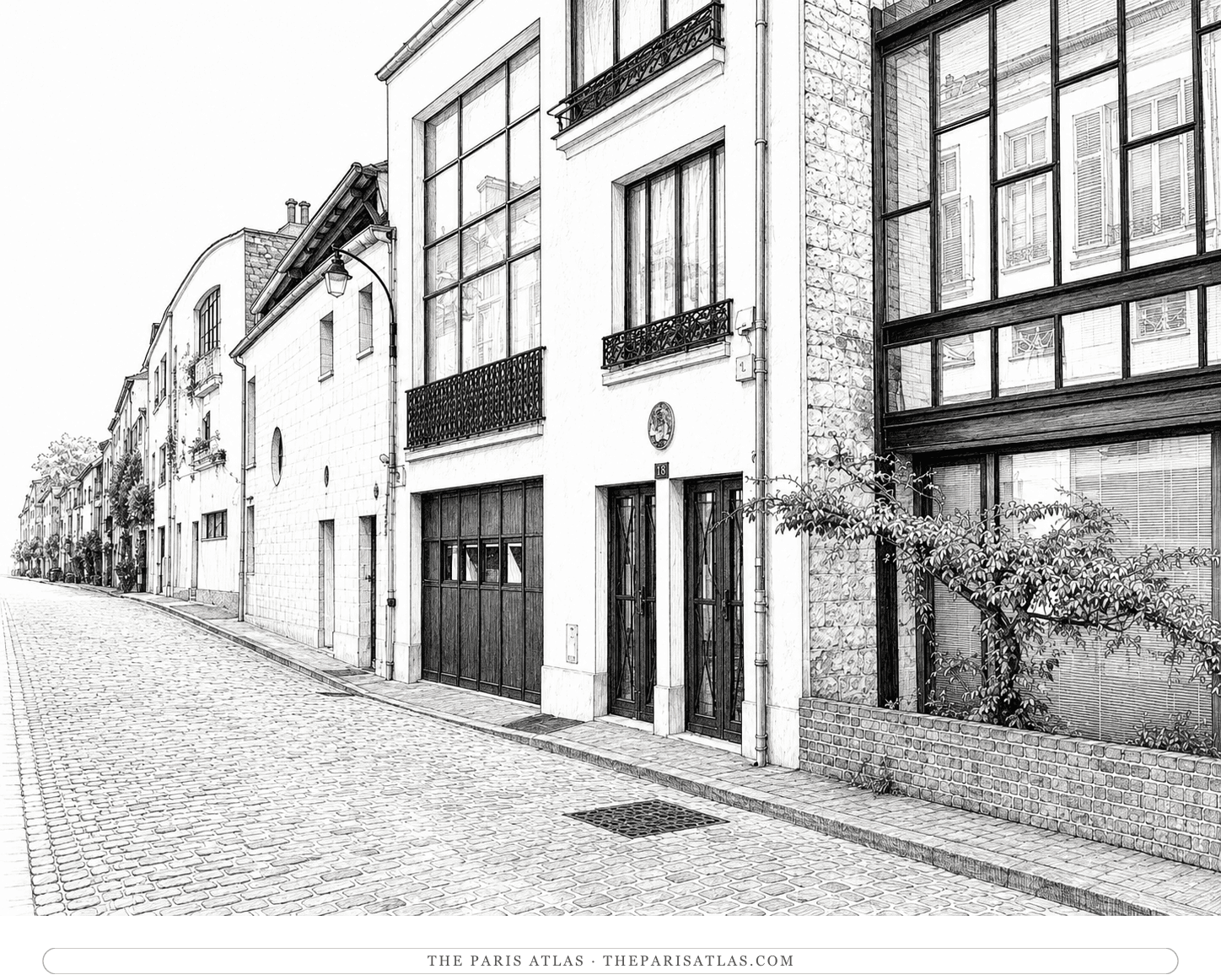
His apartment by 1931, when a broke Henry Miller moved in for about a month — the flat that opens Tropic of Cancer as the 'Villa Borghese.' Miller returned as tenant of the top-floor studio in 1934.
Met
Nin belonged to his Paris circle alongside Miller, Lowenfels, and Perlès — and it was to her that Fraenkel, twenty years on, still described his 1916 first love as the transforming pain of his existence.
Met · 1928
Met in 1928, close friends by 1929 — each with an unpublished manuscript, which is why Carrefour exists. It was Lowenfels who later introduced Fraenkel to Henry Miller.
Met · 1931
Fraenkel put Miller up at 18 Villa Seurat in 1931, appears in Tropic of Cancer as Boris, and later ran a years-long philosophical correspondence with Miller, published as the two Hamlet volumes.
Depicted in
Fraenkel is Boris, the gloomy prophet of the 'Villa Borghese' in the novel's opening pages — the flat is 18 Villa Seurat, where Fraenkel put Miller up in 1931. Both biographies make the identification.
The sources below include biographies, scholarly essays, interviews, and primary materials that informed this page. They reflect both the historical record and ongoing critical conversations about Michael Fraenkel and their work.

Biographical evidence used to verify chronology, relationships, and historical context connected to Michael Fraenkel.
Biographical evidence used to verify chronology, relationships, and historical context connected to Michael Fraenkel.

Archival evidence used to document the historical record connected to Michael Fraenkel.
These references anchor the page in the documented record and in the scholarly conversations around Michael Fraenkel. Every claim on this page traces back to one or more of the works listed here.
 Explore more resources