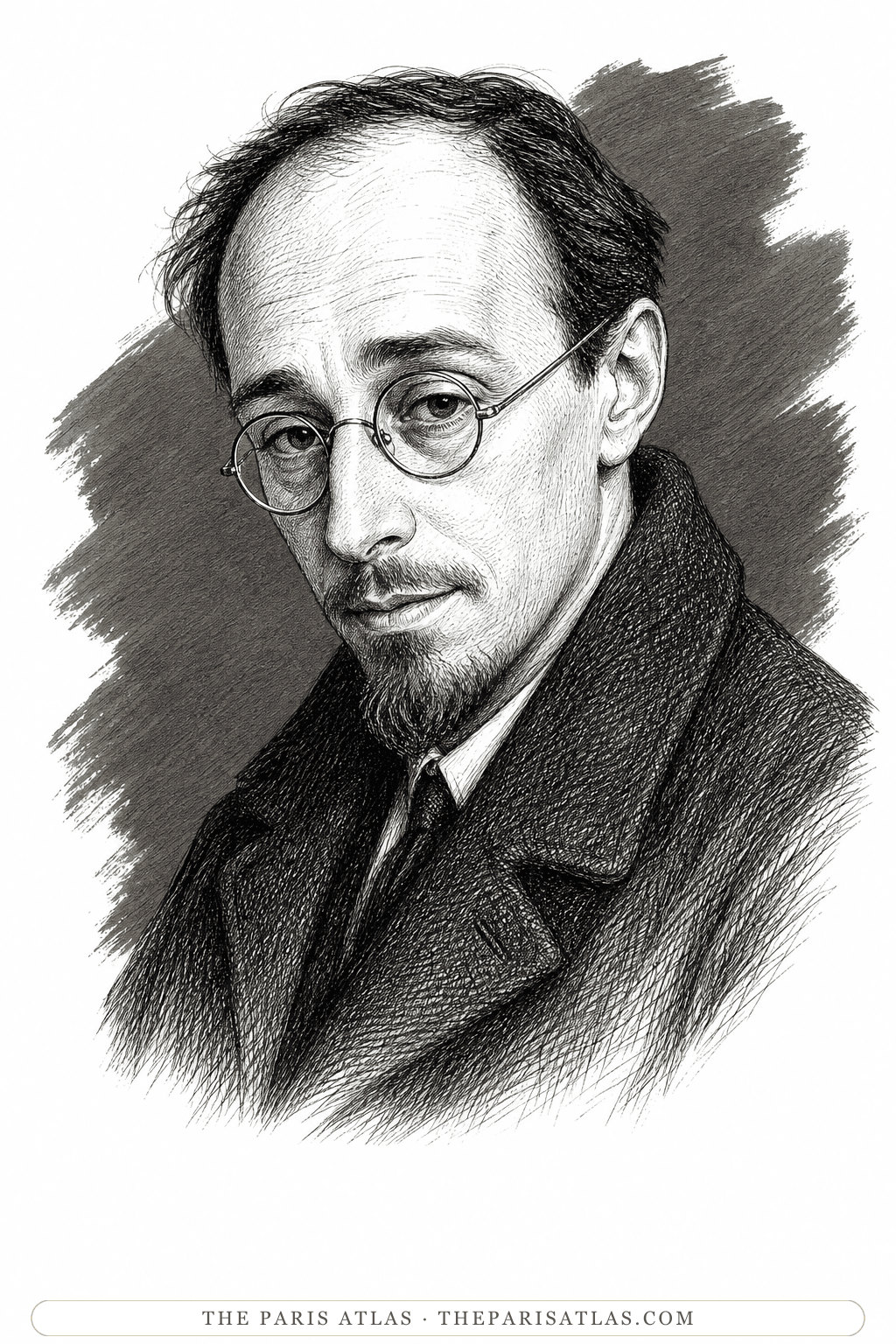
Boris
The weather prophet of the opening pages — 'the weather will continue bad,' more calamities, more death: the speech the book's title walks out of. Michael Fraenkel, renamed.
He wants the narrator to stay alive and stay near him, because he has decided that he himself is already dead.
The book

At a glance
- 'Boris' — a writer, and the man the narrator lodges with at the start
- The apartment both men call the Villa Borghese, which he is trying to sublet for a thousand francs a month
- A wife who has not moved in, and a German maid named Elsa
- The Last Book — an anonymous volume he and the narrator plan on their walks to the post office
- Plato and Spinoza, on a bookrack beside the couch
- Michael Fraenkel · 1896–1957 · Kopul, Lithuania, by way of New York
Who they are in the book
Spoiler-freeBoris is a character in Tropic of Cancer, the 1934 novel by the American writer Henry Miller. He is the man the narrator is living with when the book opens: a writer, and the tenant of the large, spotless Paris apartment the two of them call the Villa Borghese. The narrator sleeps there, types there, and is hungry the whole time. 'There is not a crumb of dirt anywhere, nor a chair misplaced,' he writes on the first page. 'We are all alone here and we are dead.'
Boris is a small man with a goatee, a pair of glasses he keeps dropping, and a frock coat long enough to drag on the floor. He rubs his hands together when money is in the room. What he mainly does in the book is talk, and what he talks about is death — his own, which he considers already over, and everyone else's, which he expects shortly.
The two men are not equals in the arrangement. Boris holds the lease and is trying to sublet the place for a thousand francs a month; he eats his meals in restaurants and the narrator waits upstairs. They are also collaborators, at least in conversation: on walks to the post office they plan an anonymous book together that is going to end literature.
He is Michael Fraenkel, renamed — a writer born in Lithuania and raised in New York, who made enough money in the book trade to retire at thirty, moved to Paris, and spent the rest of his life arguing that modern civilization was spiritually dead. In life he was Miller's landlord at the apartment the book calls the Villa Borghese. The passages below come from the Grove Press text, read in the Internet Archive's scan.
How Boris Is Portrayed
- The weather will continue badWithin the first pages the narrator writes down Boris's summary of his own views. The weather will continue bad, Boris says; there will be more calamities, more death, more despair, and no sign of a change anywhere. 'The cancer of time is eating us away.' He finishes with 'The weather will not change.'
- The night they both had liceBoris discovers he is infested. The narrator shaves his armpits for him and the itching goes on regardless. The narrator's conclusion: 'We might never have known each other so intimately, Boris and I, had it not been for the lice.'
- He never remembers the breadThe narrator asks him again and again to buy bread for breakfast, and Boris always forgets. He takes his breakfast in a restaurant instead and comes back picking his teeth, with a bit of egg caught in his goatee. His stated reason for not feeding his guest is that it hurts him to eat a big meal and have the narrator watch. On another day the narrator leaves the flat before noon so that Boris can sit down to lunch alone.
- Goatee, glasses and a frock coatHe is physically slight — the narrator notes that Boris's wife weighs well over 180 pounds and 'Boris is only a handful.' When the doorbell rings he panics, drops his glasses, and ends up on his hands and knees with his coat spread across the floor. Another American in the book, a journalist called Van Norden, says he would like to consult a psychoanalyst but adds: 'I don't want to see these little shysters with goatees and frock coats, like your friend Boris.'
- Showing the apartment to a rich tenantA wealthy woman comes to look at the place. Boris walks her through it, points out both toilets, offers to build her a washstand, and quotes the price: 'Yes, a thousand francs a month.' He does not introduce the narrator, who is upstairs waiting to get his chair back and noting that Boris only forgets the introduction when the visitor is rich. The narrator's worry is practical — if the flat is let he loses both his desk and his bed. 'Even a bad novel requires a chair to sit on and a bit of privacy.'
- The Last BookOn the way to the post office one morning the two of them settle the plan for a book they intend to write together. It is to be published anonymously, called The Last Book, and open to anyone with something to say. 'We will exhaust the age,' the narrator records, and after it no other book for a generation at least. He is clear-eyed about the scheme on the same page: 'It is colossal in its pretentiousness.'
- Step softly for a few daysA German maid named Elsa moves into the flat, and Boris warns the narrator to 'Step softly for a few days.' He is also braced for the arrival of his wife, who could turn up at any moment. One morning, while Boris is out inspecting the cheap room he plans to move to once the apartment is sublet, the narrator sleeps with Elsa; she had got one line into a letter to her lover in Italy.
- One of the two writers the narrator respectsThe narrator has a low opinion of nearly every writer around him, and says so by name. Boris is one of two exceptions, along with a friend called Carl. He describes the pair as possessed, glowing inwardly with a white flame, mad and tone deaf, and sufferers.
- Talking about dying, at lengthBoris and another writer in the circle, Cronstadt, spend evenings on the subject of death, and the narrator sits in without following any of it. Boris kept Plato and Spinoza on a bookrack beside his couch and could not understand why the narrator had no use for them. The talk was abstract enough that no flesh and blood ever entered it, and the narrator says these were the first occasions in his life when death struck him as interesting.
If you like Tropic of Cancer


If you like Henry Miller
Explore authors with a similar voice, perspective, and influence.

Louis-Ferdinand Céline
Miller's acknowledged master at making literature out of the gutter. Journey gave him permission; Cancer is what he did with it.
View author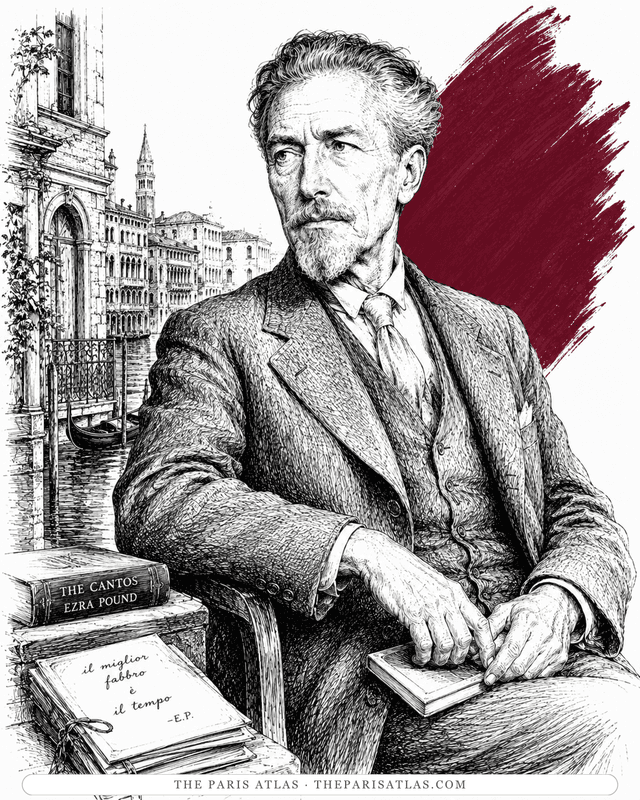
Ezra Pound
Pound read Cancer and sent Miller a famously backhanded postcard. Both believed literature's job was to wake the reader by any means necessary.
View author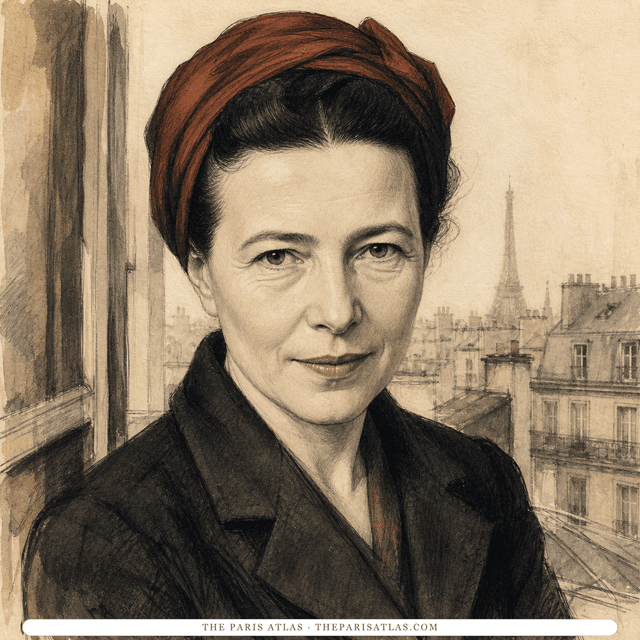
Simone de Beauvoir
French writer and philosopher whose novels, memoirs, and social analysis examined freedom, gender, responsibility, aging, and the material conditions that shape a life.
View author