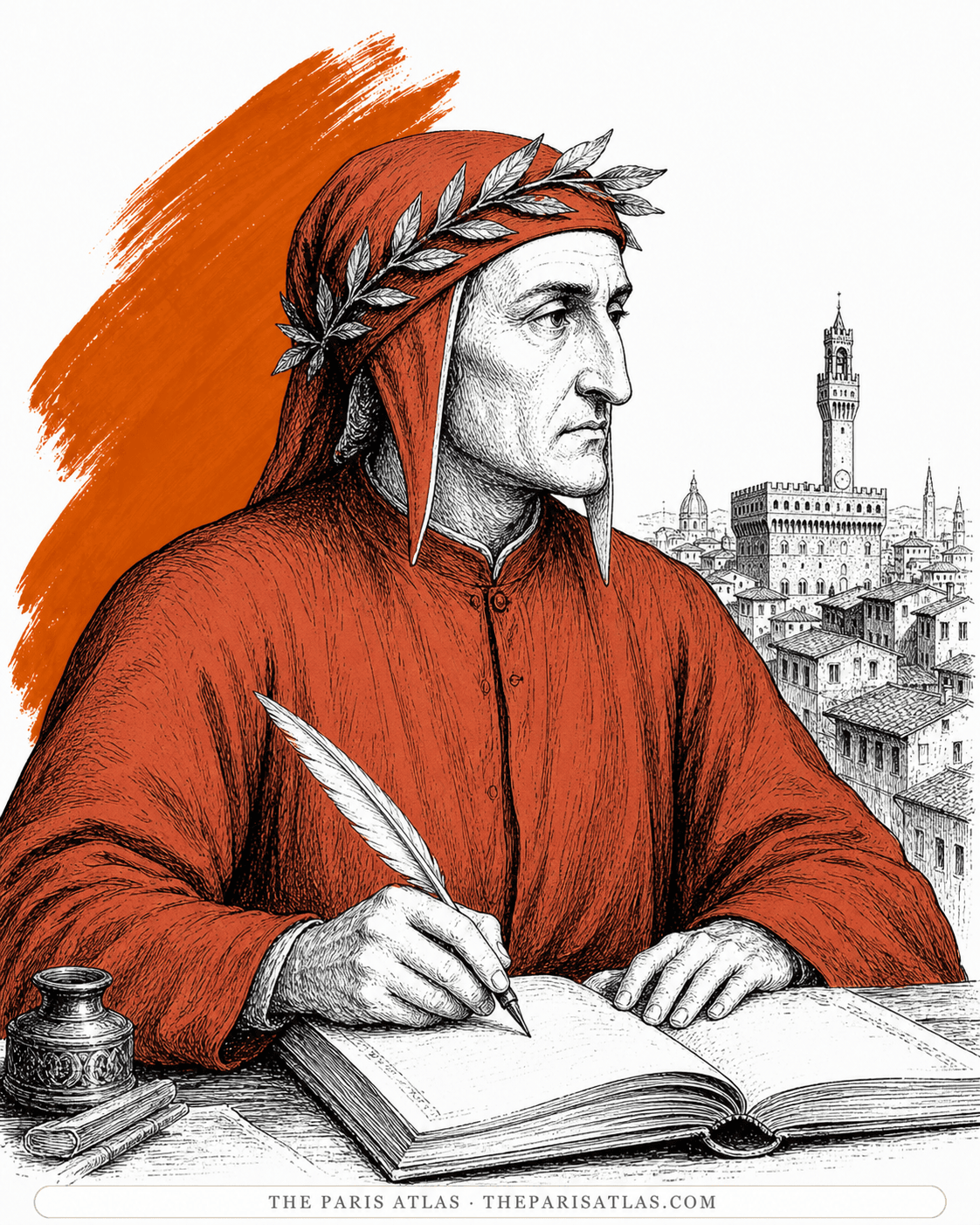
Convivio
Dante Alighieri
Convivio
Written in the same years, in Italian rather than Latin, with its own defence of the vernacular in the first book.
Read our takeDe Vulgari Eloquentia
Dante Alighieri
Dante, writing in Latin, makes the case for poetry in Italian, and mocks nearly every Italian dialect on the way.
Dante Alighieri wrote De vulgari eloquentia in Latin, in the first years of his exile, between about 1303 and 1305.[1] The title means On Eloquence in the Vernacular. Vernacular is the everyday language people learn as children, as opposed to Latin, which had to be learned from books. Dante argues that the vernacular is the nobler of the two. He tells how human language began with Adam and broke apart at the Tower of Babel. He then travels through the dialects of Italy looking for one worthy of great poetry, and finds none. The best Italian, he decides, belongs to no single city. He planned four books but stopped in the middle of the second.[2] The Latin text was first printed in Paris in 1577.[1]
The book opens with a boast. In Dante's Latin, he has found no one before him who has written anything at all on the art of eloquence in the vernacular.[2] He meant it. Latin had long been studied with grammars and rules. The languages people actually spoke had never been treated as worth studying.
Dante wrote it in Latin because his readers were scholars, and scholars read Latin. The Stanford Encyclopedia of Philosophy notes that he was working on it in the same years as the Convivio, a philosophy book he wrote in Italian. He abandoned both around 1307.[3]
The first book has nineteen chapters and deals with language in general. The second book turns to poetry: who should write in the finest Italian, on what subjects, and in which form. Dante names three subjects worthy of it: prowess in arms, love, and virtue.[3] The highest form, he argues, is the canzone, the long, formal song of Italian poetry. He is in the middle of explaining how many lines and syllables a stanza should have when the text stops, in chapter XIV of the second book.[2][1]
The English quotations below are close renderings made directly from the Latin text on Latin Wikisource. They are not taken from a published translation. A. G. Ferrers Howell's translation of 1890, revised in 1904, is public domain and readable in scans at the Internet Archive.[4]
Book I begins with a definition. The vernacular is the speech children pick up from the people around them, without rules, by imitating their nurses. The other kind of speech is grammar, the Romans' word for Latin as it was taught. Few people ever master grammar, because it takes years of study. The vernacular, Dante says, is nobler, because it was the first language humans used, the whole world uses it, and it comes naturally.[2]
Next comes the history of speech. Only humans need language, Dante argues, because angels understand each other directly and animals of one kind all act alike. Adam spoke first, and the language God gave him was Hebrew. At the Tower of Babel that single language broke into many. Dante sorts the languages of south-western Europe by their word for yes: oc for the people he calls Spaniards, oïl for the French, and sì for the Italians. French, he reports, claims prose for itself, including the Bible stories, the histories of Troy and Rome, and the beautiful winding tales of King Arthur.[2][3]
Then Dante goes hunting through Italy. He runs through about fourteen dialects and finds something wrong with almost every one. He is hardest on his own Tuscans, who in their madness claim the title of the finest Italian, and he quotes the Florentines saying “Manuchiamo introcque”, roughly “let's eat meanwhile.” Even the famous Tuscan poets he names, Guittone d'Arezzo and a Brunetto of Florence among them, wrote in a city dialect, not a courtly one. Bologna comes off best, but only by comparison.[2][3]
In the end, Dante says the language he wants is like a panther. Its scent is everywhere but it lives nowhere. The best Italian is found in every city and belongs to none. He calls it illustrious, because it raises those who use it to honour and glory. The finest Italian is also cardinal, because the local dialects turn on it the way a door turns on its hinge. And it is courtly and curial, because it would be spoken in the royal hall and weighed in the court of justice, if Italy had either.[2] The best examples he gives are the canzoni of Cino da Pistoia and of Cino's friend, by whom Dante means himself.[2][3]
Book II applies all this to poetry. Only the best poets should use the finest language, and only for the highest subjects. The canzone is the noblest form, and Dante sets out how its stanzas should be built, how lines of eleven and seven syllables mix, and how rhymes should fall. He quotes his own canzoni as examples beside Provençal and Italian poets. The book breaks off in mid-explanation.[2]
In the sixth chapter Dante laughs at people who think their home town is the best place under the sun and their mother tongue the language Adam spoke. Then he speaks of himself. His homeland, he writes, is the world, as the sea is for fish. He drank from the Arno before he had teeth. He loves Florence so much that for loving her he suffers exile unjustly. Even so, he will judge by reason, not by feeling.
Dante comes back to his exile in chapter XVII. The finest Italian, he writes, brings glory to the people who use it. He knows this himself, he adds, since for the sweetness of that glory he puts his exile behind him. The two passages help explain the book. Dante is severe on Florentine, and he ends by looking for an Italian that no single city owns.
Few medieval copies survive. The Enciclopedia Dantesca lists only five manuscripts, now in Berlin, Grenoble, Milan, the Vatican and Strasbourg, with one further fragment. The first printed edition of the Latin text appeared in Paris in 1577. The Florentine scholar Jacopo Corbinelli prepared it from the Grenoble manuscript, which the abbot Piero del Bene, a Florentine friend, obtained for him.
The two earliest writers on Dante both knew the book was unfinished. Some manuscripts of Giovanni Villani's chronicle say that Dante promised four books and that only two exist. Villani adds that in strong Latin Dante “reproves all the vernaculars of Italy.” Giovanni Boccaccio also counts two books out of a planned four. He believed Dante wrote it near his death, a date modern scholars have moved back to the early years of exile.
Since we find that no one before us has written anything at all on the art of eloquence in the vernacular…
We call vernacular speech the speech we take in without any rule, by imitating our nurses.
Of these two, the nobler is the vernacular.
A few years before the Comedy, Dante argues in Latin that the everyday language could carry the greatest poetry.
He mocks almost every city in Italy for how it talks, starting with his own Florence.
The Latin text was first printed in Paris in 1577, from a manuscript now in Grenoble.
1302
Florence sentences Dante to exile.
c. 1303–1305
Dante writes De vulgari eloquentia in Latin and leaves it unfinished in the second book.
After 1348
Giovanni Boccaccio records that only two of the four planned books exist.
1577
Jacopo Corbinelli publishes the first printed edition of the Latin text in Paris, from the Grenoble manuscript.
1890
A. G. Ferrers Howell's English translation is published in London.
1904
Howell's revised translation appears in the Temple Classics volume of Dante's Latin works.

Convivio
Dante Alighieri
Written in the same years, in Italian rather than Latin, with its own defence of the vernacular in the first book.
Read our takeThe Divine Comedy
Dante Alighieri
The poem that proved the argument, written in the everyday language Dante defends here.
Read our takeLa Vita Nuova
Dante Alighieri
The early Italian poems that Dante had already written by the time he made the case for the vernacular in theory.
Read our takeDe Monarchia
Dante Alighieri
Dante's argument that the everyday spoken language is nobler than Latin and can be used for great poetry. He tells how language began and divided, surveys the dialects of Italy, defines the ideal Italian, and starts a handbook on writing the canzone.
On Eloquence in the Vernacular. Vernacular means the language people learn as children at home, as opposed to Latin, which was learned from grammar books.
Its readers were scholars, who wrote and argued in Latin. To persuade them that the vernacular deserved respect, Dante addressed them in their own language.
No. Dante planned four books. He completed the first and stopped in chapter XIV of the second. Both Giovanni Villani and Giovanni Boccaccio already knew only two books.
Between about 1303 and 1305, early in Dante's exile. Boccaccio thought it was written near Dante's death, but modern scholars date it much earlier.
The first printed edition of the Latin text was published in Paris in 1577 by the Florentine scholar Jacopo Corbinelli, from a manuscript now in Grenoble.
A. G. Ferrers Howell's translation of 1890, revised in 1904, is public domain and can be read in scans at the Internet Archive. Steven Botterill's Cambridge edition is the standard modern one.
Explore authors with a similar voice, perspective, and influence.
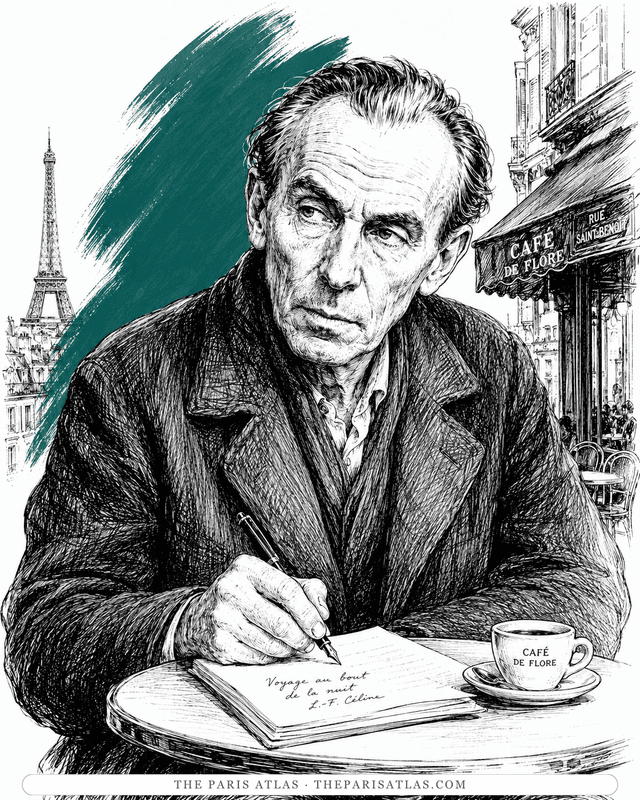
The doctor of the Paris slums who wrote the century's blackest, funniest novel — and changed the sound of French prose.
View author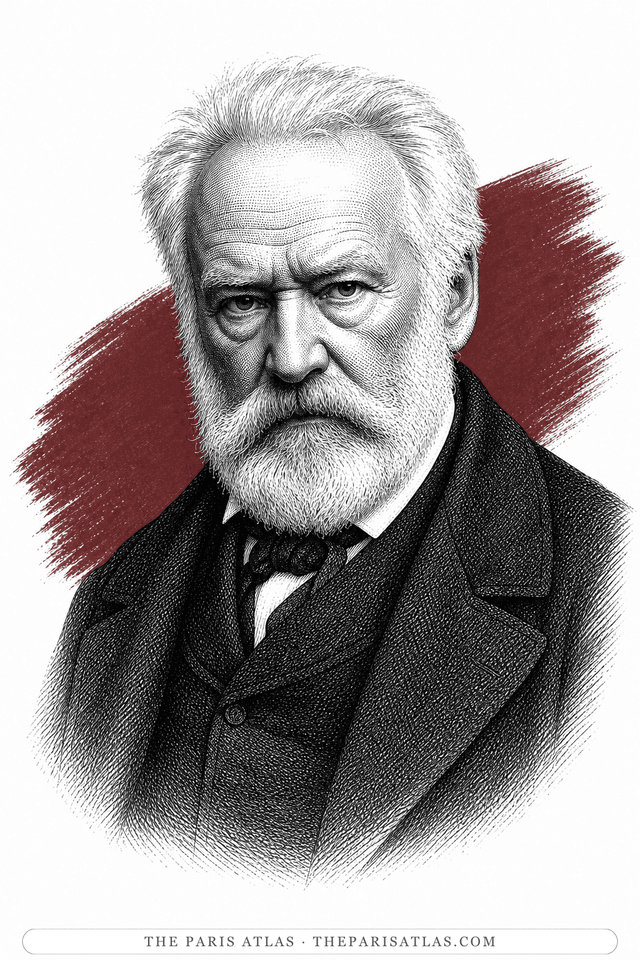
Poet, novelist and playwright who spent sixteen years in an apartment on the Place des Vosges that is now his museum, wrote a novel about Notre-Dame that shamed France into repairing the cathedral, spent nineteen years in exile for opposing the emperor Napoleon III, and was buried in the Panthéon — the Paris monument where France buries its most honoured dead — in 1885 after a funeral that brought roughly two million people into the streets of Paris.
View author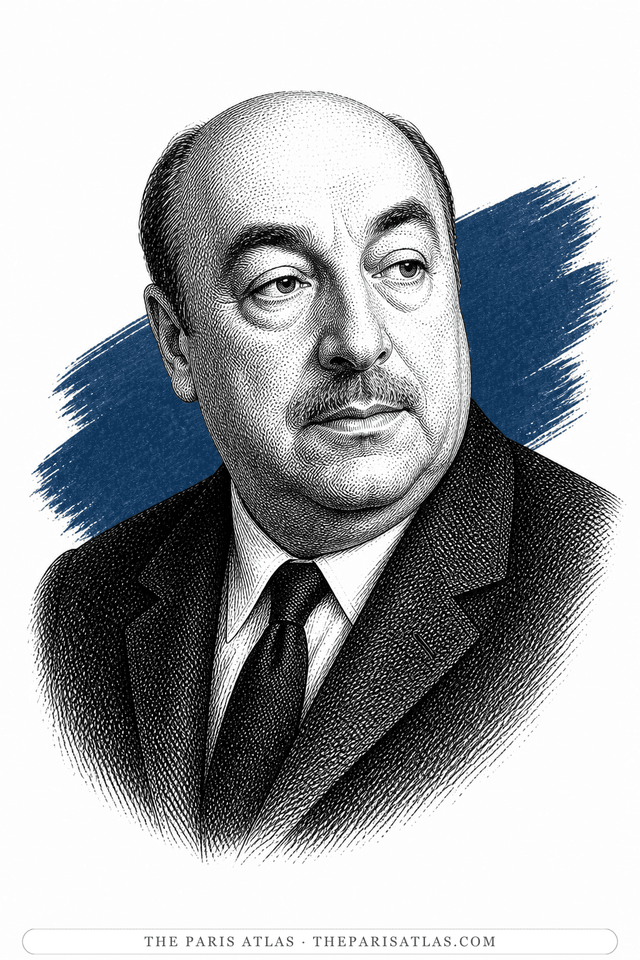
Chilean poet of the twentieth century's most widely read love poems, who spent his whole life in his country's diplomatic service and came back to Paris three times: passing through at twenty-three in 1927, on his way to his first consular post in Burma; running the rescue of refugees from the Spanish Civil War out of a Paris office in 1939; and serving as ambassador to France for Salvador Allende, Chile's newly elected socialist president, when the Nobel Prize in Literature reached him in October 1971.
View authorThe sources below include the primary text, editions, scholarship, archival materials, and other records that informed this page. They document De Vulgari Eloquentia, its publication, and its place in literary history.

The 1904 Temple Classics volume with Ferrers Howell's revised translation, first published in 1890.
Giovanni Villani's notice of Dante, which in some manuscripts mentions this book.

Boccaccio's account of the book and of the two surviving books.
The primary text represented by this page, used for descriptions of the work’s contents and for any quoted passages shown here.
The primary text is the baseline reference for every book page. Additional references document publication history, interpretation, and historical context where that evidence is available.
 Explore more resources