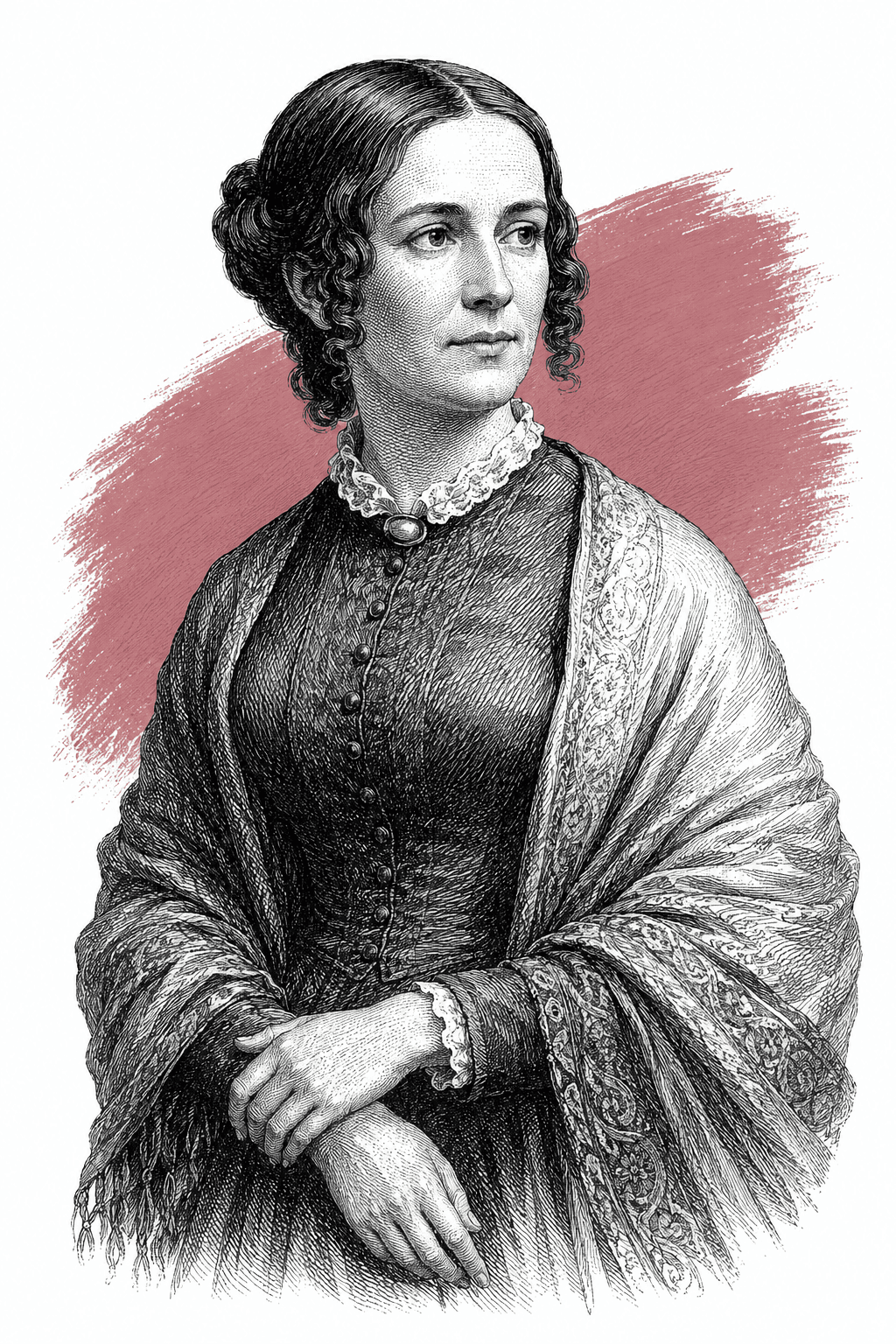
Anna Sutter
The wife Johann August Sutter walked out on in 1834. Fifteen years later she crossed the Atlantic and the Isthmus of Panama with their four children to find him.
To hand her children over to their father. Cendrars has her ignore every person who advises her to wait — her Paris banker, her shipping agents at Le Havre, the passengers on the boat — and keep going.
The book

At a glance
- Madame Anna Sutter — Johann August Sutter's wife, left in Switzerland in 1834
- Three sons — Emile, Victor and Arthur — and a daughter, Mina
- The old pastor at Grenzach, who told her to go, for the honour of the children
- The last days of December 1849, from the Stork hotel in Basel
- Basel, Paris and Le Havre; then by steamer to Chagres, the railway across Panama, and a sailing ship north to San Francisco
- Chapter eleven, almost alone
- Anna Sutter, Johann August Sutter's wife · Canton of Basel, Switzerland
Who they are in the book
Spoiler-freeAnna Sutter is left behind in the canton of Basel in May 1834 with four children and no explanation. She hears nothing for fourteen years. Then a letter arrives from California with sailing instructions and a large letter of credit on a Basel bank, and in the last days of December 1849 she sets out with her three sons and her daughter.
Blaise Cendrars gives her a chapter to herself — the one stretch of the book that leaves her husband entirely. It is the journey: a horse-drawn chaise across France, a Channel port swarming with gold-seekers, forty-one days at sea to the fever coast of Panama, the new railway across the isthmus, and another ship north to San Francisco. Almost everyone she meets on the way tells her to turn round.
How Anna Sutter Is Portrayed
- How she looksA tall dark woman, severe on the outside and, the book says, almost excessively yielding underneath. At her throat she wears a miniature of her husband in a gold frame, painted when the two were engaged.
- What she did while he was goneShe paid off his debts and had the judgment against him quashed. Martin Birmann, the lawyer who acted as the children's guardian for fifteen years, arranged the whole journey and wept into a handkerchief as the coach pulled away.
- What she thinks she is going toHer bank has told her that her husband is honourably known, holds credit at the great banking houses of Europe and owns more land than the whole canton of Basel. She pictures him as a sort of William Tell. She has never heard the name New Helvetia.
- The Daumier cartoonsAt a coaching inn she sees a newspaper with a set of drawings by Honoré Daumier about the dangers passengers face on the new railways. That settles it. Against her written instructions she takes the mail coach from Strasburg instead of the train, on the grounds that it is safer. Her sons do not hide their disappointment.
- The crossingForty-one days from Le Havre to Chagres, with a crew of eleven and a hundred and twenty-nine passengers, of whom she and her daughter are the only women. On the Panama train two men who have never met her husband tell her he is a king who rides a white horse shod in gold. She faints. She arrives at Panama with a streak of white in her hair and a tremor in her limbs that does not stop.
- The last stageAt San Francisco she learns that there is no longer any such place as New Helvetia and that nobody knows where Sutter has gone. The family rides inland behind an old Mexican guide, the three boys and their sister keeping pace with a litter slung between two mules, because their mother can no longer sit a horse.
She never gets to speak to him. The party reaches the Hermitage in the evening, after a day riding through the estate's abandoned fields, and finds the place silent. Two Indian workers come out of the house, and then an old man behind them — her husband, whom she last saw as a man of thirty-one. She struggles up in the litter and gets out his first name. What follows is a death rattle. The last word she manages is not his name at all but the word Jean Marchais, the blacksmith at the old fort, had used for him — master — out of a message she had been asked to pass on. Sutter is on his knees beside the litter.
Père Gabriel, the missionary, buries her. When Sutter finally writes to Martin Birmann in Switzerland, he opens by saying that Anna died at his very door and that it was the will of Providence.
If you like Gold


If you like Blaise Cendrars
Explore authors with a similar voice, perspective, and influence.
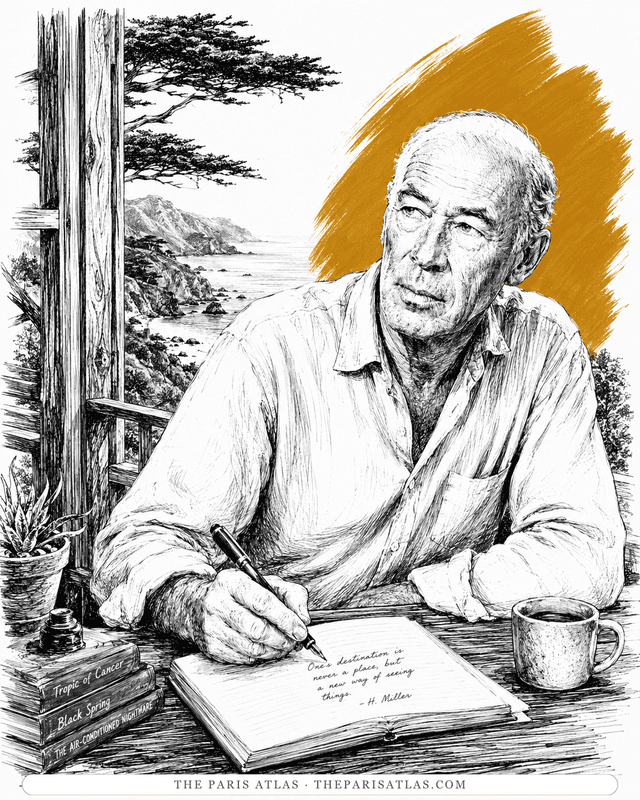
Henry Miller
The devoted heir — Miller crowned Cendrars above every living writer, and the torrential first-person prose is the family resemblance.
View author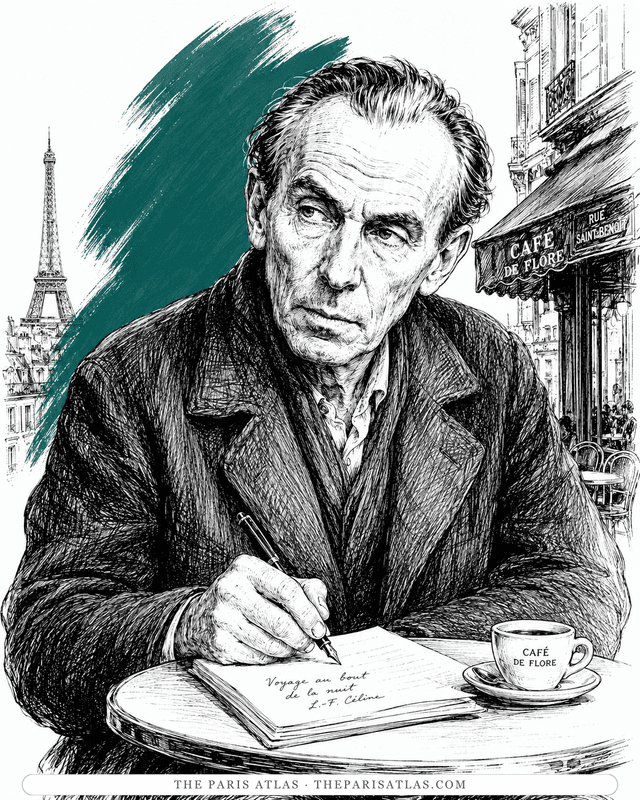
Louis-Ferdinand Céline
The other voyager at the end of the night — spoken rhythm, black exuberance, and a war wound at the center of everything.
View author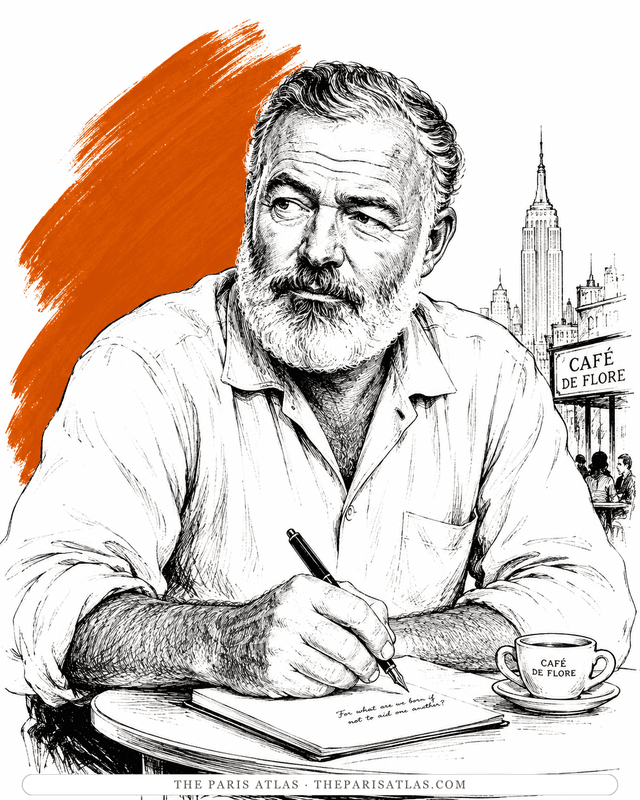
Ernest Hemingway
Author of The Sun Also Rises and A Moveable Feast; his pared-down style, developed in 1920s Paris, became the most imitated in American prose.
View author