
The Astonished Man
Panel one — the lightning that started the tetralogy this volume deepens.
Read our take
Eleven ports and the sea-word for knocking about the world — with the great Genoa chapter, the tetralogy's buried childhood, at its heart.
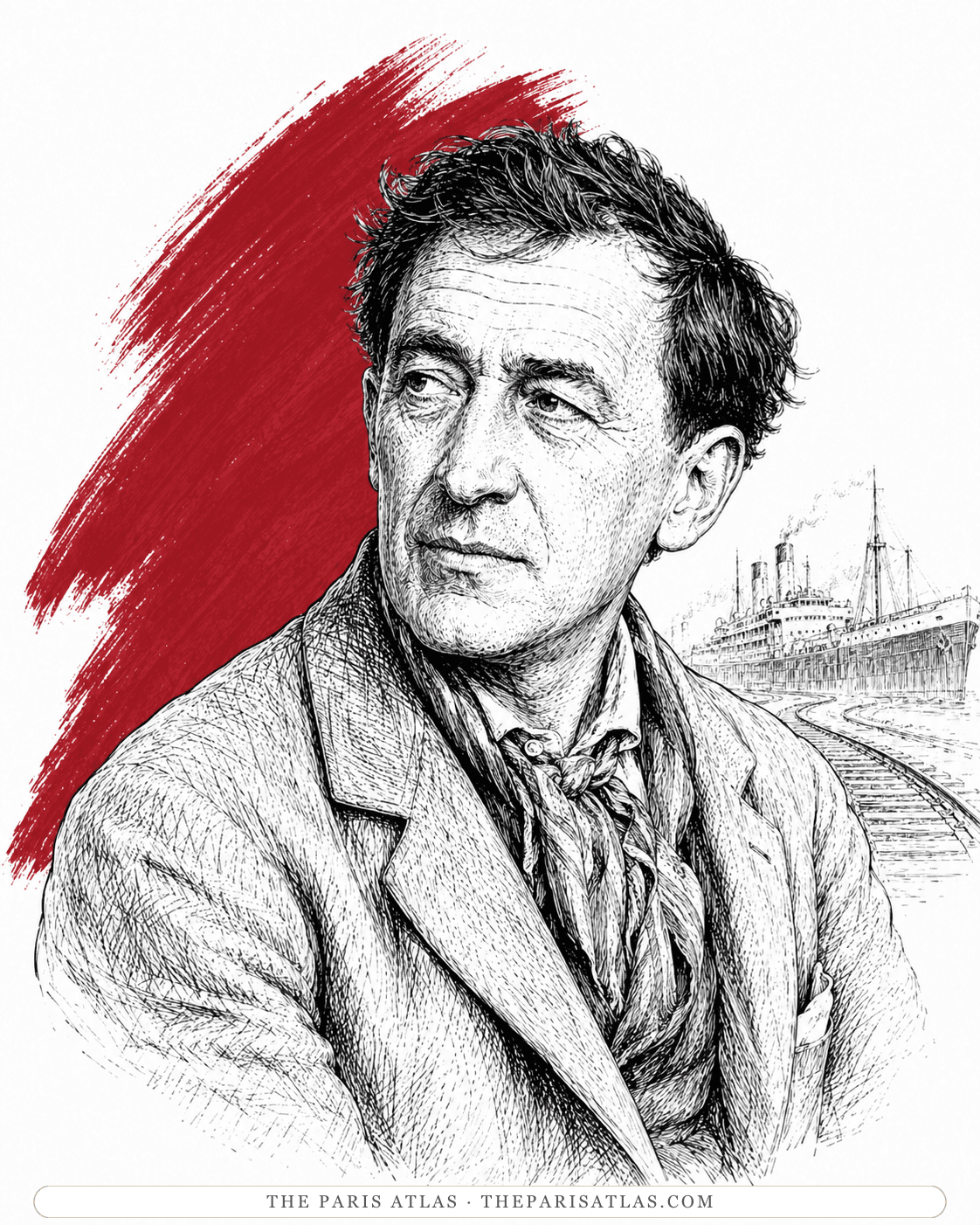
Bourlinguer (1948) — the old sailor's verb for knocking about the world — is the tetralogy's third panel: eleven chapters, eleven ports, from Venice to Antwerp by way of the century's waterfronts, each harbor uncorking its own cargo of memory. At the center sprawls 'Gênes' — Genoa — the longest and greatest chapter, where the wandering finally digs down to childhood itself: the Italian boyhood, the first deaths, the first books. The title entered French as his flag; the book remains the tetralogy's richest single volume. (A memoir — nothing here to spoil.)
The structure is a harbor chart: Venice, Naples, Bordeaux, Brest, Toulon, Antwerp and the rest, each port a chapter and each chapter a life — smugglers, sailors' bars, cargoes, books read and burned, the merchant marine of memory. Cendrars' digression-engine runs at full sea-speed here, but the book's gravity is the immense Genoa chapter: the family's Italian years, the child Freddy's streets and terrors, a first beloved dog, a first brush with death and desire — the buried strata the legend was built to cover, finally excavated by the man the legend belonged to.[1]
Published by Denoël in 1948 (Englished later by Nina Rootes as Planus), it made the verb bourlinguer permanently his in French — to have knocked about the world, the Cendrars way. Within the tetralogy it is the volume readers keep: the widest geography and the deepest dig in one binding, the adventurer's outward myth and inward child reconciled at last in the same harbor.[1]
Eleven ports, each a chapter and a world: wartime Venice and its spies, Naples of the emigrant ships, the Atlantic and Channel harbors of cargo runs and shore-leave underworlds — the narrator aboard, ashore, and astray, with the digressions casting off whenever a bollard of memory offers. Then Genoa: the tetralogy's longest reach, down through the family's Italian years into the child who preceded every legend — school terrors, street initiations, first grief — told with the same fraternity the other volumes spend on legionnaires and gypsies.[1]
If you read one volume of the tetralogy, most of its faithful would hand you this one — and point you to Genoa first.[1]
Venice opens with the narrator looking out from a library, not boarding a ship. Reflections in water, glass and polished flooring prepare a shift in which a modern vessel gives way to a seventeenth-century departure. The transition happens within the act of looking: the observer stays still while the narrative carries us elsewhere. A stowaway's punishment replaces the apparently quiet view. Travel here includes entering another person's danger through a story. The port is therefore more than a stop on an itinerary; it is a meeting point between observation, reading and imagined experience.
The childhood recalled in the Genoa chapter cannot be sealed off from the older narrator's knowledge. Leone's pursuit of spinning tops suddenly evokes a wartime aircraft, then the destruction of Hiroshima. A toy's shape and motion carry the prose across decades before it returns to the dog's death. The leap makes memory an encounter between different ages of the same speaker, rather than a transparent recovery of childhood. Tenderness survives in the final contact between child and animal, but the surrounding account has already exposed their play to a history neither could then imagine.
Each harbor chapter is a complete book of tales — the digression method at its most generous.
Genoa gives the adventurer a child's face — the tetralogy's deepest and most moving excavation.
Waterfronts, cargoes, emigrant ships — the world the era's literature mostly watched from café terraces, boarded.
1946
The publisher René Kieffer commissions a short text to accompany eighteen harbor engravings by Valdo Barbey — a quick six-month job.
1947
Cendrars blows past the assignment into a sprawling literary epic; a disappointed Kieffer drops out, and he takes the finished text elsewhere.
1948
Denoël publishes Bourlinguer in Paris, the tetralogy's third panel, and the sailor's verb becomes permanently his in French.
1972
Peter Owen issues Nina Rootes's complete English translation, as Planus.

Panel one — the lightning that started the tetralogy this volume deepens.
Read our take

The shelf's other Mediterranean rapture — Miller's Greece answering his master's Genoa.
Read our takeBlaise Cendrars. Published in 1948, it is the third panel of his late memoir tetralogy.
It is an old sailor's verb for knocking about the world. Cendrars took it as his own flag, and it entered French with him.
Eleven chapters, eleven ports — Venice to Antwerp by way of the century's waterfronts — each harbor uncorking its own cargo of memory.
"Gênes" (Genoa), the longest, where the wandering finally digs down to childhood itself — the Italian boyhood, the first deaths, the first books.
Autobiographical memoir, freely reshaped — often called the richest single volume of Cendrars's tetralogy.
Explore authors with a similar voice, perspective, and influence.

The devoted heir — Miller crowned Cendrars above every living writer, and the torrential first-person prose is the family resemblance.
View author
The other voyager at the end of the night — spoken rhythm, black exuberance, and a war wound at the center of everything.
View author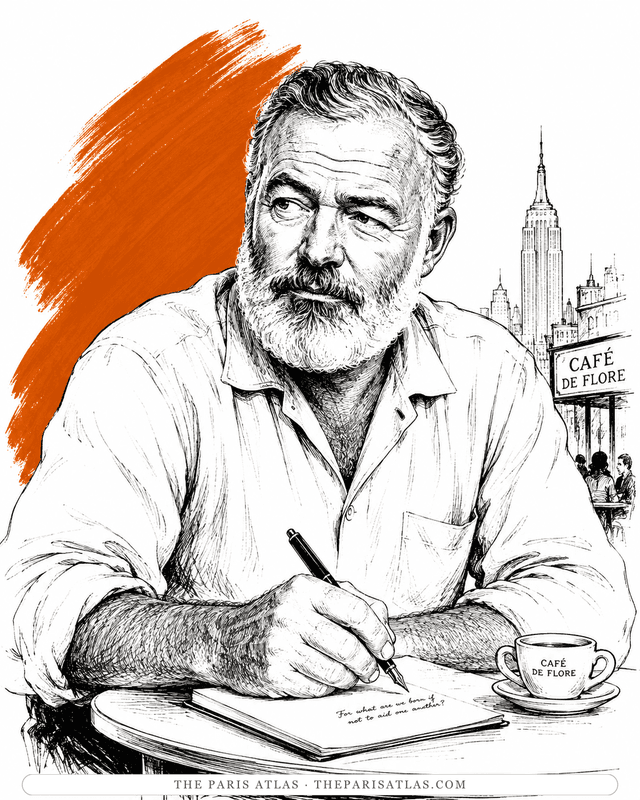
Author of The Sun Also Rises and A Moveable Feast; his pared-down style, developed in 1920s Paris, became the most imitated in American prose.
View authorThe sources below include the primary text, editions, scholarship, archival materials, and other records that informed this page. They document Bourlinguer, its publication, and its place in literary history.


Selected Venise opening and Gênes childhood/Leone passages in the December 2023 Ebooks libres et gratuits French transcription. Literary analysis of the narrated time shifts, not independent historical, autobiographical, military or medical verification. No complete-volume or first-edition collation claimed.

The Swiss National Library bibliography independently verifies Nina Rootes as the translator and Planus as the English title of Bourlinguer.
Used to place Bourlinguer within Blaise Cendrars's published work and verify its bibliographic context.
Used for independent biographical, archival, or historical context surrounding Blaise Cendrars's career and the period in which Bourlinguer appeared.
Used to cross-check authorship, chronology, and the work's place in Blaise Cendrars's wider catalogue.
Used to verify Blaise Cendrars's bibliography and place Bourlinguer within the broader chronology of Blaise Cendrars's career.
The primary text is the baseline reference for every book page. Additional references document publication history, interpretation, and historical context where that evidence is available.
 Explore more resources