The Paris AtlasCharting the artists, works, and places worth returning to.
  • Painter
  • Illustrator
· French · 1885–1979

Sonia Delaunay

Painter who arrived from Odessa via St Petersburg in 1905, co-invented Simultanism with Robert Delaunay, made the two-metre folding artist's book La Prose du Transsibérien with the poet Blaise Cendrars in 1913, dressed 1920s Paris from her Atelier Simultané, and in 1964 became the first living woman shown at the Louvre.

In images

Details

Lived
1885–1979
Born
1885
Birthplace
Odessa, Russian Empire
Died
1979
Place of death
Paris
Nationality
French
Married
Wilhelm Uhde · 1908–1910Robert Delaunay · 1910–1941
Children
Charles Delaunay
Roles
PainterIllustrator
Also known as
Sarah Stern · Sonia Terk

About Sonia Delaunay

Sonia Delaunay refused the border every art history draws between painting and everything else. The same discs and contrasts of pure colour that she and her husband Robert Delaunay developed on canvas — Simultanism, the style Guillaume Apollinaire folded into his 'Orphism' — went onto quilts, book covers, dresses, coats, a boutique at the 1925 Exposition des Arts Décoratifs, theatre costumes and fabric by the kilometre. Asked where the art stopped and the decoration began, she declined the question for seventy years.

Born Sarah Stern near Odessa in 1885 and raised Sonia Terk by a prosperous uncle in St Petersburg, she reached Paris in 1905 at nineteen. The founding object of her abstraction was domestic: a patchwork cradle quilt sewn for her son Charles in 1911, whose geometric colour blocks she recognized as a picture. Two years later she and the poet Blaise Cendrars made La Prose du Transsibérien — a poem and a painting printed as one two-metre folding sheet, the most famous artist's book of the century. In 1964 the Louvre showed her collection, the first living woman so honoured; the Légion d'honneur followed in 1975, and she worked until her death in Paris in 1979, at ninety-four.

Sarah, Sonia, Paris

She was born Sarah Elievna Stern on 14 November 1885 into a poor Jewish family near Odessa, and at about five was taken in by her mother's brother Henri Terk, a prosperous St Petersburg lawyer, who gave her his surname, a comfortable upbringing and the run of the city's art collections. Art school in Karlsruhe led to Paris in 1905 and the Académie de la Palette in Montparnasse; a brief marriage of convenience to the German dealer Wilhelm Uhde in 1908 — social cover for Uhde, who was gay; residency in France and a gallery to show in for her — dissolved amicably when she met the painter Robert Delaunay. They married in 1910; their son Charles was born in January 1911.

Sonia Delaunay around 1912, in the first years of Simultanism. (Photographer unknown, via Wikimedia Commons · Public domain)

For the baby she sewed a cradle quilt of patched geometric colour, Russian-village fashion, and saw when it was done that it was an abstract picture. She said so plainly ever after: the quilt came first, the theory second. From it, and from Michel Eugène Chevreul's law of simultaneous colour contrast, she and Robert built Simultanism — discs and wheels of adjacent pure colour that vibrate where they meet — while Apollinaire, naming the wider tendency after Orpheus, filed them under Orphism.

A two-metre poem

In 1913 she and Blaise Cendrars produced La Prose du Transsibérien et de la petite Jehanne de France: his railway poem set in a dozen typefaces down the right of a single sheet two metres tall, her simultaneous colour pouring down the left, the whole folding like a map into covers. The planned edition of 150 copies would, unfolded end to end, have equalled the height of the Eiffel Tower — the arithmetic was part of the design. It is the most celebrated livre d'artiste — artist's book — of the century, and museums that own copies display them unfolded, as paintings.

Wearing her own Casa Sonia designs in Madrid, c. 1918–20. (Photographer unknown, via Wikimedia Commons · Public domain)

The Russian Revolution cut off the Terk income that had carried the household, and Sonia monetized the style without apology. Stranded in Iberia by the war, she opened Casa Sonia in Madrid — fashion, interiors, accessories — and dressed the dancers of Sergei Diaghilev's Ballets Russes, the era's famous touring ballet company; back in Paris her Atelier Simultané of the 1920s put simultaneous colour on coats, scarves, swimsuits and film costumes, and her boutique with the furrier Jacques Heim at the 1925 Exposition Internationale des Arts Décoratifs stood at the event that named Art Deco. Fabric design for Metz & Co of Amsterdam paid the bills into the 1930s, by which time the couple had returned to canvases and the abstraction they had founded.

First woman in the Louvre

Robert Delaunay died of cancer in 1941 in Montpellier, mid-war; Sonia spent the occupation in the south and the rest of her life managing both careers — organizing his retrospectives, donating jointly, painting her own late gouaches and rhythm-colour canvases. In 1964, when she gave the state 117 works by them both, the Louvre exhibited the donation: the first retrospective showing given to a living woman there. France made her an officer of the Légion d'honneur in 1975.

She worked — gouaches, tapestry cartoons, a Matra sports car painted in simultaneous colour for charity — until the end, and died in Paris on 5 December 1979, at ninety-four. Her son Charles Delaunay had by then spent decades as France's great jazz impresario, co-founder of the Hot Club de France: the family colour sense, gone to swing.

Life events

  1. 1885

    Born Sarah Stern on 14 November near Odessa; raised in St Petersburg as Sonia Terk by her uncle.

    Sonia Delaunay — Wikipedia

  2. 1905

    Arrives in Paris at nineteen, to the Académie de la Palette in Montparnasse.

    Sonia Delaunay — Wikipedia

  3. 1910

    Marries Robert Delaunay after an amicable arranged first marriage to the dealer Wilhelm Uhde.

    Sonia Delaunay — Wikipedia

  4. 1911

    Sews the patchwork cradle quilt for her son Charles and recognizes it as an abstract picture — her stated origin of Simultanism.

    Sonia Delaunay — Wikipedia

  5. 1913

    La Prose du Transsibérien with Blaise Cendrars: poem and painting on one two-metre folding sheet.

    Sonia Delaunay — Wikipedia

  6. 1918

    Casa Sonia opens in Madrid — fashion and interiors in simultaneous colour, and costumes for Diaghilev's Ballets Russes.

    Sonia Delaunay wearing her own Casa Sonia designs in Madrid, around 1918–20 — the fashion house she founded in wartime Spain before the Atelier Simultané dressed Paris. (Photographer unknown, via Wikimedia Commons)

    Sonia Delaunay — Wikipedia

  7. 1925

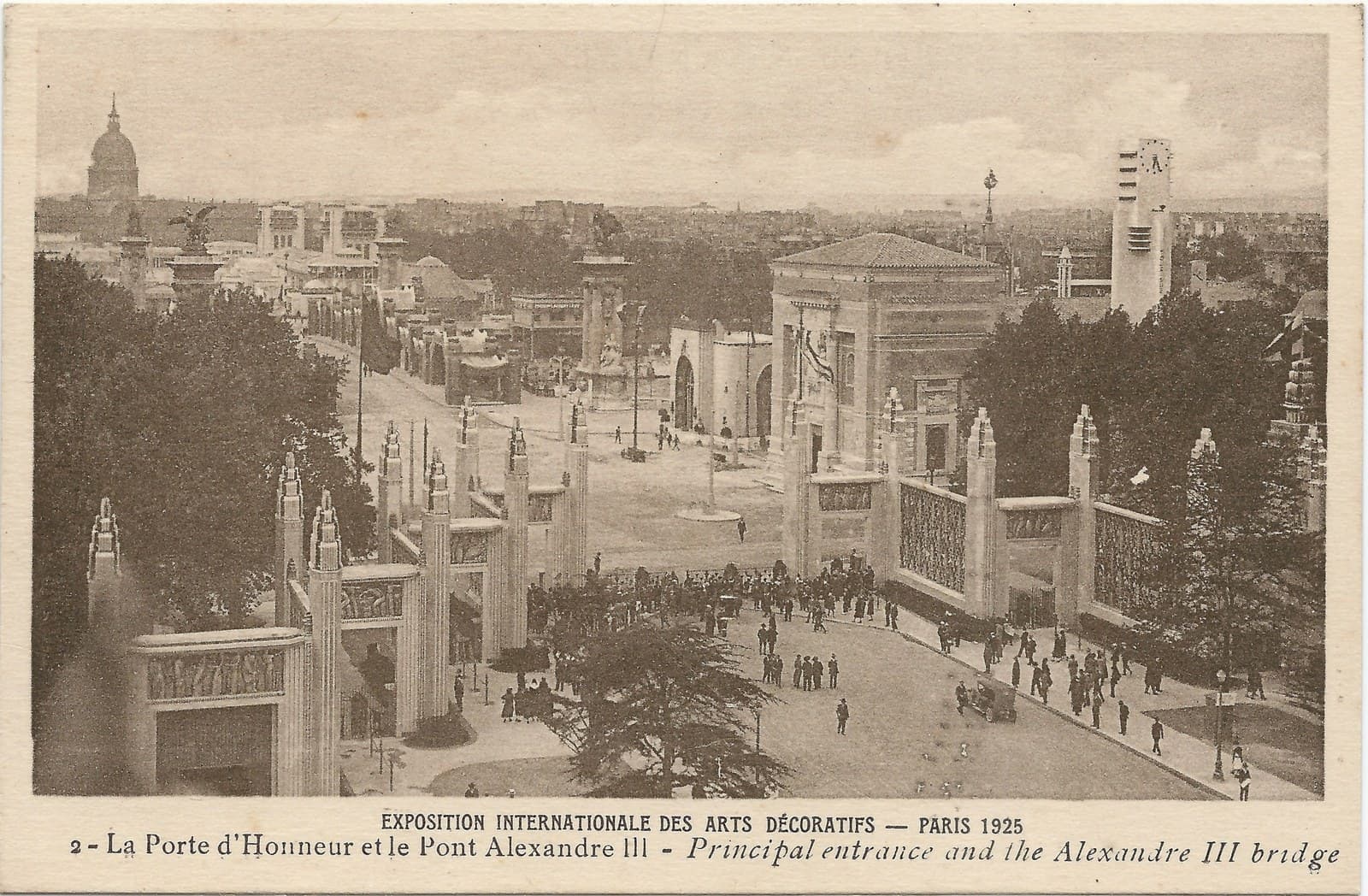
    Her boutique with Jacques Heim at the Exposition Internationale des Arts Décoratifs dresses the event that names Art Deco.

    Sonia Delaunay — Wikipedia

  8. 1941

    Robert Delaunay dies in Montpellier; she stewards both bodies of work ever after.

    Sonia Delaunay — Wikipedia

  9. 1964

    The Louvre shows the Delaunay donation — the first retrospective showing for a living woman at the museum.

    Sonia Delaunay — Wikipedia

  10. 1975

    Officer of the Légion d'honneur.

    Sonia Delaunay — Wikipedia

  11. 1979

    Dies in Paris on 5 December, aged ninety-four, still working.

    Sonia Delaunay — Wikipedia

People they knew

Documented connections — every one carries its source.

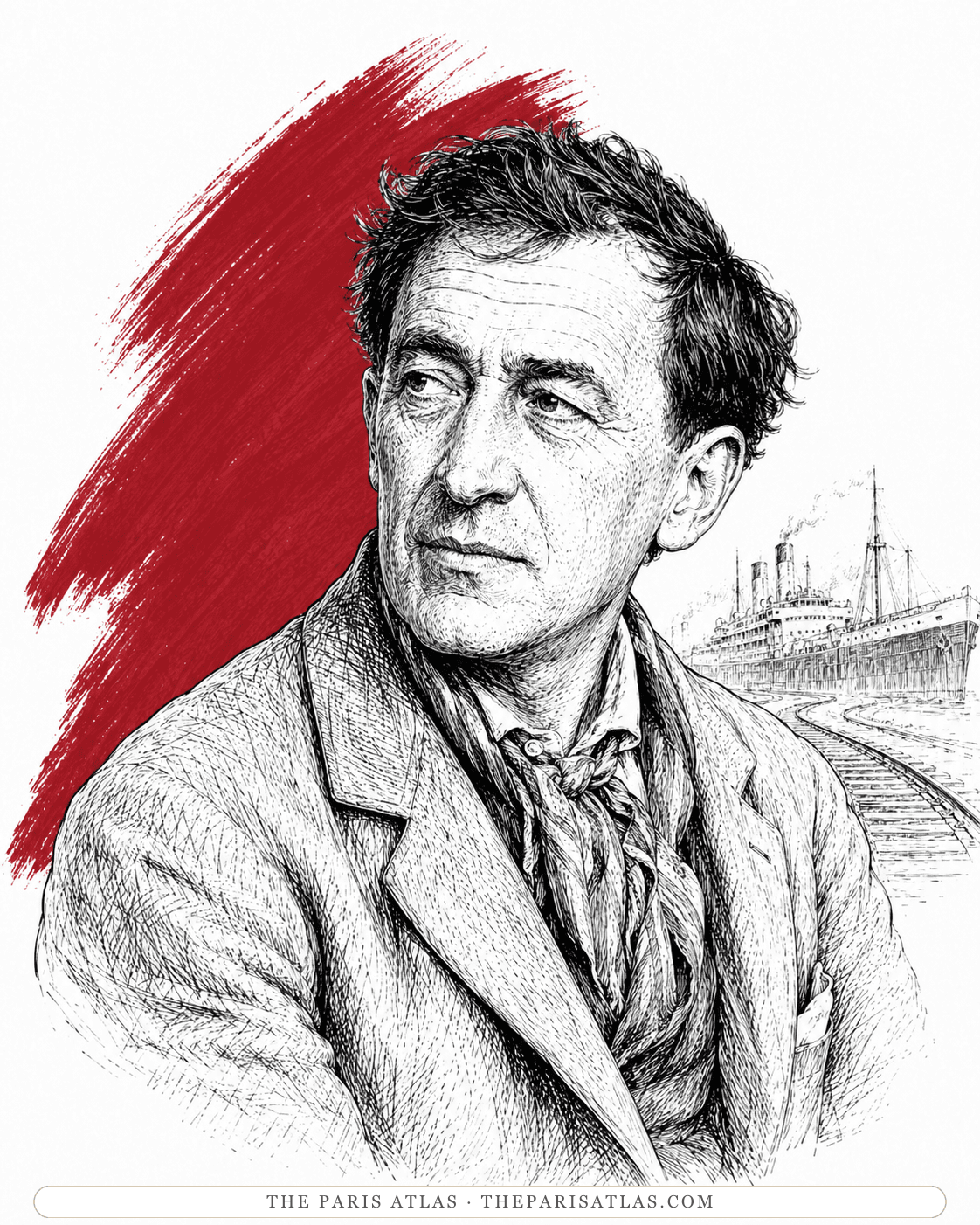
Illustrated portrait of Blaise Cendrars

Blaise Cendrars

  • Author
  • Poet

Collaborated with · 1913

La Prose du Transsiberien et de la petite Jehanne de France, 1913: Cendrars's railway poem and Delaunay's simultaneous colour printed as one two-metre folding sheet - the century's most celebrated artist's book.

Sonia Delaunay — Wikipedia

Questions about Sonia Delaunay

What is Sonia Delaunay famous for?

Making pure colour abstraction and refusing to fence it inside painting. With her husband Robert Delaunay she invented Simultanism — vibrating contrasts of adjacent pure colour — and carried it identically onto canvases, the 1913 folding book La Prose du Transsibérien, quilts, dresses, theatre costumes, and the fashion of 1920s Paris through her Atelier Simultané. In 1964 she became the first living woman given a showing at the Louvre.

What is La Prose du Transsibérien?

A single sheet two metres tall, folding like a map: Blaise Cendrars's railway poem runs down the right in a dozen typefaces while Sonia Delaunay's simultaneous colour pours down the left, ending at a small red Eiffel Tower. Published in 1913 in a planned edition of 150 — which unfolded end to end would have matched the Eiffel Tower's height — it is the most famous artist's book of the twentieth century. Copies are displayed unfolded, as paintings.

Did Sonia Delaunay invent abstract art with a quilt?

It is her own, repeated account of her beginning: in 1911 she sewed a patchwork cradle quilt for her newborn son in the geometric manner of Russian village blankets, saw an abstract composition when she looked at the finished object, and applied the discovery to painting. The quilt survives in the Musée national d'art moderne at the Centre Pompidou.

What was the relationship between Sonia and Robert Delaunay?

A fifty-year working partnership and a thirty-one-year marriage, from 1910 to his death in 1941. They developed Simultanism together and insisted on the plural; Apollinaire's 'Orphism' label covered them both. By the household's own division, Robert theorized more and Sonia applied more widely — and after his death she spent nearly four decades securing his reputation alongside her own, capped by the joint donation the Louvre showed in 1964.

Where can you see Sonia Delaunay's work?

The Centre Pompidou in Paris holds the core collection, including the 1911 quilt and major canvases; the Musée d'Art Moderne de Paris keeps the giant 1937 Exposition panels; the Bibliothèque nationale and several museums hold copies of the Transsibérien; and her textiles and fashion surface in design museums from the V&A to the Museum of Modern Art.

Sourced claims

Every connection the graph holds for Sonia, with the evidence behind it.

Collaborated with · 1913

Blaise Cendrars

La Prose du Transsiberien et de la petite Jehanne de France, 1913: Cendrars's railway poem and Delaunay's simultaneous colour printed as one two-metre folding sheet - the century's most celebrated artist's book.

Sonia Delaunay — Wikipedia

References

References

The sources below include biographies, scholarly essays, interviews, and primary materials that informed this page. They reflect both the historical record and ongoing critical conversations about Sonia Delaunay and his work.

  1. 1Sonia Delaunay — Wikipedia

    Wikipedia
    View source
    i
    Why these sources are here

    These references anchor the page in the documented record and in the scholarly conversations around Sonia Delaunay. Every claim on this page traces back to one or more of the works listed here.

    Explore more resources