The Paris AtlasCharting the artists, works, and places worth returning to.
  • Filmmaker
  • Actor
· French · 1889–1981

Abel Gance

French cinema's great maximalist — J'accuse raised the dead of the war, and Napoléon strapped cameras to horses and split the screen in three before the talkies arrived.

In images

Details

Lived
1889–1981
Born
25 October 1889
Birthplace
Paris
Died
10 November 1981 · aged 92
Place of death
Paris
Nationality
French
Married
Mathilde Thizeau · 1912Marguerite Danis · 1922Sylvie Gance · 1933–1978
Roles
FilmmakerActor
Also known as
Abel Eugène Alexandre Perthon

About Abel Gance

Abel Gance made around fifty films in sixty years and is remembered for one. Napoléon has eclipsed everything on either side of it: the wartime melodramas that first made his name, the two silent films the avant-garde actually studied, J'accuse and La Roue, the sound features of the 1930s, the three-screen experiments of his old age. Behind all of it sits a second body of work that was never shot. His archive holds more than two hundred abandoned projects, roughly four times the number he finished.

He is in these pages as the filmmaker who treated the apparatus as part of the writing. Cameras went onto horses and onto pendulums because a scene asked for it, and when one screen would not hold an ending he had three built.

Commentry, then Paris

He was born in Paris on 25 October 1889 and registered as Abel Eugène Alexandre Perthon, the son of Françoise Perthon. His father, a physician named Abel Flamant, did not marry her. The boy spent his first years with his grandparents at Commentry, a coal town in the Allier. By the time he returned to Paris his mother had married a mechanic named Adolphe Gance, whose name he took.

He left school in his teens, clerked in a solicitor's office, and from eighteen worked as a stage actor, including a season in Brussels. Scenarios sold to the studios got him inside the industry, and he directed his first film, La Digue, in 1911. Tuberculosis then interrupted everything and he was sent away to recover.

The war films

La Folie du Docteur Tube (1915) was an experiment with distorting lenses that his producers refused to release. Mater Dolorosa (1917) and La Dixième Symphonie (1918) were melodramas built on close-ups and superimposition, and they sold.

J'accuse, shot between August 1918 and March 1919 with Charles Pathé's money, borrowed the title of Zola's Dreyfus letter and turned it on the war. Its closing sequence has the dead rise from the battlefield and walk home to be counted by the living. Gance filmed it in the south of France using some two thousand soldiers on leave from Verdun, due back at the front within days. He said afterwards that most of them were killed within weeks of returning. The figure is his, repeated in interviews for the rest of his life, and there is no way to check it.

Pathé's poster for the second époque of J'accuse, drawn by Misti, with Romuald Joubé billed above the title. French releases of the period were cut into installments and advertised one at a time. (Ferdinand Misti-Mifliez (1865–1923) for Pathé — via Wikimedia Commons · Public domain)

La Roue

He was recovering from Spanish influenza at Nice when he started the next film. La Roue was shot between November 1919 and February 1922 at Nice, Chamonix, Arcachon and in Paris, loosely after Pierre Hamp's railway novel Le Rail. An engine driver raises a girl pulled from a wreck; the story is melodrama, and the machinery is the part Gance films with real attention. Its rapid cutting is what the avant-garde took from him.

Illness ran through the production. Ida Danis, his companion, was dying of tuberculosis for most of it, and Séverin-Mars, who played the driver, died in 1921 before the film was done. Gance dedicated it to Danis and went to New York rather than finish the edit himself.

Blaise Cendrars, who had lost an arm at the front in 1915, assisted him on both films. He helped assemble the accelerating train montage and brought in the composer Arthur Honegger.

Gance with the composer Arthur Honegger, who scored the 1927 Opéra premiere while the director was still recutting the film under him. Every later restoration would need its own music — the score is part of the version. (Unattributed press photograph — via Wikimedia Commons · Public domain)

The version released across ten Paris cinemas on 16 February 1923 ran past 10,000 meters, about eight hours in a prologue and four parts. The Gaumont-Palace showed it with a musical program of 115 pieces by 56 composers, arranged by Paul Fosse and Honegger. That program outlasted much of the footage: when the Fondation Jérôme Seydoux-Pathé, the Cinémathèque française and the Cinémathèque suisse rebuilt the film between 2016 and 2019, they used the music as evidence for the order of the cutting.

Napoléon, and the end of the silent era

Napoléon was announced in 1923 as the first of six films and consumed the resources of all six. Shooting ran twenty months from January 1925. The Opéra version premiered at the Palais Garnier on 7 April 1927 and finished in Polyvision, three projectors throwing three strips of film side by side.

Gance in 1924, the year the Napoléon financing came together — after La Roue, before the twenty-month shoot that would consume the budget of six films. (Unattributed press photograph — via Wikimedia Commons · Public domain)

The film has its own page here. What matters to the life is the timing: sound arrived within two years and made the whole apparatus unaffordable, so the most ambitious production in European cinema was obsolete almost immediately. Gance was thirty-seven at the premiere and had another fifty years to work.

The sound years

He adapted quickly and unevenly. La Fin du monde (1931), a science-fiction spectacle he starred in himself, failed badly enough to cost him control of his own productions. What followed was largely assignment work, some of it very good: a remake of Mater Dolorosa in 1932, Lucrèce Borgia in 1935, and Un grand amour de Beethoven in 1936, which stages the onset of the composer's deafness by taking the sound away.

Twice in this decade he went back to his own material. In 1935 he recut and rescored the Napoleon footage as Napoléon Bonaparte. In 1938 he remade J'accuse, reusing some of the 1919 film inside a new one. With another war approaching, the dead rise a second time, now to warn rather than to accuse.

Occupation, and Spain

Paradis perdu was released in 1940. Vénus aveugle followed in 1941, premiered at Vichy and dedicated to Pétain. In June of that year the Vichy administration registered Gance as Jewish on account of his father, despite his Catholic baptism. He directed Le Capitaine Fracasse in 1943, left France for Spain that summer, and returned in October 1945.

Magirama, and the last projects

Henri Langlois introduced him to Nelly Kaplan, an Argentine film writer in her early twenties who had come to Paris in 1953. She started as his assistant on La Tour de Nesle in 1954, his first film in color, and became his collaborator for the next decade.

Magirama opened at Studio 28 in December 1956: a program of shorts projected on three screens, reviving the Polyvision idea thirty years on and this time with no story to carry it. Austerlitz (1960) returned to Bonaparte with an international cast. Cyrano et d'Artagnan (1964) was written in alexandrines. After that the work moved to television, and in 1971 he assembled the Napoleon material a third time as Bonaparte et la Révolution.

Gance at sixty-seven, photographed by Studio Harcourt. The year after Magirama, and three years before Austerlitz. (Studio Harcourt, Paris — via Wikimedia Commons · CC BY 3.0)

The films that never existed

The larger body of work is in the archive. Gance's papers reached the Bibliothèque nationale de France in stages: nineteen working notebooks covering 1914 to 1928, early screenplays and his correspondence with Charles Pathé, bought at a Drouot auction in 1993; then, in 1995, the full personal archive donated by his friend Claude Lafaye. It runs to twenty linear meters.

It holds more than two hundred film projects he never made. Some are a few lines on a loose sheet. Others have screenplays, technical plans, and lists of the actors he wanted.

  • La Divine Tragédie — the religious epic he came back to for decades
  • Christophe Colomb — attempted three times across nearly forty years, with a cluster of related projects on the discovery of the Americas
  • Ignace de Loyola
  • Le Cid Campeador
  • 1812 and La Campagne de Russie — the Napoleonic cycle that never got past its first installment

So a filmography of Abel Gance lists only the projects that found money.

Rediscovery

Kevin Brownlow spent most of a lifetime reassembling Napoléon from scattered fragments, and the restoration reached audiences while Gance was still alive to see it. France gave him the first Grand Prix national du cinéma in 1974. In 1979, at eighty-nine, he attended a triptych screening at the Telluride Film Festival. He was given an honorary César in 1981 and died in Paris on 10 November that year, at ninety-two. He is buried at the Cimetière d'Auteuil.

One question the archives are still settling is how much of the equipment was actually his. Gance is credited with the Brachyscope, the Pictographe, Polyvision and Perspective Sonore, all developed alongside manufacturers such as André Debrie, and the Cinémathèque française has put the question of what he invented, adapted or commissioned to its own researchers under the heading of myth or reality.

The Gance grave at the Cimetière d'Auteuil in the 16e, shared with his third wife, Sylvie, who died in 1978. (Wikimedia Commons user Mu · CC BY-SA 3.0)

Abel Gance, illustrated

A few scenes from Gance's working life, drawn for The Paris Atlas — illustrations, not photographs.

Writing scenarios.
Paris, the early years.
At the camera.
Directing a Napoleonic scene.
With a script, late in the career.
Among the reels.
Illustrations — The Paris Atlas

Life events

  1. 1889

    Born in Paris on 25 October and registered as Abel Perthon; raised for his first years by his grandparents at Commentry, in the Allier.

    Encyclopaedia Britannica — Abel Gance

  2. 1911

    Directs his first film, La Digue, after several years as a stage actor and a seller of scenarios.

    Encyclopaedia Britannica — Abel Gance

  3. 1915

    La Folie du Docteur Tube — distorting lenses and deformed images. The producers refuse to release it.

    Encyclopaedia Britannica — Abel Gance

  4. 1918–19

    Shoots J'accuse, ending with the return of the dead, filmed with soldiers on leave from Verdun.

    Pathé's poster for the second époque of J'accuse, drawn by Misti, with Romuald Joubé billed above the title. French releases of the period were cut into installments and advertised one at a time. (Ferdinand Misti-Mifliez (1865–1923) for Pathé — via Wikimedia Commons)

    Encyclopaedia Britannica — Abel Gance

  5. 1919–22

    La Roue, shot at Nice, Chamonix, Arcachon and Paris. Ida Danis dies during the production, and Séverin-Mars in 1921.

    Fondation Jérôme Seydoux-Pathé — Restaurations : La Roue (Abel Gance)

  6. 1923

    La Roue opens in ten Paris cinemas on 16 February, over eight hours long, accompanied by 115 pieces of music arranged by Paul Fosse and Arthur Honegger.

    Gance with the composer Arthur Honegger, who scored the 1927 Opéra premiere while the director was still recutting the film under him. Every later restoration would need its own music — the score is part of the version. (Unattributed press photograph — via Wikimedia Commons)

    Fondation Jérôme Seydoux-Pathé — Restaurations : La Roue (Abel Gance)

  7. 1925–27

    Twenty months of shooting on Napoléon; the Opéra version premieres at the Palais Garnier on 7 April 1927 with the Polyvision triptych.

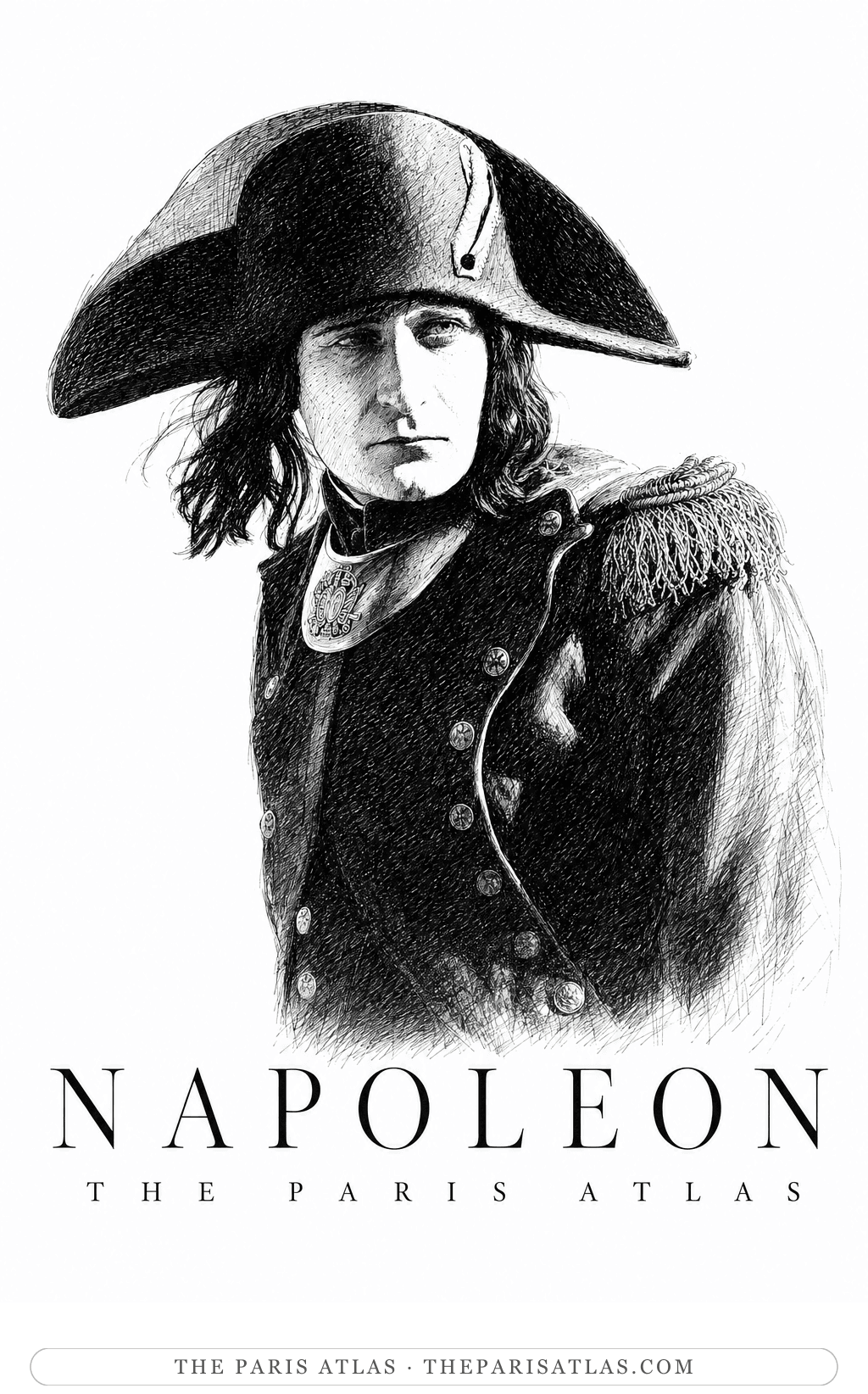
    House-illustrated poster for Napoléon (1927): a pen-and-ink portrait of Albert Dieudonné as Bonaparte in bicorne hat and fringed epaulette, above the title NapoleonFilm · in the catalogNapoléon1927 · Silent epic

    La Cinémathèque française — Napoléon vu par Abel Gance, enfin reconstruit et restauré

  8. 1931

    La Fin du monde, his first large sound production, fails and costs him control over his own projects.

    Encyclopaedia Britannica — Abel Gance

  9. 1938

    Remakes J'accuse as another war approaches, reusing part of the 1919 film.

    Encyclopaedia Britannica — Abel Gance

  10. 1941

    Vénus aveugle premieres at Vichy, dedicated to Pétain. That June the Vichy administration registers Gance as Jewish on account of his father.

    Encyclopaedia Britannica — Abel Gance

  11. 1943–45

    Leaves France for Spain in the summer of 1943; returns in October 1945.

    Encyclopaedia Britannica — Abel Gance

  12. 1956

    Magirama opens at Studio 28 — three-screen shorts made with Nelly Kaplan, thirty years after the Napoléon triptych.

    Gance at sixty-seven, photographed by Studio Harcourt. The year after Magirama, and three years before Austerlitz. (Studio Harcourt, Paris — via Wikimedia Commons)

    La Cinémathèque française — Les inventions techniques d'Abel Gance : mythe ou réalité ? (conférence de Georges Mourier) (2013)

  13. 1993–95

    His papers reach the Bibliothèque nationale de France: nineteen notebooks and the Pathé correspondence at auction in 1993, then Claude Lafaye's donation of the whole archive in 1995.

    Comité d'histoire de la BnF, Dictionnaire des fonds — Abel Gance

  14. 1979

    At eighty-nine, attends a triptych screening of the restored Napoléon at the Telluride Film Festival.

    Sight and Sound — A monumental reckoning: how Abel Gance's Napoléon was restored to full glory (Paul Cuff)

  15. 1981

    Receives an honorary César, and dies in Paris on 10 November at ninety-two. He is buried at the Cimetière d'Auteuil.

    The Gance grave at the Cimetière d'Auteuil in the 16e, shared with his third wife, Sylvie, who died in 1978. (Wikimedia Commons user Mu)

    Encyclopaedia Britannica — Abel Gance

  16. 2024

    The BnF counts more than two hundred unrealized projects in his archive — about four times the films he completed.

    Bibliothèque nationale de France, Chroniques n°100 — Abel Gance. Ni vu ni connu (2024)

Selected works

Cataloged from the holding institutions' records. Reproductions appear only where the rights are verified.

Cinema

House-illustrated poster for Napoléon (1927): a pen-and-ink portrait of Albert Dieudonné as Bonaparte in bicorne hat and fringed epaulette, above the title Napoleon

Editorial illustration

Film

Napoléon

1927 · Silent epic

Gance's colossal biography of Bonaparte from schoolyard snowball fight to the Italian campaign — cameras strapped to horses, swung on pendulums, and thrown like snowballs, ending in Polyvision: three projectors opening the screen into a triptych. The most technically audacious film of the silent era, premiered at the Paris Opéra two years before the talkies made its inventions orphans.
Abel Gance, Napoléon, 1927.

People they knew

Documented connections — every one carries its source.

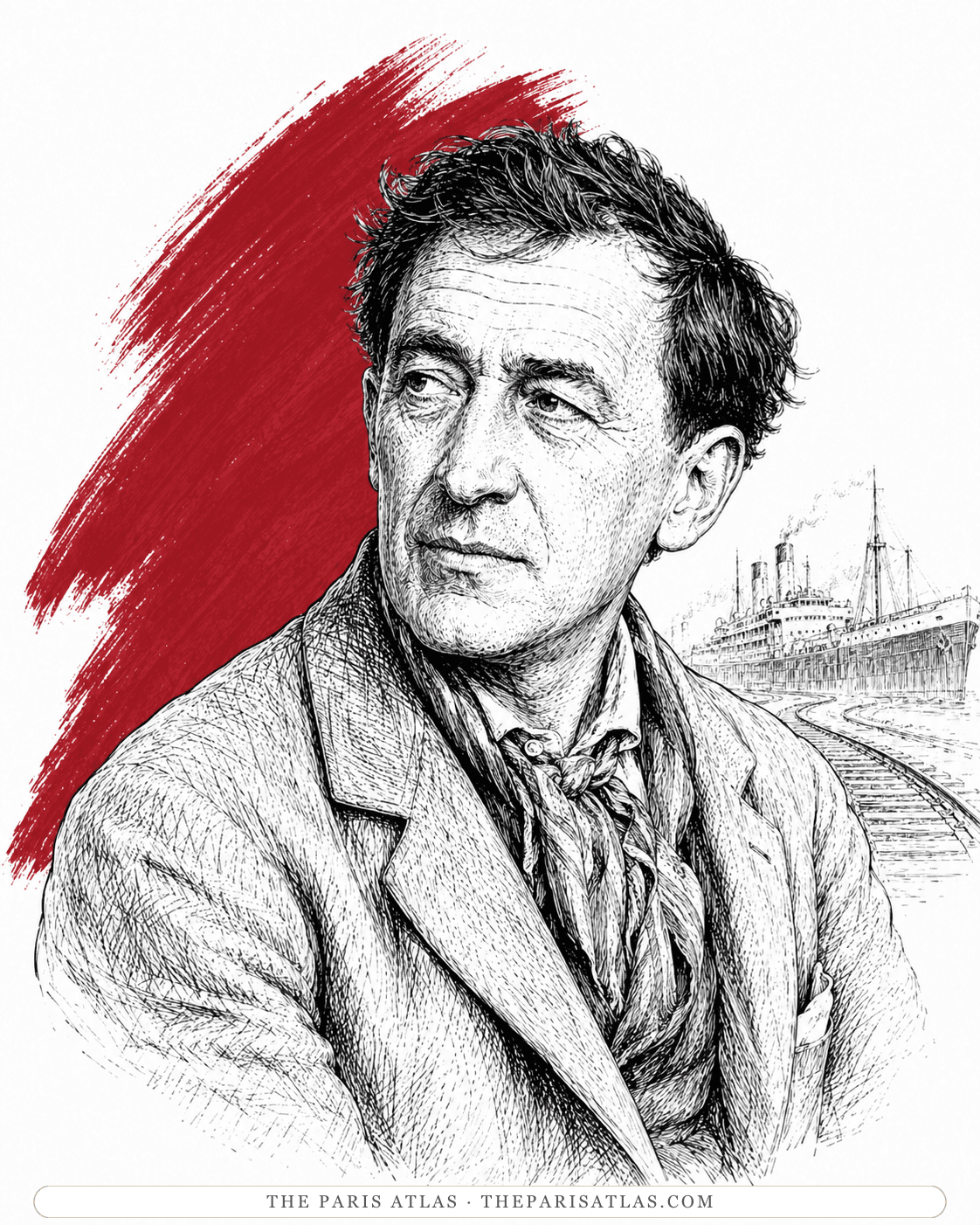
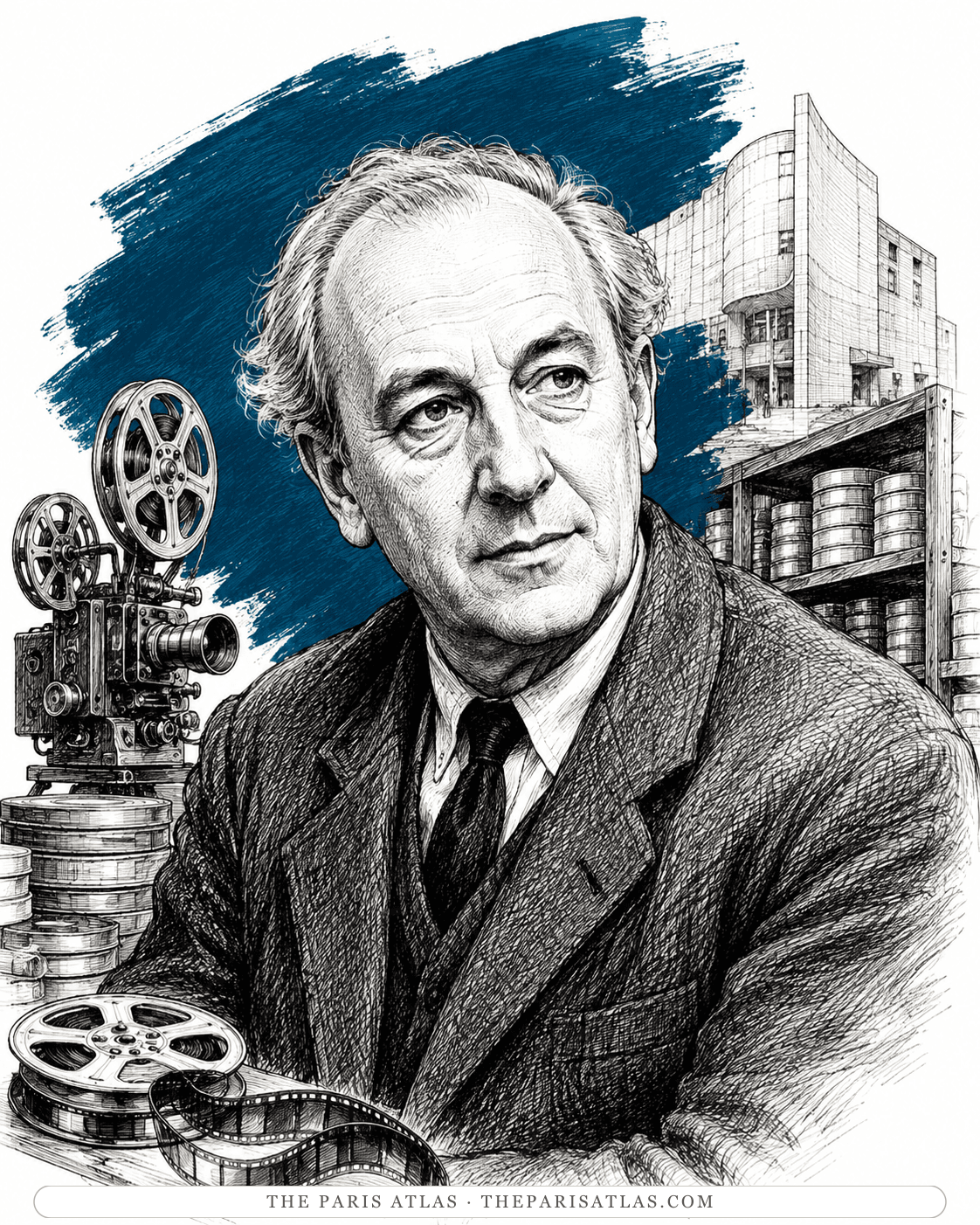
Illustrated portrait of Nelly Kaplan

Nelly Kaplan

  • Filmmaker
  • Author
  • Critic

Mentored · 1954–1964

Henri Langlois introduced them; she began as his assistant on La Tour de Nesle, co-directed the Magirama program, worked on Austerlitz and Cyrano et d'Artagnan, and went on to direct her own features.

Sight and Sound — The departed: the filmmakers we lost in 2020 (Bob Mastrangelo) (2020), Nelly Kaplan; Encyclopaedia Britannica — Abel Gance

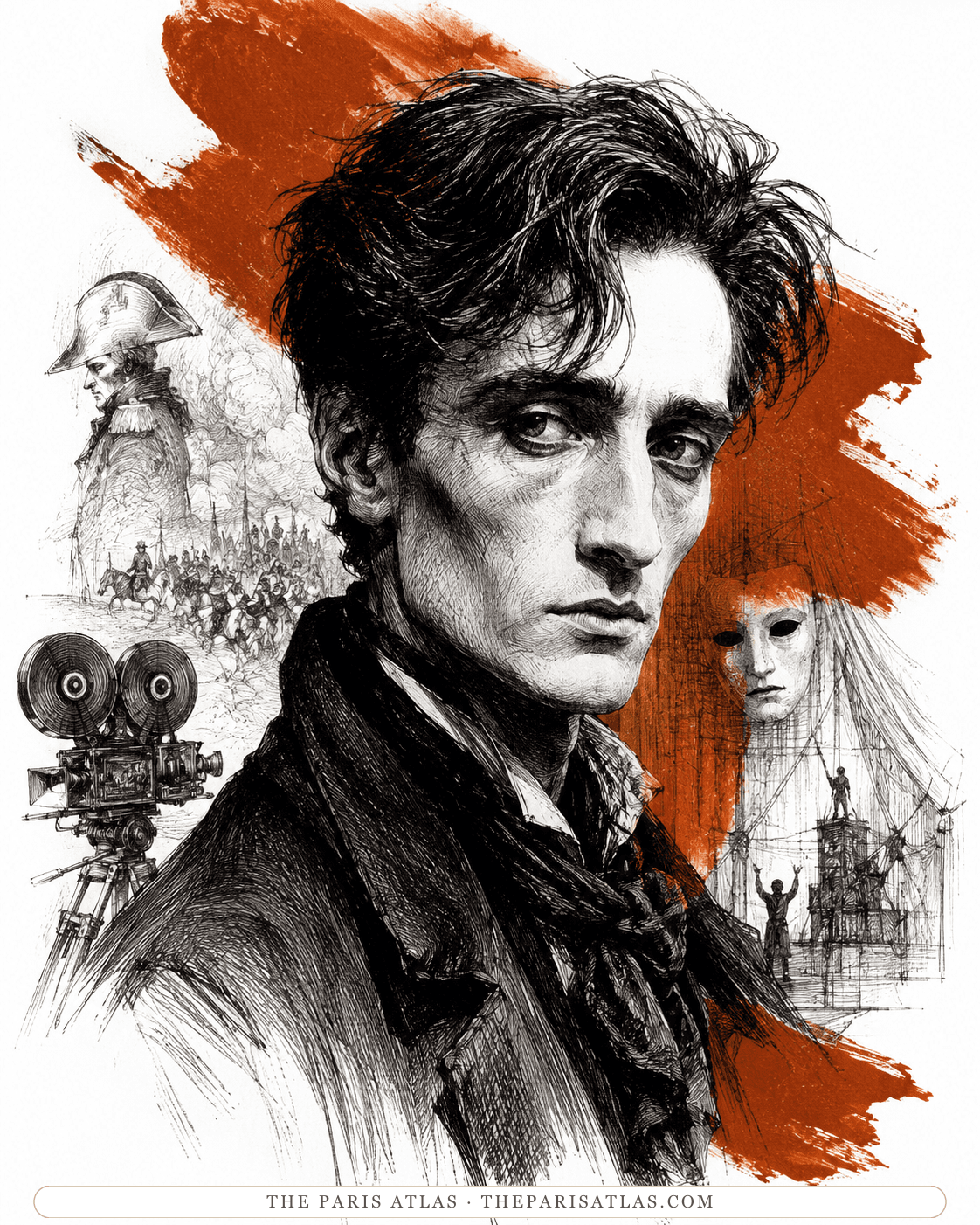
Illustrated portrait of Antonin Artaud

Antonin Artaud

  • Poet
  • Playwright
  • Actor

Met · 1925–1926

Artaud played Marat during the twenty-month Napoléon shoot, opposite Gance's own Saint-Just. It is one of two screen roles that carried him into film history.

Encyclopaedia Britannica — Napoléon (film by Gance); La Cinémathèque française — Napoléon vu par Abel Gance, enfin reconstruit et restauré

Illustrated portrait of Blaise Cendrars

Blaise Cendrars

  • Author
  • Poet

Met · 1918–1922

Cendrars was Gance's assistant on J'accuse — he also appears among the risen dead — and stayed through the three years of La Roue, where he cut with him and brought in Arthur Honegger.

Fondation Jérôme Seydoux-Pathé — Restaurations : La Roue (Abel Gance), La Roue — restoration notes; Encyclopaedia Britannica — Abel Gance

Questions about Abel Gance

Who was Abel Gance?

A French filmmaker (1889–1981), the great maximalist of French silent cinema, known for the antiwar film J'accuse and the epic Napoléon.

What is Abel Gance best known for?

Napoléon (1927), a silent epic famous for its technical daring — cameras strapped to horses, and a three-screen finale that split the image across three projectors, decades before widescreen.

What is J'accuse?

His antiwar film, which raised the dead of the First World War on screen. The poet Blaise Cendrars was his assistant on it and appears among the risen dead.

What was Polyvision?

Gance's three-projector widescreen process, used for the triptych finale of Napoléon — the image spread across three adjacent screens.

Who worked with Abel Gance?

Blaise Cendrars assisted on J'accuse and stayed through the three years of La Roue; Antonin Artaud played Marat during the long Napoléon shoot; and he later mentored the director Nelly Kaplan.

Sourced claims

Every connection the graph holds for Abel, with the evidence behind it.

Mentored · 1954–1964

Nelly Kaplan

Henri Langlois introduced them; she began as his assistant on La Tour de Nesle, co-directed the Magirama program, worked on Austerlitz and Cyrano et d'Artagnan, and went on to direct her own features.

Sight and Sound — The departed: the filmmakers we lost in 2020 (Bob Mastrangelo) (2020), Nelly Kaplan; Encyclopaedia Britannica — Abel Gance

Met · 1925–1926

Antonin Artaud

Artaud played Marat during the twenty-month Napoléon shoot, opposite Gance's own Saint-Just. It is one of two screen roles that carried him into film history.

Encyclopaedia Britannica — Napoléon (film by Gance); La Cinémathèque française — Napoléon vu par Abel Gance, enfin reconstruit et restauré

Met · 1918–1922

Blaise Cendrars

Cendrars was Gance's assistant on J'accuse — he also appears among the risen dead — and stayed through the three years of La Roue, where he cut with him and brought in Arthur Honegger.

Fondation Jérôme Seydoux-Pathé — Restaurations : La Roue (Abel Gance), La Roue — restoration notes; Encyclopaedia Britannica — Abel Gance

Performed in · 1927

Napoléon

Abel Gance plays Saint-Just.

Encyclopaedia Britannica — Napoléon (film by Gance)