The place, briefly
Bas-Meudon was the low, wet end of Meudon, downhill from the château and directly across the water from Billancourt. Boats had run down from Paris since the 1867 exposition, and by the end of the century the bank was a row of guinguettes: the Poisson Rouge, the Chat Noir, the Martin-Pêcheur on the place du Port. Parisians came out on the Mouches and the Hirondelles for twenty centimes, ate mussels and chips and friture de Seine at open-air tables, and went home again.
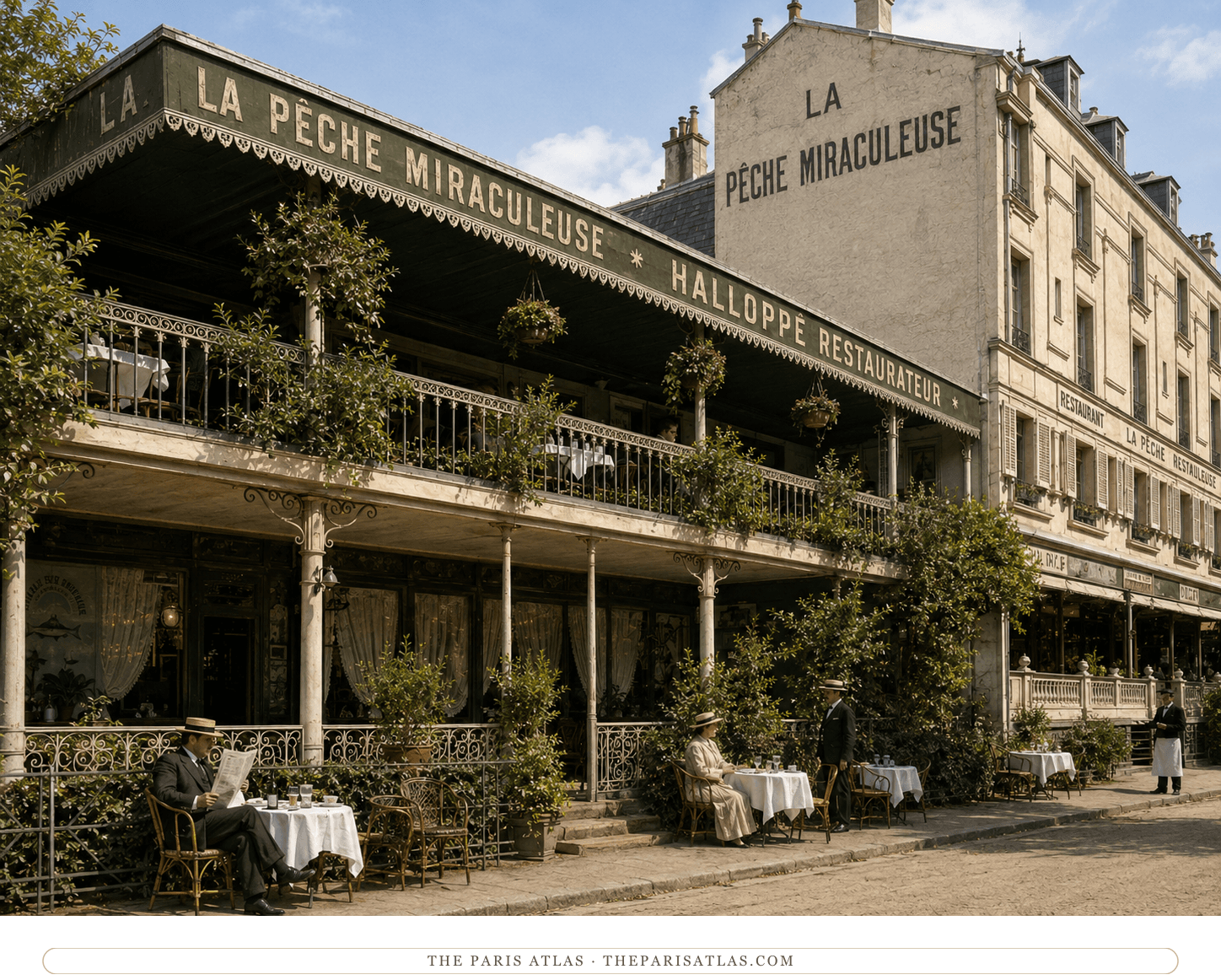
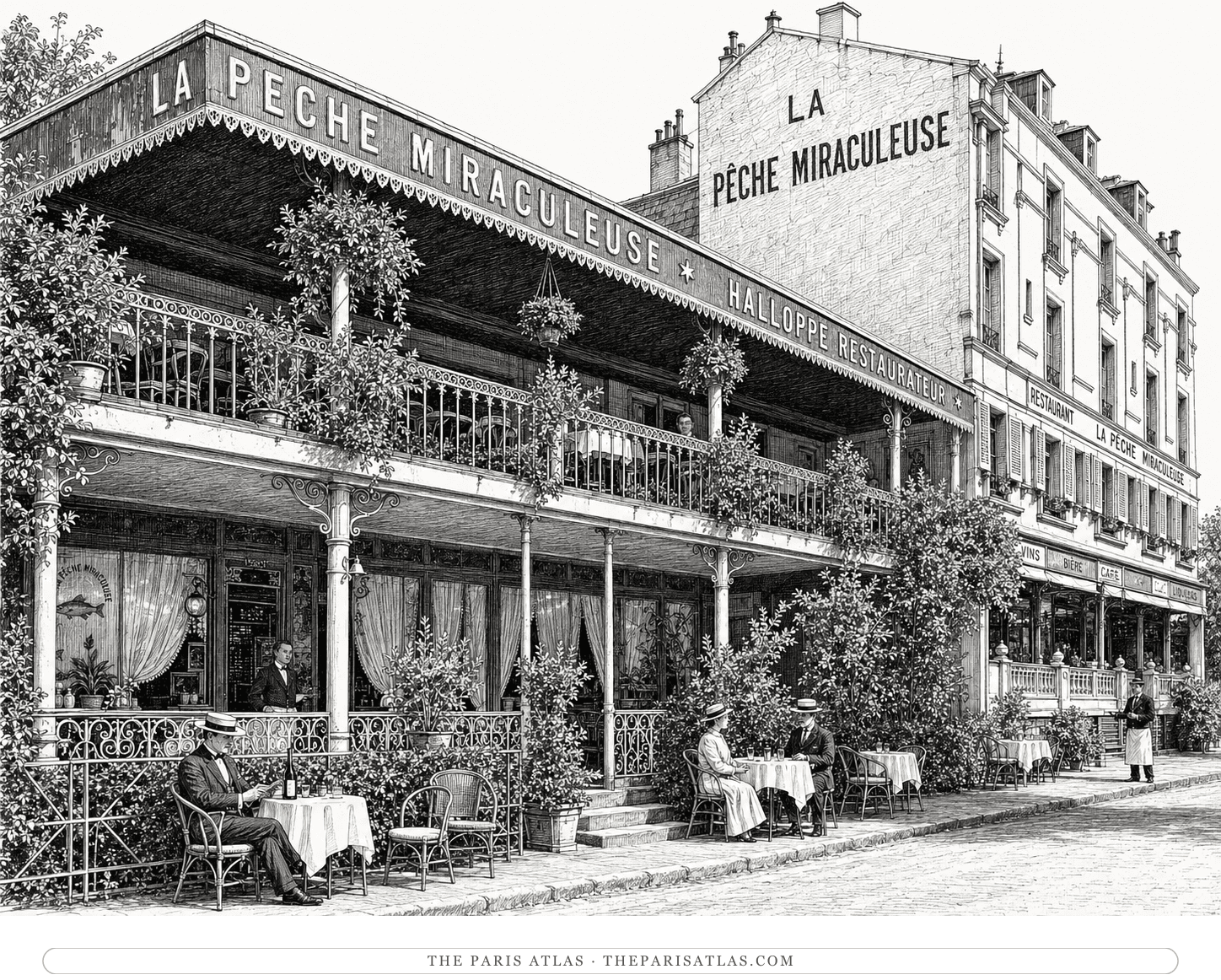
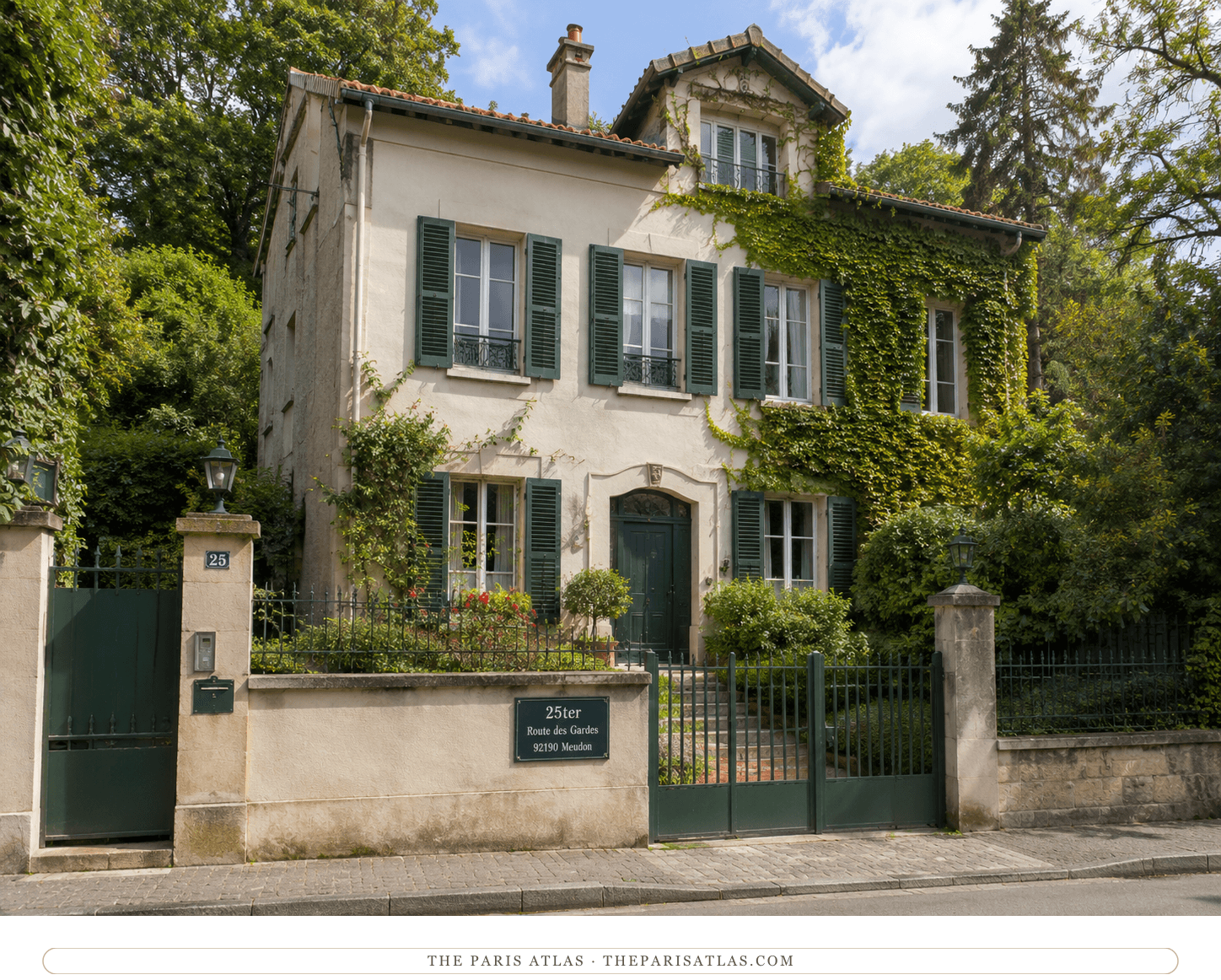
La Pêche Miraculeuse — the miraculous catch, after the Gospel story — was the exception. It traded under that sign but was known as Chez Haloppé for the man who kept it, and it was where the high society of the Third Republic ate when it came downriver: good food, and a cellar people talked about. President Félix Faure used it as the discreet end of a standing Friday arrangement, coming out to Marguerite Steinheil at the Vert Logis on the chemin des Lacets and taking his meals at the restaurant alone with her. By the 1880s it was also drawing the literary dining clubs out from Paris for the summer.
Painters had it first. Alfred Sisley put it in La Seine au Bas-Meudon in 1878, working from the hillside and looking back down at the restaurant. Marie-François Firmin-Girard went the other way and painted the terrace itself: Le dimanche au Bas-Meudon, a wide canvas of Parisians eating and drinking beside the water on a late-summer Sunday, shown at the Salon of 1884 and again at the Exposition Universelle of 1889. Commentary at the time suggested some of the diners in it were painters Firmin-Girard knew.
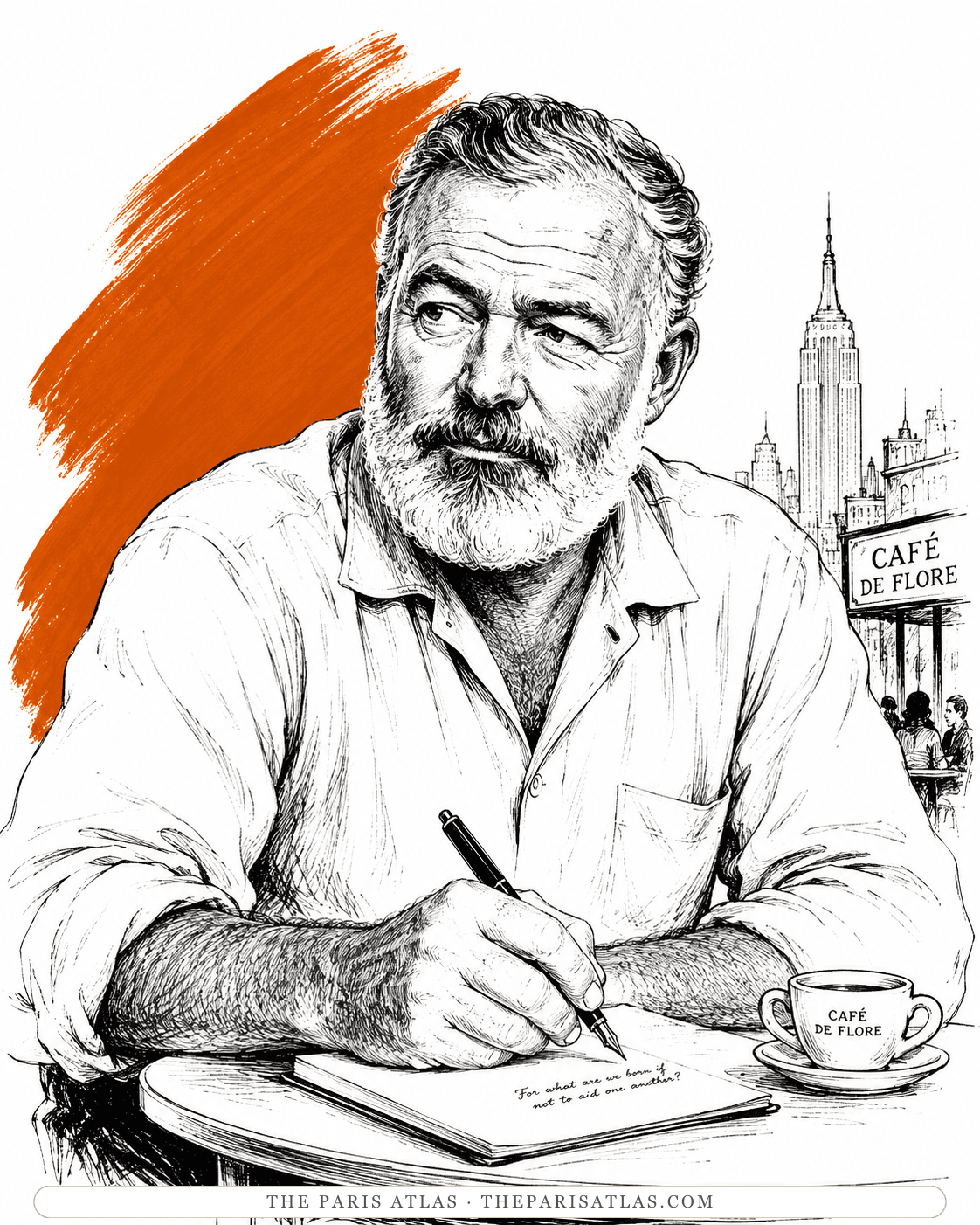
Which is what makes the memoir's line more than decoration. In A Moveable Feast Ernest Hemingway names it in 'People of the Seine' as one of the best places to eat goujon, the small dace-like fish the Seine men caught by the plateful and served fried whole, bones and all. He remembers going when there was money for a trip out of the quarter, and remembers the wine as a splendid white that was a sort of Muscadet — his own hedge, worth keeping. The place struck him as one out of a Maupassant story, with the river laid out as Sisley had painted it. He was describing a view that had in fact been painted, from more or less where he was sitting.
The quarter did not survive Louis Renault. The works at Billancourt across the river needed room, and through the first half of the century the industry took the bank the guinguettes stood on. A press photograph of 1921 still shows the Hôtel de la Pêche Miraculeuse standing beside the Restaurant de la Grotte, so it was there at the start of Hemingway's Paris years. When it went is not recorded in the sources consulted here. What is left is the postcard trade, two paintings, and a paragraph.




 View source