

Complete Poems
All of Ernest Hemingway's poems in one scholarly edition — school verse, Paris satires, war poems, and the private jokes he never meant to publish.
- 1983
About Ernest Hemingway
The story, briefly
Spoiler-freeErnest Hemingway published poems before he was famous for prose: Poetry magazine ran his verse in 1923, and his first book, Three Stories and Ten Poems, gave the poems equal billing. After that he wrote verse only occasionally — satires, insults, war poems, and a few personal ones — and refused to collect it. This edition, prepared by the scholar Nicholas Gerogiannis, gathers all of it, with notes dating each poem and naming its targets. It matters more as biography than as poetry. (Poems — nothing here to spoil.)
The story, in more detail
Hemingway's serious period as a poet was the early 1920s. Poetry magazine published his verse in 1923, the little magazines of Paris ran more, and his first book, Three Stories and Ten Poems, put the poems in the title. The Paris poems are mostly satire, mocking famous writers and postwar pieties; a few, like 'The Age Demanded,' work the same compression he was developing in prose.[1]
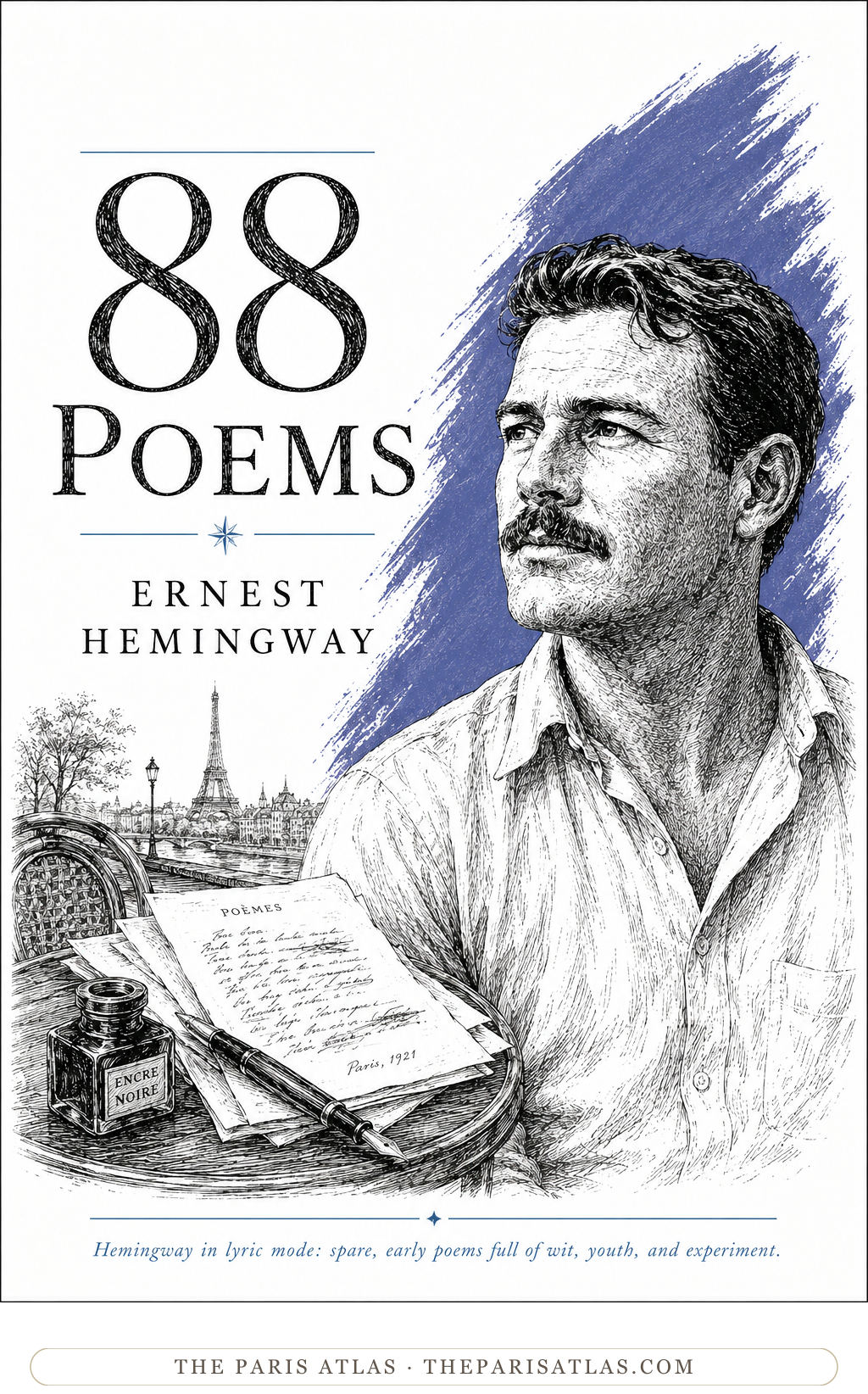
After Paris he wrote verse only privately: attacks on critics, a lampoon of Dorothy Parker, obscene barracks poems from two wars, and late personal poems addressed to his wife Mary. He never collected any of it, so pirates did — unauthorized 'Collected Poems' pamphlets circulated from the 1950s on, and Hemingway denounced them. The first authorized edition was 88 Poems in 1979, edited by Nicholas Gerogiannis; this Complete Poems is the revised and enlarged version, and the standard text.[1]
What's inside
The poems in chronological order: school verse from Oak Park; the published poems of the Chicago and Paris years; satires and squibs from the middle decades, most never meant for print; and the late personal poems, including lines written for his wife Mary. Gerogiannis's notes date each poem and identify the people the satires attack.[1]
The whole book can be read in an evening. It reads best as a supplement to the biography rather than as a poetry collection.[1]
Themes and analysis
Before the prose reputation took over
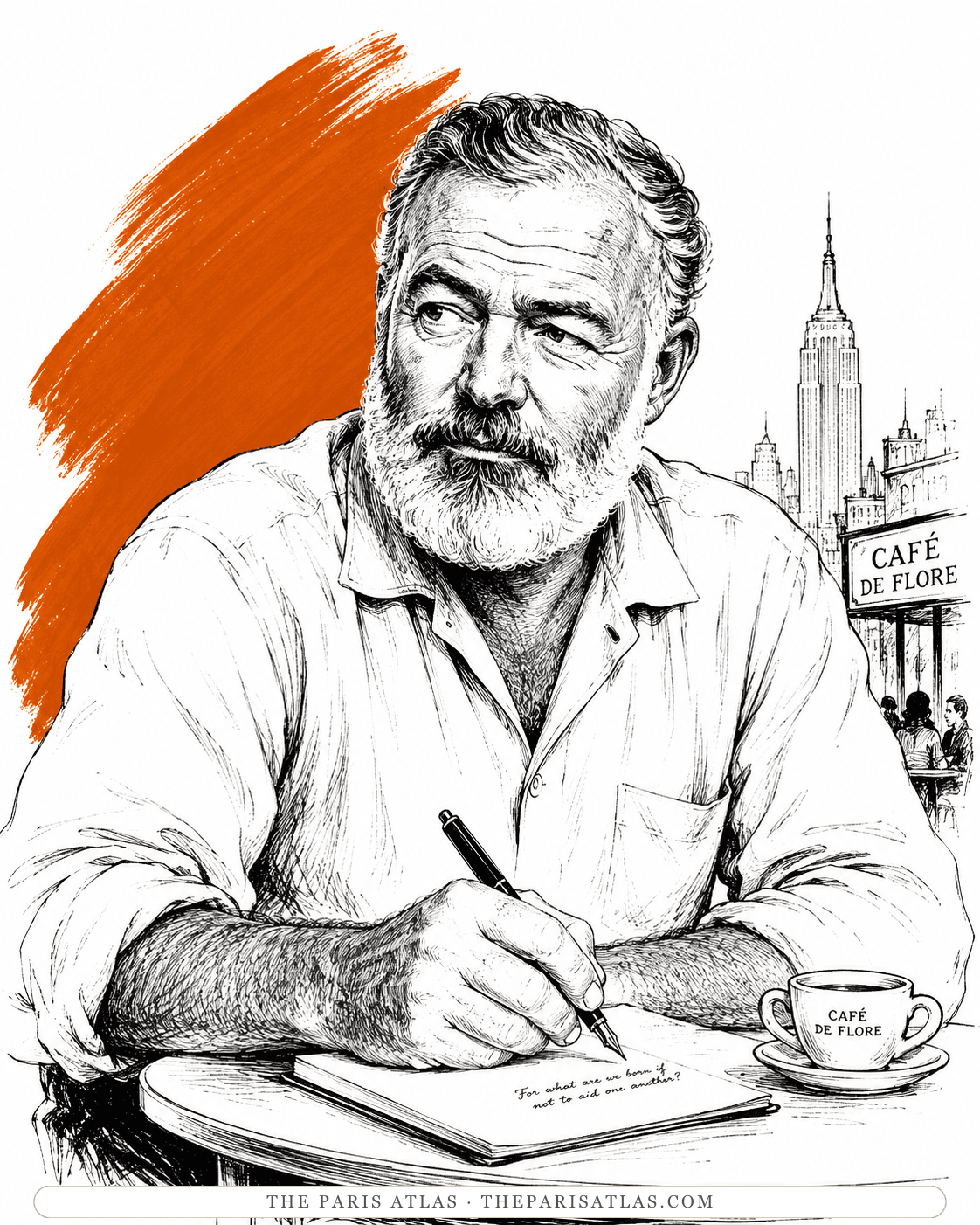
In the early poem “Mitraigliatrice,” writing becomes a small, noisy battle. The opening contrast between the slow mills of divine justice and a chattering machine gives way to thoughts figured as infantry, struggling across difficult ground. The Corona typewriter joins the mechanical sound of composition to the weapon named at the close. Yet this is no effortless display of mastery: the mental soldiers are awkward and their progress obstructed. The poem makes a desk into a battlefield while allowing the martial comparison to expose the writer's difficulty, not merely advertise his force.
A collection assembled after his death
Completeness here is an editorial achievement rather than a final arrangement made by the poet. Nebraska Press's description of the revised collection singles out the addition of “Critical Intelligence,” alongside Gerogiannis's afterword and updated bibliography. The collection can therefore change even while retaining its claim to completeness. Its explanatory notes also place the poems within historical and literary relationships that a casual reader might miss. The archive illustration points toward that double task: gathering texts and making their contexts legible. What looks like a single poetic career reaches the reader through continuing editorial decisions.
Why we recommend it
What the fiction left out
The angers and jokes Hemingway kept out of his fiction went into these poems instead. They are revealing about the man.
The style is still there
Even the throwaway verse is written in short, cut-down lines. His prose economy shows in every form he touched.
A few real poems
A handful of the early poems are genuinely good, from the one period when he took the form seriously.
What this book explores
Timeline
1923
Poetry magazine publishes Hemingway's verse, and Three Stories and Ten Poems gives poems equal billing with the stories.
1950s
Unauthorized 'Collected Poems' pamphlets begin to circulate. Hemingway denounces them.
1979
Nicholas Gerogiannis edits the first authorized collection, published as 88 Poems.
1983
The University of Nebraska Press publishes the revised and enlarged Complete Poems, now the standard text.
Book editions
- Hardcover
- Harcourt Brace Jovanovich
- 1979
Paperback
- Paperback
- University of Nebraska Press
Reader reviews
Readers may also like

In Our Time
The prose he was writing at the same time as the Paris poems, using the same compression.
Read our take
A Moveable Feast
His memoir of the Paris years the satires come from, naming many of the same people.
Read our takeComplete Poems: frequently asked questions
Who wrote Complete Poems?
Ernest Hemingway. Nicholas Gerogiannis collected the verse as 88 Poems in 1979 and revised and expanded it as this Complete Poems.
Did Hemingway really write poetry?
Yes. Poetry magazine published his verse in 1923, and his first book, Three Stories and Ten Poems, included ten poems. After the 1920s he wrote verse only occasionally and privately.
What does the collection contain?
All of his known verse: school poems from Oak Park, the published Paris poems, satires and insults from later decades, war poems, and late personal poems, with scholarly notes dating each one.
Why were there pirated editions?
Hemingway refused to collect his poems, so unauthorized 'Collected Poems' pamphlets circulated from the 1950s onward. He denounced them, but the demand was real.
How should it be read?
As a supplement to the biography. The poems show what Hemingway was angry or amused about at each stage of his life; only a few of the early ones stand on their own as poetry.
If you like Ernest Hemingway
Explore authors with a similar voice, perspective, and influence.

Louis-Ferdinand Céline
The other great stylist the Great War produced — where Hemingway cut the language down, Céline set it on fire. The same wound, opposite treatments.
View author
Henry Miller
Paris on no money a decade later, with the restraint removed. Miller called Hemingway's Paris a tourist's Paris; readers get to referee.
View author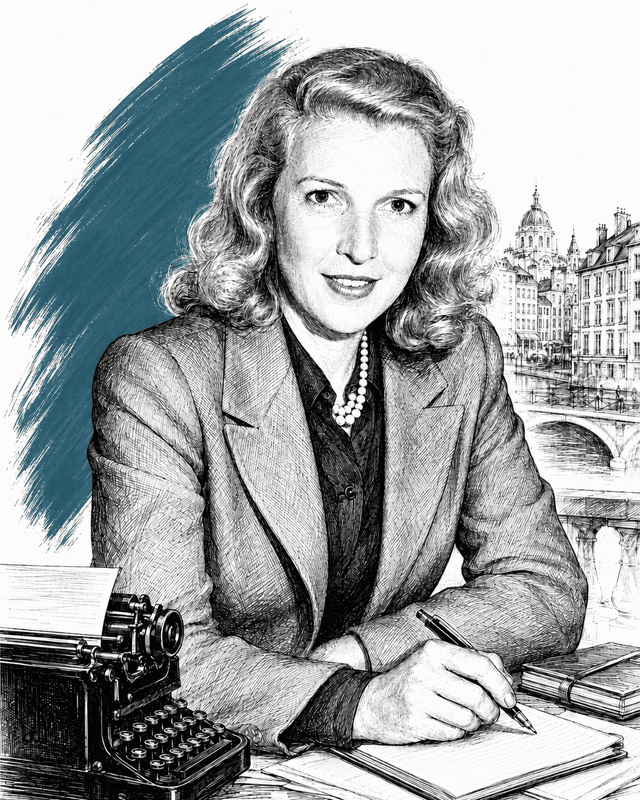
Martha Gellhorn
War correspondent who covered the Spanish Civil War, D-Day, and conflicts across five more decades; Hemingway's third wife, 1940–1945.
View author
References
References
The sources below include the primary text, editions, scholarship, archival materials, and other records that informed this page. They document Complete Poems, its publication, and its place in literary history.


2Ernest Hemingway: A Life Story
BiographyCarlos Baker, 1969Used forUsed to place Complete Poems within Ernest Hemingway's published work and verify its bibliographic context.
3Ernest Hemingway's Life in Key West
WebsiteThe Ernest Hemingway Home & MuseumUsed forUsed for independent biographical, archival, or historical context surrounding Ernest Hemingway's career and the period in which Complete Poems appeared.
4Max Perkins: Editor of Genius
BiographyE. P. Dutton, 1978Used forUsed to cross-check authorship, chronology, and the work's place in Ernest Hemingway's wider catalogue.

5Ernest Hemingway, The Art of Fiction No. 21
PeriodicalThe Paris Review, Issue 18, Spring 1958, 1958Used forUsed to verify Ernest Hemingway's bibliography and place Complete Poems within the broader chronology of Ernest Hemingway's career.
6Three Stories & Ten Poems (1923 text)
WebsiteProject GutenbergUsed forWeb source consulted for documented facts and historical context presented on the Complete Poems page.
i
Why these sources are here
The primary text is the baseline reference for every book page. Additional references document publication history, interpretation, and historical context where that evidence is available.
 Explore more resources