

In Our Time
The next step — two of these stories fold into it as the career finds its shape.
Read our take
The first book: three hundred copies from a little Paris press, 1923 — everything Hemingway had that the stolen suitcase spared.
Before the novels, before even In Our Time, there was this: a slim volume printed in an edition of about three hundred by Robert McAlmon's Contact Publishing in Paris, 1923. Three stories — 'Up in Michigan,' 'Out of Season,' 'My Old Man' — and ten poems: nearly the whole surviving output of a twenty-four-year-old whose apprentice manuscripts had vanished with a stolen suitcase the winter before. The rarest Hemingway, and the debut of the style that would remake the language. (A first book — nothing here to spoil.)
The thinness was involuntary: in December 1922 a valise containing virtually all of Hemingway's manuscripts — stories, a partial novel, the carbons too — was stolen from Hadley's train compartment in the Gare de Lyon, the most famous lost luggage in American letters. What survived was what happened to be elsewhere: 'Up in Michigan,' shoved in a drawer after Gertrude Stein pronounced it unpublishable, and 'My Old Man,' out with an editor. 'Out of Season' and the poems came after. When Robert McAlmon — expatriate writer, heir by marriage, and proprietor of the Contact Publishing Co. — offered to make a book, this was everything there was.[1]
The three hundred copies sold slowly out of Paris bookshops, Sylvia Beach's among them, and reviews were few — but the stories announce the whole project: the flat declaratives, the withheld emotion, the sentences with their freight below the waterline. Within three years the author of this pamphlet-sized debut had published The Sun Also Rises. Surviving copies now trade like relics, which is what they are: the modern American style, in its first three hundred instances.[1]
The three stories carry the book: 'Up in Michigan,' the blunt, painful seduction story Stein called inaccrochable; 'Out of Season,' a Tyrolean fishing excursion curdling around a marriage and a drunk guide — the first story built on the theory of omission; and 'My Old Man,' a boy's-eye account of a crooked jockey father, the most conventional of the three and the one the anthologies took first. The ten poems are period pieces — clipped, satiric, Kiplingesque by way of the Chicago school — interesting now chiefly as the sound of the prose writer clearing his throat.[1]
An hour's read and a founding document: the shortest distance between the apprentice Hemingway and the master.[1]
Peduzzi wants the three walkers to look like a company, but their closeness produces little understanding. His elaborate greetings meet silence, and his claim to local popularity is less secure than he makes it sound. Around the Concordia, embarrassment and the purchase of wine interrupt the promised fishing. The couple's private quarrel also escapes his cheerful account of the day. By the ending, his imagined series of future outings depends on a customer who will not promise to return.
Joe begins by defending his father's body before describing the effort required to maintain it. The skipping rope becomes a performance he loves to watch, while sweat, heavy breathing and layers of clothing reveal its cost. His father's grin makes the strain companionable without making it easy. When the exhausted man looks at a younger jockey, Joe first imagines a racing grievance rather than an unequal struggle with age and weight. The boy's affectionate attention records more than he immediately understands.
Before editors, before fame — the twenty-four-year-old's actual first swing, with the theory of omission already loaded.
The story Hemingway later cited when explaining the iceberg — the omitted ending is the founding omission.
Little press, expatriate patron, Dijon printer, Odéon shop windows — the whole ecosystem of these pages in one artifact.
1922
In December, a valise holding nearly all of Hemingway's manuscripts is stolen from Hadley's train compartment at the Gare de Lyon.
1923
Robert McAlmon's Contact Publishing Co. prints it in Paris in an edition of about three hundred copies, from the pieces that happened to survive.
1926
Within three years the author of the pamphlet-sized debut publishes The Sun Also Rises.

The next step — two of these stories fold into it as the career finds its shape.
Read our take
The memoir tells this book's whole world — the suitcase, Stein's verdict, the hungry apprenticeship.
Read our take
Three years and one revolution later — the distance the style traveled from these three hundred copies.
Read our takeErnest Hemingway. It was his first book, printed in Paris in 1923 by Robert McAlmon's Contact Publishing Co.
Three stories — "Up in Michigan," "Out of Season," and "My Old Man" — and ten poems: nearly the whole surviving output of a twenty-four-year-old.
In December 1922 a valise holding virtually all of Hemingway's manuscripts was stolen from his wife's train compartment at the Gare de Lyon. What survived was what happened to be elsewhere.
Very. The first edition ran to about three hundred copies, printed in Dijon — surviving copies now trade like relics.
It is the debut of the style that would remake the language — the flat declaratives and withheld emotion already present, three years before The Sun Also Rises.
Explore authors with a similar voice, perspective, and influence.
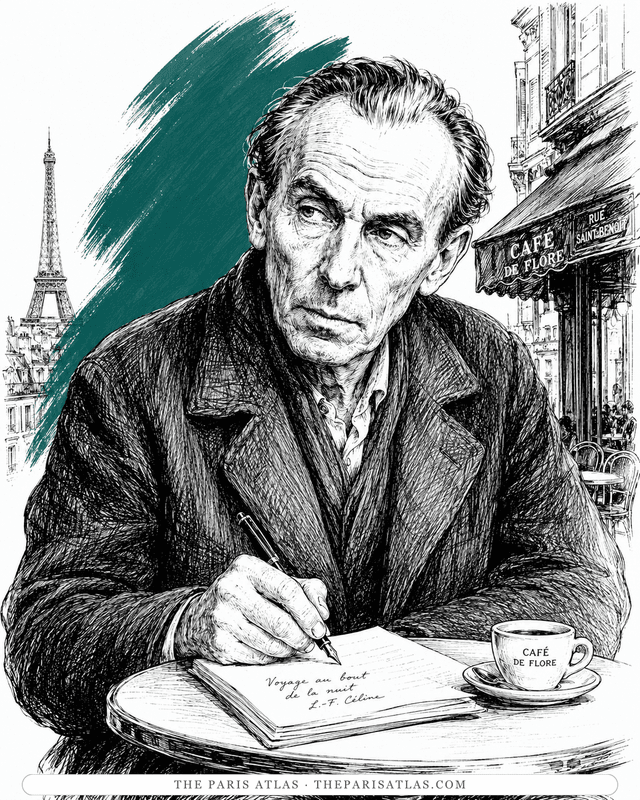
The other great stylist the Great War produced — where Hemingway cut the language down, Céline set it on fire. The same wound, opposite treatments.
View author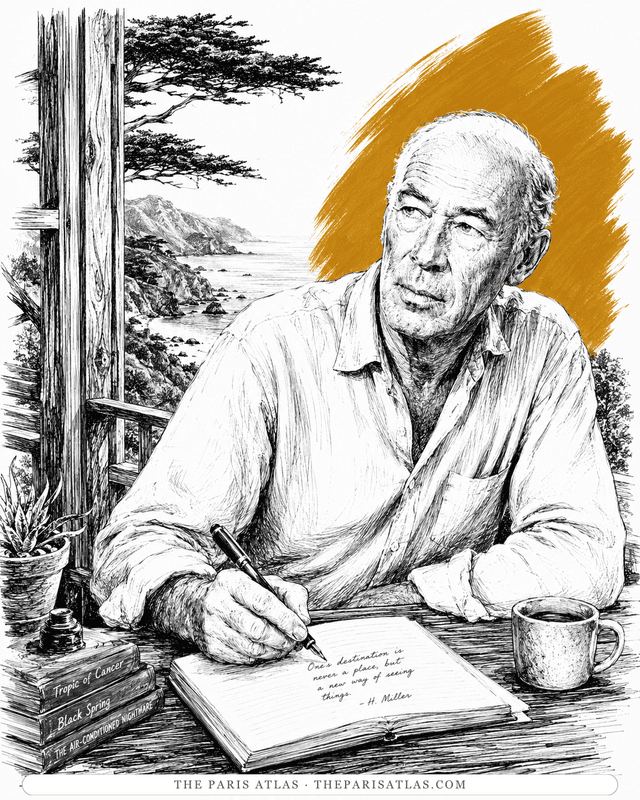
Paris on no money a decade later, with the restraint removed. Miller called Hemingway's Paris a tourist's Paris; readers get to referee.
View author
War correspondent who covered the Spanish Civil War, D-Day, and conflicts across five more decades; Hemingway's third wife, 1940–1945.
View authorThe sources below include the primary text, editions, scholarship, archival materials, and other records that informed this page. They document Three Stories and Ten Poems, its publication, and its place in literary history.


Out of Season and the opening of My Old Man in the 1923 transcription; no later-version comparison.
Used to place Three Stories and Ten Poems within Ernest Hemingway's published work and verify its bibliographic context.
Used for independent biographical, archival, or historical context surrounding Ernest Hemingway's career and the period in which Three Stories and Ten Poems appeared.
Used to cross-check authorship, chronology, and the work's place in Ernest Hemingway's wider catalogue.

Used to verify Ernest Hemingway's bibliography and place Three Stories and Ten Poems within the broader chronology of Ernest Hemingway's career.
The primary text is the baseline reference for every book page. Additional references document publication history, interpretation, and historical context where that evidence is available.
 Explore more resources