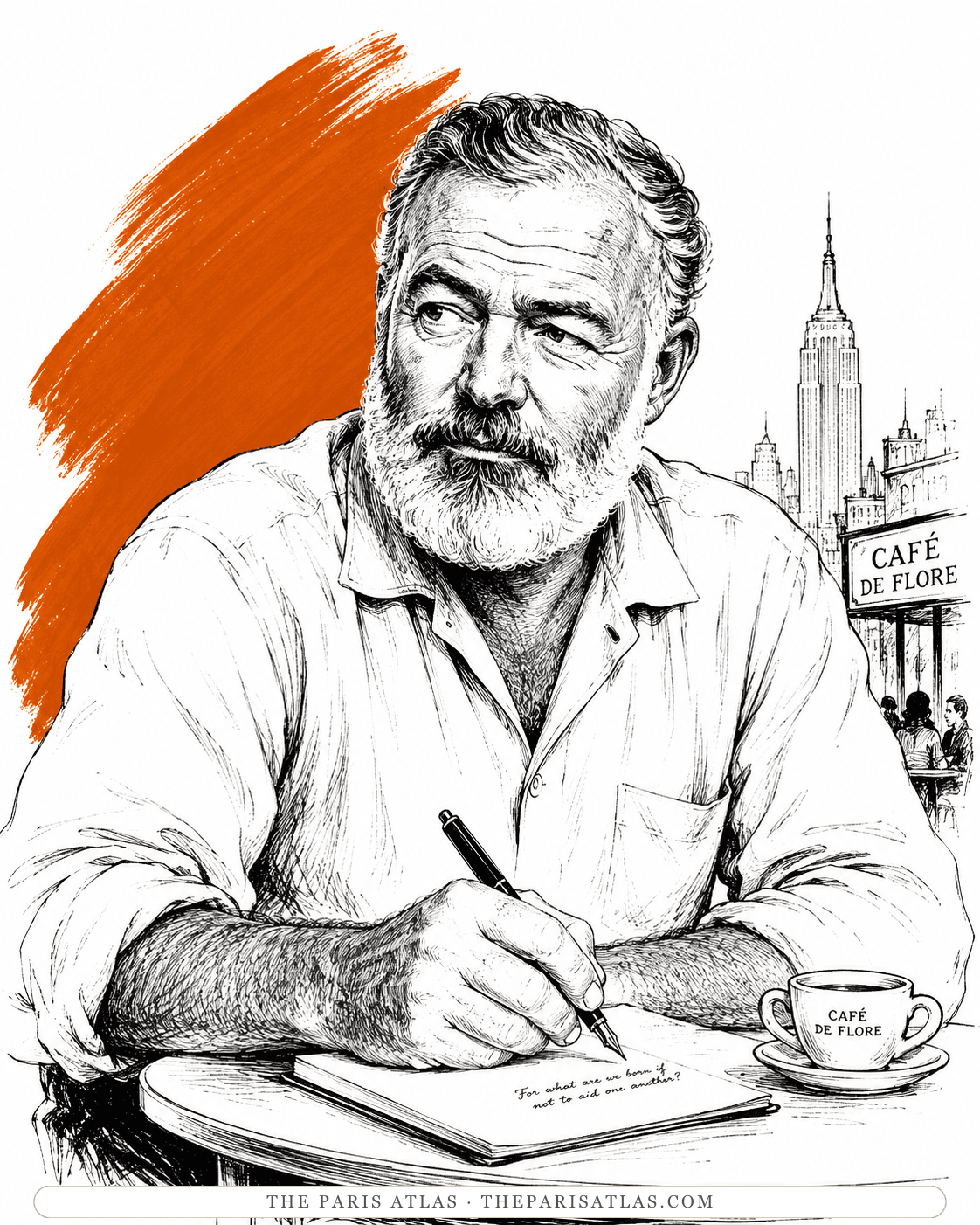


The Dangerous Summer
The last book he worked on: Spain, 1959 — two great matadors, one murderous rivalry, and the old aficionado keeping score a final time.
- 1985
About Ernest Hemingway
The story, briefly
Spoiler-freeIn 1959 Life magazine sent Hemingway back to Spain to cover the season-long rivalry between Antonio Ordóñez and Luis Miguel Dominguín — brothers-in-law, both supreme, dividing the country's rings and loyalties in a mano a mano that gored them both. The assignment was for ten thousand words; the manuscript grew past a hundred thousand as the summer became a last love letter to Spain and a mirror he couldn't look away from. Published in 1985, cut to size, it is the final bullfight book — and the last thing he worked on. (A true story — nothing here to spoil.)
The story, in more detail
The circle was deliberate: Ordóñez was the son of Cayetano Ordóñez — 'Niño de la Palma,' the model for The Sun Also Rises' Pedro Romero — and Hemingway attached himself to the son's summer with the devotion he'd given the father's, following the cuadrilla from feria to feria, keeping the wounds chart, riding in the cars. The rivalry was real and escalating: Dominguín, older, richer, coming out of retirement; Ordóñez, in Hemingway's scoring, the classicist reborn; both gored repeatedly as the mano a mano corridas pushed each man past sense. The old man in the entourage — Pamplona again, Valencia, Málaga — was watching his own twenties with the cast changed, and knew it.[1]
The writing defeated him: the Life piece metastasized, and cutting it proved beyond his failing health — the struggle with this manuscript shadowed his last two years, and the despair of it is part of the biography of his death. Life ran a version in 1960; the book, trimmed by Scribner's editors with an introduction by James Michener, appeared in 1985. Read against Death in the Afternoon it is the elegy to that book's treatise — the same faith in the ring's tragedy, now personal: an aging master measuring younger ones, in the country he loved first, for the last time.[1]
The full story
Spain, summer 1959. Hemingway returns after years away — Franco's Spain now, the old wounds politely unmentioned — and joins Antonio Ordóñez's traveling court as the season builds toward the mano a mano: paired corridas in which the brothers-in-law face six bulls between them, city by city, each afternoon an escalation. The book keeps the tour's rhythm — roads, hotels, night drives, the cuadrilla's economy of nerves — with the fights rendered in the old connoisseur's precision: the passes named, the bulls judged, the crowds read like weather.[1]
The summer turns dangerous on schedule: horn wounds take each man in turn, and the rivalry's arithmetic — who returns too early, who tops whom in Málaga's terrible paired afternoon — plays out against Hemingway's open partisanship for Ordóñez and his mounting sense of watching something both magnificent and unrepeatable. It ends as seasons end, with rankings settled in blood and the aficionado driving away from Spain — this time, though the book doesn't say it, for good.[1]
Themes and analysis
The old observer at the ring
In the brief exchange after Barcelona quoted by Kirkus, Ordóñez asks whether Hemingway noticed the bull's behavior, not merely whether he enjoyed the afternoon. The question makes spectatorship part of the performance: skill needs somebody capable of recognizing it. Hemingway therefore appears inside the scene's exchange of approval, not outside it as an impartial scorer. That closeness offers the reader access to the matador's priorities, while also giving a reason to question whether the narrator's friendship can be separated from his judgment.
The miles between afternoons
In the driving passage reproduced by the Basque Government's Hemingway route, Mario's racing experience provides a reason to trust him, but the narrator still sweats at their speed. Expertise can explain away danger without making the body feel safe. Read beside the ringside scenes, this moment changes the observer's position: he is now a passenger depending on another man's skill. The road is not simply an interval between important afternoons; it offers a smaller, uneasy test of confidence in an accomplished performer.
Why we recommend it
The circle closing
Pamplona 1925 and Pamplona 1959, one witness — no career in American letters rhymes its ending better.
The rivalry itself
Ordóñez–Dominguín remains the corrida's most storied duel, and this is its firsthand chronicle.
Spain, one last time
The roads, ferias, and afternoons rendered with the old precision and a new tenderness — farewell disguised as reporting.
What this book explores
Timeline
1959
Life sends Hemingway to Spain to cover the Ordóñez–Dominguín rivalry; the ten-thousand-word assignment grows past a hundred thousand.
1960
Life runs a version, but cutting the swollen manuscript defeats his failing health and shadows his last years.
1985
Scribner publishes the book, trimmed by its editors, with an introduction by James Michener.
Book editions
Hardcover
- Hardcover
- Scribner
- 1985

- Paperback
- Scribner
- 9780684837895
Reader reviews
Readers may also like

The Sun Also Rises
Romero's model was Ordóñez's father — the fiesta novel's world, one generation on.
Read our take
Juan Belmonte, Killer of Bulls
The ring's own voice — Belmonte's era is the standard both rivals were measured against.
Read our takeThe Dangerous Summer: frequently asked questions
Who wrote The Dangerous Summer?
Ernest Hemingway. Scribner published it in 1985, with an introduction by James A. Michener.
What is The Dangerous Summer about?
The 1959 season-long rivalry between the matadors Antonio Ordóñez and Luis Miguel Dominguín — brothers-in-law dividing Spain's rings in a mano a mano that gored them both — covered by the old aficionado keeping score a final time.
How did the book come about?
Life magazine sent Hemingway to Spain for a ten-thousand-word piece; the manuscript grew past a hundred thousand words as the summer became a last love letter to Spain.
How does it connect to The Sun Also Rises?
Ordóñez was the son of Cayetano Ordóñez, the matador who modeled Pedro Romero in The Sun Also Rises — Hemingway covered father and son thirty-four years apart.
Why is it significant in his career?
It was the last thing he worked on; the failure to cut the swollen manuscript shadowed his final years, and the book closes the career where it caught fire, in the rings of Spain.
If you like Ernest Hemingway
Explore authors with a similar voice, perspective, and influence.

Louis-Ferdinand Céline
The other great stylist the Great War produced — where Hemingway cut the language down, Céline set it on fire. The same wound, opposite treatments.
View author
Henry Miller
Paris on no money a decade later, with the restraint removed. Miller called Hemingway's Paris a tourist's Paris; readers get to referee.
View author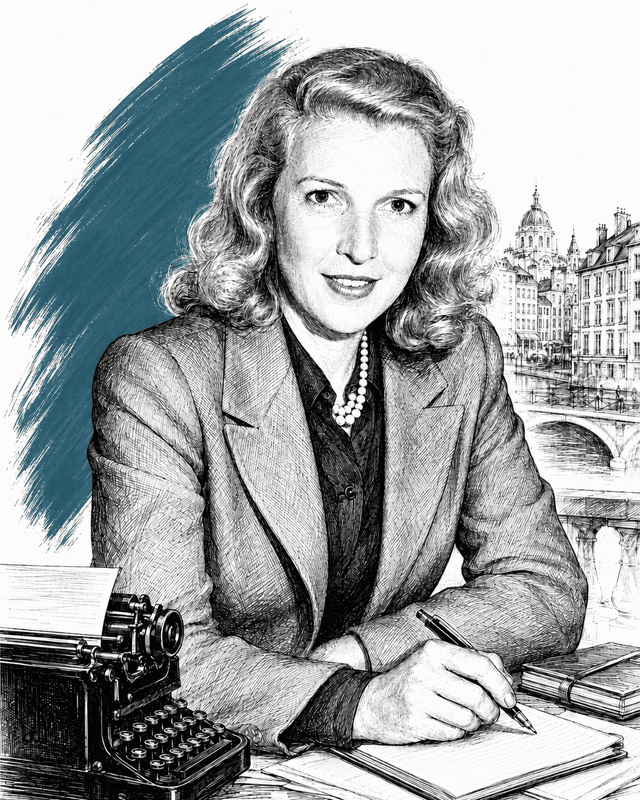
Martha Gellhorn
War correspondent who covered the Spanish Civil War, D-Day, and conflicts across five more decades; Hemingway's third wife, 1940–1945.
View author
References
References
The sources below include the primary text, editions, scholarship, archival materials, and other records that informed this page. They document The Dangerous Summer, its publication, and its place in literary history.

2The Dangerous Summer (review)
EssaysKirkus Reviews, 1985Used forPublished analysis and historical context used in preparing the The Dangerous Summer page.

3The Hemingway Basque Route: Stage 5
WebsiteBasque Government, Tourism EuskadiUsed forWeb source consulted for documented facts and historical context presented on the The Dangerous Summer page.
4Ernest Hemingway: A Life Story
BiographyCarlos Baker, 1969Used forUsed to place The Dangerous Summer within Ernest Hemingway's published work and verify its bibliographic context.
5Ernest Hemingway's Life in Key West
WebsiteThe Ernest Hemingway Home & MuseumUsed forUsed for independent biographical, archival, or historical context surrounding Ernest Hemingway's career and the period in which The Dangerous Summer appeared.
6Max Perkins: Editor of Genius
BiographyE. P. Dutton, 1978Used forUsed to cross-check authorship, chronology, and the work's place in Ernest Hemingway's wider catalogue.
7Ernest Hemingway, The Art of Fiction No. 21
PeriodicalThe Paris Review, Issue 18, Spring 1958, 1958Used forUsed to verify Ernest Hemingway's bibliography and place The Dangerous Summer within the broader chronology of Ernest Hemingway's career.
i
Why these sources are here
The primary text is the baseline reference for every book page. Additional references document publication history, interpretation, and historical context where that evidence is available.
 Explore more resources