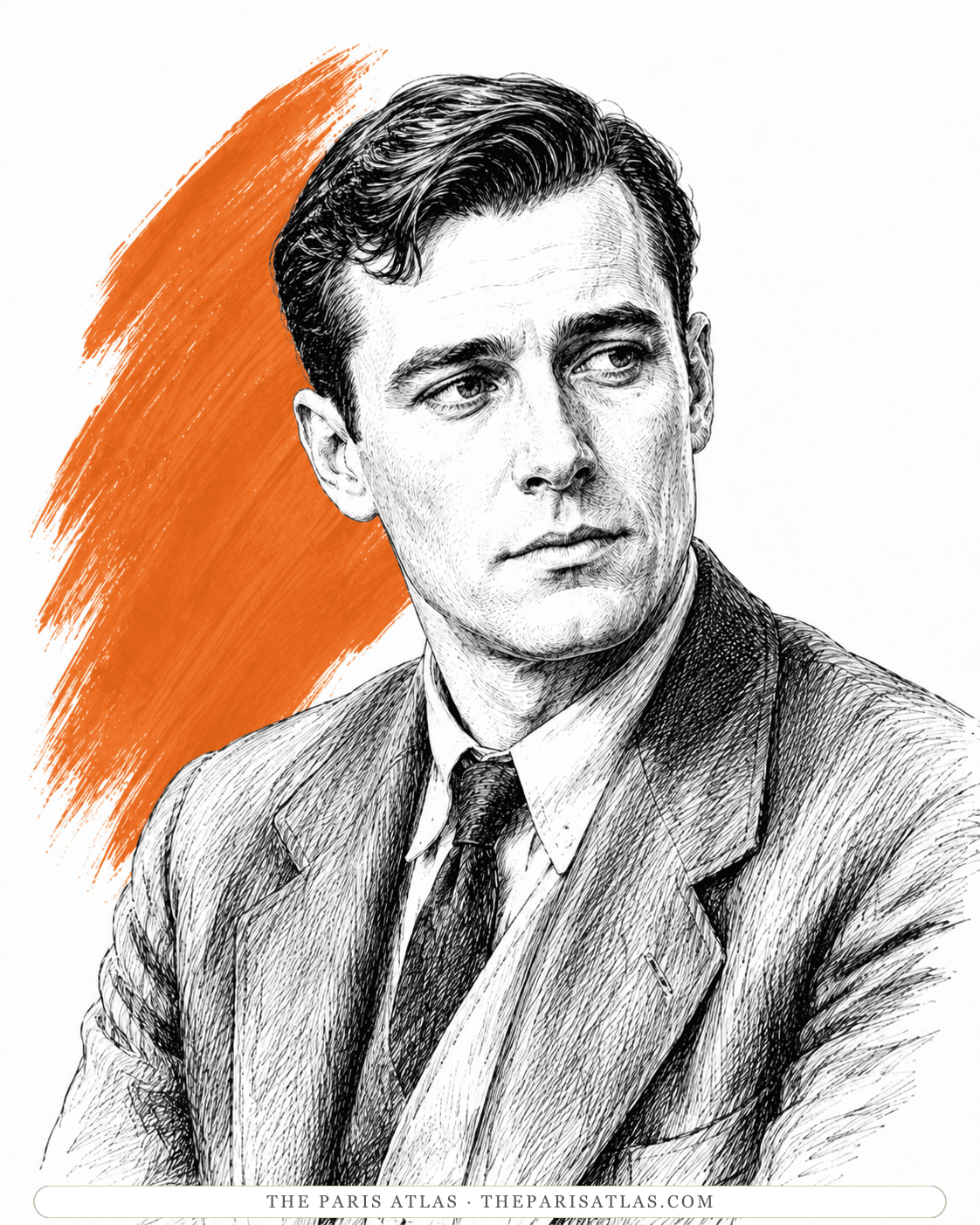
Jake Barnes
The narrator — an American newspaperman in Paris, carrying a war wound the book never names, in love with the one woman it makes impossible.
To live with Lady Brett Ashley. "Couldn't we live together, Brett?" he asks her. "Couldn't we just live together?" She says she would be unfaithful to him with everybody and that he could not stand it.
The book

At a glance
- Narrator — American journalist in Paris, veteran of the Italian front
- 'Jake' — Jacob Barnes in full; Brett tells him it is a hell of a biblical name
- Every page — Paris, Burguete's trout streams, Pamplona, and Madrid
- Wire-service correspondent with an office, a typewriter, and morning hours he keeps
- Aficionado — admitted to Montoya's circle, the one membership he earns honestly
- The dinners, the rooms, the taxis, and eventually the telegram to Madrid
- Ernest Hemingway — the author, rearranged · 1899–1961 · Oak Park, Illinois
Who they are in the book
Spoiler-freeJake is the book's eyes and its wound. He works the wire-service hours of a Paris correspondent, keeps his office and his café schedule in balance, and narrates the whole novel in the flat, exact voice of a man who has decided that saying less is the only way to stay upright. What happened to him in the war is never spelled out — a flying accident on the Italian front, an injury that took the future without taking the desire for it — and the not-spelling-out is the novel's whole method in miniature.
He calls himself a bad Catholic and is the book's one true aficionado — bullfighting is the single thing it lets him keep whole. What he wants is Brett, and both of them know exactly why that cannot work; the novel runs on the current between what he wants and what he can carry. Around him the crowd drinks, quarrels, and borrows money, and Jake pays — the bills, mostly, and everything else eventually.
How Jake Barnes Is Portrayed
- The voiceDeclarative sentences, prices, train times, and the names of streets — feeling shows up only as what the voice refuses to say.
- The woundIntroduced sideways: a mirror, a bad night, and a memory of an Italian liaison colonel's consolation that he had given more than his life. The book never gets more specific, on purpose.
- The aficionMontoya's test — the hand on the shoulder, the wordless membership of true aficionados — is the one exam Jake passes that the book fully respects.
- The working manAlone among the crowd he has a job, files his copy, and gets up in the morning — the novel quietly makes solvency a moral category.
- The nightDaylight Jake is steady; it is the dark, alone in his room, when the thing he doesn't talk about does the talking.
- The rotten CatholicKneeling in the Pamplona cathedral he prays for everyone he can think of, catches his mind wandering to money and bullfighters, and comes out ashamed of himself — a grand religion, he decides, if he could only manage to feel religious.
The ending is a telegram: Brett, having sent Romero away, wires Jake from Madrid, and he crosses Spain to collect her — the book's last service in a novel full of them. In the final taxi — the wound, the love, and the whole expatriate carnival filed under the same verdict. Nothing is resolved because, the novel insists, nothing was ever going to be.
Jake is Hemingway with the facts rearranged. The real man at the July 1925 fiesta was a married, unwounded twenty-five-year-old with a baby son back in Paris — but the newspaperman's trade was his, the aficion was his, and the wound was transposed from his own 1918 mortar blast at Fossalta and from maimed men he'd known in the Milan hospital. Hemingway later explained Jake's injury with clinical precision — desire intact, capacity gone — and insisted the point was not what was lost but what had to be lived with. He wrote the novel in roughly eight weeks in 1925, at twenty-six, and it made him famous.
If you like The Sun Also Rises


If you like Ernest Hemingway
Explore authors with a similar voice, perspective, and influence.

Louis-Ferdinand Céline
The other great stylist the Great War produced — where Hemingway cut the language down, Céline set it on fire. The same wound, opposite treatments.
View author
Henry Miller
Paris on no money a decade later, with the restraint removed. Miller called Hemingway's Paris a tourist's Paris; readers get to referee.
View author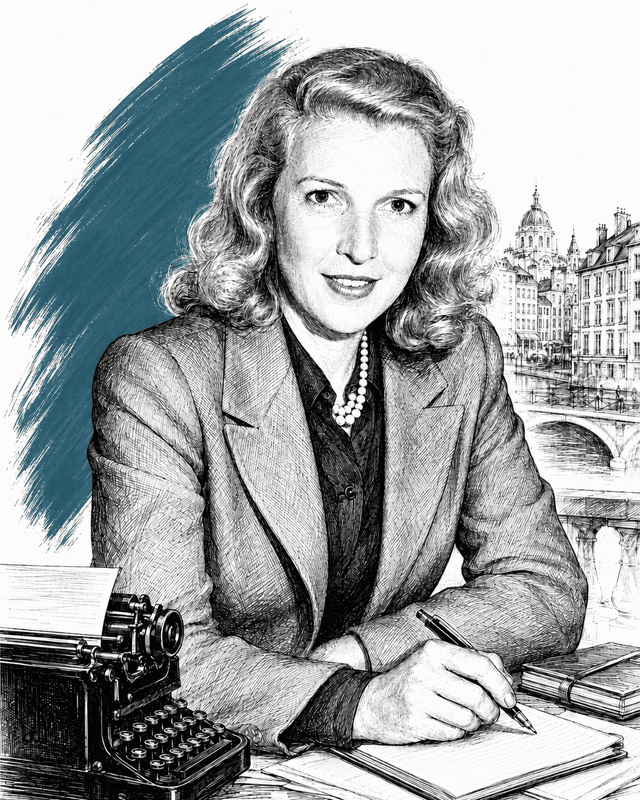
Martha Gellhorn
War correspondent who covered the Spanish Civil War, D-Day, and conflicts across five more decades; Hemingway's third wife, 1940–1945.
View author