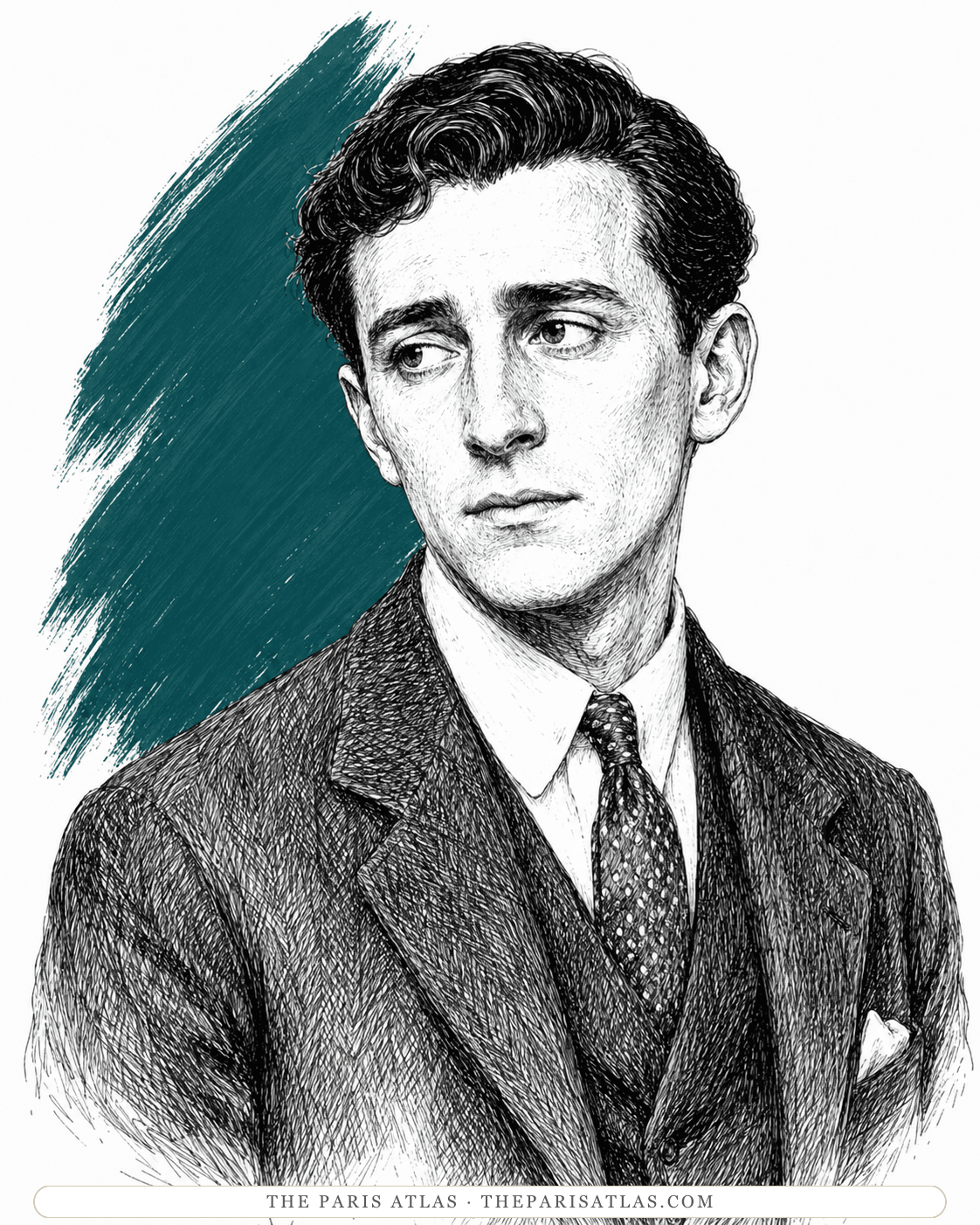
Robert Cohn
Once middleweight boxing champion of Princeton — the novel's opening line, and the outsider the whole crowd sharpens itself on.
To go somewhere his life will feel like it is happening. He keeps trying to get Jake Barnes to come with him to South America, turns down every alternative offered, and then says what is actually the matter: "I can't stand it to think my life is going so fast and I'm not really living it."
The book

At a glance
- American novelist, 34, of a wealthy New York family; companion of Frances Clyne
- Paris, San Sebastián (by report), and Pamplona — he never makes it to the fishing
- Three hundred dollars a month from his mother
- One novel, taken by a fairly good publisher and praised past its worth
- W. H. Hudson's The Purple Land — as a guidebook, which is the whole trouble
- Harold Loeb · 1891–1974 · New York City
Who they are in the book
Spoiler-freeThe novel begins with Cohn — 'Robert Cohn was once middleweight boxing champion of Princeton' — and the first two chapters are his biography told in Jake's deadpan: the boxing learned to answer the slights he met at Princeton as a Jewish student, the wealthy New York family, the bad first marriage, the little review he edited and bankrolled, the novel a good publisher actually took. He is romantic in the old, literary sense — he reads The Purple Land as a guidebook and believes life is elsewhere — which makes him the one person in the book still running on illusions the war burned out of everyone else.
That is exactly what the crowd cannot forgive. His weekend with Brett in San Sebastián convinces him it meant everything; her engagement to Mike convinces him of nothing; and through the fiesta he follows her with a devotion the others find unbearable and say so — Mike most viciously, and the needling about his Jewishness arrives with a bluntness the book's content notes flag. Cohn is the character 1926 readers were invited to laugh at and modern readers tend to defend; the novel is crueler to him than to anyone, and knows it.
How Robert Cohn Is Portrayed
- The athleteThe flattened nose from Princeton boxing, the tennis game that collapses when Brett is watching, and a left hand the book saves for Pamplona.
- The romanticHe wants South America out of a book, and Brett out of a weekend — the last man in Paris who believes experience is transformation.
- The targetSteers, the jokes go at the fiesta — the animal that runs with the bulls and absorbs the goring. The crowd's wit at his expense is the book's ugliest running music.
- The outsiderAlone in the cast he neither drinks much, went to the war, nor gets the bullfights — three memberships the novel treats as one.
- The allowanceThree hundred dollars a month settled on him by his mother, and no work to do. He is the only man in the book with money and nothing to spend himself on.
- The man who is managedFrances took him over after his first marriage failed and spent three years running him, down to making him dismiss the secretary on his magazine. Being handled is his habit before Brett ever arrives.
Cohn's ending is the fiesta's explosion: told where Brett has gone, he knocks Jake and Mike down with the Princeton left, then finds Romero and beats him terribly — and cannot make him stay down, and cannot make him shake hands, and ends the night weeping in his room, begging Jake's forgiveness. He leaves Pamplona before the last corrida, out of the novel and out of the crowd for good. It is the book's most humiliating exit, handed to its most vulnerable character.
Harold Loeb — Princeton, the Guggenheim clan, editor of the little magazine Broom, and author of a novel published the year of the fiesta — recognized himself instantly and spent the next half-century answering. The San Sebastián weekend had a real original (Loeb and Duff slipped away to the coast weeks before Pamplona), and so did the near-violence: at the real fiesta Hemingway challenged him to fisticuffs over Duff, and the two exchanged apologetic notes the next day instead. Loeb's 1959 memoir The Way It Was is the fullest rebuttal any Hemingway model ever published — his Pamplona, point by point. He outlived nearly everyone in the book.
If you like The Sun Also Rises


If you like Ernest Hemingway
Explore authors with a similar voice, perspective, and influence.

Louis-Ferdinand Céline
The other great stylist the Great War produced — where Hemingway cut the language down, Céline set it on fire. The same wound, opposite treatments.
View author
Henry Miller
Paris on no money a decade later, with the restraint removed. Miller called Hemingway's Paris a tourist's Paris; readers get to referee.
View author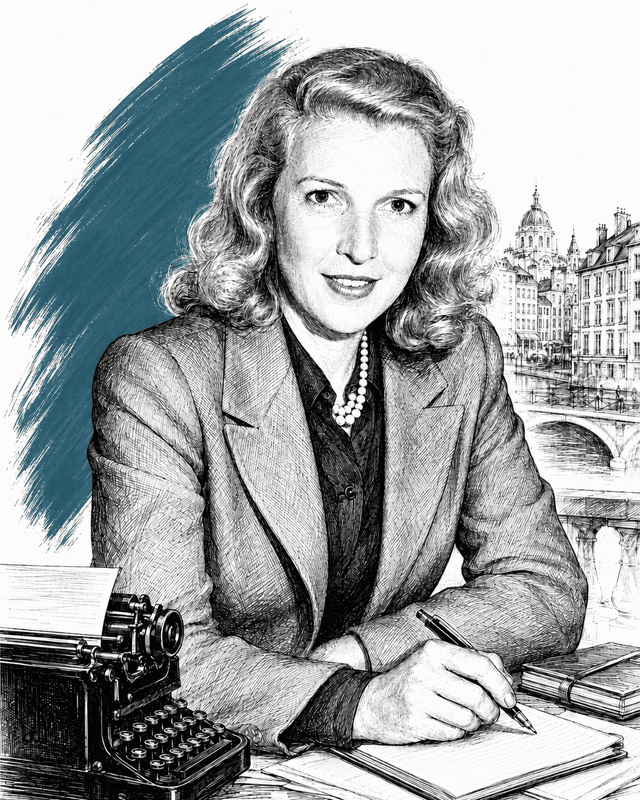
Martha Gellhorn
War correspondent who covered the Spanish Civil War, D-Day, and conflicts across five more decades; Hemingway's third wife, 1940–1945.
View author