Belmonte
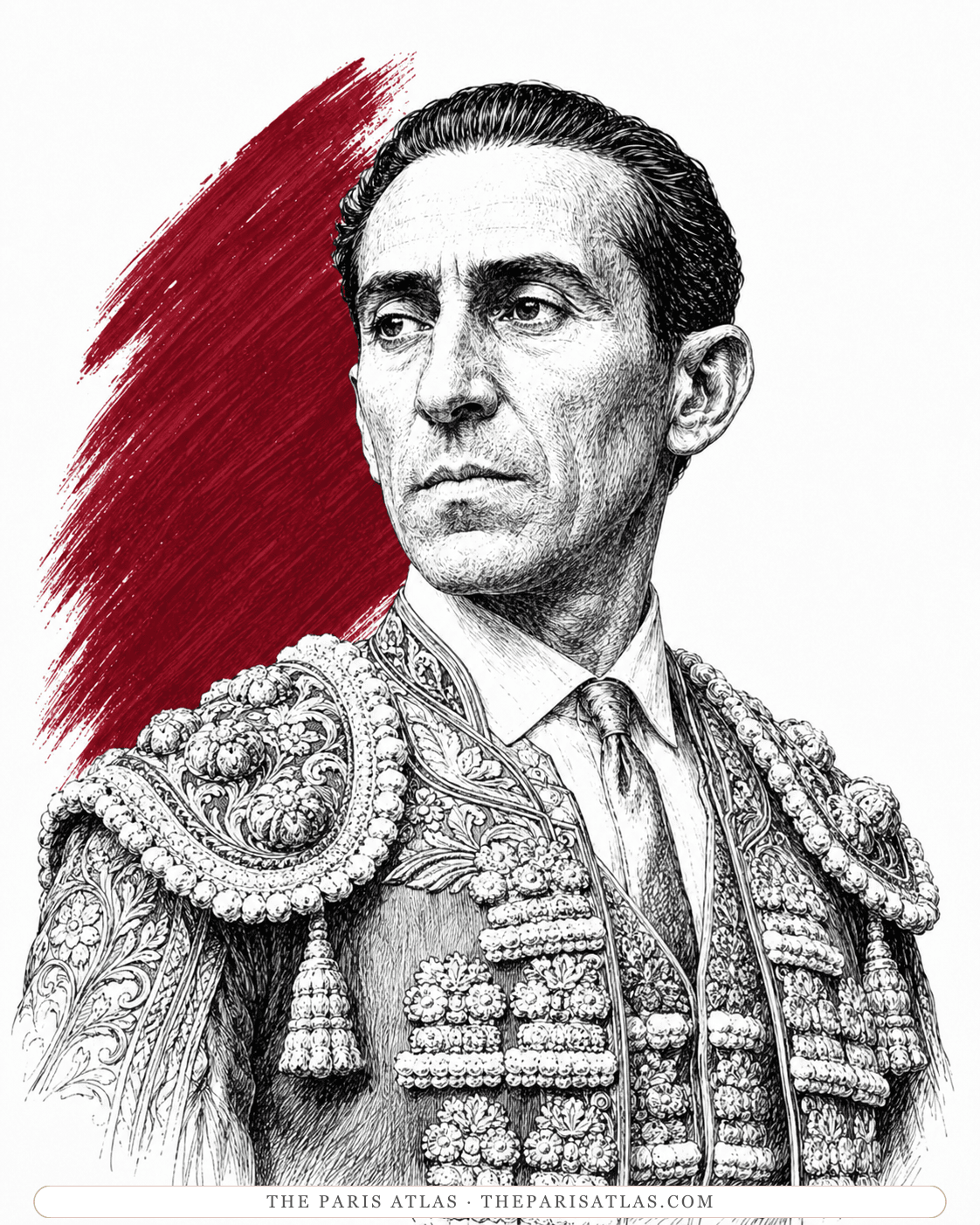
The one real name in the book: Juan Belmonte, greatest matador of his age, caught mid-comeback on the afternoon the novel hands to a boy of nineteen.
One more great afternoon in the ring. He has come back from retirement in real pain, and has picked small bulls with short horns for safety, so that when a little of the old greatness does arrive he has discounted it in advance and it gives him no pleasure.
The book

At a glance
- Himself — the era's most celebrated matador, sharing Romero's cartel at the fiesta
- The Pamplona bullfight chapters
- Thirty thousand pesetas, with the queue for tickets forming overnight
- More than a thousand bulls since the years when they said to see him quickly, while he was still alive
- Out of retirement and sick with a fistula; every movement costs him
- His bulls not too large, and not too dangerously armed — which is what removes the tragedy the crowd came for
- Juan Belmonte — under his own name · 1892–1962 · Seville
Who they are in the book
Spoiler-freeEveryone else in the novel wears an alias; Belmonte fights under his own. Juan Belmonte was the most famous bullfighter alive — the revolutionary who had rewritten the art in the 1910s by standing still and letting the horns decide — and the book catches him where the real 1925 season had him: out of retirement, older, in pain, and worth more money than ever. Hemingway puts him on the same Pamplona cartel as young Romero and lets the afternoon do the arguing.
The portrait is unsparing but knowing: a great man performing against the memory of himself, contemptuous of a crowd that demands the impossible legend rather than the aching professional, working within his limits while the public jeers the difference. For the aficionados in the book — and in the readership — his chapter is the sport's whole tragedy in one corrida: greatness is real, and it does not come back.
How Belmonte Is Portrayed
- The wolf jawWan, yellow-faced, looking at nothing, he waits for the parade with his long wolf jaw out — and as the afternoon curdles into sneers, insults, and finally a volley of cushions in the plaza of his greatest triumphs, the jaw only comes further out. The insults he likes best get the smile: toothed, long-jawed, lipless.
- The legendFifteen years ago, the saying went, you should hurry to see him while he was still alive; he has since killed more than a thousand bulls. Retirement grew the legend past any man's reach — no one could work as close to the bulls as Belmonte was supposed to have done. Not, the book notes, even Belmonte.
- The conditionsHe picks his bulls in advance for safety — small, manageable, lightly horned — choosing them from a motorcar, leaning on the fence of his friend the breeder. When flashes of the old greatness come anyway, they give him nothing: he discounted and sold them in advance, and he knows it.
- The painHe fights sick, and every movement costs; across the afternoon his face goes from yellow to parchment. Between bulls he leans on the barrera, head on his arms, seeing and hearing nothing, only going through his pain — then rinses his mouth, spits, takes the cape, and goes back in.
- The watcherHe ignores Marcial, whose kind he came out of retirement to beat, and watches only Romero — always without seeming to. The boy does smoothly and beautifully what Belmonte can now manage only sometimes, and Belmonte declines that competition, knowing where it ends: a bad horn wound, or death.
- The seven o'clock trainThe book's last look at him is in the hotel dining-room after the corrida: street clothes, a blue-striped shirt, soft-boiled eggs, tough businesslike men at his table, and no conversation — answering questions only, and leaving that evening for Barcelona.
The book leaves Belmonte where the afternoon leaves him: jeered, in pain, and watching the crowd hand his era to Romero — the torch passed in real time, with the novel's cold courtesy of recording that his craft, within its narrowed limits, was still exact. The real Belmonte's legend only grew. His rivalry with Joselito had already remade bullfighting before Joselito's death in the ring in 1920; the 1925 comeback the novel catches was one of several, each richer than the last; and he retired finally to his ranch near Seville as the art's living monument. He died there in 1962, by suicide, at sixty-nine — a year after Hemingway, whose novel had fixed one bad afternoon of his forever.
If you like The Sun Also Rises


If you like Ernest Hemingway
Explore authors with a similar voice, perspective, and influence.

Louis-Ferdinand Céline
The other great stylist the Great War produced — where Hemingway cut the language down, Céline set it on fire. The same wound, opposite treatments.
View author
Henry Miller
Paris on no money a decade later, with the restraint removed. Miller called Hemingway's Paris a tourist's Paris; readers get to referee.
View author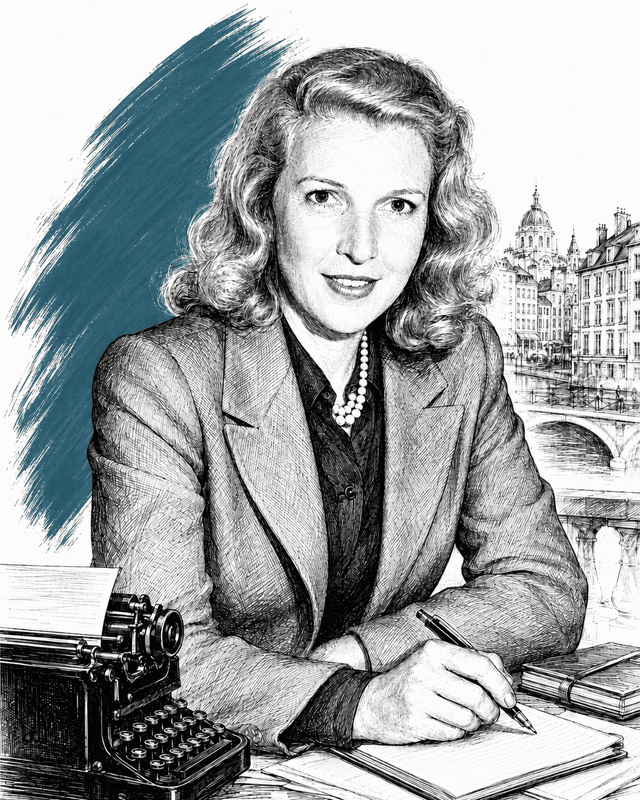
Martha Gellhorn
War correspondent who covered the Spanish Civil War, D-Day, and conflicts across five more decades; Hemingway's third wife, 1940–1945.
View author