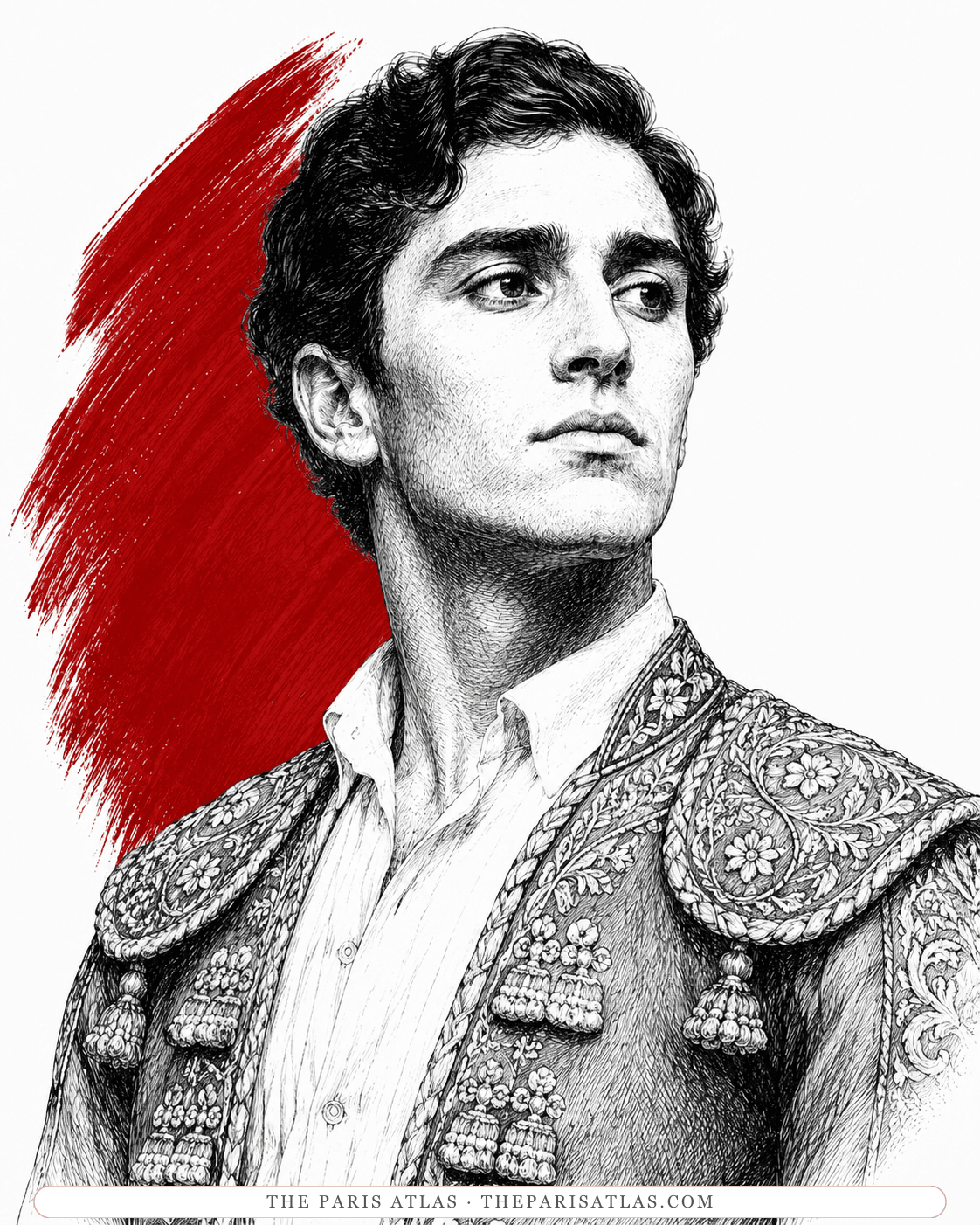
Pedro Romero
Nineteen, from Ronda, and the real thing — the young matador the book offers as the one unruined man in it.
To keep fighting bulls, and to live a long time doing it. Told by Brett Ashley that his hand says he will live a long time, he says he knows: "I'm never going to die." When Jake Barnes taps the table for luck he stops him, because the bulls, he says, are his best friends.
The book

At a glance
- Matador, 19, from Ronda — the fiesta's rising star, guarded jealously by Montoya
- Pamplona's ring and hotel, and briefly Madrid
- The bullfighting school in Málaga; three years at it
- A sword-handler, three hangers-on, and an older brother who works as his banderillero
- The number of Malagueño expressions he uses, by the bullfight critics
- Cayetano Ordóñez, 'Niño de la Palma' · 1904–1961 · Ronda, Andalusia
Who they are in the book
Spoiler-freeRomero enters late and changes the book's weather. Nineteen years old, from Ronda, presented to Jake in Montoya's hotel as the best-looking boy he has ever seen, he is everything the expatriates are not: disciplined, unironic, and whole. In the ring he works close and straight, no tricks, no contortions — the purity the novel has been failing to find anywhere else, embodied in a teenager with a cape.
His name is itself a borrowed relic: the original Pedro Romero was the legendary eighteenth-century founder of the Ronda school of bullfighting, and hanging that name on the boy tells the aficionados in the audience exactly what he represents. When Brett fixes on him — and asks Jake to make the introduction — the book arrives at its moral crisis: whether the crowd's damage is contagious, and what Jake owes to the one thing he holds sacred.
How Pedro Romero Is Portrayed
- In the ringStraight, close, and pure in line — he lets the horn pass his body by inches and makes the danger honest where the crowd-pleasers fake it.
- The composureRomero is Spanish. He's also nineteen years old and the steadiest person in the book. He smokes his cigar with the bullfight critics as an equal, and he is shy about speaking English — it isn't his first language. When Cohn knocks him down again and again the night before the last corrida, he gets up each time, and fights the next afternoon with his face cut and swollen.
- The old worldHe belongs to Montoya's Spain — aficion, apprenticeship, obligation — and every scene he shares with the expatriates is two civilizations at one table.
- The green trousersBrett's first sight of him, and her first words about him. The costume does half the work the novel needs done before he has said anything at all.
- The earAfter his best bull his brother cuts the notched black ear and brings it to him; he holds it up to the President, then runs ahead of the crowd to the barrera and hands it to Brett. Don't get bloody, he tells her, grinning.
- Carried against his willThe crowd tries to lift him onto its shoulders and he fights and twists to get away, running for the exit in the middle of them. He is the one man in the book who does not want the ovation.
Romero's ending is the book's argument for him: beaten half-blind in his room by Cohn — knocked down repeatedly, refusing to stay down, refusing the handshake — he fights the next afternoon anyway and is magnificent, kills his bull cleanly, and cuts the ear, which he gives to Brett. She takes him to Madrid, and then, in the novel's one act of mercy, lets him go before the crowd's rot reaches him; he tries to leave her money and is refused. He exits the book intact — the only thing in it that does.
Cayetano Ordóñez was the sensation of the real 1925 season, and the ear was real: he presented one to Hadley Hemingway at the Pamplona feria, and she kept it. The rest of his story ran darker than the novel's. Gorings took the edge off his courage, and Hemingway — who had immortalized him at nineteen — published the cruelest possible epitaph on his decline in Death in the Afternoon. The name survived a second act: his son Antonio Ordóñez became the greatest matador of his generation and the hero of Hemingway's The Dangerous Summer, closing the strangest circle in the Hemingway–Spain ledger. Cayetano died in Madrid on 30 October 1961, four months after Hemingway.
If you like The Sun Also Rises


If you like Ernest Hemingway
Explore authors with a similar voice, perspective, and influence.

Louis-Ferdinand Céline
The other great stylist the Great War produced — where Hemingway cut the language down, Céline set it on fire. The same wound, opposite treatments.
View author
Henry Miller
Paris on no money a decade later, with the restraint removed. Miller called Hemingway's Paris a tourist's Paris; readers get to referee.
View author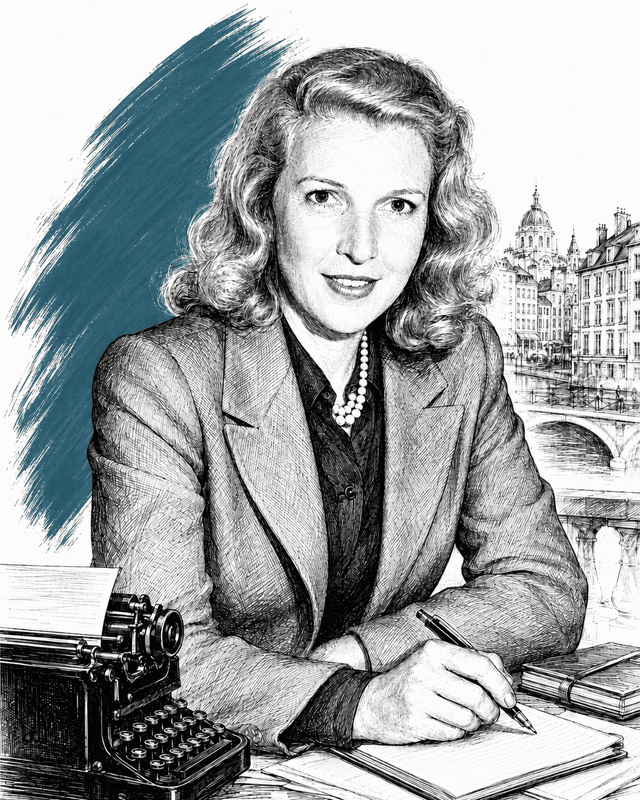
Martha Gellhorn
War correspondent who covered the Spanish Civil War, D-Day, and conflicts across five more decades; Hemingway's third wife, 1940–1945.
View author