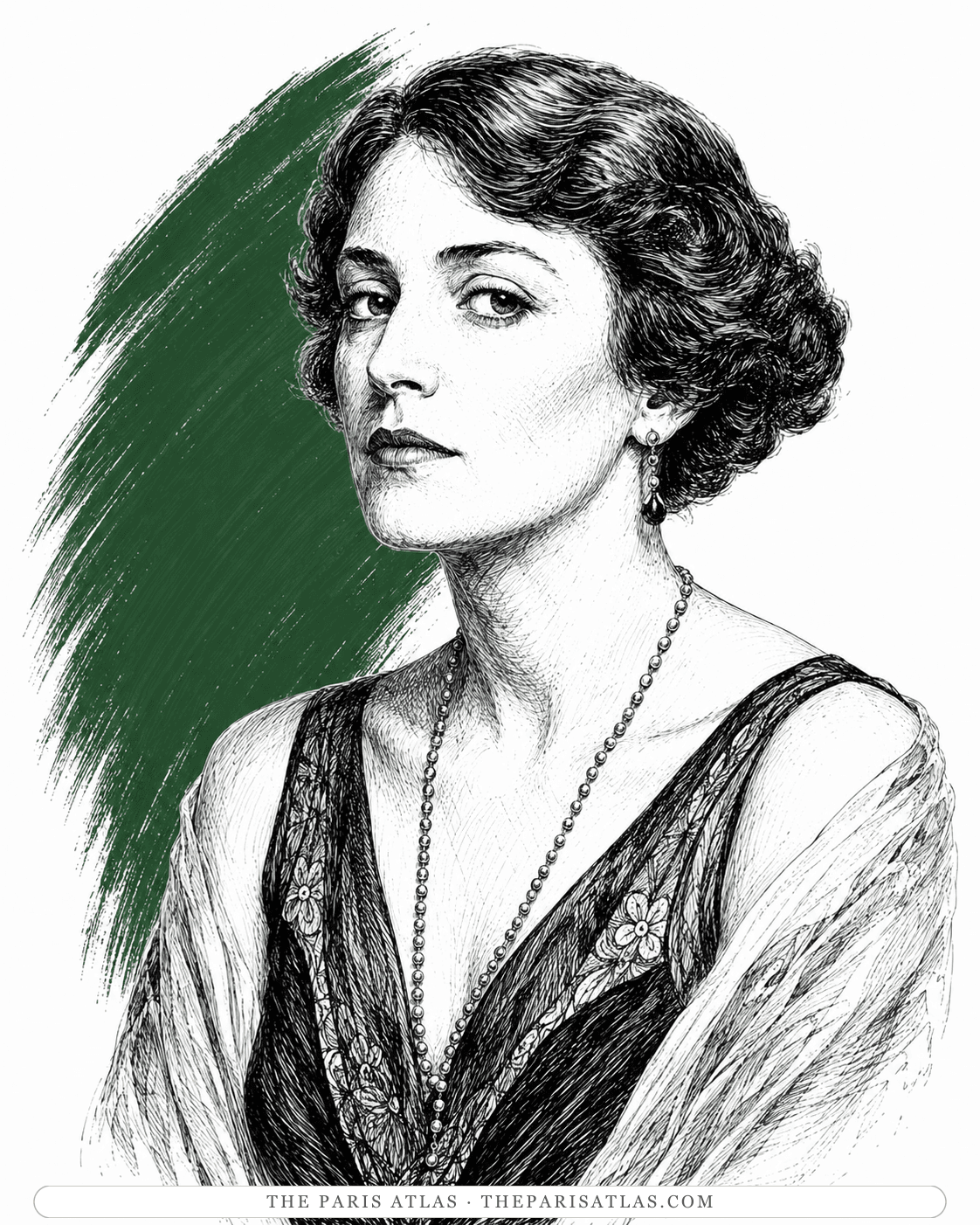
Frances Clyne
Cohn's companion of three years — and author of the book's most scalding monologue when he decides to trade her in for his new life.
Children, and the wedding she has been promised. She took the quickest divorce she could get rather than hold out for alimony, and tells Jake Barnes she never much liked children but does not want to think she will never have any: she always thought she would have them and then like them.
The book

At a glance
- Cohn's companion, American, facing her exit as the novel opens
- The Paris chapters; she departs for England before Spain
- Three years, and a divorce she has only just finished getting
- Two hundred pounds and a visit to friends in England
- Very tall, with a great deal of movement — Jake's whole physical note on her
- Kitty Cannell
Who they are in the book
Spoiler-freeFrances has spent three years managing Robert Cohn — his review, his novel, his confidence — on the understanding, hers at least, that marriage was the destination. The book meets her just as Cohn's success and his restlessness arrive together, and she can read the arithmetic: she is about to be left, and there is nothing she can do about it except refuse to go quietly.
Her single great scene is exactly that refusal. In front of Jake, with a smile that never drops, she delivers a beautifully controlled, utterly merciless accounting of Cohn — his vanity, his little economies, his literary self-pity — while he sits and takes it. It is the book's most uncomfortable set piece and its clearest preview of the fiesta: the crowd's talent for vivisection, demonstrated on the man the novel will spend the rest of its pages carving.
How Frances Clyne Is Portrayed
- The smileThe monologue is delivered brightly, socially, as if reading out a menu — rage worn as good manners, which makes it land twice as hard.
- The positionUnmarried at thirty-plus in 1925 Montparnasse, her years invested in a man now shopping for a grander life — the book lets you do the actuarial math on exactly how cornered she is.
- The priceCohn is sending her to England. He offered a hundred pounds; she made him give two hundred, and says so at the table, in front of Jake, calling him very generous.
- The friends who don't knowShe rehearses the visit ahead — the friends who have not yet been told she is coming, the careful talk around Robert, the my-dear condolences. She performs both halves of the conversation.
- The secretaryHer own indictment, volunteered: she made Cohn get rid of the secretary he had brought across the country for the magazine, and he did not even pay the girl's fare back. She should have known, she says, that she would go the same way.
- The audienceJake notices that having someone to hear it is the satisfying part. He also notices that he feels no impulse to stop it, and that this counts as friendly joking beside what comes later.
Frances is packed off to England on Cohn's money before the fiesta, and the book forgets her — her revenge scene was her whole part. Kitty Cannell, the Paris fashion correspondent who was Harold Loeb's lover in the real 1925, recognized the transaction instantly and never forgave it; she had, in fact, warned Loeb that Hemingway was studying the crowd for material and would skewer them all. She was righter than she knew, and said so for decades — one more member of the Pamplona circle who spent a lifetime answering a novel that borrowed her worst season.
If you like The Sun Also Rises


If you like Ernest Hemingway
Explore authors with a similar voice, perspective, and influence.
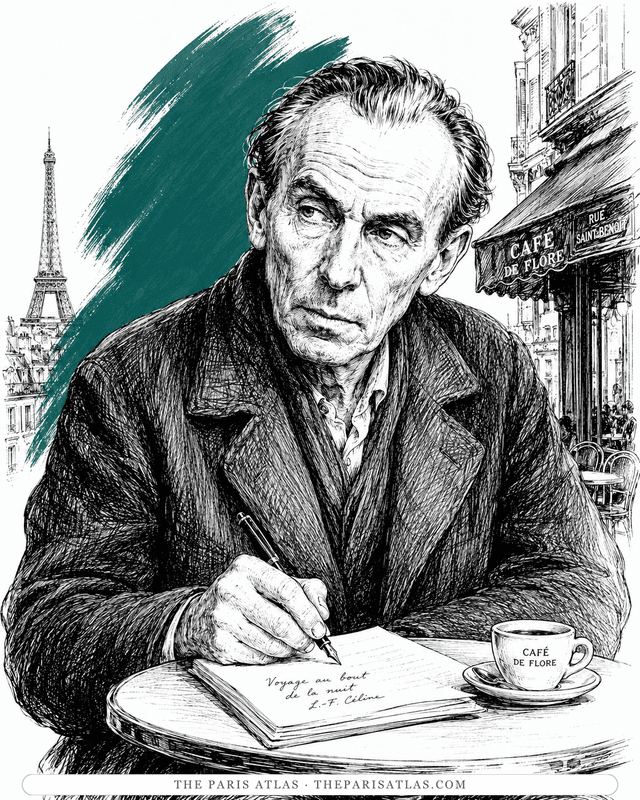
Louis-Ferdinand Céline
The other great stylist the Great War produced — where Hemingway cut the language down, Céline set it on fire. The same wound, opposite treatments.
View author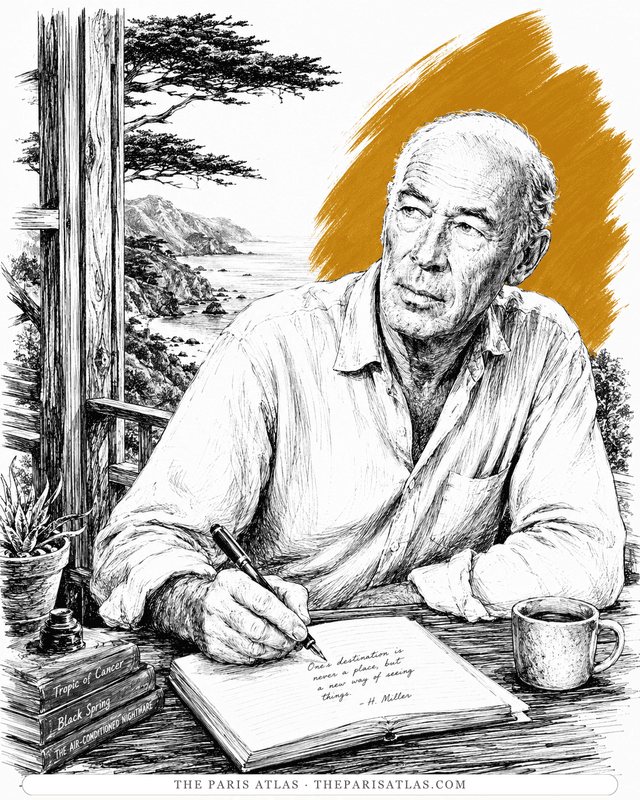
Henry Miller
Paris on no money a decade later, with the restraint removed. Miller called Hemingway's Paris a tourist's Paris; readers get to referee.
View author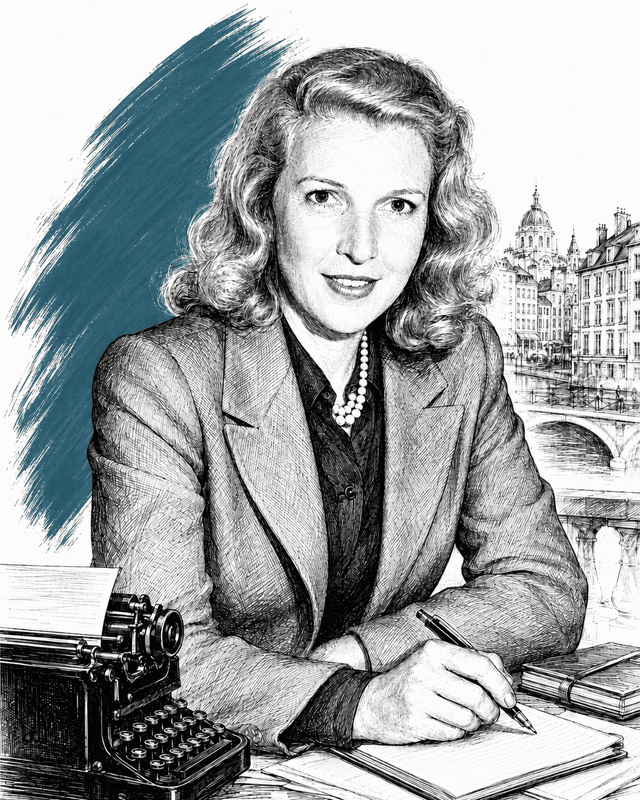
Martha Gellhorn
War correspondent who covered the Spanish Civil War, D-Day, and conflicts across five more decades; Hemingway's third wife, 1940–1945.
View author