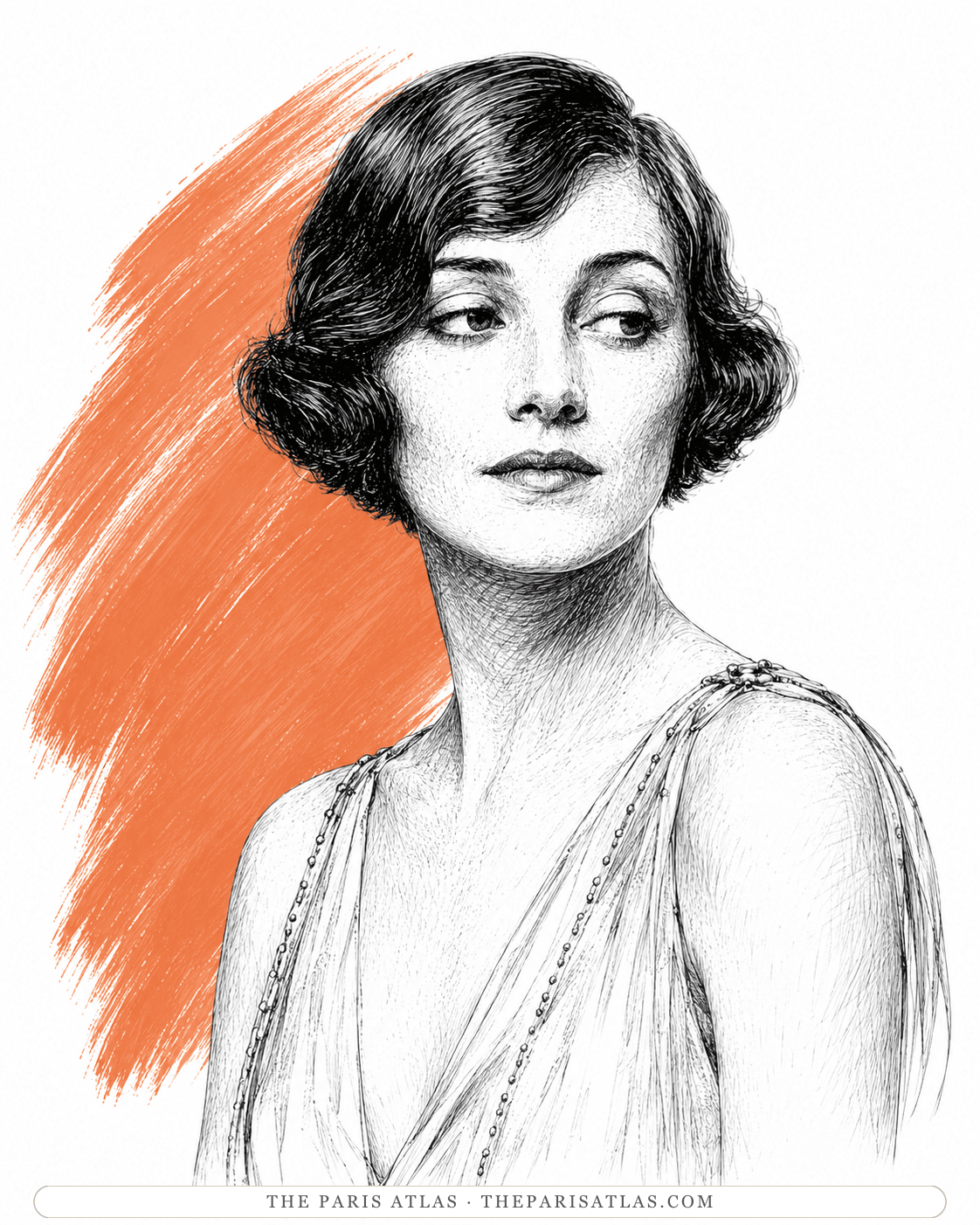
Lady Brett Ashley
Married twice, waiting on a divorce, magnetic to every man in the book — the center of gravity the whole novel orbits.
To do as she likes without hating herself for it. "I've always done just what I wanted," she tells Jake Barnes, and a few lines later, "I do feel such a bitch." Refusing earlier to live with him, she puts it down to the way she is made rather than to anything she could decide differently.
The book

At a glance
- Lady Ashley — English, 34, war widow in all but paperwork, engaged to Mike Campbell
- 'Brett' — never her title by the people who love her
- Paris, San Sebastián (by report), Pamplona, and Madrid
- A slipover jersey and tweed skirt, a man's felt hat, later a Basque beret
- V.A.D. in the war; the man she loved died of dysentery in it
- Ten thousand dollars from the count to go to Biarritz — she knew too many people there
- Lady Duff Twysden (born Dorothy Smurthwaite) · 1891–1938 · Richmond, Yorkshire
Who they are in the book
Spoiler-freeBrett arrives with a crowd of young men in tow and the book never really looks at anyone else again. Thirty-four, English, a title from a marriage she is shedding, hair brushed back like a boy's — she started all that, the narration notes — she drinks level with the men, calls everyone 'chaps,' and moves through Paris and Pamplona leaving wreckage she genuinely regrets. She was a nurse's aide in the war; the man she loved died of it; the husband who followed came home wrong from the Navy. The book hands you her damage in fragments and lets you assemble the verdict yourself.
What she wants is harder to name — Jake, except that's impossible; freedom, except it keeps collapsing into the next man. She is engaged to Mike Campbell, detours through Robert Cohn, and in Pamplona fixes on the young matador Romero. Readers have been arguing since 1926 about whether she is the novel's monster or its most honest casualty; the book, characteristically, declines to rule.
How Lady Brett Ashley Is Portrayed
- The lookA man's felt hat, a jersey, and the famous appraisal — curves like the hull of a racing yacht. The bobbed hair was about to become a generation's.
- The talkClipped, bright, and evasive — 'chaps,' 'darling,' 'rot' — a brittle gaiety the book lets crack only when she's alone with Jake.
- The effectEvery man in the novel proposes, follows, fights, or pays; the riau-riau dancers in Pamplona circle her like an image they want to keep.
- The honestyShe never once pretends the damage isn't hers — the book's cruelest self-accountant, and the only character who refuses her own alibi.
- The one she doesn't ragThe count notices it over the champagne: she jokes everyone, and says so cheerfully, and has no friends in the world because of it. Everyone except Jake, whom she will not joke.
- The unfinished sentencesThe count's other observation — that she never finishes a sentence when she talks to him. She leaves the ends for other people to complete however they like, which is also how she conducts everything else.
Brett runs off to Madrid with Romero and then performs the book's one unambiguous act of grace: she sends him away — refuses his money, refuses to let a nineteen-year-old ruin himself on her — and wires Jake to come get her. 'I'm not going to be one of these bitches that ruins children,' she tells him, and offers the thought that deciding not to be a bitch is 'sort of what we have instead of God.' The final taxi ride is hers as much as Jake's: what they could have had, and the pretty thinking it amounts to.
Duff Twysden never publicly answered the portrait, though the roman à clef was transparent to everyone in Montparnasse — the 1925 Pamplona party had watched most of it happen. She divorced Sir Roger Twysden, later married the American painter Clinton King, moved with him to the American Southwest, and died of tuberculosis in Santa Fe in 1938, at forty-seven. Hemingway told interviewers a grim story about her funeral — pallbearers who were all former lovers, a dropped casket — that biographers have since shown was invented: she was cremated, and the cruelty was his addition.
If you like The Sun Also Rises


If you like Ernest Hemingway
Explore authors with a similar voice, perspective, and influence.

Louis-Ferdinand Céline
The other great stylist the Great War produced — where Hemingway cut the language down, Céline set it on fire. The same wound, opposite treatments.
View author
Henry Miller
Paris on no money a decade later, with the restraint removed. Miller called Hemingway's Paris a tourist's Paris; readers get to referee.
View author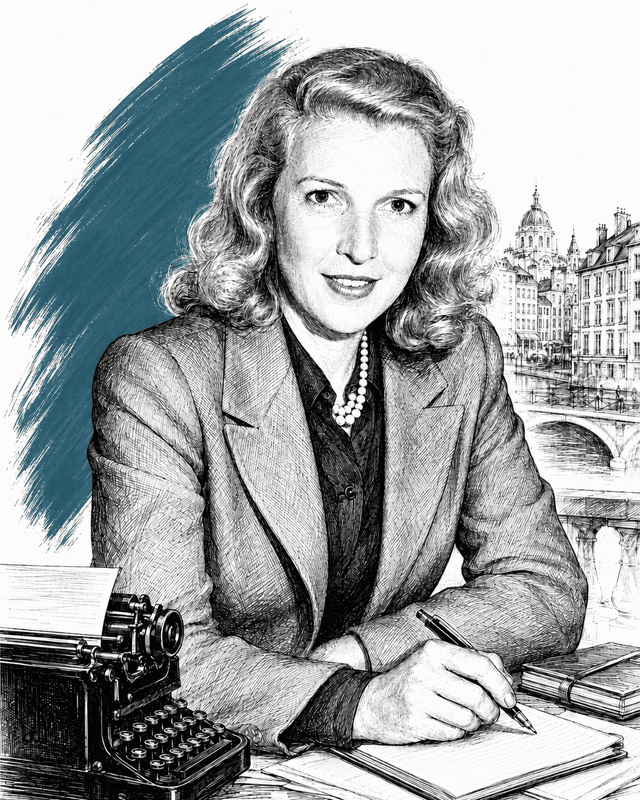
Martha Gellhorn
War correspondent who covered the Spanish Civil War, D-Day, and conflicts across five more decades; Hemingway's third wife, 1940–1945.
View author