The Paris AtlasCharting the artists, works, and places worth returning to.
  • Author
  • Journalist
· American · 1902–1968

John Steinbeck

American novelist of the California fields and of the Dust Bowl migration — the exodus of farming families driven off the drought-ruined southern plains in the 1930s — awarded the Nobel Prize in Literature in 1962. In the summer of 1954 he moved into 1 avenue de Marigny in Paris and wrote for the Paris daily newspaper Le Figaro. Some of that work reached French readers in translation long before it was ever printed in his own English: one story waited sixty-five years.

Details

Lived
1902–1968
Born
1902
Birthplace
Salinas, California
Died
1968
Place of death
New York City
Nationality
American
Profession
Novelist and reporter
Major works
Of Mice and Men (1937), The Grapes of Wrath (1939), East of Eden (1952), Travels with Charley (1962)
Married
Carol Henning · married 14 January 1930Gwyn Conger · married in New OrleansElaine Anderson Scott · married 28 December 1950
Roles
AuthorJournalist

About John Steinbeck

John Steinbeck wrote the books that fixed the American 1930s in place: Of Mice and Men, the story of two itinerant ranch hands and the killing that ends their plan for a farm of their own; The Grapes of Wrath, the 1939 novel about Oklahoma tenant farmers driven off their land and turned into migrant labour in California, which won the Pulitzer Prize, the American award for the year's best novel, the following year. He was born in Salinas, an agricultural town in central California, in 1902, worked the sugar-beet fields between terms at Stanford University, and never took a degree.

His Paris is a single documented season and a strange body of work. In the summer of 1954 the Steinbecks were living at 1 avenue de Marigny, in the wealthy 8th arrondissement around the Champs-Élysées, and he was writing for Le Figaro, the Paris daily newspaper, as a regular contributor — pieces that reached French readers in translation. One of them, a comic story about a nervous chef and his cat, ran in the paper on 31 July 1954 and was not printed in Steinbeck's own English until 2019. In 1956 a Paris publisher gathered his New York and Paris writing into a French book, Un Américain à New York et à Paris — 'An American in New York and in Paris' — translated by Jean-François Rozan.

Salinas, and the fields

He was born in Salinas, California, on 27 February 1902, the third of four children and the only son of John Ernst Steinbeck II and Olive Hamilton Steinbeck; the family had come to the United States a few generations back from Germany, England and Ireland. He worked his way through Stanford University without graduating, spending the breaks and summers in fields of sugar beet and other crops — the labour that later gave his novels their detail and their politics.

In 1925 he went to New York to establish himself as a freelance writer, failed at it within a few years, and went home to California. The first novel, Cup of Gold, appeared in August 1929; The Pastures of Heaven followed in 1932 and To a God Unknown in 1933, none of them selling. Recognition arrived with Tortilla Flat in May 1935, a run of comic stories about the paisanos of Monterey — the Spanish-speaking Californians of mixed Mexican, Indian and European descent who lived in the hills above that coastal town.

The California books

What followed the humour was harder. In Dubious Battle (October 1936) is set among migratory fruit pickers striking on a California plantation. Of Mice and Men (February 1937) reduced the same world to two men and one impossible plan. The Long Valley, a collection of stories, came in 1938, and The Grapes of Wrath in April 1939 — the Oklahoma tenant farmers who lose the land and become migrant workers in California, and the book that is generally taken as his best. It won both of the leading American book prizes of the day, the Pulitzer Prize and the National Book Award, in 1940.

The novels are social novels about the economics of rural labour, and they carry, as the Nobel Foundation's own summary of him put it, a streak of worship of the soil — a romantic reverence for the land itself — that does not always sit comfortably beside their plain-spoken reporting of how the work and the money actually functioned. He married Carol Henning in January 1930, Gwyn Conger in New Orleans in the war years, and Elaine Anderson Scott in December 1950, who was his wife for the rest of his life.

Correspondent

From June to October 1943 he was in Europe and North Africa as a war correspondent for the New York Herald Tribune, then one of the two great New York daily papers. In August and September 1947 he toured the Soviet Union with Robert Capa, the Hungarian-born photographer whose pictures of the Spanish Civil War and the Normandy landings had made him the most famous war photographer alive. The reporting habit never left him: he kept going out to look at things and writing down what he saw, and it eventually produced both the Paris columns and, at the end, Travels with Charley.

East of Eden, the long novel of two families in his own Salinas Valley that he considered his most ambitious book, was published in 1952. It was his most recent novel when he arrived in Paris two years later.

The summer at 1 avenue de Marigny

In 1954 the Steinbecks took a house at 1 avenue de Marigny, in the 8th arrondissement — the wealthy district on the Right Bank around the Champs-Élysées — and stayed for the summer. He was fifty-two, world-famous, and — unusually for an American novelist in Paris — working for a French newspaper rather than writing about the city for readers at home. Le Figaro, one of the oldest and largest of the Paris dailies, treated him as a regular contributor, a frequent interviewee and a favourite American, and he wrote for the paper through the season.

On 31 July 1954 the paper printed "Les Puces sympathiques" — French for "The Amiable Fleas" — a whimsically satirical tale about Monsieur Amité, a nervous French chef, and Apollo, his temperamental cat. It appeared in French, for French readers, and then effectively vanished. The English text Steinbeck actually typed sat unpublished among his papers at the University of Texas until Andrew Gulli, the editor of The Strand Magazine, an American quarterly that specialises in printing rediscovered fiction, found it and printed it in 2019, sixty-five years after the story had been read in Paris.

The Paris writing accumulated into a book that exists only in French: Un Américain à New York et à Paris — 'An American in New York and in Paris' — published in 1956 in Jean-François Rozan's translation and catalogued under that title by the Bibliothèque nationale de France, the French national library. So one of Steinbeck's books sits on the shelves of a national library in a language he did not write it in, and has never been published in the language he did.

There is an unresolved question attached to the same address. The American journalist Christopher Dickey, writing about that summer, noted the daily arrival at the house of a man from the United States embassy — the American government's mission in Paris — carrying an attaché case, the slim leather document case of the diplomatic trade, and asked whether Steinbeck was serving as an informant for the Central Intelligence Agency, the American foreign intelligence service, while he lived there. The question has been raised and not settled: no published document either confirms it or rules it out.

Charley, and the Nobel

The Winter of Our Discontent appeared in 1961. The following year he published Travels with Charley, the account of a three-month circuit of forty American states made in a camper truck with Charley, his poodle, and was awarded the Nobel Prize in Literature, the international prize given each year to one writer for a body of work — "for his realistic and imaginative writings, combining as they do sympathetic humour and keen social perception", as the citation put it. He died in New York City on 20 December 1968, of arteriosclerosis, the hardening of the arteries.

Life events

  1. 1902

    Born in Salinas, California, on 27 February, the only son of John Ernst Steinbeck II and Olive Hamilton Steinbeck.

    John Steinbeck: Chronology

  2. 1925

    Goes to New York to try to make a living as a freelance writer, fails within a few years, and returns to California.

    John Steinbeck — Biographical

  3. 1929

    Publishes his first novel, Cup of Gold, in August.

    John Steinbeck: Chronology

  4. 1935

    Tortilla Flat, his comic stories of the paisanos — the Spanish-speaking Californians of the hills above Monterey — brings him wide recognition.

    John Steinbeck: Chronology; John Steinbeck — Biographical

  5. 1937

    Of Mice and Men is published in February.

    John Steinbeck: Chronology

  6. 1939

    The Grapes of Wrath is published in April.

    John Steinbeck: Chronology

  7. 1940

    Wins the Pulitzer Prize and the National Book Award for The Grapes of Wrath.

    John Steinbeck: Chronology

  8. 1943

    In Europe and North Africa from June to October as a war correspondent for the New York Herald Tribune.

    John Steinbeck: Chronology

  9. 1947

    Tours the Soviet Union in August and September with the photographer Robert Capa.

    John Steinbeck: Chronology

  10. 1952

    Publishes East of Eden.

    John Steinbeck: Chronology

  11. 1954

    Lives at 1 avenue de Marigny in Paris and writes for the Paris daily Le Figaro as a regular contributor. On 31 July the paper prints his story "Les Puces sympathiques" ("The Amiable Fleas"); its English original stays unpublished until 2019.

    1954 Short Story by John Steinbeck Written in Paris Published by The Strand (2019); Christopher Dickey Asks: Was John Steinbeck a CIA Informant in Paris in 1954? (2019)

  12. 1956

    Un Américain à New York et à Paris — 'An American in New York and in Paris' — is published in France in Jean-François Rozan's translation.

    Un Américain à New York et à Paris, traduit de l'américain par Jean-François Rozan / John Steinbeck (1956)

  13. 1962

    Publishes Travels with Charley and receives the Nobel Prize in Literature, "for his realistic and imaginative writings, combining as they do sympathetic humour and keen social perception".

    John Steinbeck — Facts; John Steinbeck — Biographical

  14. 1968

    Dies in New York City on 20 December, of arteriosclerosis.

    John Steinbeck: Chronology; John Steinbeck — Facts

People they knew

Documented connections — every one carries its source.

Illustrated portrait of Ernest Hemingway

Ernest Hemingway

  • Author
  • Journalist

Met · 1944

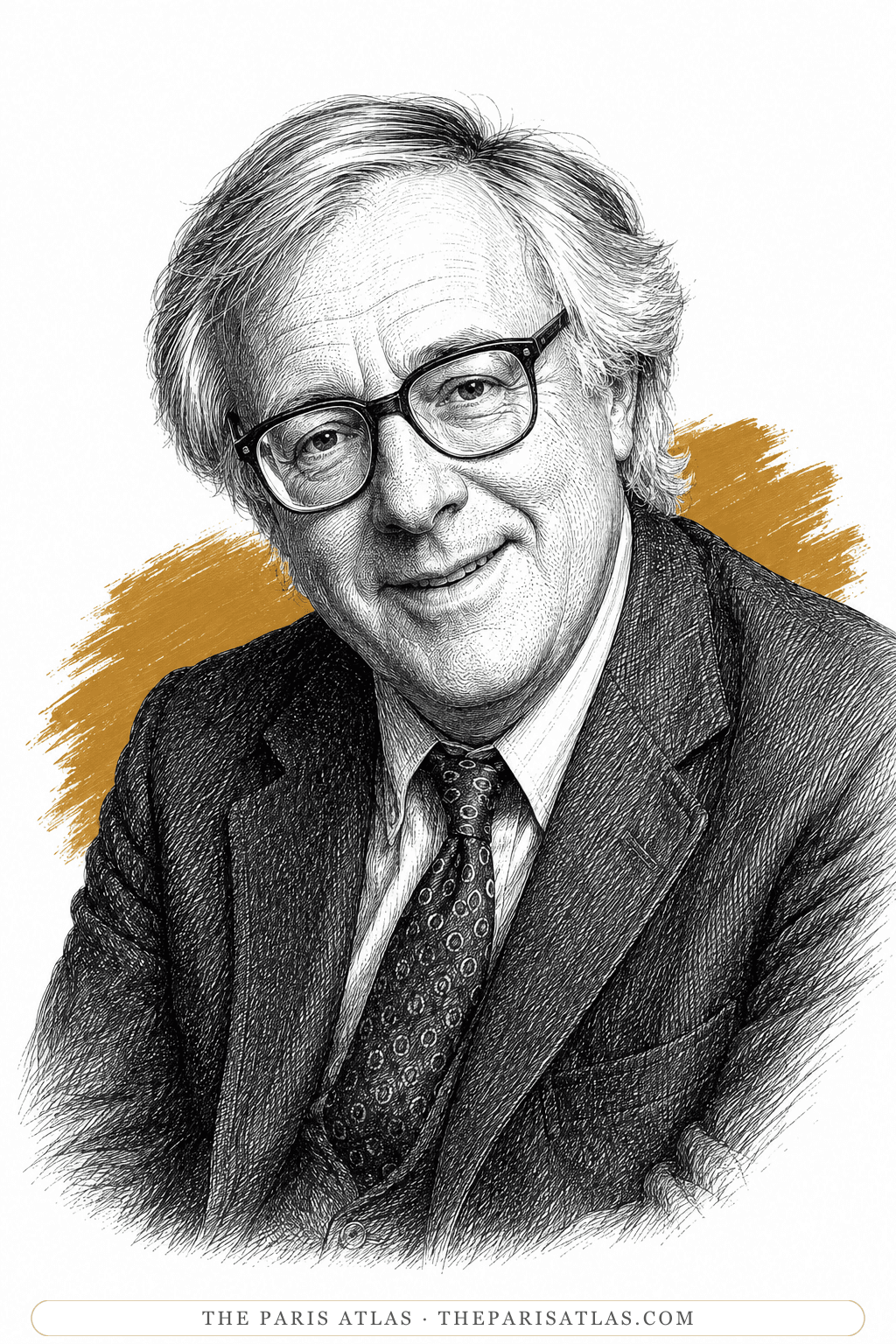
They met once, and it went badly. Hemingway asked to meet Steinbeck in the spring of 1944, when both were in New York; the dinner took weeks to arrange and was held at Tim Costello's on Third Avenue with Robert Capa, John O'Hara and John Hersey at the table. The evening is remembered for one thing: Hemingway bet O'Hara fifty dollars he could break over his own head the blackthorn walking stick Steinbeck had given him, did it, and asked "You call that a blackthorn?" Steinbeck, who by Jackson Benson's account admired Hemingway's writing more than that of any other writer of his time, watched and thought the whole thing unnecessarily cruel and stupid. Not a Paris meeting — this is the one documented contact between the two men, and it happened in Manhattan a decade before Steinbeck's Figaro summer on the avenue de Marigny.
Bill Steigerwald, Film on Ernest Hemingway Fails to Mention Steinbeck (2021)

Questions about John Steinbeck

Did John Steinbeck live in Paris?

Yes, for a season. In 1954 he and his wife took a house at 1 avenue de Marigny, in the 8th arrondissement, and he spent the summer there writing for the Paris daily Le Figaro, which treated him as a regular contributor and a frequent interviewee. He was fifty-two and two years past East of Eden.

What did Steinbeck write for Le Figaro?

Pieces about New York and Paris, published in French translation, and at least one short story: "Les Puces sympathiques" — "The Amiable Fleas" — a satirical tale about a nervous French chef named Monsieur Amité and his temperamental cat Apollo, which the paper printed on 31 July 1954. In 1956 a French collection drew the New York and Paris writing together as Un Américain à New York et à Paris — 'An American in New York and in Paris' — translated by Jean-François Rozan and held under that title by the Bibliothèque nationale de France, the French national library.

Can you read Steinbeck's Paris writing in English?

Only partly, and only recently. "The Amiable Fleas" reached French readers in Le Figaro in 1954, but Steinbeck's English original lay among his papers at the University of Texas until Andrew Gulli, editor of The Strand Magazine — an American quarterly that specialises in rediscovered fiction — published it in 2019, sixty-five years later. The 1956 collection Un Américain à New York et à Paris ('An American in New York and in Paris') exists as a French book; there is no equivalent English volume.

Was John Steinbeck a CIA informant in Paris?

It is an open question rather than an established fact. The journalist Christopher Dickey, examining Steinbeck's 1954 stay, noted that a man from the United States embassy called at the avenue de Marigny house daily carrying an attaché case, and asked whether the novelist was passing information to the Central Intelligence Agency. Nothing in the published record settles it.

What did John Steinbeck win the Nobel Prize for?

The Nobel Prize in Literature 1962, awarded "for his realistic and imaginative writings, combining as they do sympathetic humour and keen social perception". He was the sole winner that year — the prize is sometimes divided between two writers — and published Travels with Charley in the same year.

What is John Steinbeck best known for?

The Grapes of Wrath (1939), his novel of Oklahoma tenant farmers driven west into California's migrant labour camps, which won the Pulitzer Prize; and Of Mice and Men (1937), the short novel of two ranch hands whose plan for a place of their own ends in a killing. East of Eden (1952) and the travel book Travels with Charley (1962) are the other titles most read today.

How did John Steinbeck die?

He died of arteriosclerosis in New York City on 20 December 1968, aged sixty-six, six years after the Nobel Prize.

Sourced claims

Every connection the graph holds for John, with the evidence behind it.

Met · 1944

Ernest Hemingway

They met once, and it went badly. Hemingway asked to meet Steinbeck in the spring of 1944, when both were in New York; the dinner took weeks to arrange and was held at Tim Costello's on Third Avenue with Robert Capa, John O'Hara and John Hersey at the table. The evening is remembered for one thing: Hemingway bet O'Hara fifty dollars he could break over his own head the blackthorn walking stick Steinbeck had given him, did it, and asked "You call that a blackthorn?" Steinbeck, who by Jackson Benson's account admired Hemingway's writing more than that of any other writer of his time, watched and thought the whole thing unnecessarily cruel and stupid. Not a Paris meeting — this is the one documented contact between the two men, and it happened in Manhattan a decade before Steinbeck's Figaro summer on the avenue de Marigny.

Bill Steigerwald, Film on Ernest Hemingway Fails to Mention Steinbeck (2021)

References

References

The sources below include biographies, scholarly essays, interviews, and primary materials that informed this page. They reflect both the historical record and ongoing critical conversations about John Steinbeck and their work.

  1. 1John Steinbeck — Facts

    The Nobel Prize (Nobel Prize Outreach)

    The Nobel Foundation's record of the 1962 prize — dates, places and the exact prize motivation.

    View source
  2. 2John Steinbeck — Biographical

    The Nobel Prize (Nobel Prize Outreach)

    The biography published at the time of the award, from Nobel Lectures, Literature 1901–1967.

    View source
  3. 3John Steinbeck: Chronology

    Martha Heasley Cox Center for Steinbeck Studies, San José State University

    The Martha Heasley Cox Center for Steinbeck Studies chronology — publication dates, marriages, the war correspondence and the Russia trip.

    View source
  1. 4Un Américain à New York et à Paris, traduit de l'américain par Jean-François Rozan / John Steinbeck (1956)

    Bibliothèque nationale de France

    The French national library's catalogue record for the 1956 Paris collection, with its translator.

    View source
  2. 51954 Short Story by John Steinbeck Written in Paris Published by The Strand

    SteinbeckNow.com, 2019

    On the Figaro story of 31 July 1954 and the English original's publication sixty-five years later.

    View source
  3. 6Christopher Dickey Asks: Was John Steinbeck a CIA Informant in Paris in 1954?

    SteinbeckNow.com, 2019

    On the 1954 Paris address and Christopher Dickey's question about the embassy visitor.

    View source
i
Why these sources are here

These references anchor the page in the documented record and in the scholarly conversations around John Steinbeck. Every claim on this page traces back to one or more of the works listed here.

Explore more resources
Browse all authors