
Written here
For Whom the Bell Tolls
National Park Service documentation says Hemingway likely wrote part of the novel at the Key West property; it does not support treating the house as the birthplace of the whole book.
The Ernest Hemingway Home & Museum at 907 Whitehead Street is open daily from 9 a.m. to 5 p.m. Adult admission is $19, a 20–30 minute guided tour is included, and no reservation is required. The house, writing studio, garden, pool and polydactyl cats make the visit more than a celebrity address.
The Ernest Hemingway Home & Museum is open from 9 a.m. to 5 p.m. every day of the year. Tickets are sold at the main gate at 907 Whitehead Street. The museum says reservations are not required.[1]
These details were checked against the museum on 14 August 2026. Prices and operating rules can change, so use the official rates page before travel. Do not buy a supposed reserved time from an unrelated seller: the museum states that it sells tickets at the gate and does not require reservations.
Allow about 60 to 90 minutes for a first visit. The included guided tour takes 20 to 30 minutes, but the house makes more sense if you also leave time for the writing studio, garden, swimming pool and cats. A visitor interested mainly in the headline facts can finish sooner; a reader of Hemingway or Pauline Pfeiffer will have more to examine.[1]
The house is in Key West's walkable Old Town, several blocks from Duval Street and across from the lighthouse. Heat and rain matter because part of the visit is outdoors. Carry water, and avoid scheduling the museum so tightly that a short wait at the gate makes the rest of the day late.
Ernest Hemingway first reached Key West in April 1928 with Pauline Pfeiffer. In 1931, Pauline's uncle Gus Pfeiffer bought the Whitehead Street property for the couple. They lived here with their sons Patrick and Gregory during the 1930s.[2]
The Key West years were not an isolated retreat. Hemingway fished with local friends, bought the boat Pilar in 1934, travelled to Cuba and reported on the Spanish Civil War. The house was one base in a life that moved repeatedly between Florida, Cuba, Spain, Africa and the American West.[2]
The marriage ended in 1940. Hemingway moved to Cuba with Martha Gellhorn, while Pauline kept the Key West property and continued raising Patrick and Gregory there. Calling the building only Hemingway's house hides the person who stayed, paid for major changes and preserved the family home after he left.[2]
The strongest connection is To Have and Have Not, published in 1937. The novel uses Key West, the Florida Straits and the economic pressure of the Depression as more than scenery. Local boats, workers and smuggling routes became part of its material.[3]
National Park Service documentation says Hemingway worked at the property on “The Snows of Kilimanjaro” and “A Way You'll Never Be.” The same nomination says it is likely that he wrote some of For Whom the Bell Tolls here. “Likely” matters: it is evidence of a serious association, not proof that the whole novel was written in the studio.[3]
The museum also connects the opening Key West period with A Farewell to Arms. That novel was already well advanced, and Hemingway worked on it in several places. A useful house museum should show how writing moved with him instead of turning every book into a product of one desk.[2]
The swimming pool was built in 1937–1938, while Hemingway was often away reporting on the Spanish Civil War. Pauline supervised the work. The museum gives its original cost as $20,000, an enormous expense beside the price of the house itself.[4]
The pool measures roughly 24 by 60 feet and reaches 10 feet at its deepest point. Building it displaced Hemingway's boxing ring and required a difficult excavation into Key West's coral rock. It originally used salt water before conversion to fresh water in the 1940s.[4]
A famous story says Hemingway returned, complained that Pauline had spent his last cent and pressed a penny into wet concrete. A penny remains embedded near the pool. The museum itself says the spoken outburst may be apocryphal. The concrete penny is real; the exact dialogue is not documented with the same certainty.[4]
The museum dates the house to 1851 and identifies Asa Tift, a marine architect and salvage operator, as its builder. That date appears widely in visitor material.[2]
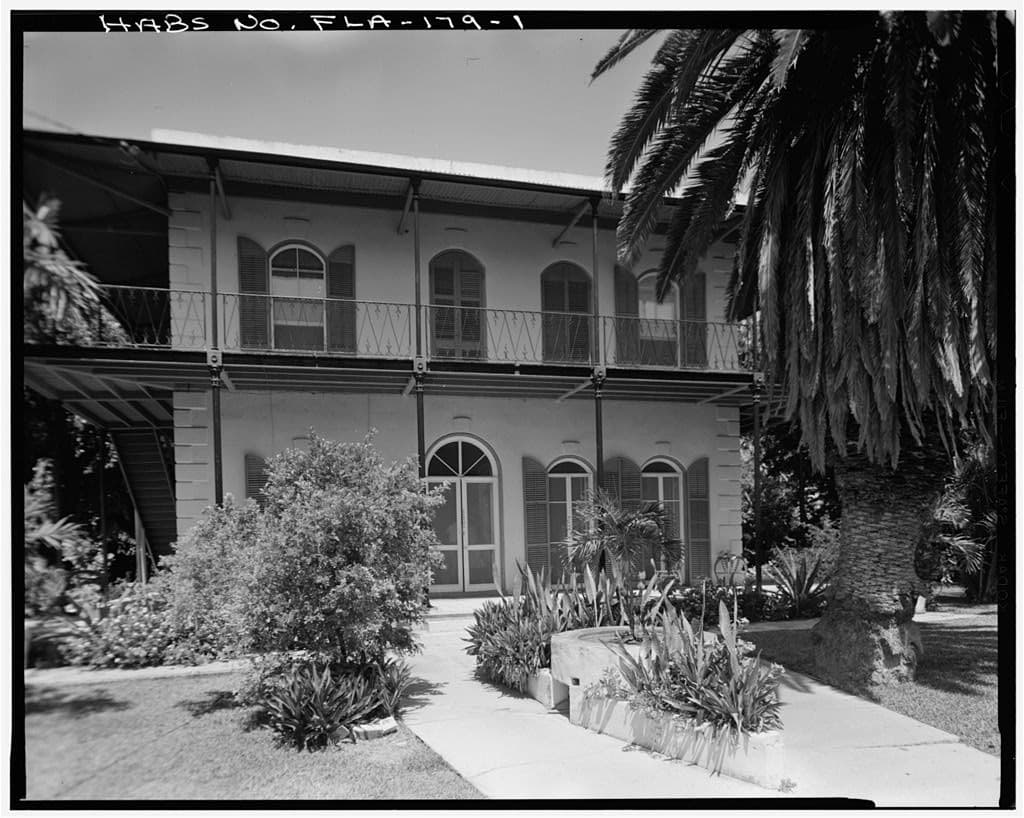
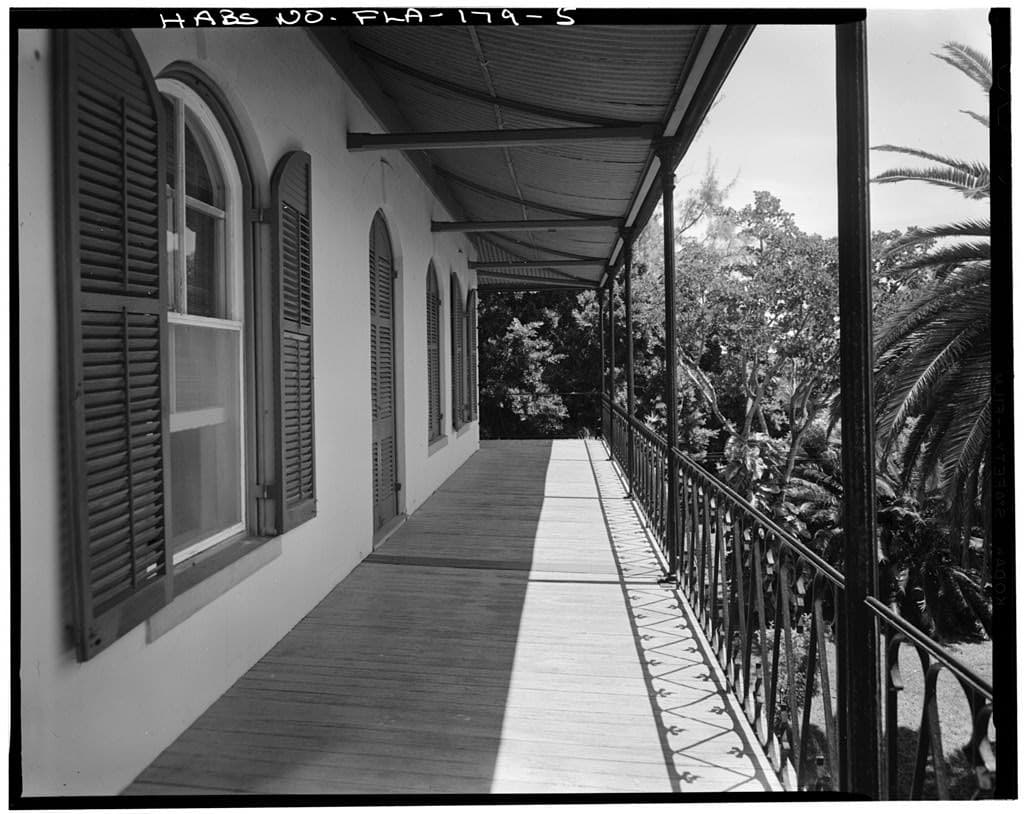
The Library of Congress Historic American Buildings Survey also identifies Asa Tift but records initial construction as about 1876. Its file includes measured drawings, written documentation and twelve photographs made for the federal survey.[5]
The two dates cannot both describe the same initial construction in the same way. This page therefore does not silently choose one. The safe conclusion is that the limestone house is a nineteenth-century Key West building associated with Asa Tift, with its exact construction date disputed by two institutional sources.
The museum says nearly sixty cats live on the property and that about half show polydactyly, meaning they have more than the usual number of toes. The cats are named after famous people and receive regular veterinary care.[6]
Museum tradition says a ship's captain gave Hemingway a white six-toed cat named Snow White and that some present cats descend from her. The genetic trait and the current colony are observable. The exact Snow White origin story belongs to the museum's account and should be understood as family lore unless earlier documentation is found.[6]
Visitors should not pick up or feed the cats. They live throughout the grounds and may enter the house, so anyone with a serious cat allergy should contact the museum before planning the visit.[6]
The museum's public rates and contact pages do not currently give a detailed, room-by-room accessibility guide. The property includes a two-story historic house, a separate upstairs writing studio and outdoor paths, so access is not identical in every part of the visit.[7]
If stairs, step-free entry, seating, accessible restrooms or a service animal affect the visit, call the museum at 305-294-1136 before going. A direct answer from staff is more useful than assuming that a general accessibility label guarantees access to every historic room.
The address is 907 Whitehead Street, Key West, Florida 33040. Tickets are sold at the gate. Old Town parking is limited, so walking, cycling, a taxi or local transit may be simpler than depending on a space beside the museum.[8]
Check current admission, payment rules, tour timing and closures before travel.
The museum's account of Hemingway, Pauline Pfeiffer and the Key West years.
Dimensions, construction history and the museum's careful note about the penny legend.
Twelve archival photographs, measured drawings, written history and federal survey data.
National Register identification and the property's recognized literary significance.
The museum dates Asa Tift's house to 1851; the federal Historic American Buildings Survey dates initial construction to about 1876.
Ernest Hemingway and Pauline Pfeiffer arrive in Key West after travelling through Havana.
Pauline's uncle Gus Pfeiffer buys the Whitehead Street property for the couple.
Hemingway acquires the fishing boat Pilar, deepening the Key West and Cuba connections that enter his writing.
To Have and Have Not publishes with Key West, the Florida Straits and Depression-era smuggling at its centre.
Pauline supervises construction of the large swimming pool while Hemingway reports on the Spanish Civil War.
Ernest and Pauline divorce. Hemingway moves to Cuba with Martha Gellhorn; Pauline keeps the house.
Pauline Pfeiffer dies. The property later passes through the family and is sold.
Bernice and Jack Daniels purchase the house months after Ernest Hemingway's death and develop it as a museum.
The Historic American Buildings Survey photographs, measures and documents the property.
The Ernest Hemingway House is entered in the National Register of Historic Places and recognized as a National Historic Landmark.
The Ernest Hemingway Home & Museum is open daily from 9 a.m. to 5 p.m., 365 days a year. These hours were checked on 14 August 2026; confirm them on the official rates page before travel.
Adult admission is $19. Children ages 6 to 12 are $7, and children age 5 and under enter free. The museum adds a 3% fee to credit-card and mobile-wallet payments. Rates were checked on 14 August 2026.
No. The museum says reservations are not required and tickets are sold at the main gate. A guided tour is included with admission.
The guided tour takes about 20 to 30 minutes. Allow 60 to 90 minutes for the full visit if you also want to see the writing studio, garden, swimming pool and cats without rushing.
Yes. Ernest Hemingway and Pauline Pfeiffer made the Whitehead Street property their home from 1931. Hemingway left after their 1940 divorce; Pauline kept the house and continued living there with their sons.
The property is strongly associated with To Have and Have Not and with work on stories including The Snows of Kilimanjaro and A Way You'll Never Be. National Park Service documentation says he likely wrote some of For Whom the Bell Tolls there, but does not establish that the whole novel was written in the house.
Yes. The visit includes the separate upstairs writing studio, viewed as part of the property. Access conditions may differ from the main floor of the historic house, so visitors who cannot use stairs should call ahead.
Polydactyl cats have a genetic trait that gives them extra toes. The museum says nearly sixty cats live on the grounds and about half display the trait. Its story that they descend from Hemingway's cat Snow White is museum tradition rather than independently proven genealogy.
The official museum site does not currently publish a detailed room-by-room accessibility guide. Because the property includes a two-story historic house, a separate upstairs studio and garden paths, call 305-294-1136 to confirm the exact access you need before visiting.
The museum says Asa Tift built the house in 1851. The Library of Congress Historic American Buildings Survey dates initial construction to about 1876. Both agree that it is a nineteenth-century limestone Key West house, but the exact date is disputed.
A penny is embedded near the pool. The story that Hemingway threw it down after complaining that Pauline Pfeiffer had spent his last cent may be apocryphal; the museum itself distinguishes the surviving penny from the uncertain dialogue.
The museum is at 907 Whitehead Street in Old Town, Key West, across from the Key West Lighthouse and several blocks west of Duval Street.
Written here
National Park Service documentation says Hemingway likely wrote part of the novel at the Key West property; it does not support treating the house as the birthplace of the whole book.
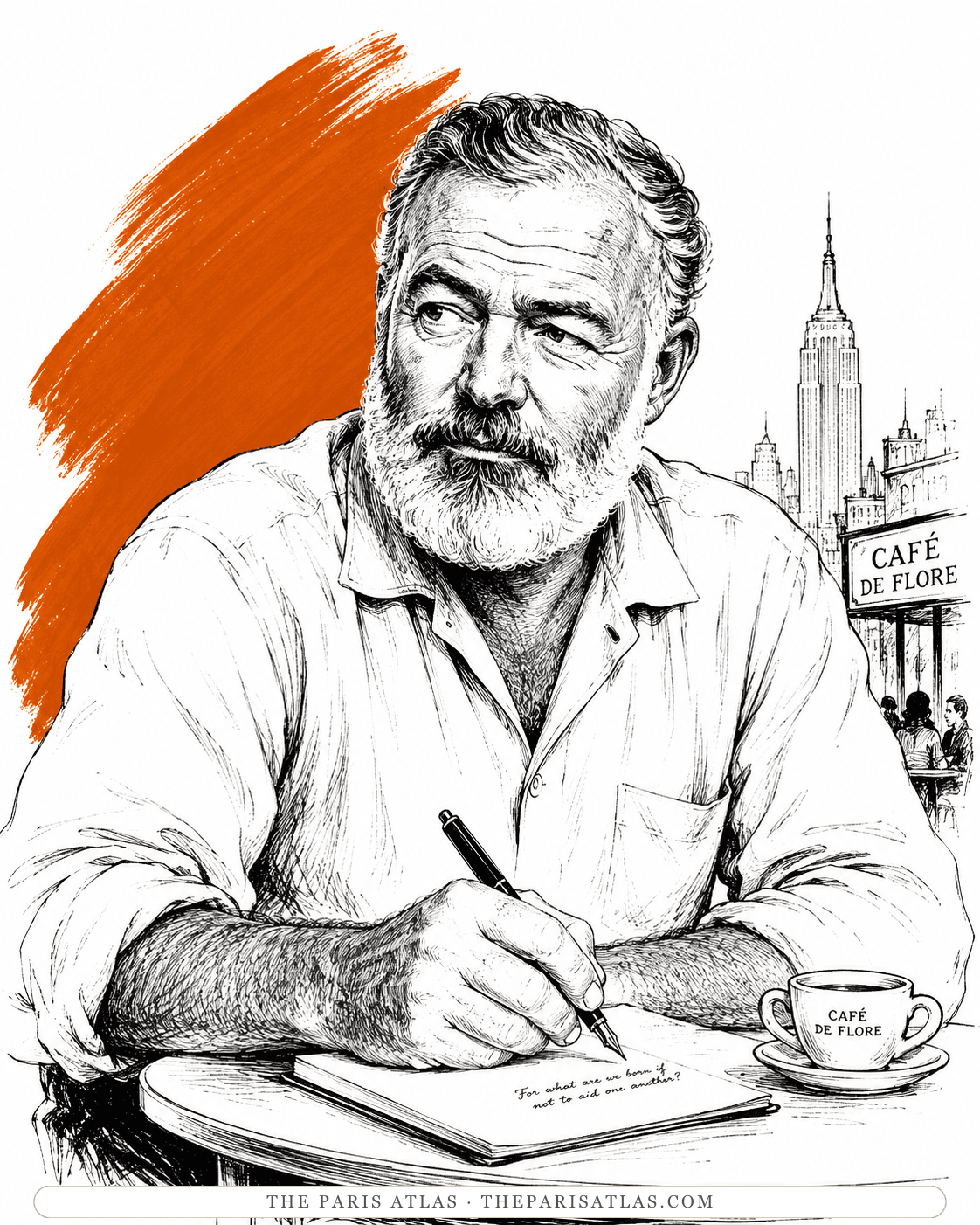
Lived here · 1931–1940
Ernest Hemingway and Pauline Pfeiffer made the Whitehead Street house their Key West home. He moved to Cuba after their 1940 divorce.
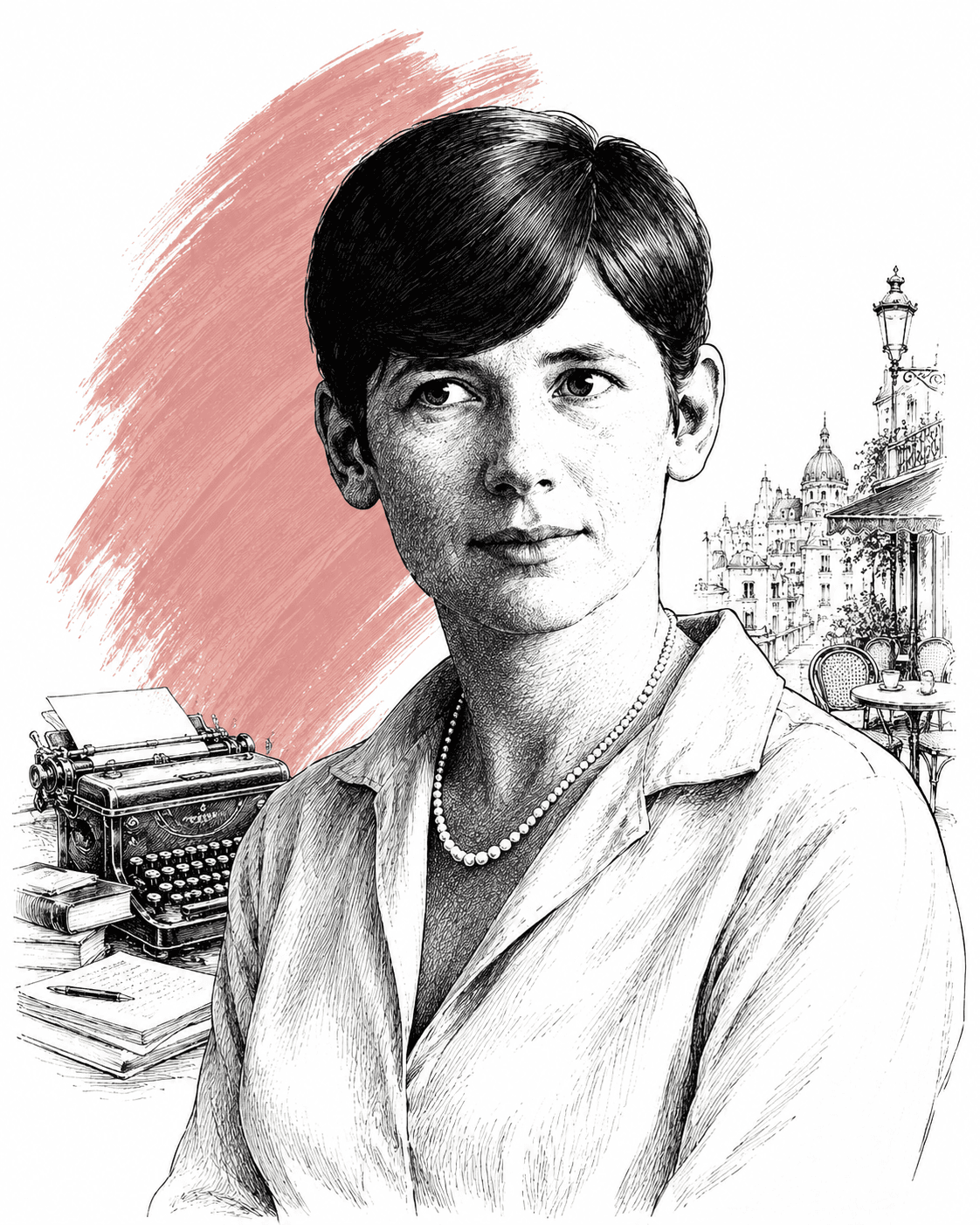
Pauline Pfeiffer moved into the Whitehead Street house with Ernest Hemingway, supervised construction of its pool, and kept the property after their divorce.
The sources below include histories, archival materials, scholarly research, and official records that informed this page. They document Ernest Hemingway Home & Museum, the people connected to it, and its place in Key West, Florida.

Archival evidence used to document the historical record connected to Ernest Hemingway Home & Museum.

Web source consulted for documented facts and historical context presented on the Ernest Hemingway Home & Museum page.
Official record used to verify names, dates, institutional details, or other factual information on this page.
These references provide the documented foundation for this page's history and context. Claim-level citations remain attached to the specific claims they support.
 Explore more resources
Newsletter
The cafés, studios, and walk-up flats where the work was made — one story from the map in every letter.