The place, briefly
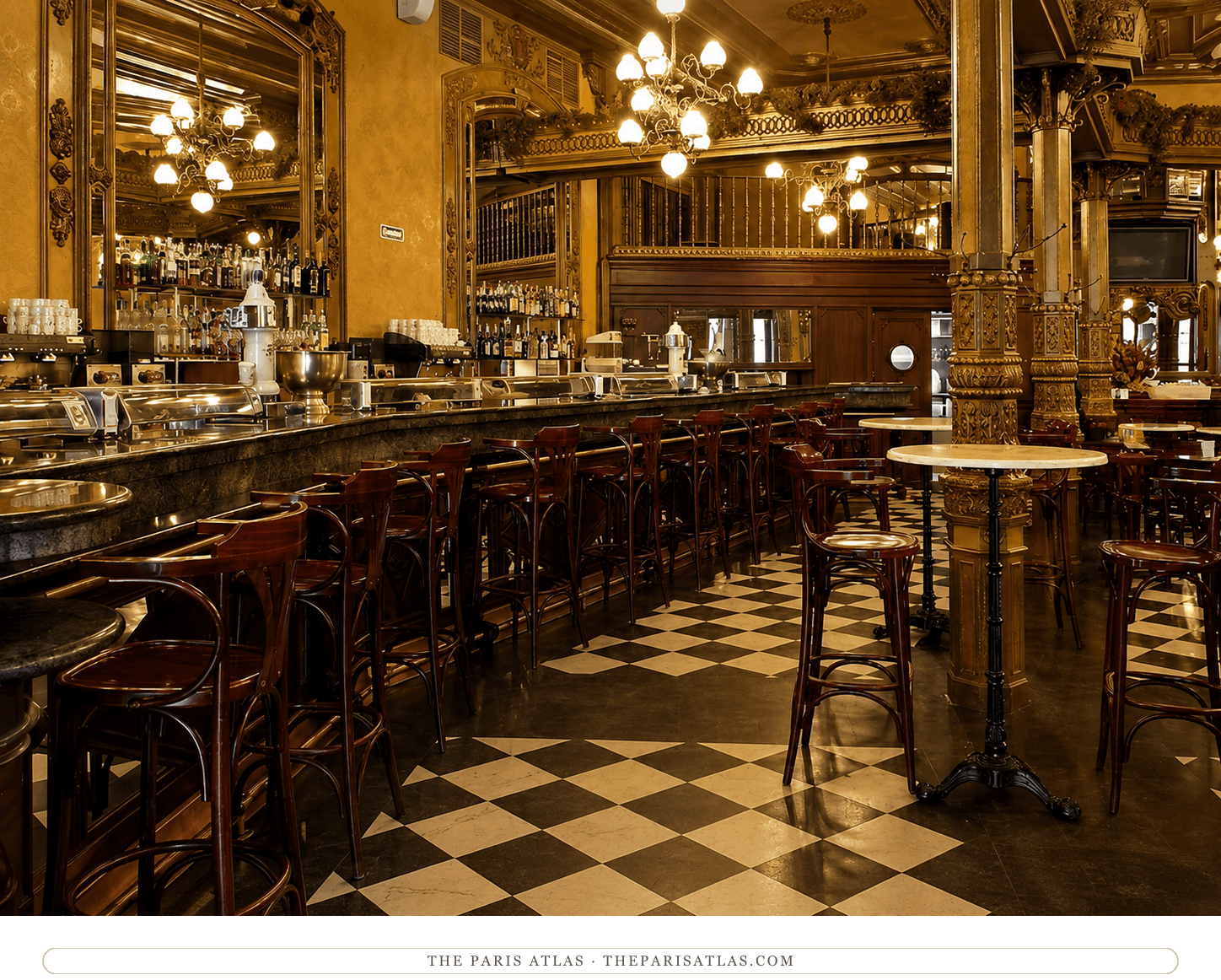
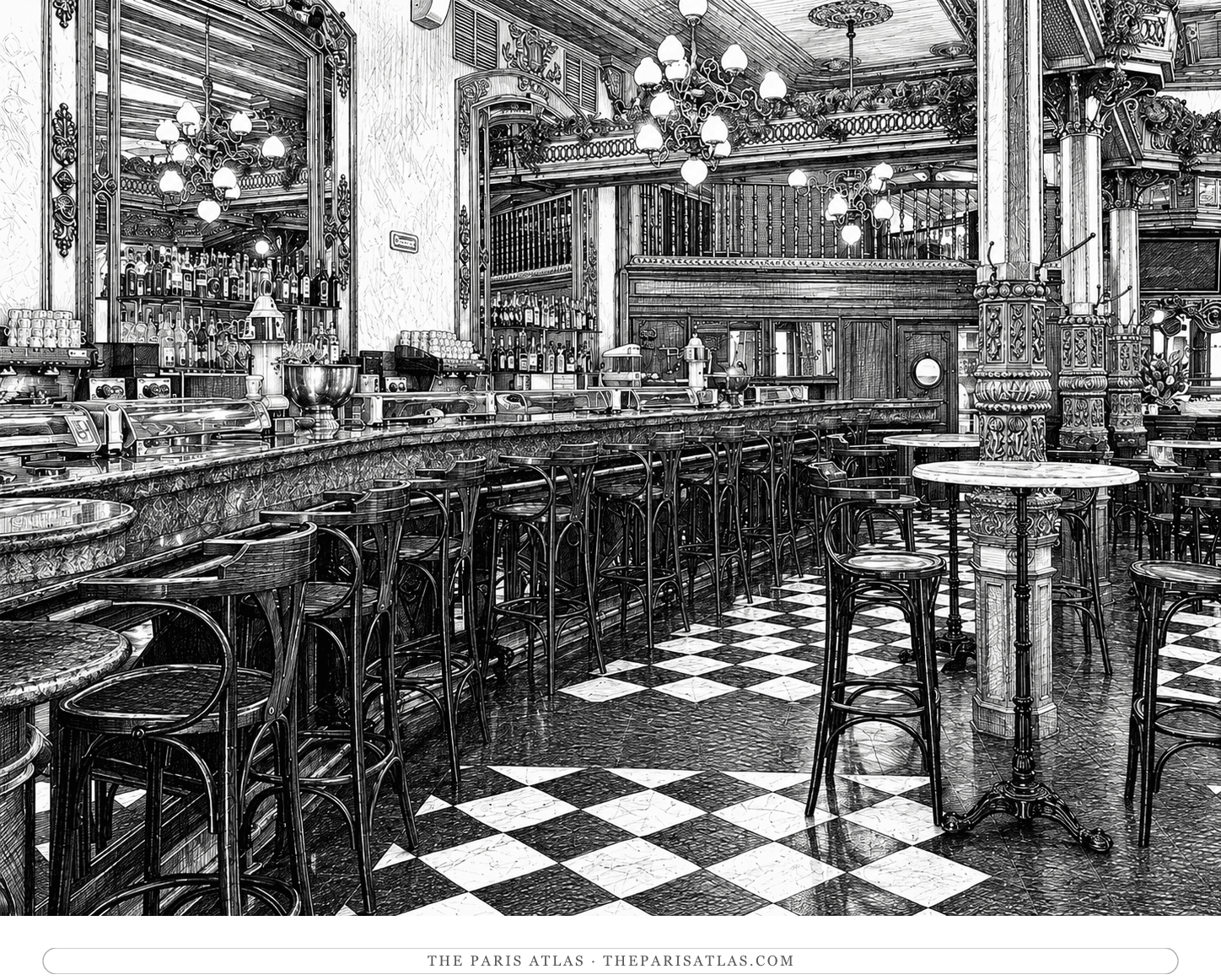
Café Iruña opened on 2 July 1888, on the eve of San Fermín, under the arcade on the east side of the Plaza del Castillo. Pamplona's city council records it as the first establishment in the city lit by electric light, which in 1888 was reason enough to fill the arcade outside with people wanting to look at it. It has traded on the same square ever since.
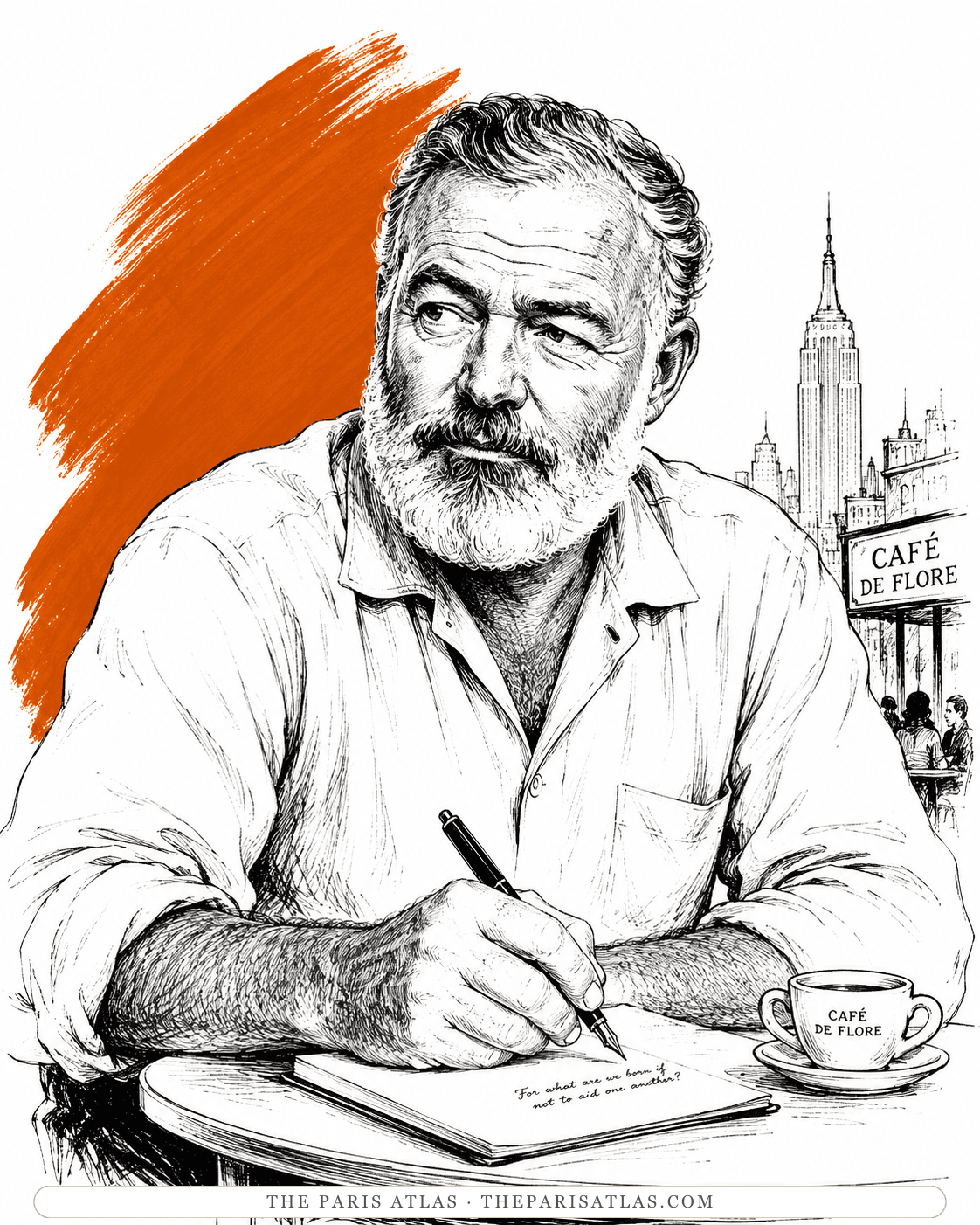
Ernest Hemingway uses it more than any other room in The Sun Also Rises, his 1926 novel of expatriates following the bullfights from Paris to Pamplona. The Iruña is named twelve times across five chapters, always as the place the group returns to: they walk under the arcade to it on arriving in Pamplona, they arrange to meet there at noon, and they are still there when the fiesta has worn everyone down. Hemingway gives it the novel's most unhurried sentence about sitting still — coffee, wicker chairs, the cool of the arcade, the big square outside.
The tables in the book are white wicker, set out past the arcade to the edge of the street, and the narrator, Jake Barnes, spots the others at them from across the square: Lady Brett Ashley and Mike Campbell in Basque berets, Robert Cohn bare-headed in his spectacles. It is the novel's standing arrangement, and the reason the café can be read as a character rather than a backdrop.
The café still occupies the arcade at number 44. Inside, a corner is given over to Hemingway, with a life-size bronze of him leaning on the bar — a commemoration of the habit rather than a preserved table, and the café says as much itself.





 View source