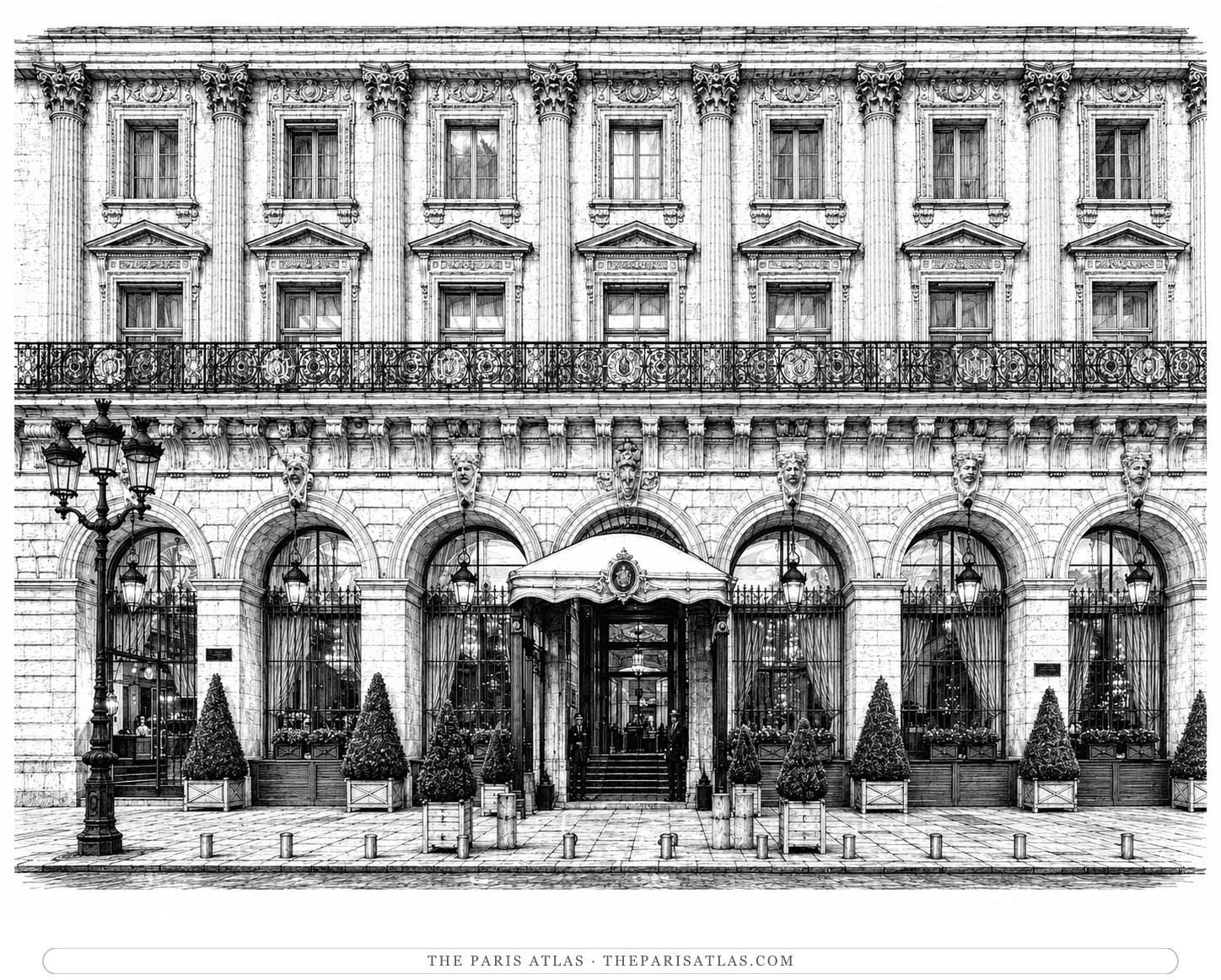

Setting of the story
The Sun Also Rises
The Right Bank at its grandest: Jake writes letters on the house stationery, then heads down to the bar for a Jack Rose cocktail with George the barman.
Stay in Paris
Stay on place de la Concorde in a hotel with rooms, suites, restaurants, and a spa. The room categories below differ in space and occupancy.
Explore the history of Hôtel de Crillon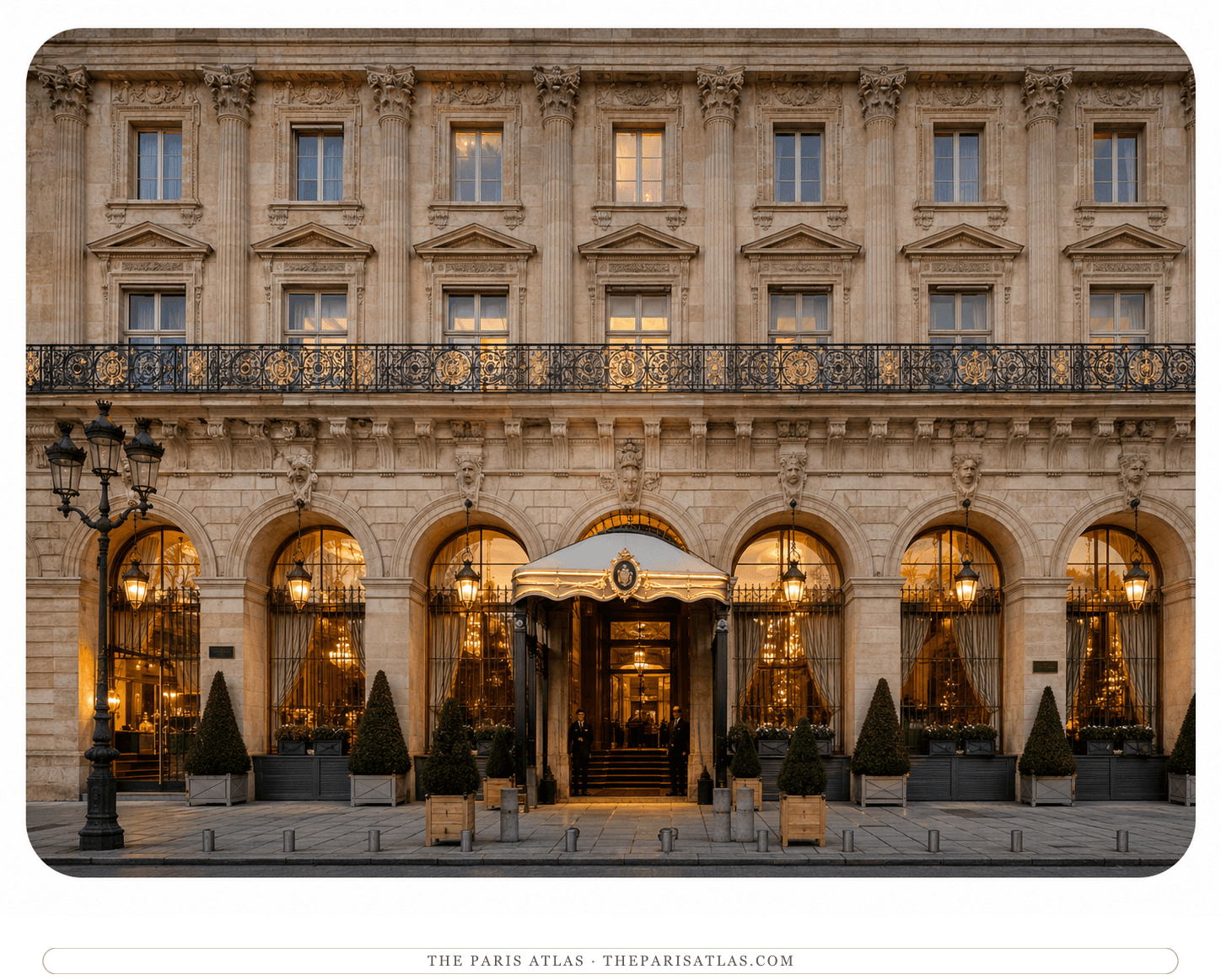
The hotel today
Open for stays
Accommodation in Paris.
Choose your room
Compare the options, then check your dates with the hotel for availability, current rates, and the exact room configuration.
One bed and a marble bathroom.
One bed, with a city or courtyard outlook depending on the room.
An extra bed is subject to availability; confirm the arrangement before booking.
More space than the room categories. An extra bed is subject to availability.
During your stay
The hotel lists Jardin d’Hiver, Nonos par Paul Pairet, and Les Ambassadeurs among its dining and drinking spaces.
Signature and family suites are also available. Check the hotel’s full selection for the layout and occupancy you need.
Check dates and room options on the hotel’s official website. Confirm breakfast, additional charges, and cancellation terms for the rate you choose.
+33 1 44 71 16 00The history of this address
The grandest address on the Place de la Concorde — where Jake Barnes, the narrator of Ernest Hemingway's The Sun Also Rises, crosses the river to write letters on impressive stationery and drink a Jack Rose with George the barman.
The building came first and the hotel much later: Ange-Jacques Gabriel designed the colonnaded palace as one of the two matched façades framing the rue Royale on Louis XV's great square, finished in 1758 and passed to the Crillon family. It opened as a luxury hotel in 1909 and entered history ten years later, when the American delegation to the Paris Peace Conference made it their headquarters — for a season in 1919, the Crillon was effectively America's address in Europe.
That is precisely the register the novel uses it in. The Crillon is the Right Bank of money and appointments, as far from the saucer-stacked terraces of Montparnasse as Paris allows. Jake Barnes turns up at five o'clock, kills time writing letters — reasoning that Crillon stationery can only help them — and goes down to the bar for a Jack Rose mixed by George, the barman fashionable memoirs of the decade mention by first name, as if everyone knew him. Then a taxi back across the Seine, barges riding high on the current, to the Select and the other life.
The Crillon has spent a century being exactly what the novel needed it to be: the fixed point of Right Bank grandeur. It closed in 2013 for a four-year restoration and reopened in 2017 under Rosewood; the Gabriel façade is protected, the bar still pours, and the stationery is presumably still worth borrowing.
At five o’clock I was in the Hotel Crillon waiting for Brett. She was not there, so I sat down and wrote some letters. They were not very good letters but I hoped their being on Crillon stationery would help them.
Gabriel's palace completed on the new royal square.
Opens as the Hôtel de Crillon.
The American peace delegation takes over the house during the conference at Versailles.
Hemingway sends his narrator, Jake Barnes, to its bar for a Jack Rose in The Sun Also Rises.
Reopens after a four-year restoration.
Still the grandest address on the square.
Setting of the story
The Right Bank at its grandest: Jake writes letters on the house stationery, then heads down to the bar for a Jack Rose cocktail with George the barman.
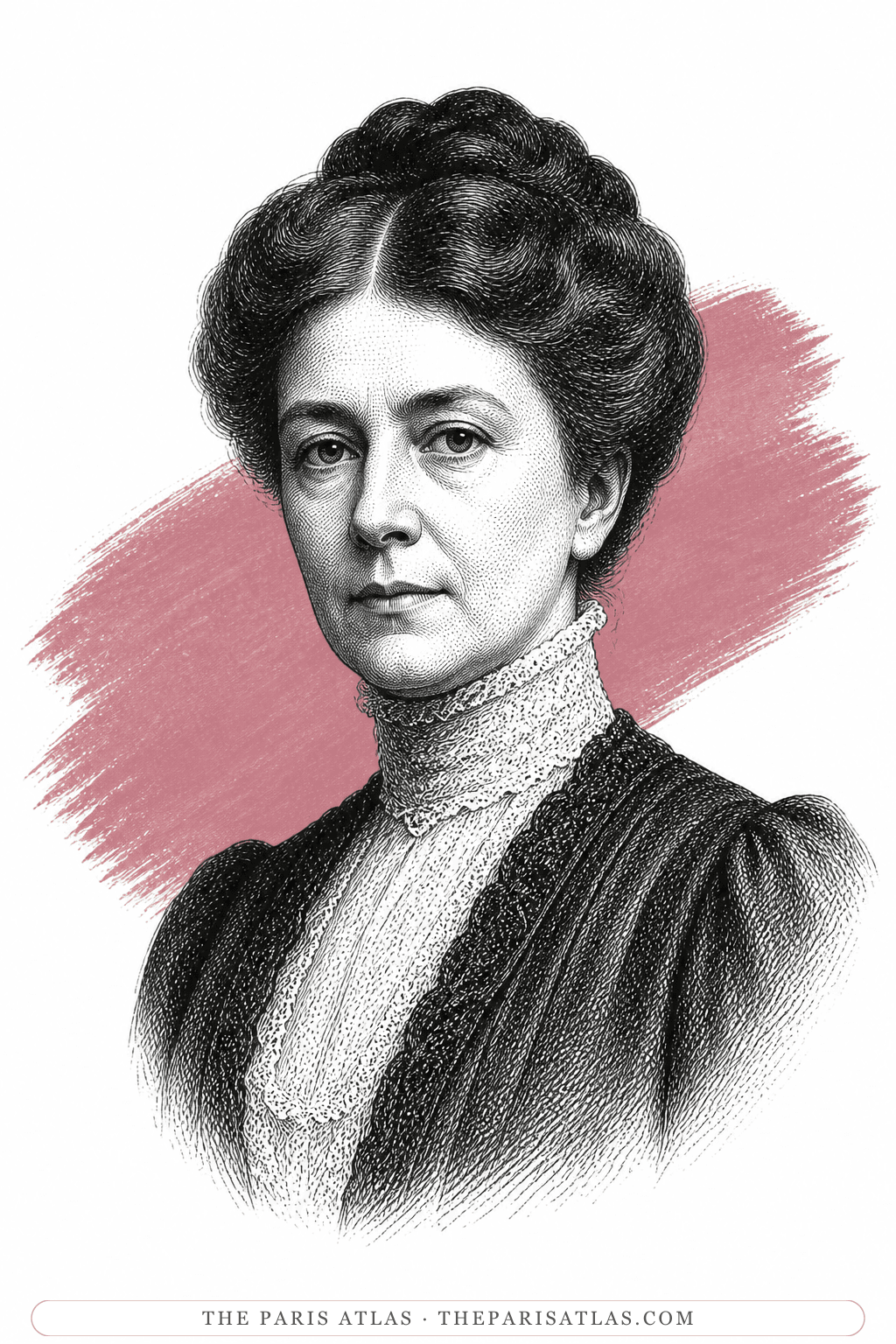
Frequented by · 1909
Wharton used the Crillon regularly and booked a room there in 1909. Biographical accounts connect the hotel with her work on The Custom of the Country.
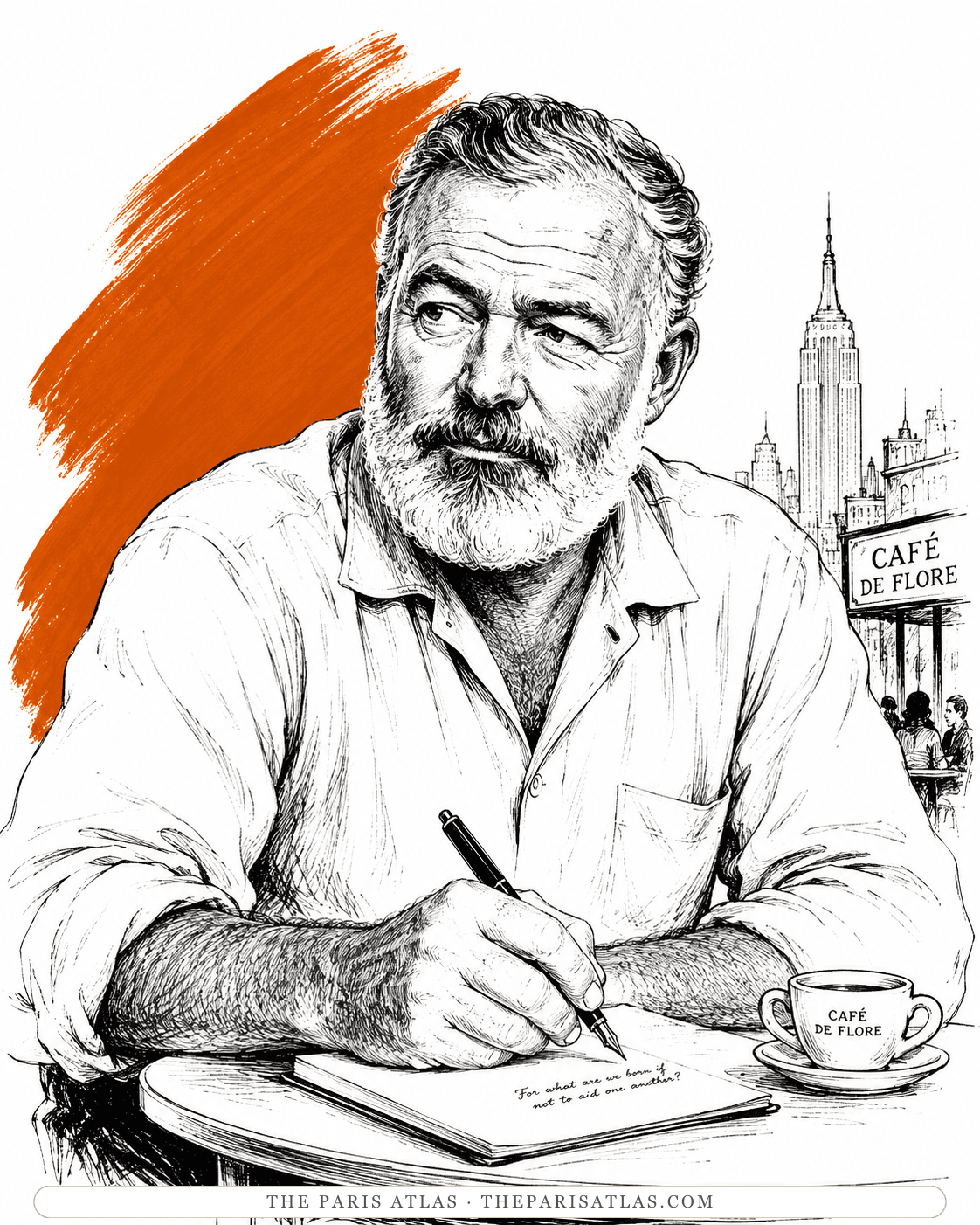
Ernest Hemingway wrote about Hôtel de Crillon in The Sun Also Rises.
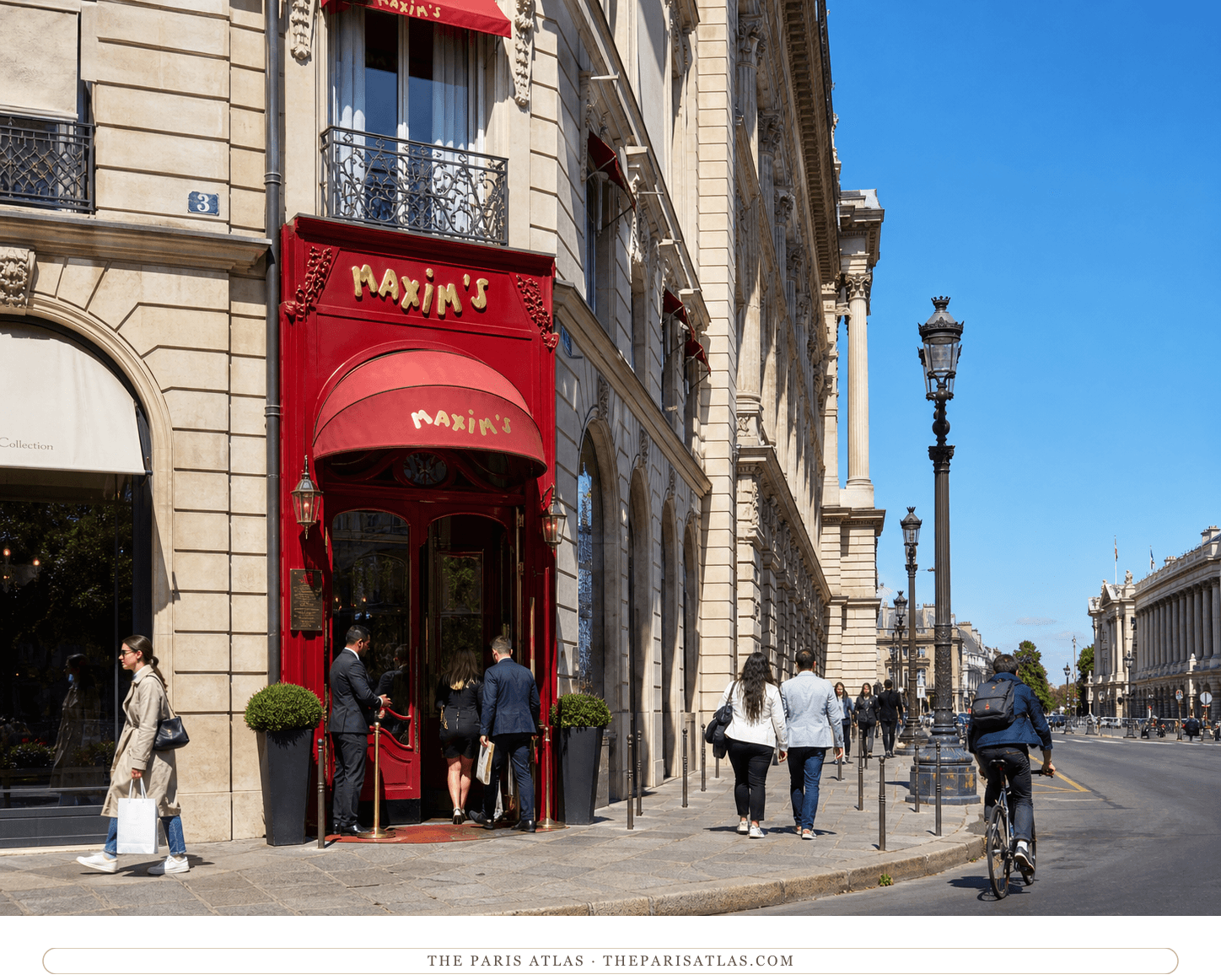
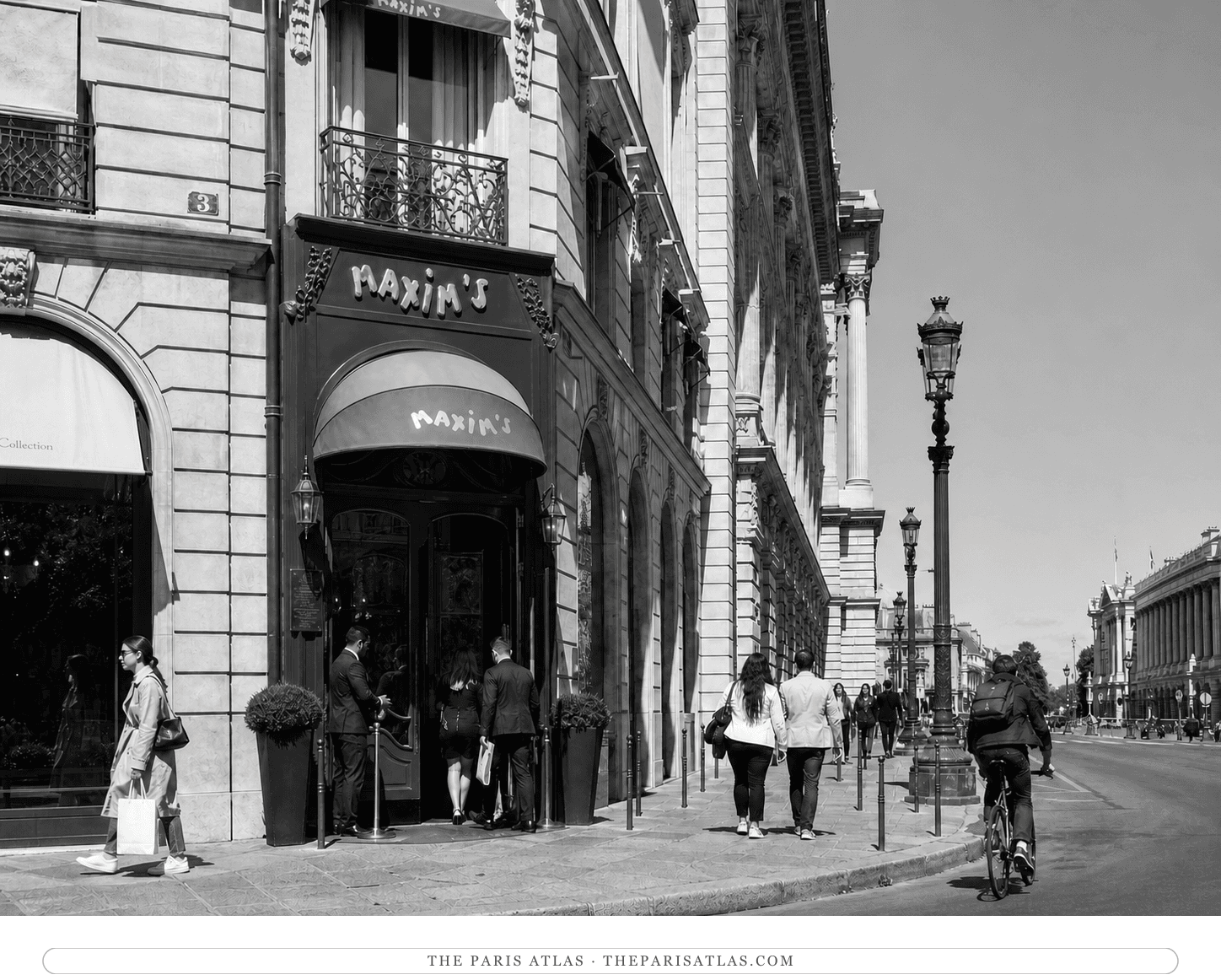
The Belle Époque restaurant on the rue Royale, opened in 1893 and still trading behind the same Art Nouveau interior. The City of Paris names it among the places Marcel Proust went out to with friends — a rare Proust address that is still doing exactly what it did.
Visit the place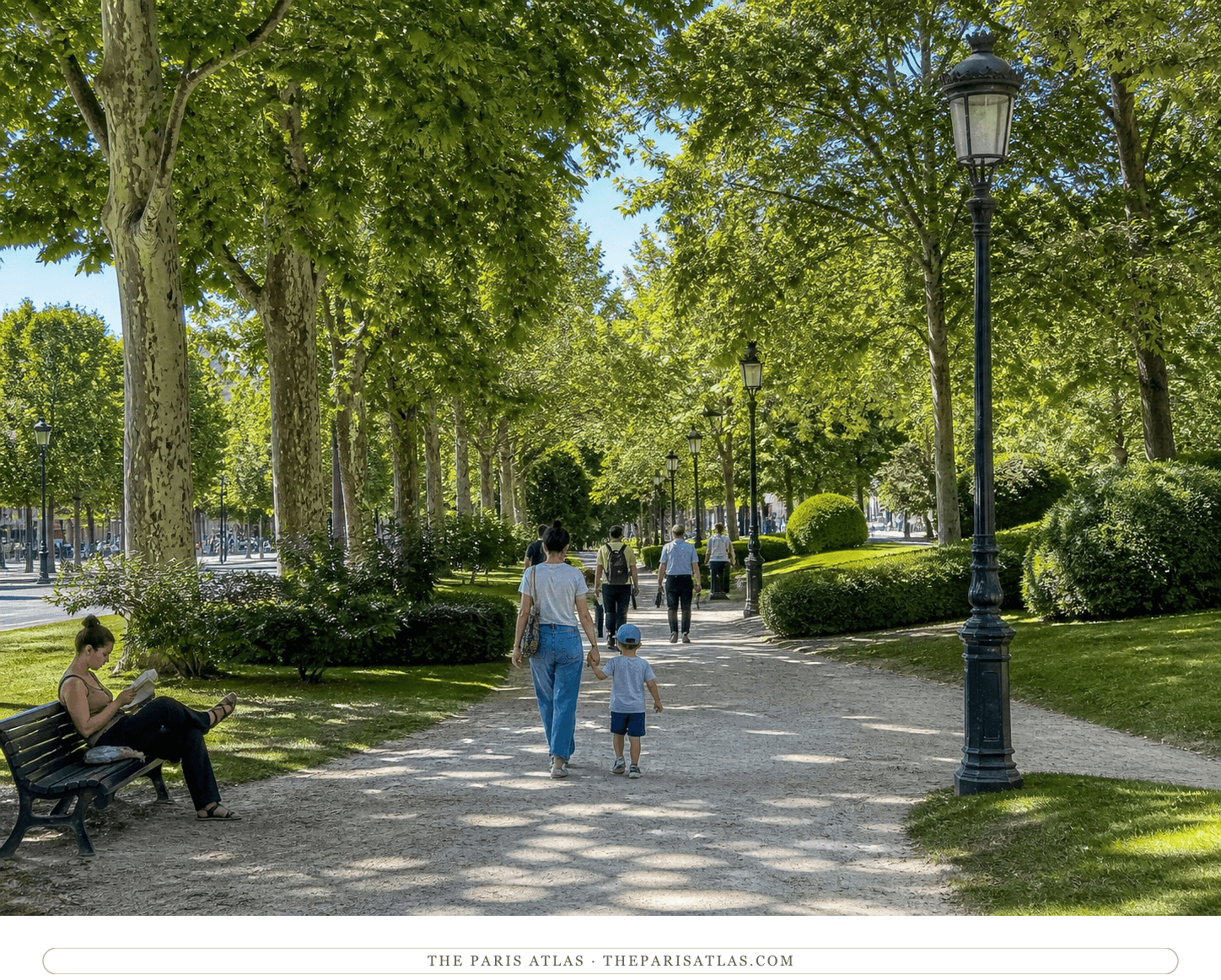
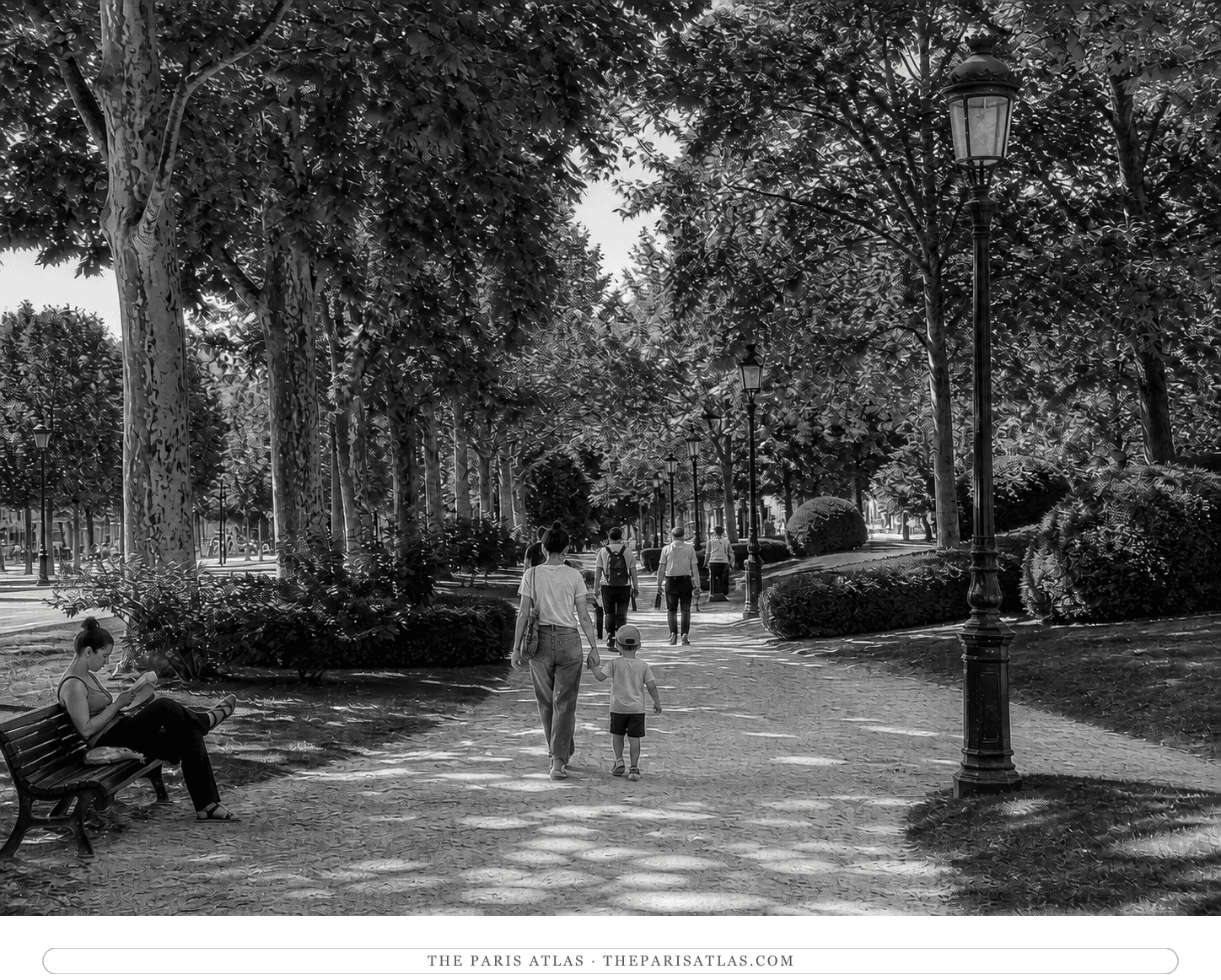
The gardens along the lower Champs-Élysées, between the Rond-Point and the Concorde — where the young Marcel Proust played, and where in July 1886 he met Marie de Bénardaky, his first love and a source for Gilberte in In Search of Lost Time. One of the paths is now officially the Allée Marcel-Proust.
Visit the place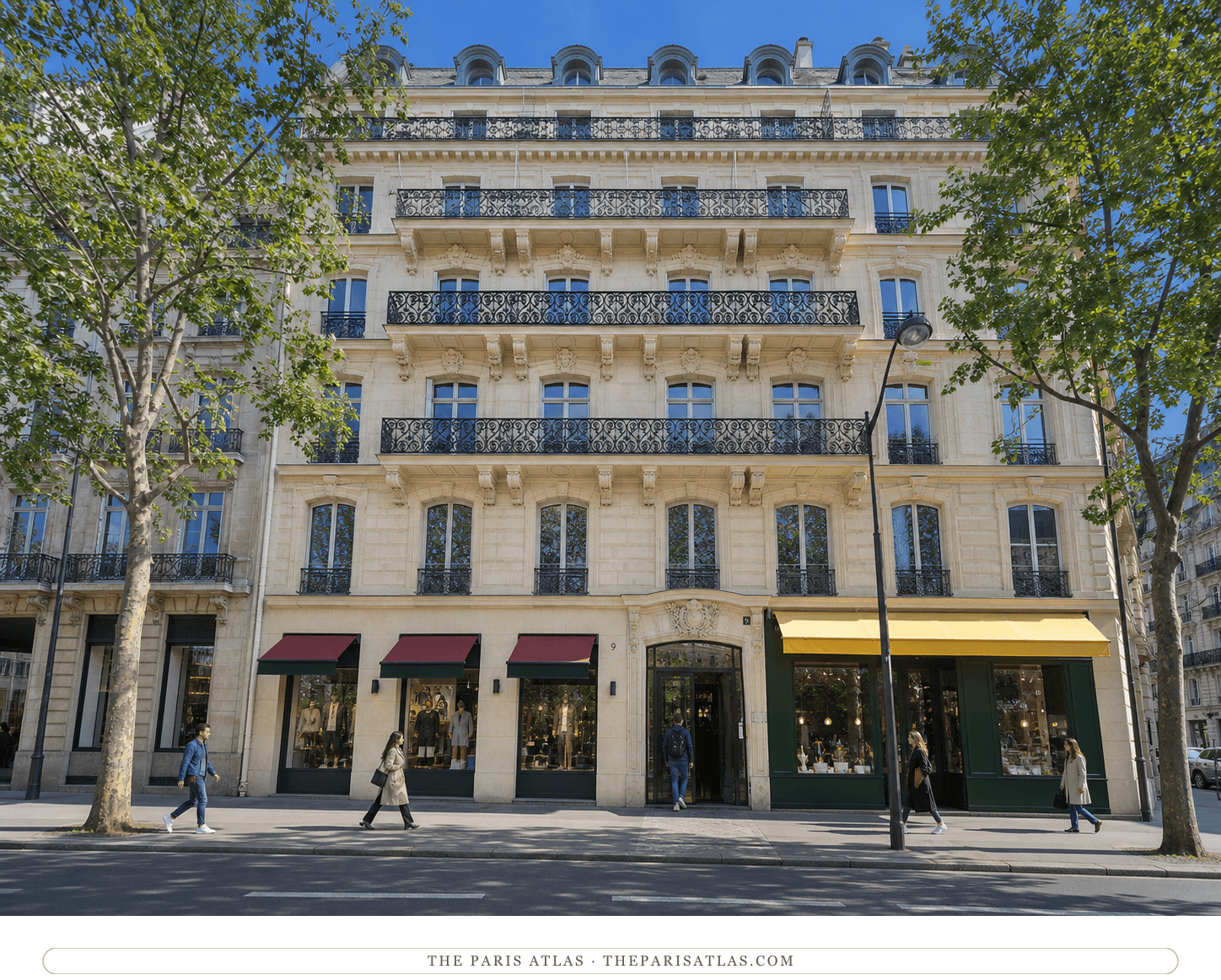
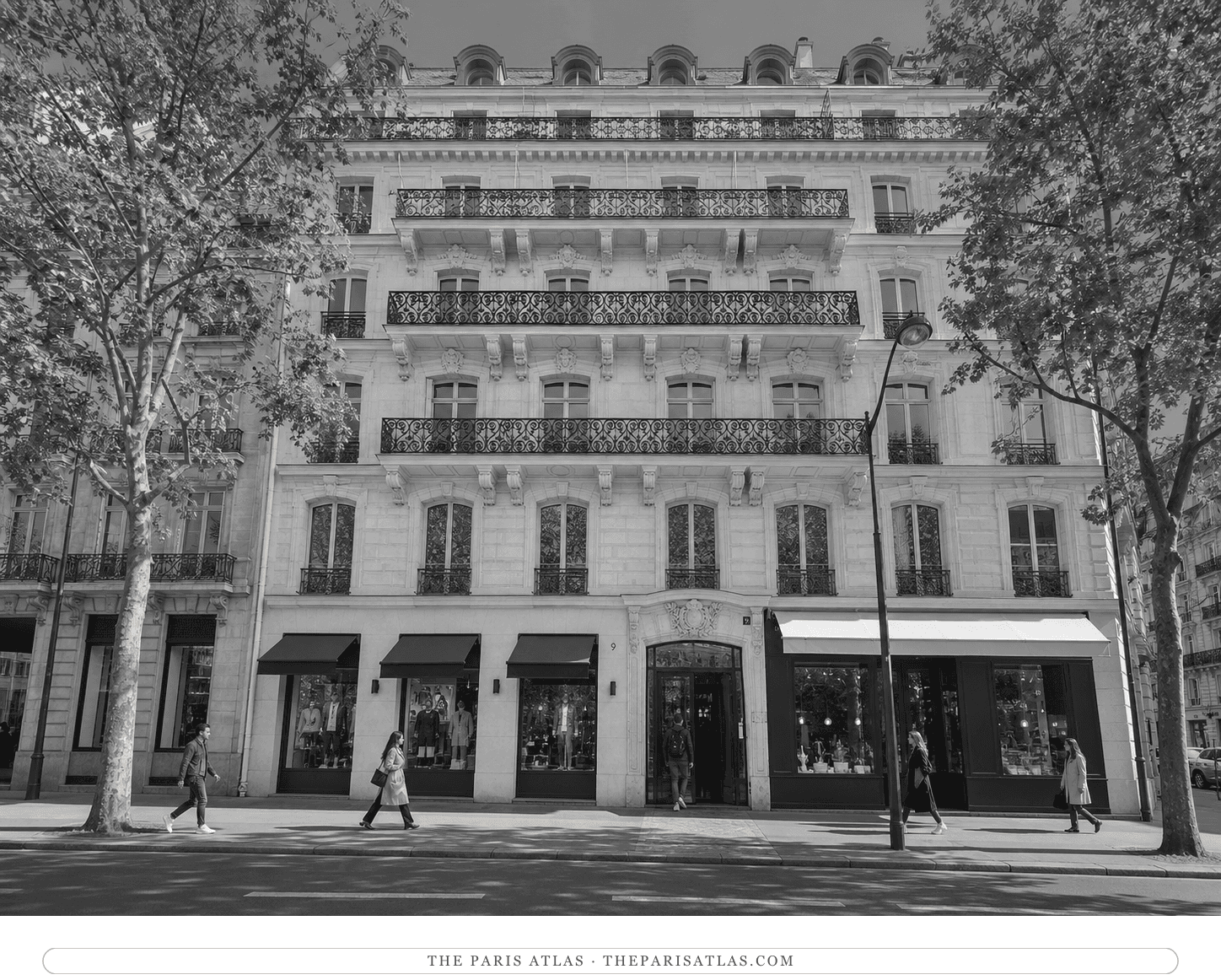
The Proust family flat, where Marcel lived with his parents and his brother Robert for twenty-seven years — effectively his whole childhood, adolescence and early adulthood. The society he spent the rest of his life reconstructing from memory is the one he learned here.
Visit the place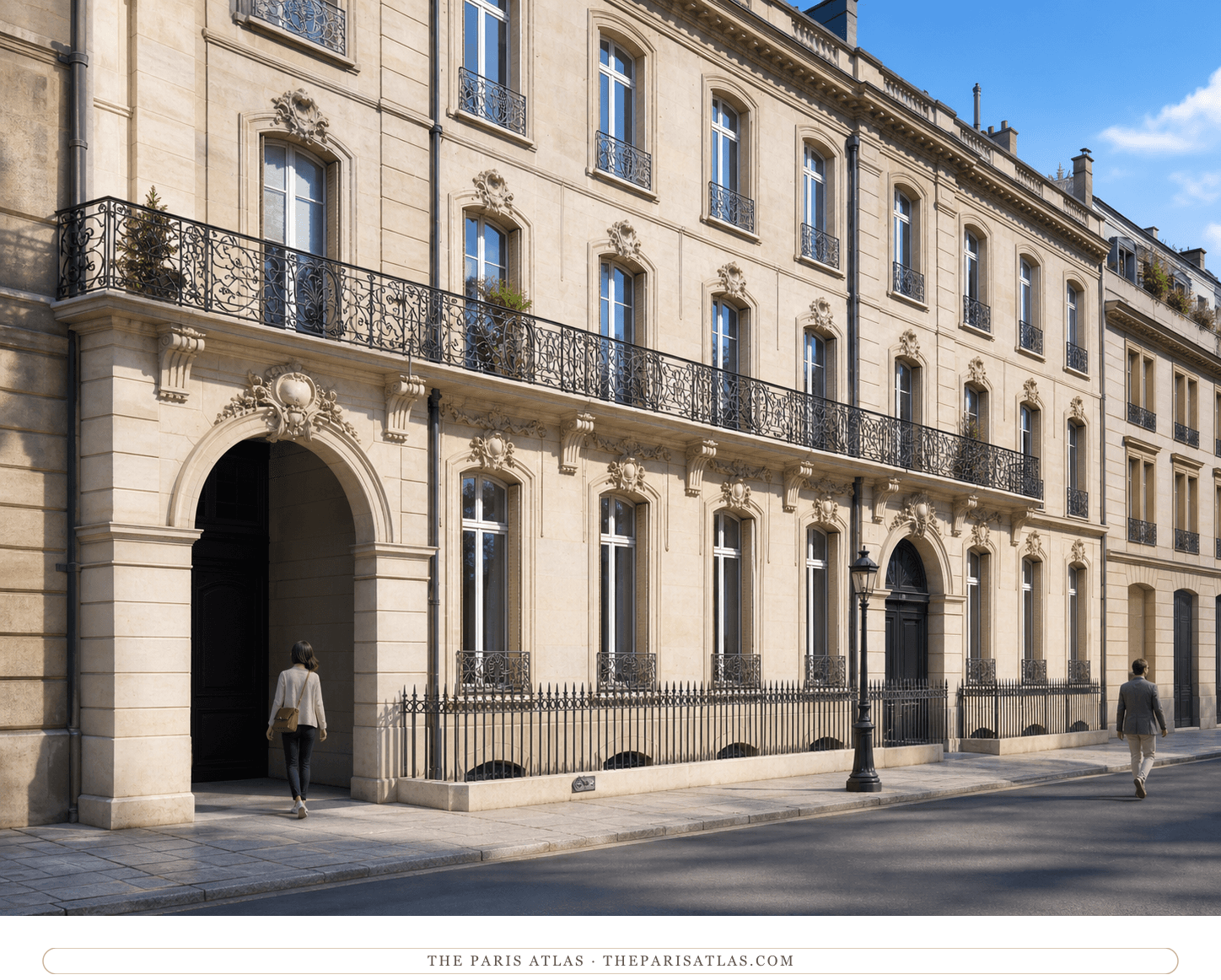
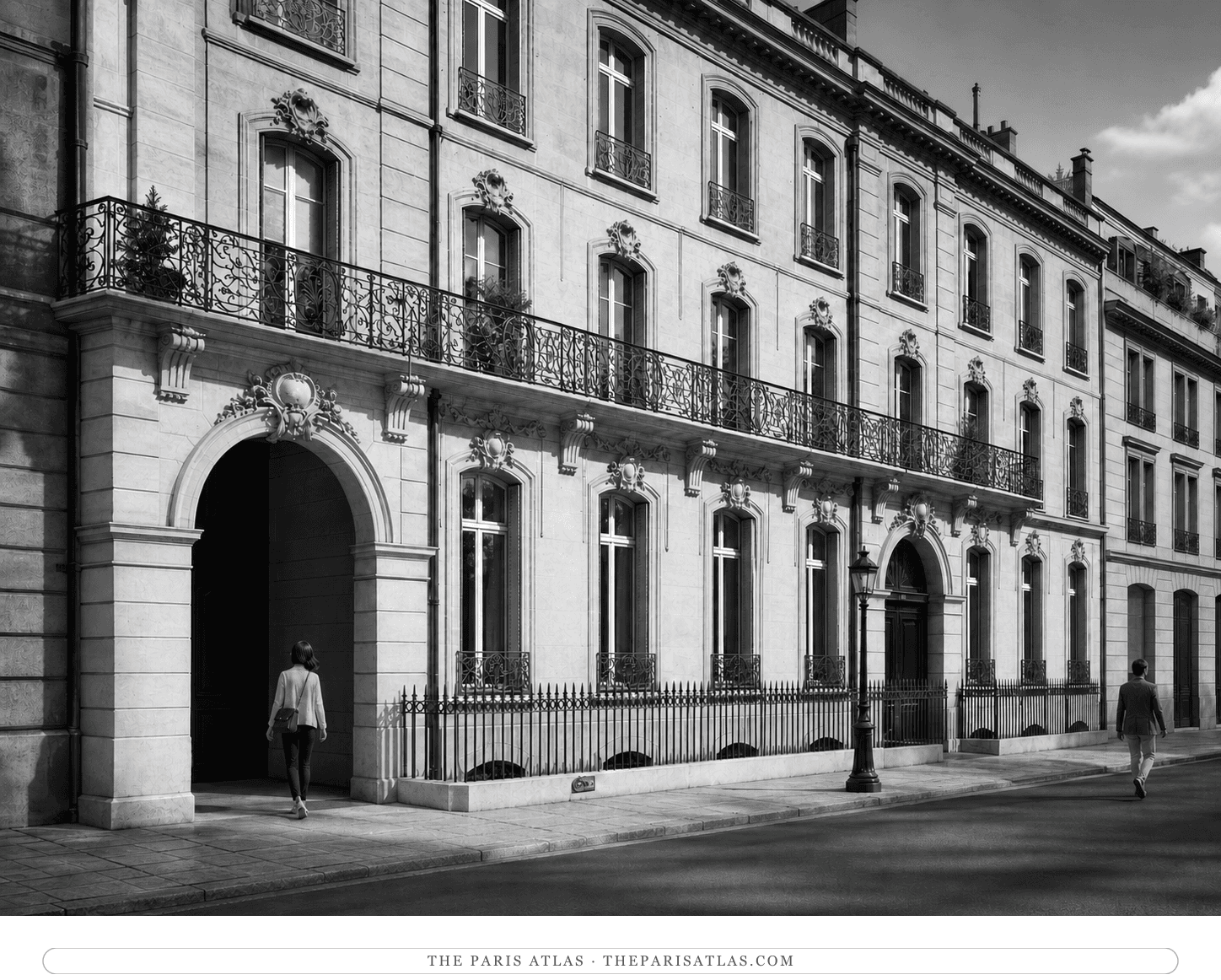
The surviving mansion that housed the American Library in Paris from 1920 to 1936—a center of transatlantic reading and literary life where Langston Hughes unsuccessfully asked for work.
Visit the placeThe sources below include histories, archival materials, scholarly research, and official records that informed this page. They document Hôtel de Crillon, the people connected to it, and its place in Paris.


Primary text included as part of the documented record for Hôtel de Crillon.
Web source consulted for documented facts and historical context presented on the Hôtel de Crillon page.

Map data used to verify addresses, geographic coordinates, and the placement associated with Hôtel de Crillon.
Official record used to verify names, dates, institutional details, or other factual information on this page.
These references provide the documented foundation for this page's history and context. Claim-level citations remain attached to the specific claims they support.
 Explore more resources
Newsletter
The cafés, studios, and walk-up flats where the work was made — one story from the map in every letter.