The Paris AtlasCharting the artists, works, and places worth returning to.
  • Author
· American · 1862–1937

Edith Wharton

American novelist of The Age of Innocence and The House of Mirth, who left New York for Paris in 1907, kept an apartment on the rue de Varenne in the Faubourg Saint-Germain — the aristocratic quarter on the Left Bank — for thirteen years, ran refugee charities through the First World War that earned her the Légion d'honneur, France's highest national honour, in 1916, and became, in 1921, the first woman awarded the Pulitzer Prize, America's foremost literary award, for a novel.

Details

Lived
1862–1937
Born
24 January 1862
Birthplace
New York City
Birth name
Edith Newbold Jones
Died
11 August 1937 · aged 75
Place of death
Saint-Brice-sous-Forêt, France
Nationality
American
Profession
Novelist and short-story writer
Major works
The House of Mirth, Ethan Frome, The Custom of the Country, The Age of Innocence
Married
Edward Robbins Wharton · 1885–1913
Roles
Author

About Edith Wharton

Edith Wharton wrote the definitive novels of the New York rich — The House of Mirth, The Custom of the Country, The Age of Innocence — from a rented apartment on the Left Bank of Paris. She was born Edith Newbold Jones in 1862 into exactly the closed Manhattan society she spent her life anatomizing, married badly at twenty-three, and by her mid-forties had done what few American writers of her generation managed: not visited France, but moved into it.

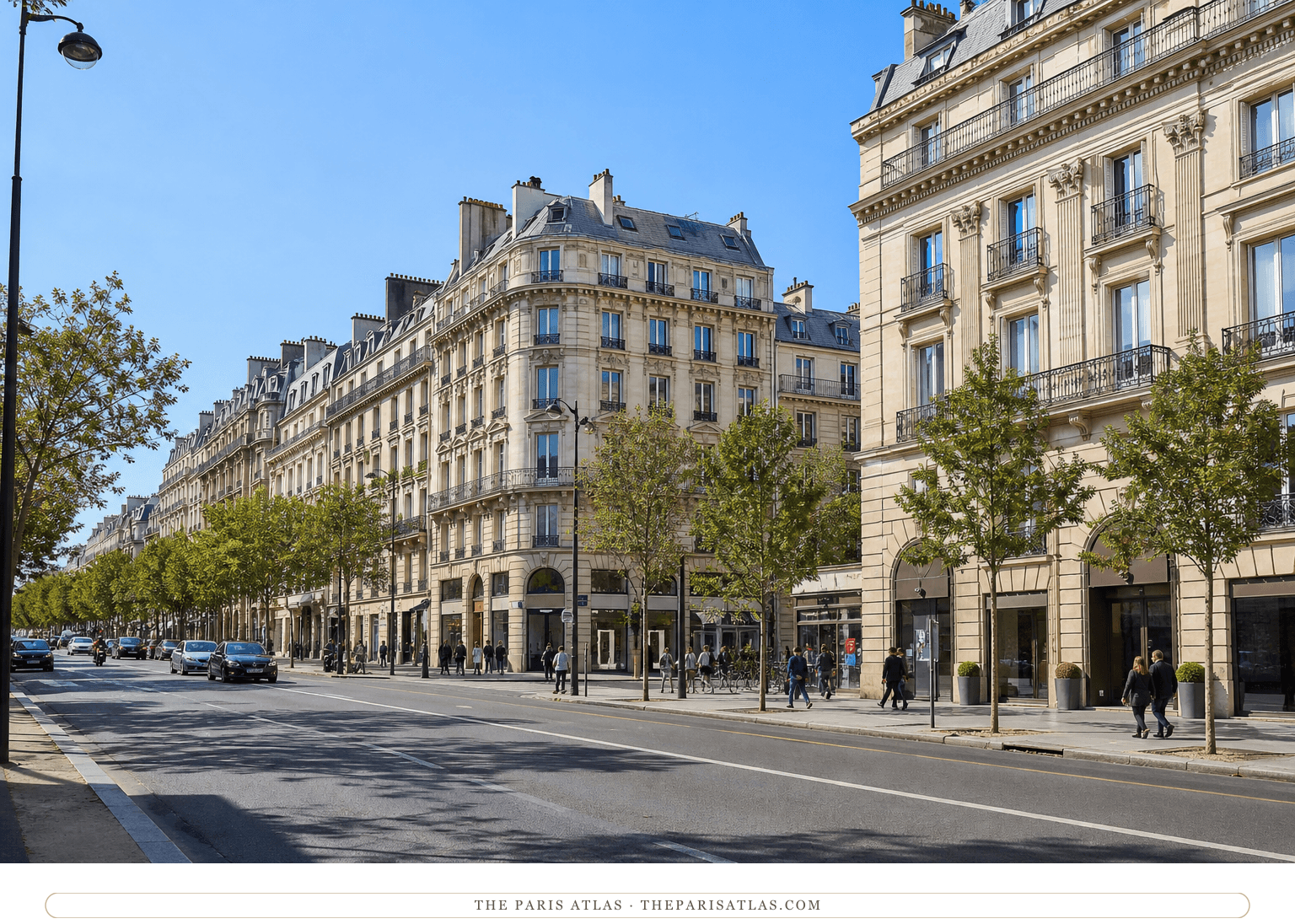
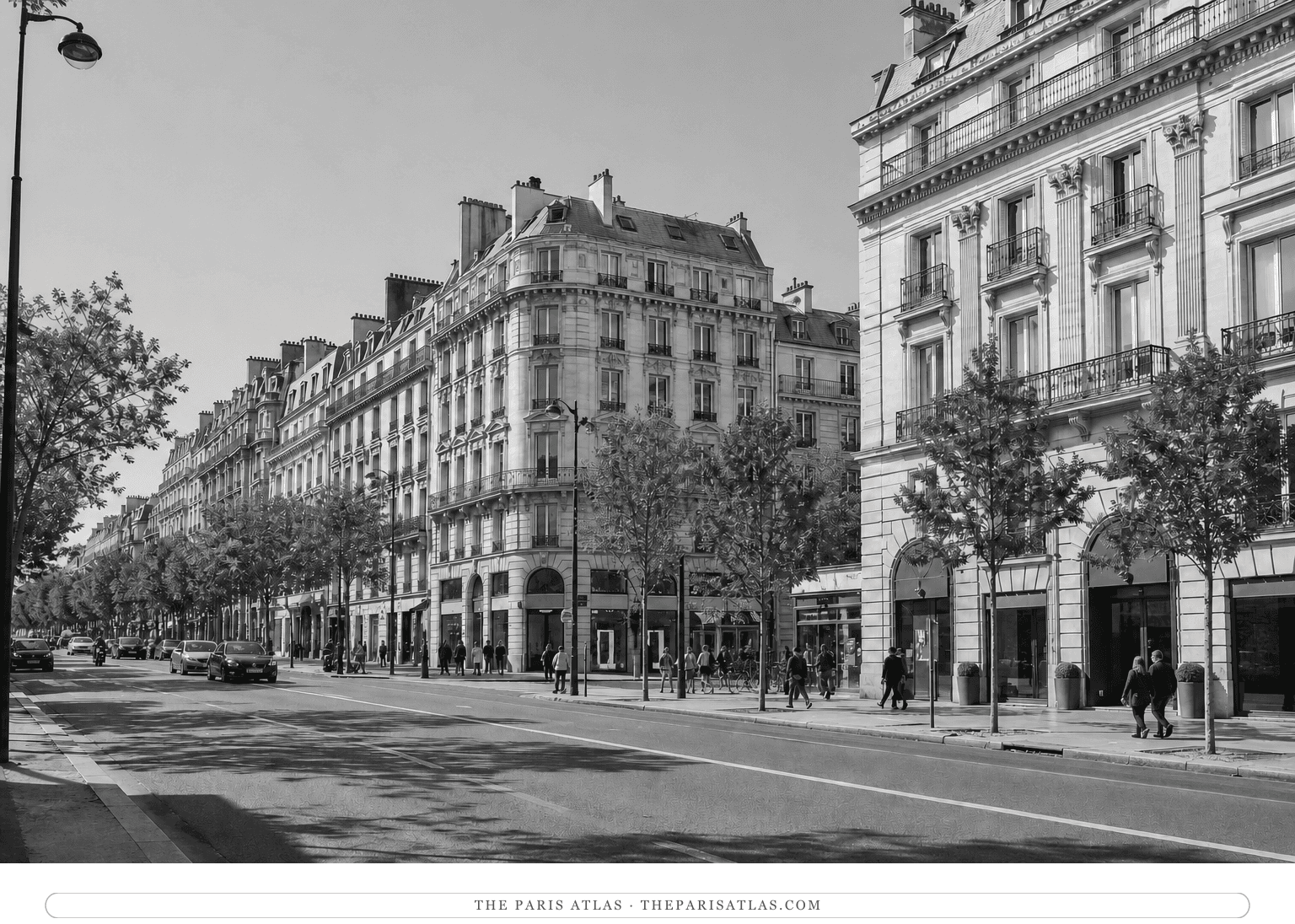
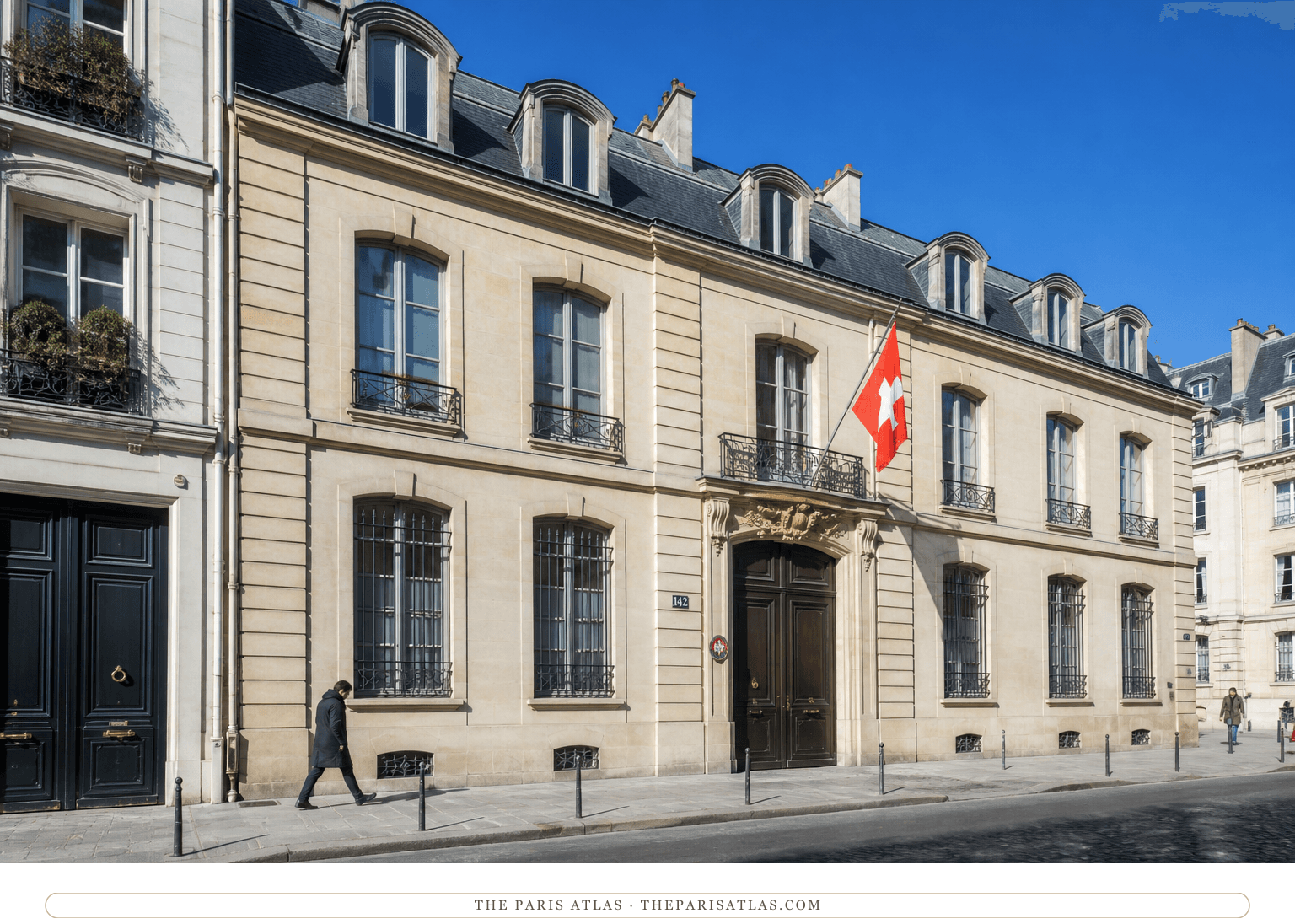
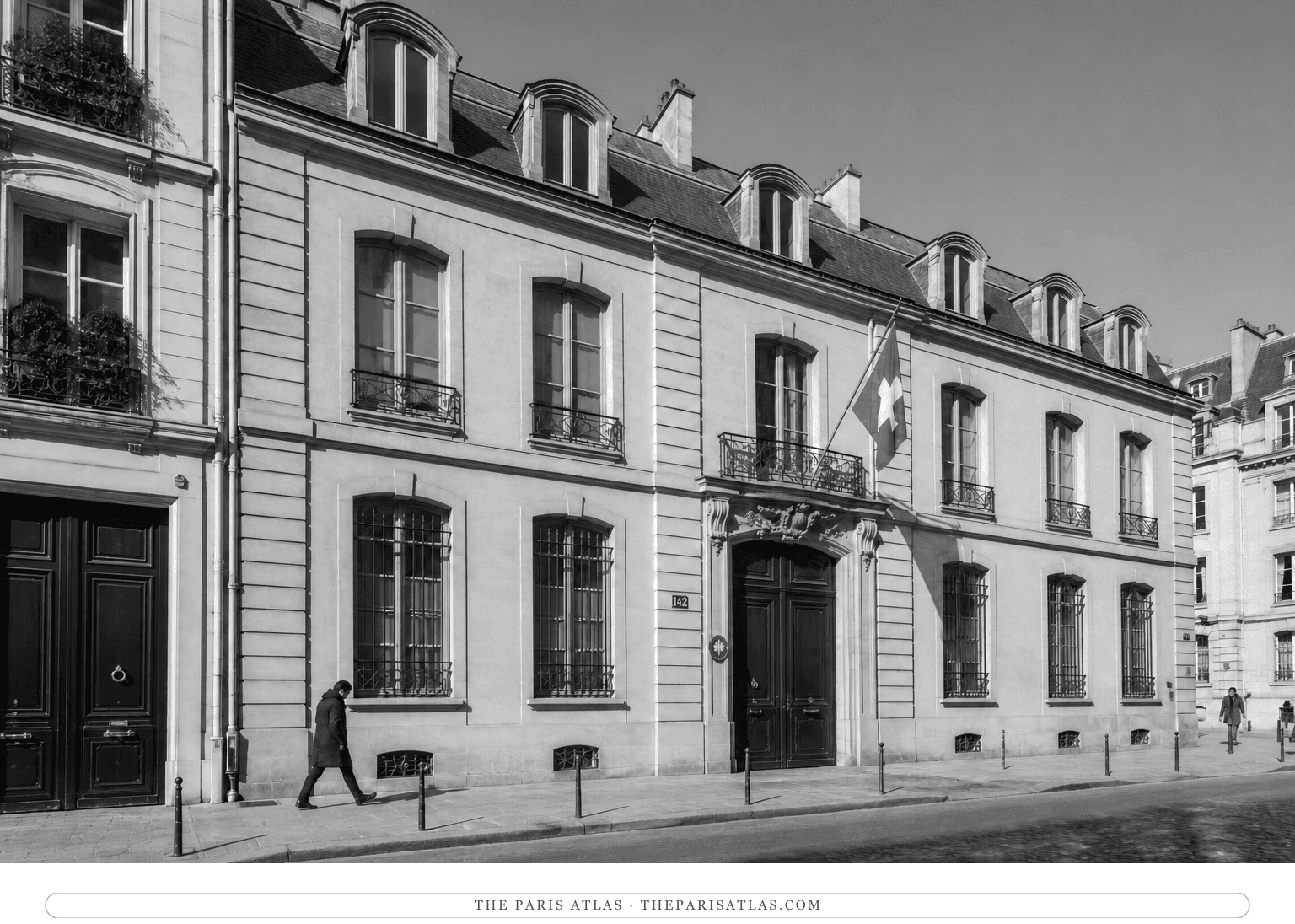
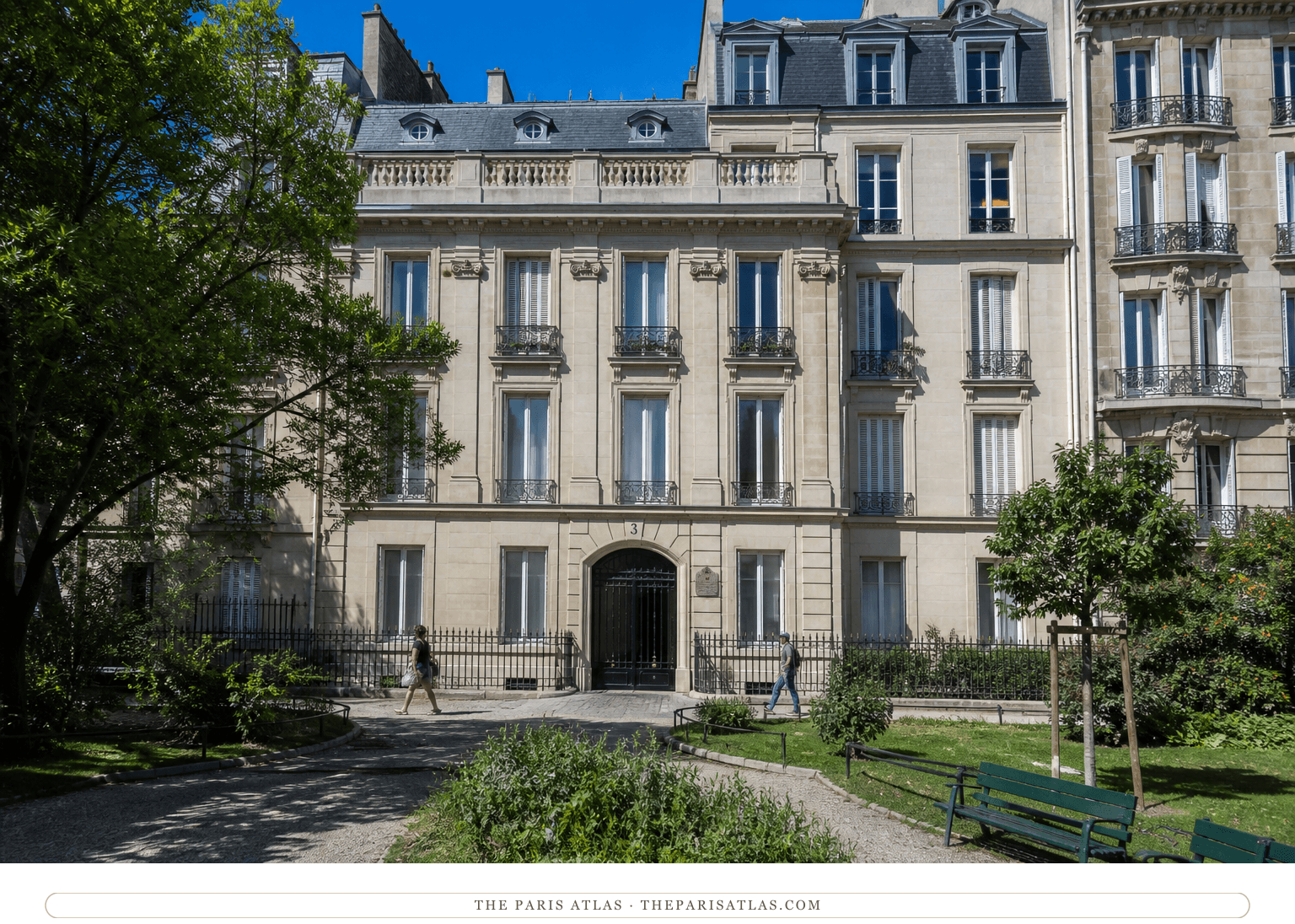
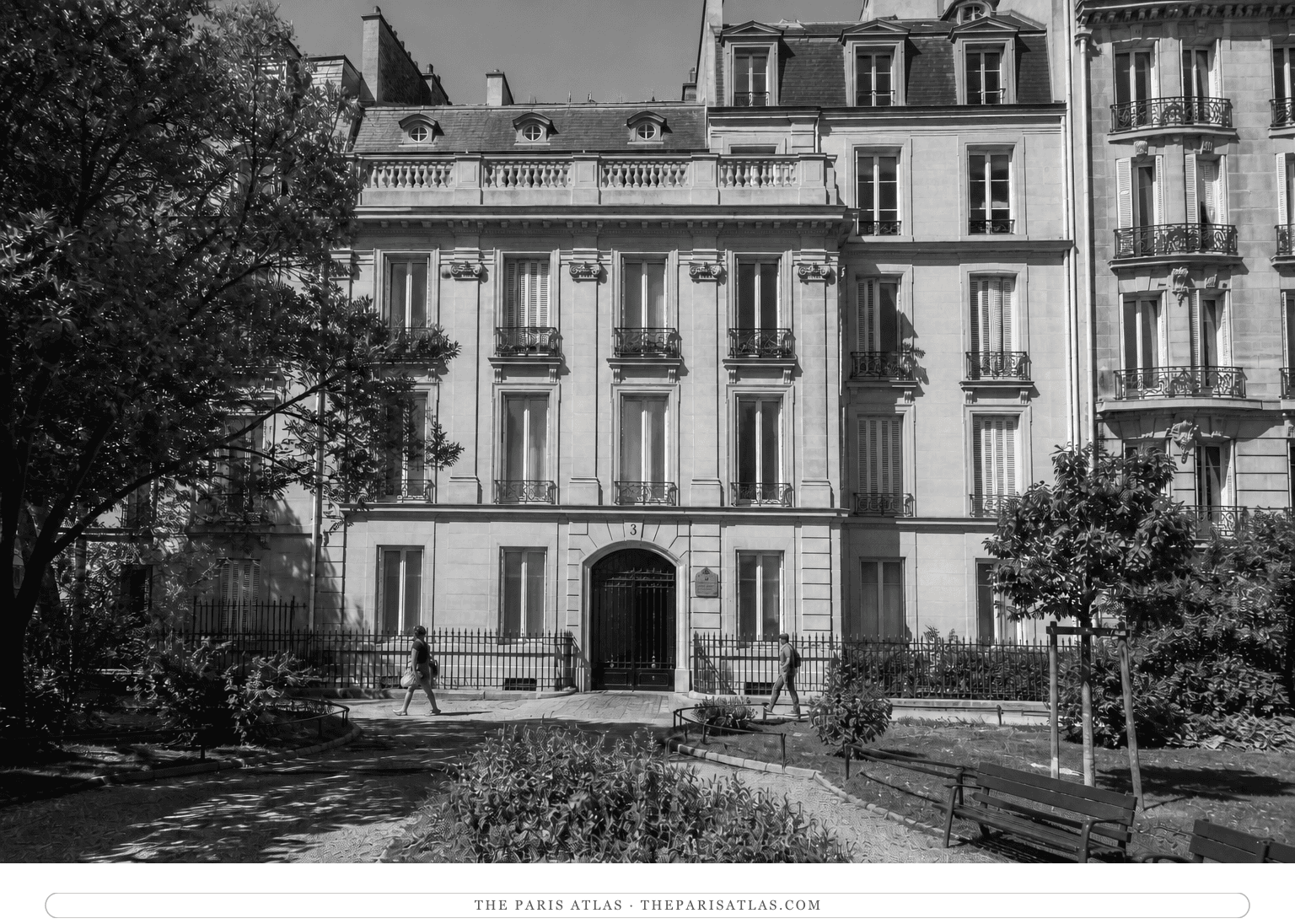
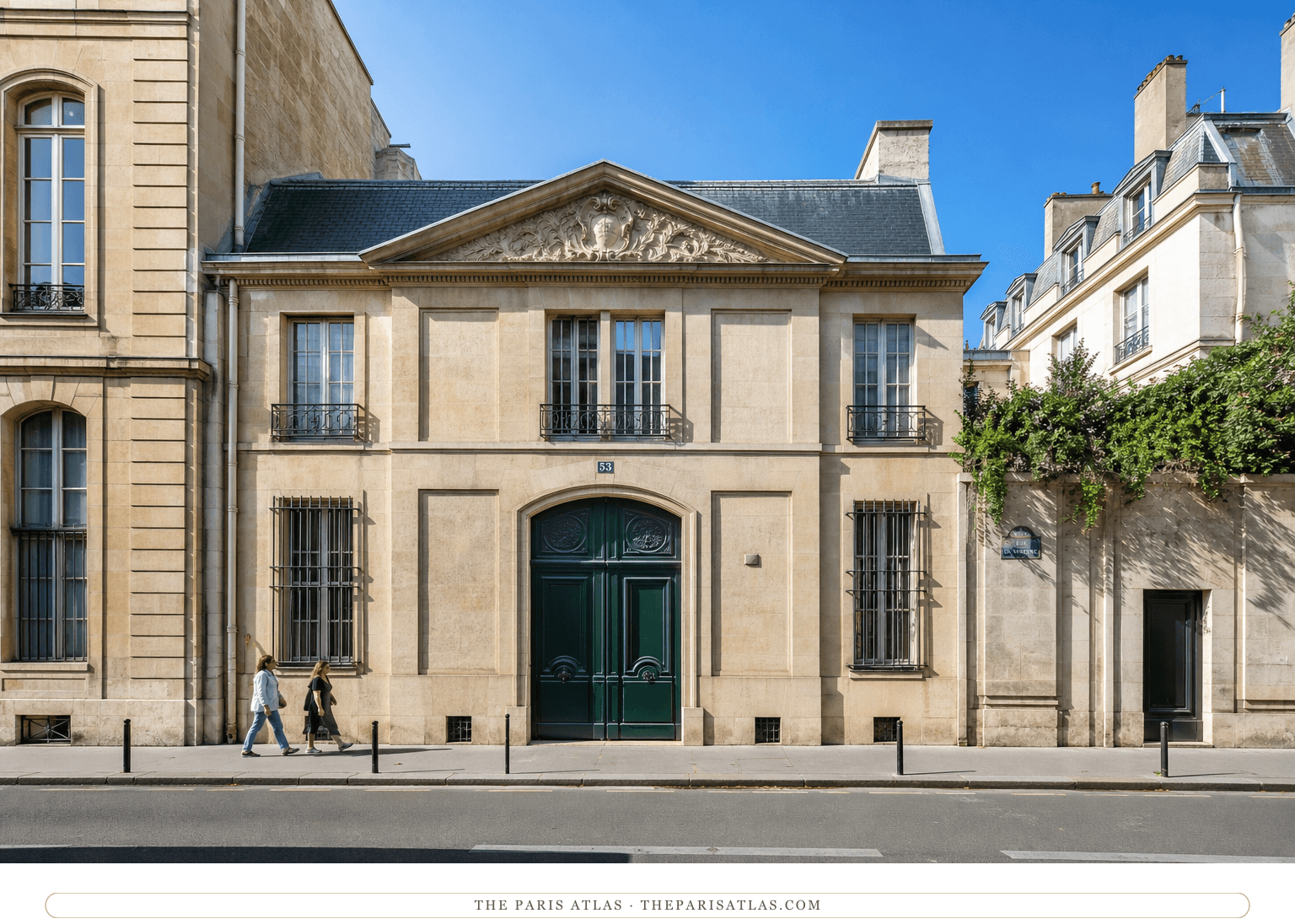
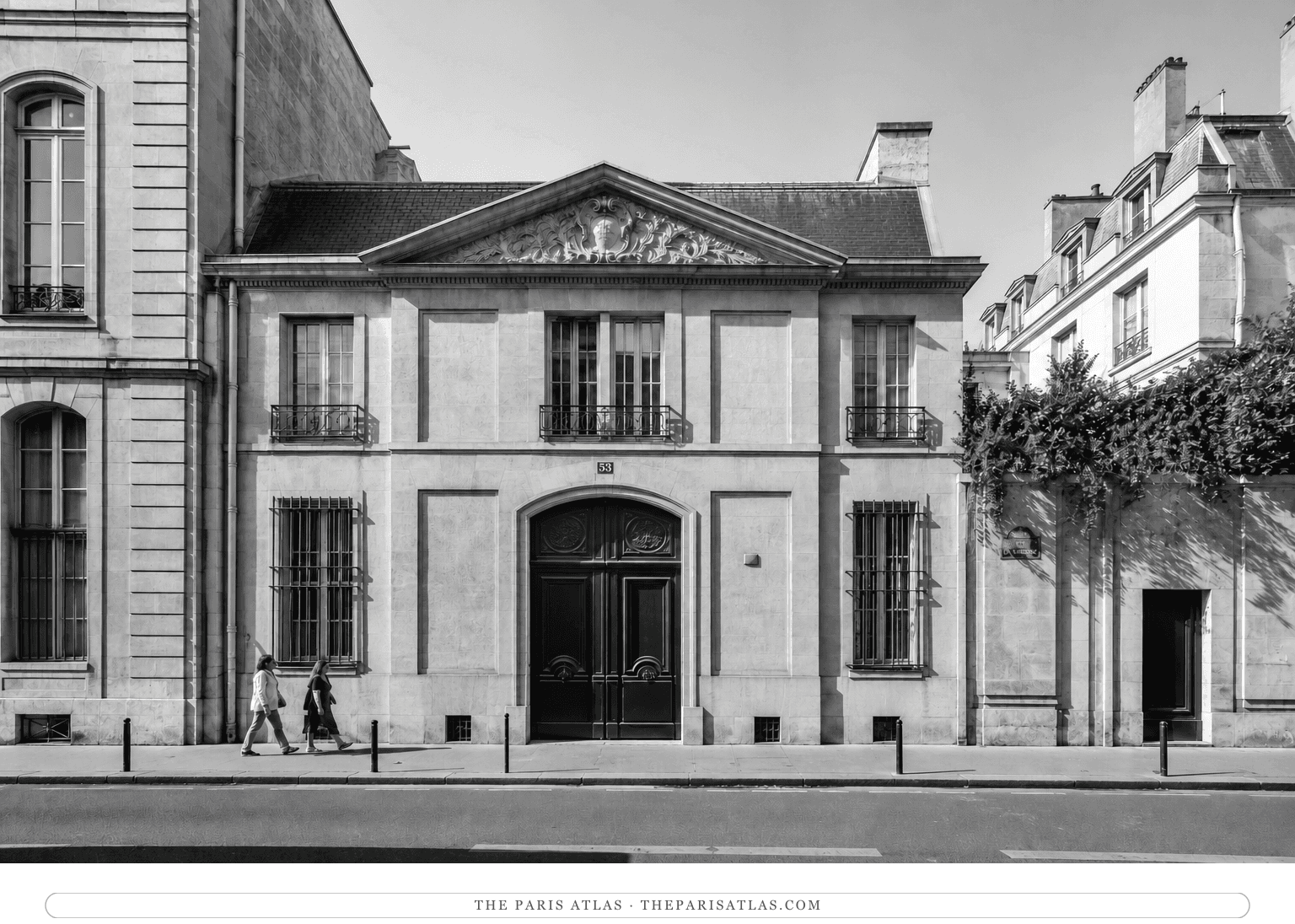
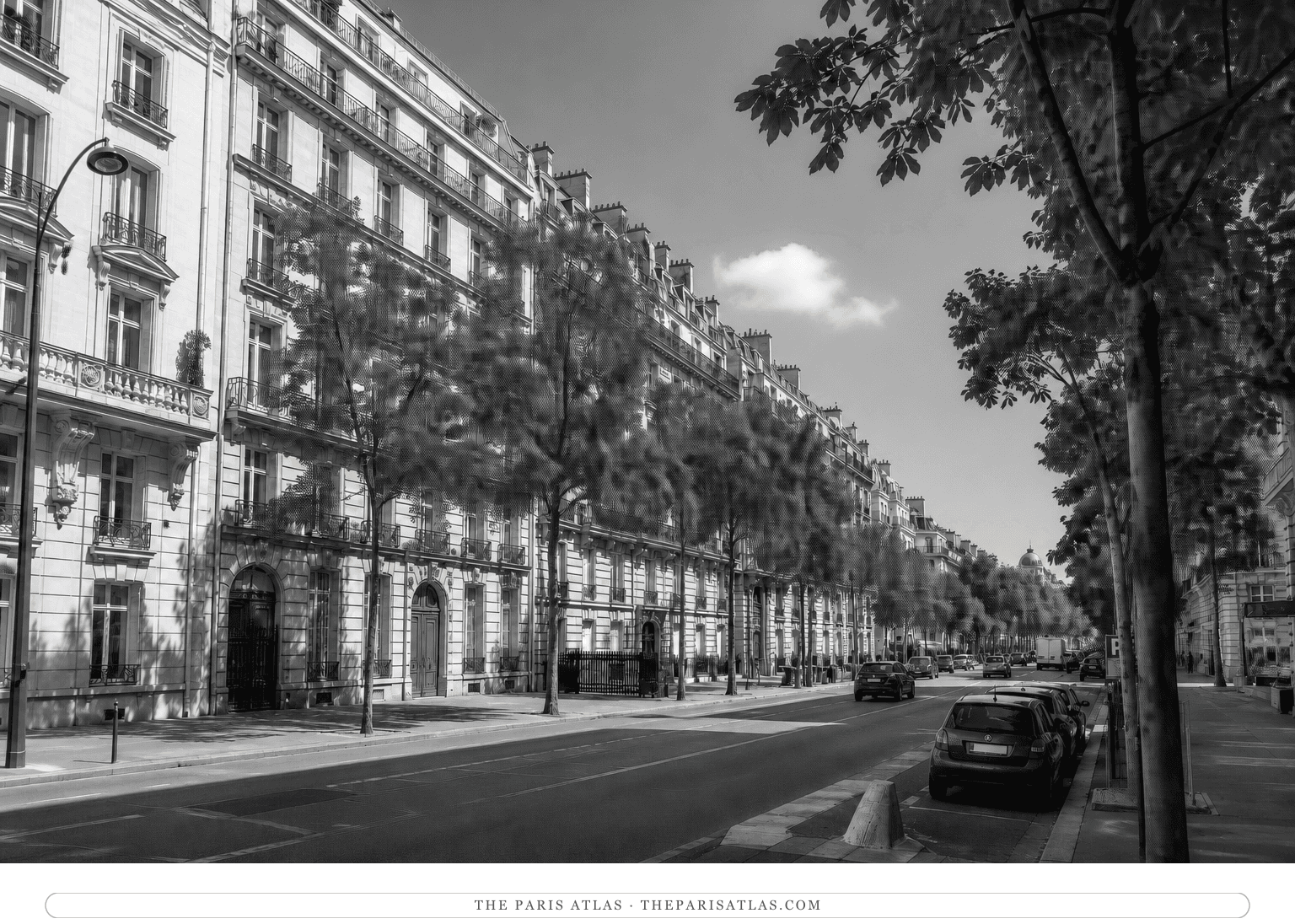
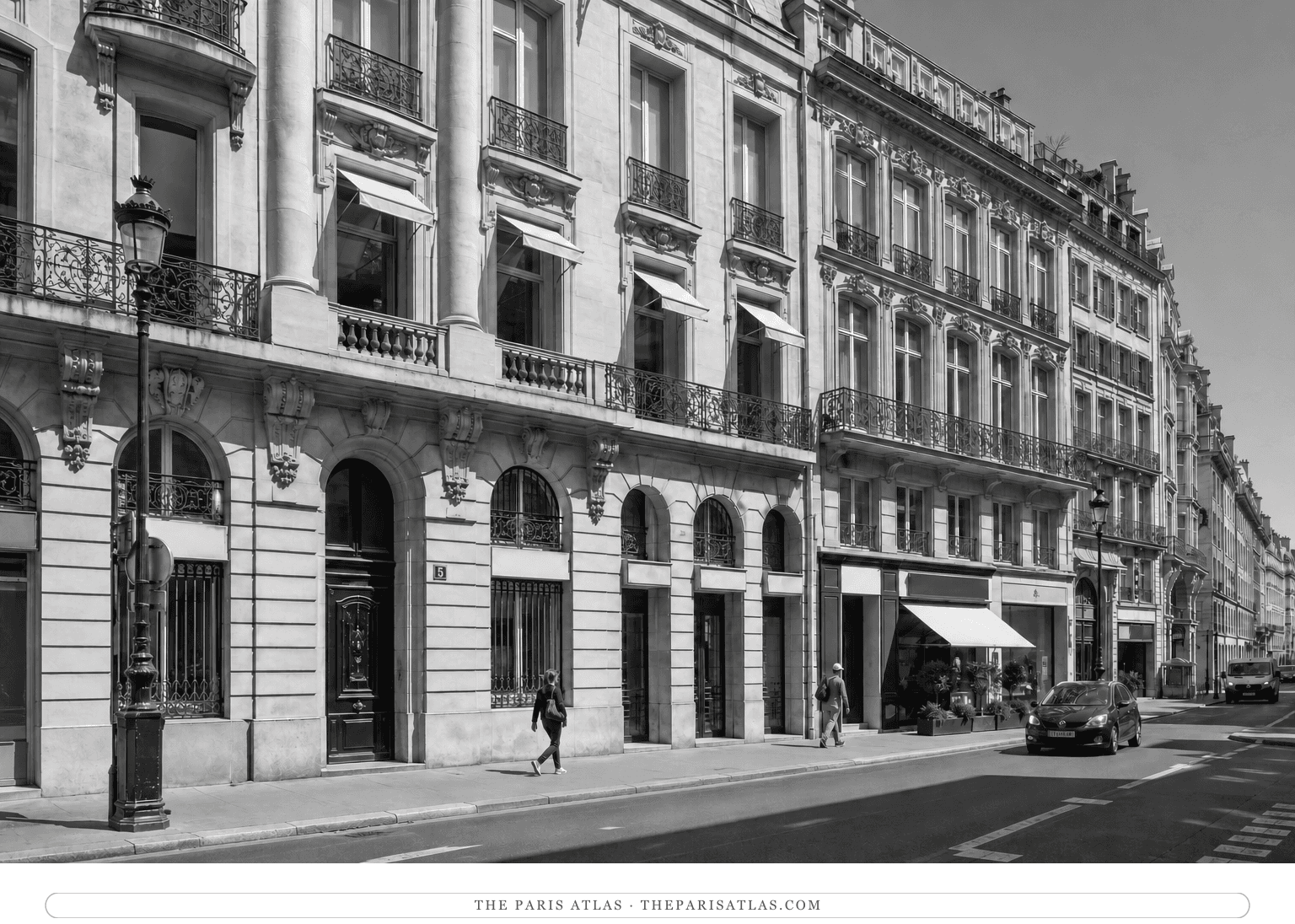
From 1907 she wintered in Paris, and from 1910 lived there almost continuously at 53 rue de Varenne, in the Faubourg Saint-Germain — the old aristocratic quarter of the 7th arrondissement, on the Left Bank, the south side of the Seine, where great houses sit behind courtyard gates. When the First World War came in 1914 she stayed, and turned herself into one of the most effective relief organisers in the city: hostels for Belgian and French refugees, workrooms for unemployed seamstresses, a rescue operation for children out of Flanders, the Belgian region the German army had overrun. France made her a Chevalier — the first rank — of the Légion d'honneur, its national order of merit, in 1916. Four years later, from her house north of Paris, she wrote a novel about New York in the 1870s and won the Pulitzer Prize with it, the American prize for the year's best novel — the first woman to do so.

Old New York, and the way out of it

She was born on 24 January 1862 into a family so settled in the Manhattan of brownstone houses and calling cards — the engraved cards a visitor left at the door on a formal afternoon call — that the phrase 'keeping up with the Joneses' is often said to refer to her father's relations. Girls of that world were educated at home, married early, and did not publish. She read her way through her father's library, spent long stretches of childhood in Italy, France and Germany, and in 1885 married Edward Robbins Wharton, called Teddy, a good-tempered Bostonian thirteen years older with no interests beyond horses and dogs.

Her first books were not fiction. The Decoration of Houses (1897), written with the architect Ogden Codman Jr., argued that rooms should be planned like buildings rather than upholstered like cushions, and it made her a household authority before she was a novelist. She built The Mount, her house at Lenox in the Berkshire hills of Massachusetts, in 1902, to demonstrate the theory. Then in 1905 came The House of Mirth — the story of Lily Bart, a beautiful woman with no money manoeuvring through New York society until it discards her — which sold enormously and made her the most successful American novelist of her generation.

53 rue de Varenne

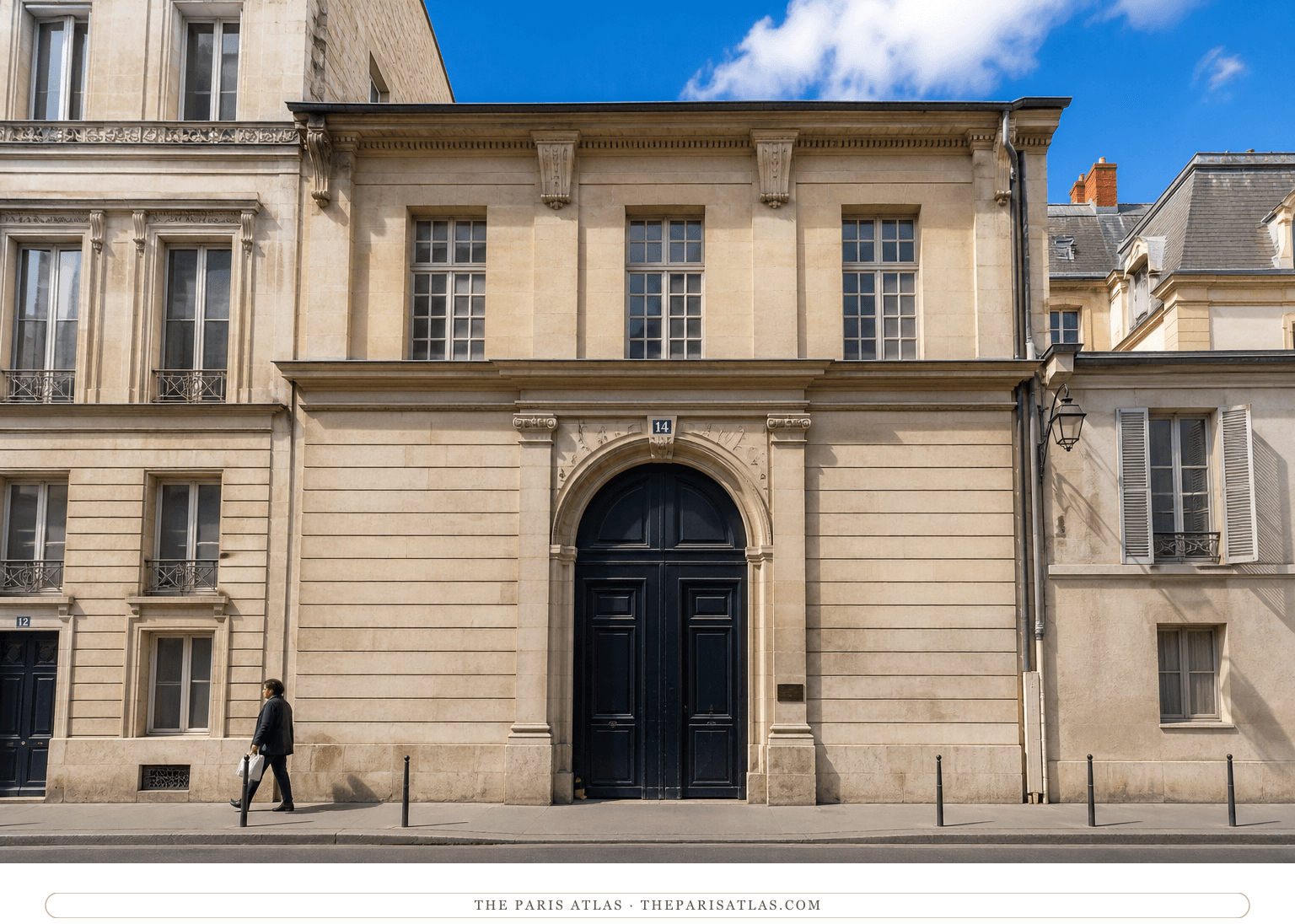
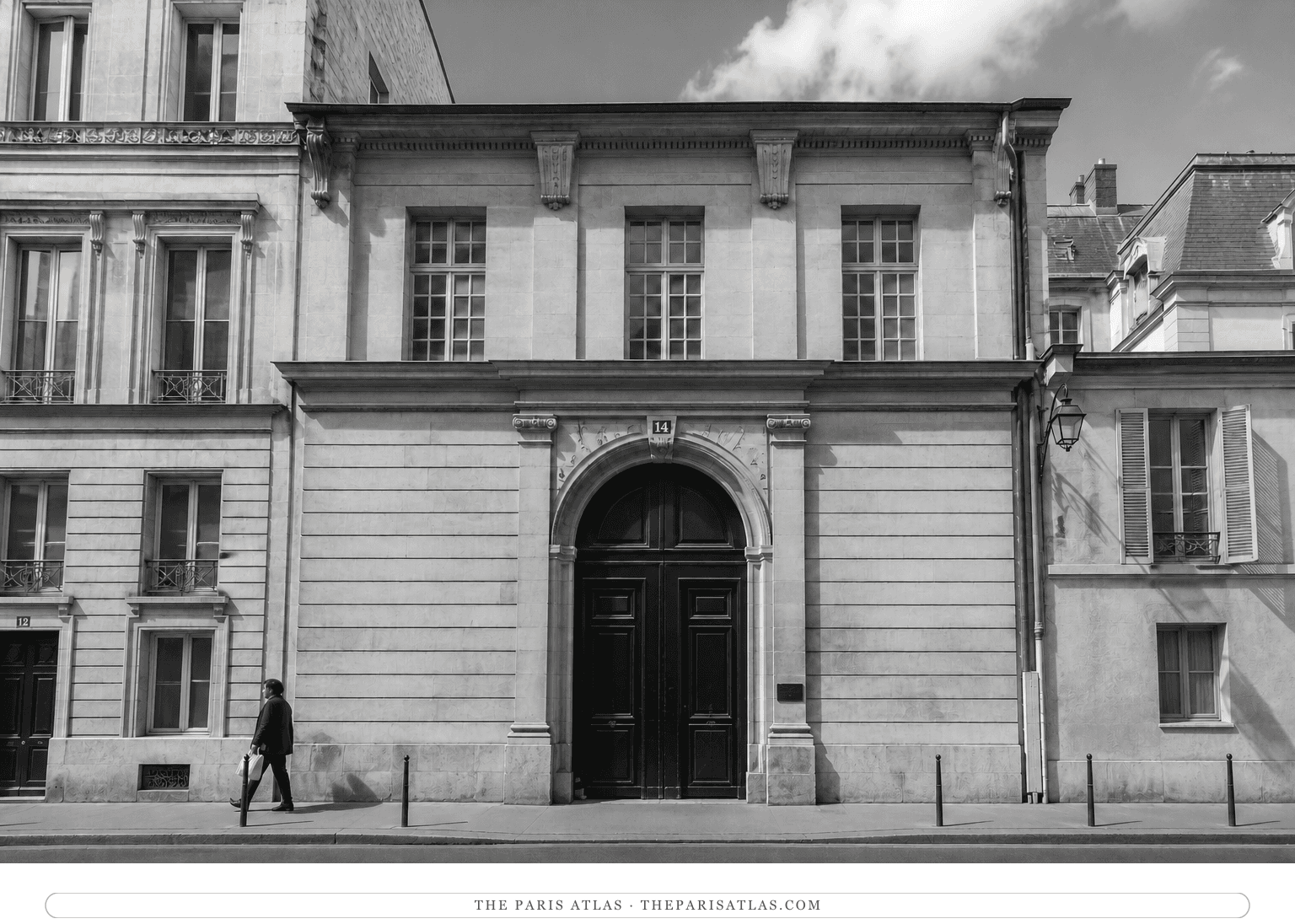
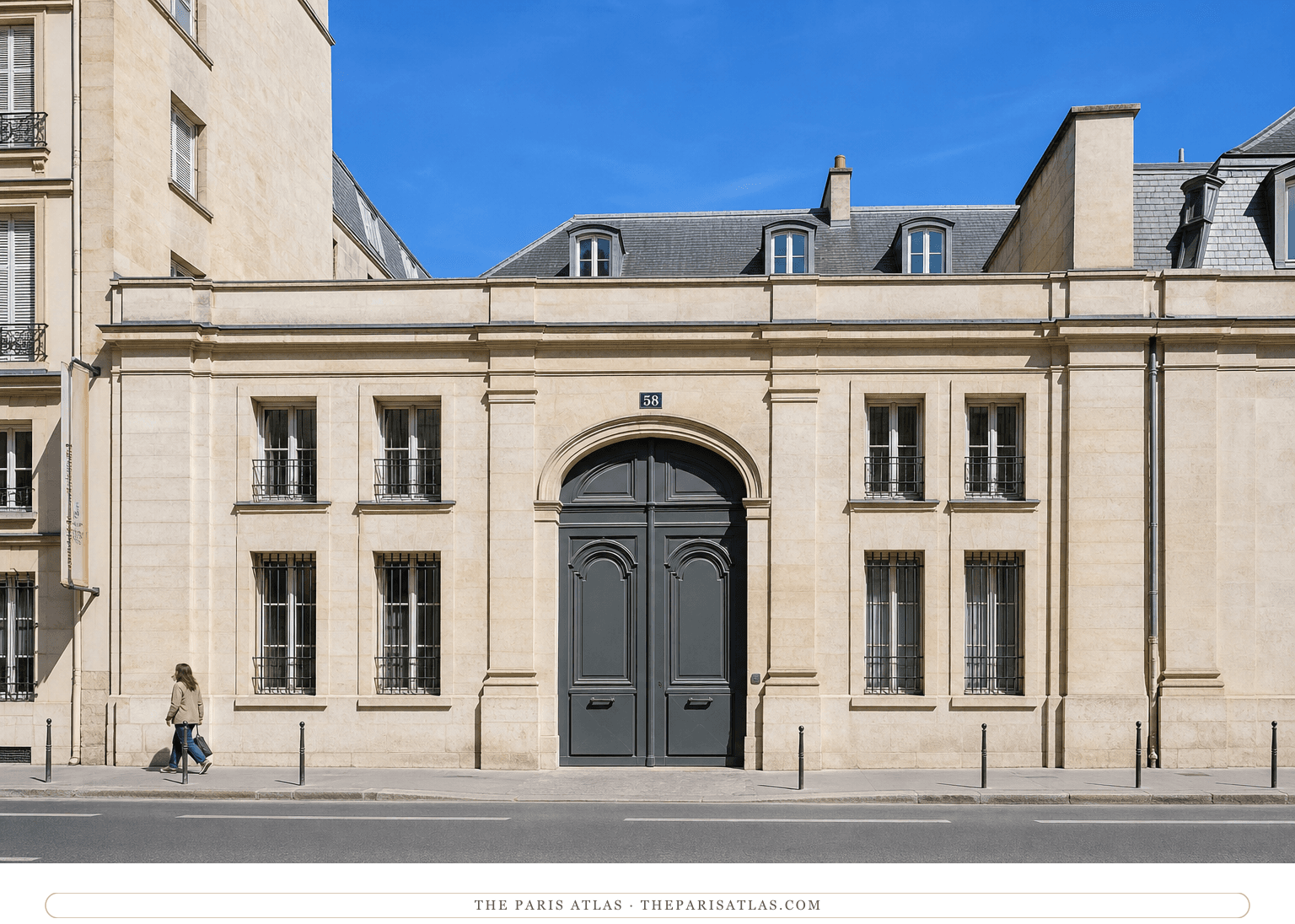
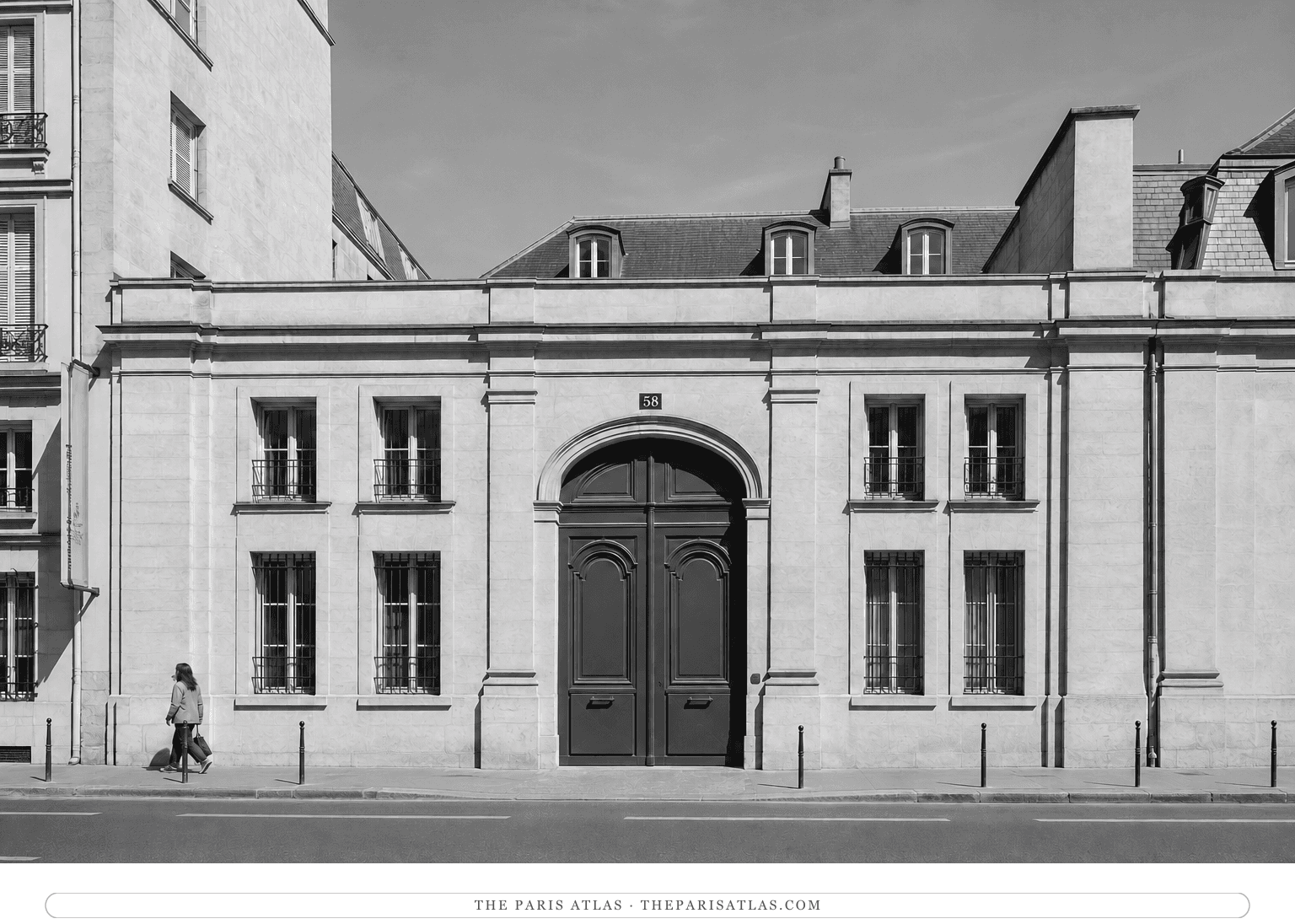
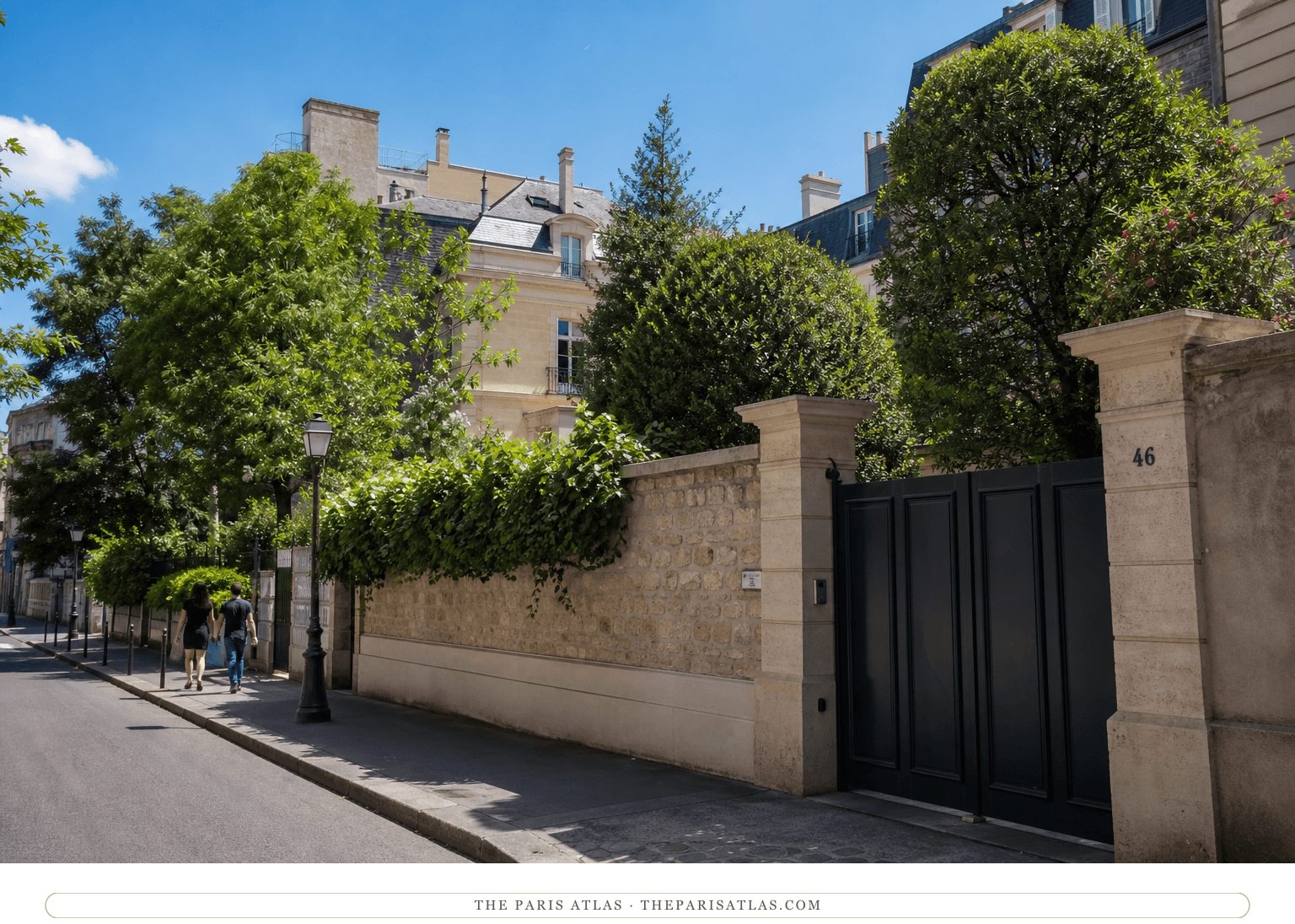
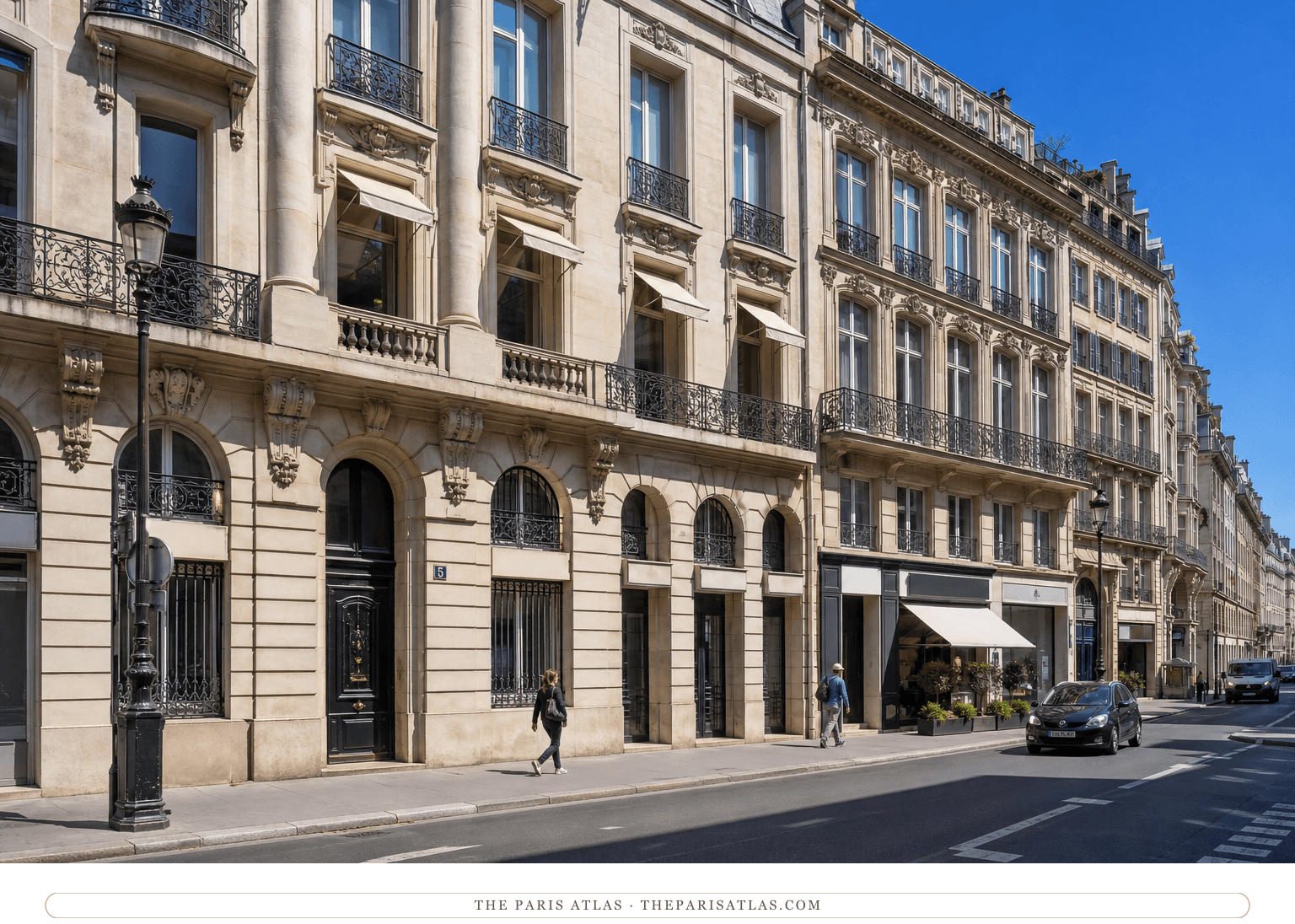
From 1907 the Whartons wintered in Paris, at first in an apartment lent by American friends at 58 rue de Varenne, and from 1910 in one of her own at number 53, where she stayed until 1920. The street is in the Faubourg Saint-Germain, the quarter of the 7th arrondissement that had been the address of the French aristocracy since the eighteenth century: eighteenth-century mansions set behind gates and courtyards, closed to outsiders and almost impossible for a foreigner to enter socially. Wharton entered it. She spoke fluent French, knew the literature better than most of her hosts, and became a fixture of a world of drawing rooms that admitted very few Americans and almost no American women.

The friendship that mattered most was with the novelist Henry James, the older American writer of The Portrait of a Lady, who called her the Angel of Devastation for the speed at which she swept him around Europe by motor car. Her marriage, meanwhile, was ending: Teddy Wharton suffered breakdowns, embezzled from her trust to keep a mistress, and the couple divorced in 1913. She was fifty-one, permanently resident in France, and free. Her writing did not slow — Ethan Frome (1911) and The Custom of the Country (1913) both belong to the rue de Varenne years.

The novelist who ran a relief network

Germany declared war on France in August 1914 while she was in Paris, and within weeks the German army was advancing on the city. Most foreigners left. Wharton stayed and began, within weeks, to build charities. She opened a workroom that paid unemployed Paris seamstresses to sew; in November 1914 she founded the American Hostels for Refugees, which found lodging, meals, clothing, medical care and work for Belgian and French civilians who had fled the German advance; and in 1915 the Children of Flanders Rescue Committee, which took in children evacuated from the occupied Belgian border and housed them in requisitioned buildings. She raised the money herself, largely from Americans, and ran the accounts.

She also went to look. With passes obtained through the French Red Cross — rarely given to civilians and almost never to women — she made a series of drives to the front lines in 1914 and 1915, and wrote what she saw: Fighting France, from Dunkerque to Belfort, published in 1915, is a war correspondent's book by a novelist, describing bombarded towns and field hospitals within earshot of the guns. The title names the two ends of the French front, the Channel port of Dunkerque in the north and the fortress town of Belfort near the Swiss border. Its purpose was partly to argue the French case to an America that was still neutral in the war and would not enter it until 1917.

Her most Parisian piece of fundraising was a book. The Book of the Homeless (1916) is an anthology she assembled by writing to nearly everyone she knew and everyone she did not: poems, essays, drawings and scores donated outright, with the proceeds going to her refugee charities. Its contributors included the novelists Joseph Conrad and Thomas Hardy, the Irish poet W. B. Yeats, her friend Henry James, the composer Igor Stravinsky, the sculptor Auguste Rodin — whose studio stood a few hundred metres from her flat, in the Hôtel Biron at 77 rue de Varenne, an eighteenth-century mansion that is now the Musée Rodin — and the painter Claude Monet, along with some sixty others. In 1916 the French government made her a Chevalier, the first rank, of the Légion d'honneur, the order Napoleon Bonaparte founded in 1802 to reward outstanding service to the nation. Very few foreign civilians of either sex had been given it.

The Age of Innocence, written from France

The war left her exhausted and looking backwards. The Age of Innocence, written in 1919 and published in 1920, returns to the New York of the 1870s — the world of her own childhood, which the war had just finished destroying — and follows Newland Archer, a young lawyer engaged to the entirely correct May Welland, as he falls in love with her cousin Ellen Olenska, who has left a European husband and does not behave as that society expects. The two of them never act on it: no elopement, no affair, no scandal — and the cost of that nothing is the rest of both their lives. The novel is at once an indictment of a society that punishes any departure from its rules and an elegy for it, written by a woman who had removed herself to another continent.

It won the Pulitzer Prize in 1921 — the annual American award for letters, then given for the Novel and now for Fiction — and Wharton became the first woman to receive it. The award had a small scandal behind it: the jury of judges had voted for Main Street, the small-town satire by the American novelist Sinclair Lewis, and the prize's trustees at Columbia University, which administers it, overruled them. She was fifty-nine, had published for a quarter of a century, and learned of the prize in France. In 1923 she crossed the Atlantic for the last time, to accept an honorary doctorate from Yale — the first the university had ever given a woman.

Pavillon Colombe, and the gardens

In 1918 she bought a small eighteenth-century house at Saint-Brice-sous-Forêt, a village about sixteen kilometres north of Paris, and left the city for good in 1920. The house was called the Pavillon Colombe after two eighteenth-century Venetian sisters who had lived there; Wharton restored it and made its garden, over nearly twenty years, into the thing visitors remembered longest. She wintered on the Riviera, the Mediterranean coast of south-eastern France, at Sainte-Claire, a former convent on the hill above the town of Hyères, where she made a second, subtropical garden, and she moved between the two houses for the rest of her life.

She kept writing to the end — novels, stories, the memoir A Backward Glance (1934), and The Writing of Fiction, a book on how fiction works — and kept an enormous correspondence with the French and English writers who came to lunch. She died at the Pavillon Colombe on 11 August 1937, at seventy-five, and is buried in the cimetière des Gonards, the cemetery at Versailles outside Paris. She had lived in France for thirty years, and had asked to be buried there rather than taken home.

Life events

  1. 1862

    Born Edith Newbold Jones on 24 January in New York City, into old Manhattan society.

    Hermione Lee, Edith Wharton (2007)

  2. 1885

    Marries Edward Robbins Wharton, a Bostonian thirteen years her senior.

    Hermione Lee, Edith Wharton (2007)

  3. 1902

    Builds The Mount at Lenox, Massachusetts, on the design principles of her own book The Decoration of Houses.

    Hermione Lee, Edith Wharton (2007)

  4. 1905

    The House of Mirth is published and becomes a bestseller.

    R. W. B. Lewis, Edith Wharton: A Biography (1975)

  5. 1907

    Begins wintering in Paris at 58 rue de Varenne, in an apartment lent by American friends in the Faubourg Saint-Germain.

    Hermione Lee, Edith Wharton (2007)

  6. 1910–1920

    Lives at 53 rue de Varenne, her own Paris apartment, for a decade.

    Hermione Lee, Edith Wharton (2007)

  7. 1913

    Divorces Teddy Wharton after his breakdowns and misuse of her money, and settles permanently in France.

    Hermione Lee, Edith Wharton (2007)

  8. 1914

    Stays in Paris at the outbreak of war, opens a workroom for unemployed seamstresses, and in November founds the American Hostels for Refugees.

    Hermione Lee, Edith Wharton (2007); R. W. B. Lewis, Edith Wharton: A Biography (1975)

  9. 1915

    Founds the Children of Flanders Rescue Committee, and publishes Fighting France, from Dunkerque to Belfort, written from journeys to the front.

    Edith Wharton, Fighting France, from Dunkerque to Belfort (1915)

  10. 1916

    Edits The Book of the Homeless — Conrad, Hardy, Yeats, Henry James, Stravinsky, Rodin and Monet among some sixty contributors — for the benefit of her charities. France makes her a Chevalier of the Légion d'honneur.

    Edited by Edith Wharton, The Book of the Homeless (Le livre des sans-foyer) (1916); Hermione Lee, Edith Wharton (2007)

  11. 1918

    Buys the Pavillon Colombe at Saint-Brice-sous-Forêt, north of Paris, and leaves the city in 1920.

    Hermione Lee, Edith Wharton (2007)

  12. 1920

    The Age of Innocence is published.

    Edith Wharton, The Age of Innocence (1920)

  13. 1921

    Awarded the Pulitzer Prize for the novel — the first woman to win it — after the trustees overruled a jury that had chosen Sinclair Lewis's Main Street.

    R. W. B. Lewis, Edith Wharton: A Biography (1975)

  14. 1937

    Dies at the Pavillon Colombe on 11 August, aged seventy-five, and is buried at the cimetière des Gonards in Versailles.

    Hermione Lee, Edith Wharton (2007)

People they knew

Documented connections — every one carries its source.

Henry James

  • Author
  • Critic

Met

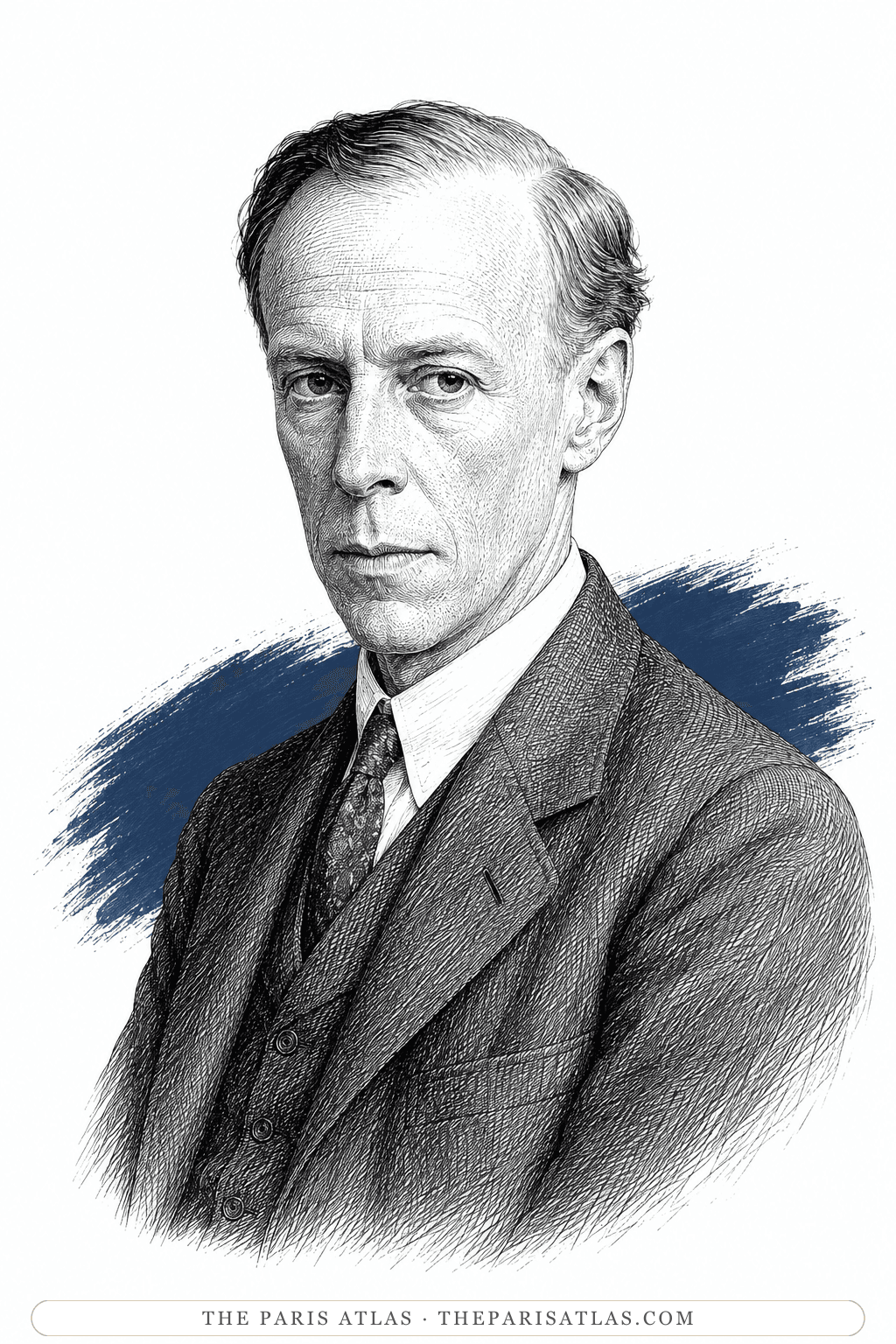
The closest friendship of James's last years, and much of it happened in Paris. Wharton kept an apartment on the rue de Varenne in the 7th arrondissement, and in the spring of 1907 James began his first real holiday in years with a stay there, followed by a long motor tour through western and southern France with Wharton and her husband. Letters to her run through the whole second half of his published correspondence, from formal 'Dear Mrs. Wharton' to 'Dearest Edith'.

Henry James, edited by Percy Lubbock, The Letters of Henry James, Volume II (1920)

Organizations

Published in · 1905

Charles Scribner's Sons

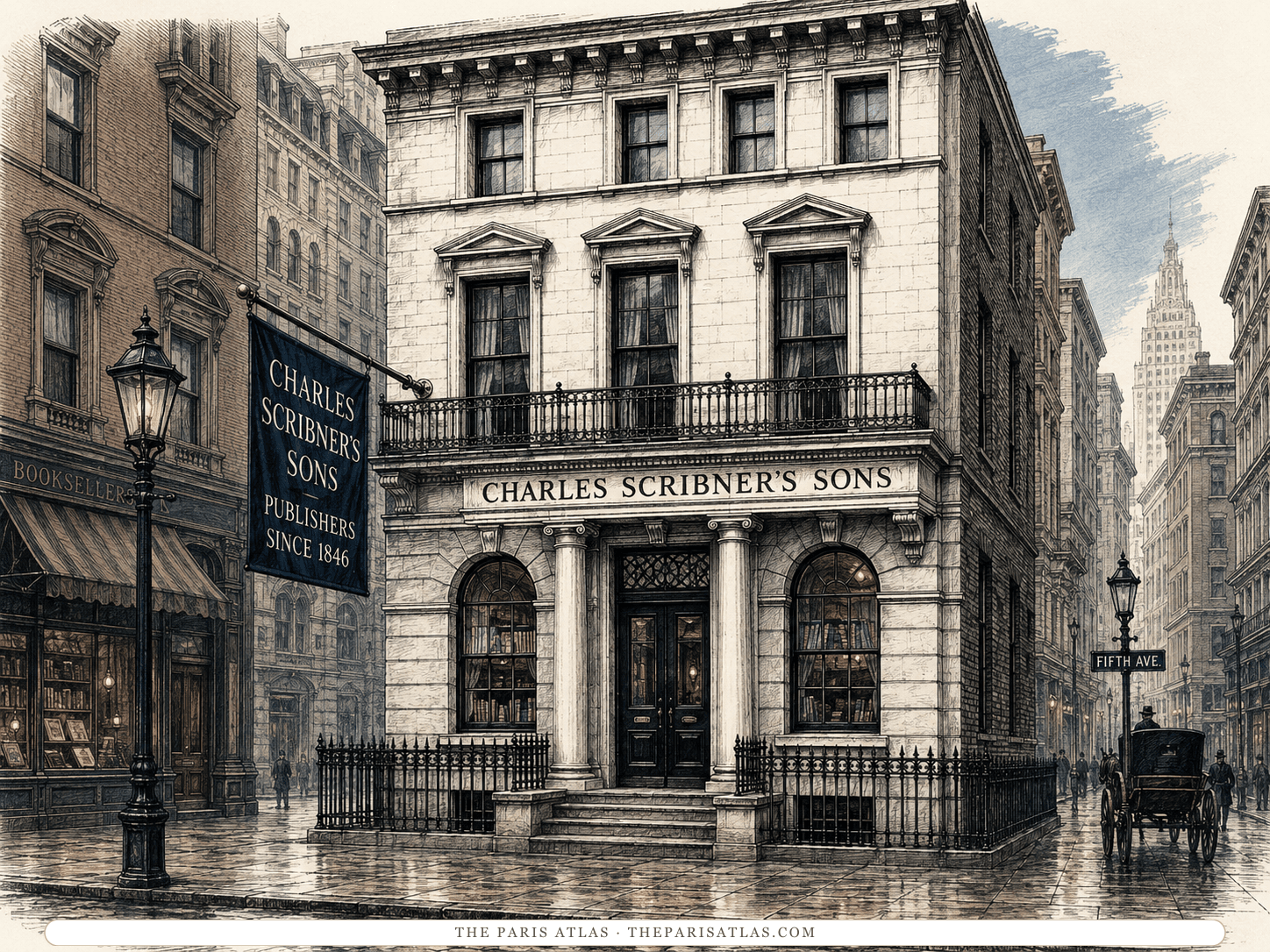
The House of Mirth reached its first readers a month at a time, in Scribner's Magazine, before it was a book: Book I ran through the January–June 1905 numbers and Book II through July to November, illustrated by A. B. Wenzell. The house's own half-yearly indexes carry the run under her name. Wharton was a Scribner's author, not a Scribner's employee — the firm had her and Henry James on its list two decades before it had Fitzgerald and Hemingway — so this is the contributor edge, not an employment one.

Scribner's Magazine, Vol. 37 (January–June 1905) — table of contents and index (1905), Index to Vol. XXXVII; Scribner's Magazine, Vol. 38 (July–December 1905) — table of contents and index (1905), Index to Vol. XXXVIII

Questions about Edith Wharton

Why did Edith Wharton live in Paris?

She preferred it, and she could. From 1907 she wintered in Paris; after her divorce in 1913 she lived in France permanently. She spoke fluent French, knew French literature deeply, and was admitted to the Faubourg Saint-Germain — the closed aristocratic quarter of the Left Bank, the south side of the Seine — in a way almost no American of her generation managed. Her last spell of living in the United States ended in 1911; after the divorce two years later France was her only home, and she crossed the Atlantic for the last time in 1923.

Where did Edith Wharton live in Paris?

On the rue de Varenne, in the 7th arrondissement: first at number 58, in an apartment lent by American friends from 1907, and from 1910 to 1920 in her own at number 53. The street runs through the Faubourg Saint-Germain, the Left Bank quarter of eighteenth-century mansions behind courtyard gates that had been the address of the French aristocracy — the sculptor Auguste Rodin's studio, in the mansion called the Hôtel Biron and now the Musée Rodin, stood at number 77.

What did Edith Wharton do in the First World War?

She stayed in Paris and ran relief operations. She opened a workroom employing out-of-work seamstresses, founded the American Hostels for Refugees in November 1914 to house and feed civilians fleeing the German advance, and in 1915 the Children of Flanders Rescue Committee for children evacuated from occupied Belgium. She raised the funds herself, edited the anthology The Book of the Homeless (1916) to raise more, and reported from the front lines in Fighting France (1915).

Why did Edith Wharton receive the Legion of Honour?

For her wartime relief work in France. The Légion d'honneur is the order founded by Napoleon Bonaparte in 1802 as France's highest distinction, awarded for eminent service to the nation; Wharton was made a Chevalier — its first rank — in 1916. Very few foreign civilians received it, and fewer women.

Was Edith Wharton the first woman to win the Pulitzer Prize?

She was the first woman to win it for a novel, in 1921, for The Age of Innocence. (The prize was then called the Pulitzer Prize for the Novel; it is now the Prize for Fiction.) The award had a quiet controversy behind it: the jury had chosen Sinclair Lewis's Main Street, and the trustees overturned the choice.

What is The Age of Innocence about?

New York in the 1870s. Newland Archer, a young lawyer engaged to the impeccably conventional May Welland, falls in love with her cousin Ellen Olenska, who has left a European husband and refuses to behave as the tribe requires. The novel is about the enormous force a polite society can exert without ever raising its voice. Wharton wrote it in France in 1919, looking back at the world she had been born into and had left.

Where did Edith Wharton die?

At the Pavillon Colombe, the eighteenth-century house she bought in 1918 at Saint-Brice-sous-Forêt, about sixteen kilometres north of Paris, where she made a celebrated garden. She died there on 11 August 1937, aged seventy-five, and is buried in the cimetière des Gonards at Versailles.

Sourced claims

Every connection the graph holds for Edith, with the evidence behind it.

Published in · 1905

Charles Scribner's Sons

The House of Mirth reached its first readers a month at a time, in Scribner's Magazine, before it was a book: Book I ran through the January–June 1905 numbers and Book II through July to November, illustrated by A. B. Wenzell. The house's own half-yearly indexes carry the run under her name. Wharton was a Scribner's author, not a Scribner's employee — the firm had her and Henry James on its list two decades before it had Fitzgerald and Hemingway — so this is the contributor edge, not an employment one.

Scribner's Magazine, Vol. 37 (January–June 1905) — table of contents and index (1905), Index to Vol. XXXVII; Scribner's Magazine, Vol. 38 (July–December 1905) — table of contents and index (1905), Index to Vol. XXXVIII

Met

Henry James

The closest friendship of James's last years, and much of it happened in Paris. Wharton kept an apartment on the rue de Varenne in the 7th arrondissement, and in the spring of 1907 James began his first real holiday in years with a stay there, followed by a long motor tour through western and southern France with Wharton and her husband. Letters to her run through the whole second half of his published correspondence, from formal 'Dear Mrs. Wharton' to 'Dearest Edith'.
Henry James, edited by Percy Lubbock, The Letters of Henry James, Volume II (1920)

References

References

The sources below include biographies, scholarly essays, interviews, and primary materials that informed this page. They reflect both the historical record and ongoing critical conversations about Edith Wharton and their work.

  1. 1Edith Wharton

    Alfred A. Knopf, 2007

    The standard modern biography — the rue de Varenne addresses, the divorce, the war charities, the Legion of Honour, Saint-Brice.

  2. 2Edith Wharton: A Biography

    Harper & Row, 1975

    The earlier standard life, which first used the Yale papers; the source for the Pulitzer's disputed 1921 decision.

  3. 3Fighting France, from Dunkerque to Belfort

    Charles Scribner's Sons, 1915

    Her own dispatches from the French front lines in 1914–15, written from passes obtained through the French Red Cross.

    View source
  1. 4The Book of the Homeless (Le livre des sans-foyer)

    Charles Scribner's Sons, 1916

    The fundraising anthology she edited for her refugee charities, with its full contributor list.

    View source
  2. 5The Age of Innocence

    D. Appleton and Company, 1920

    The primary text of the novel that won the 1921 Pulitzer.

    View source
  3. 6La Légion d'honneur

    Grande chancellerie de la Légion d'honneur

    The order's own account of what the Légion d'honneur is: founded by Napoleon in 1802 to reward eminent service to the nation.

    View source
i
Why these sources are here

These references anchor the page in the documented record and in the scholarly conversations around Edith Wharton. Every claim on this page traces back to one or more of the works listed here.

Explore more resources
Browse all authors