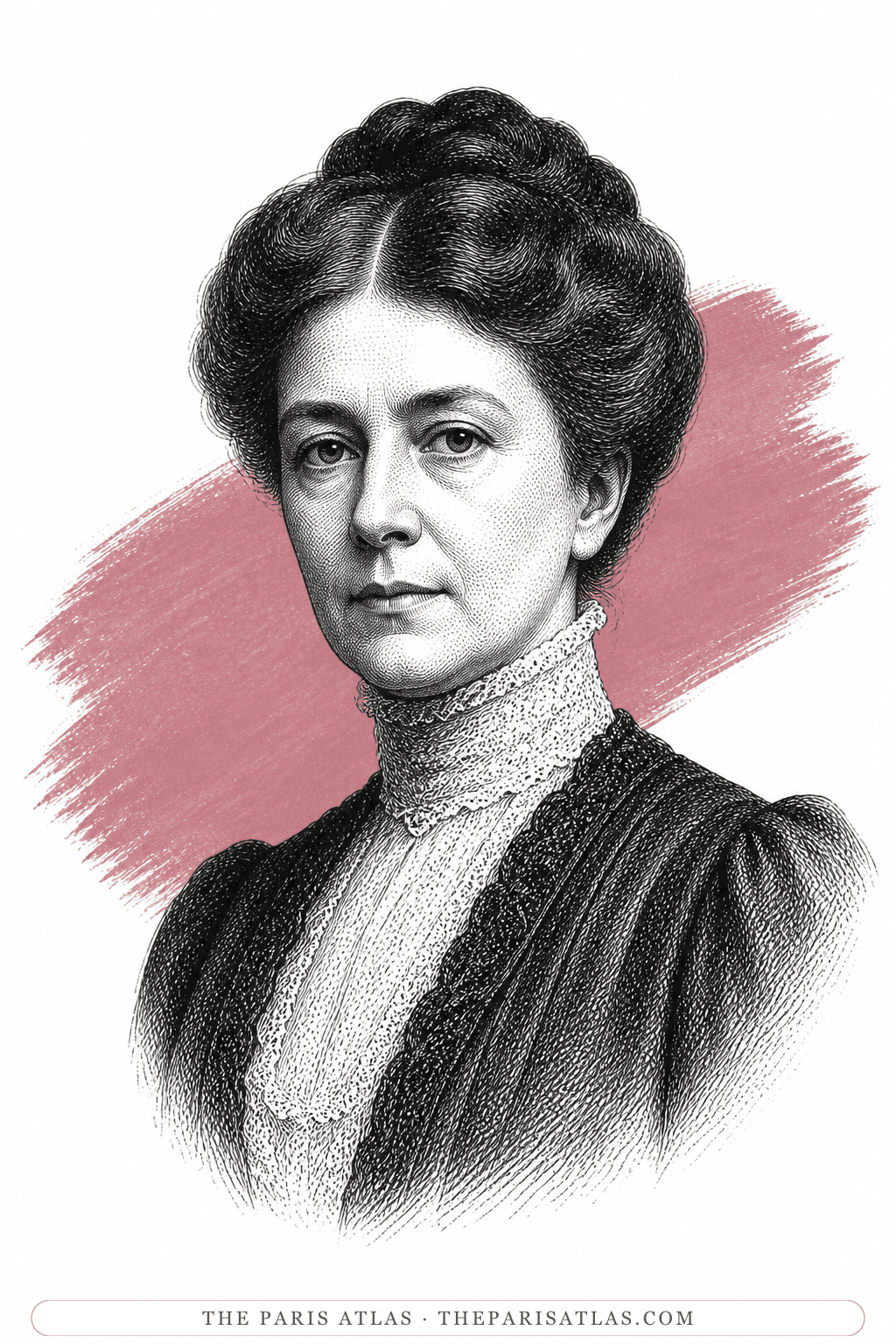
Edith Wharton
Lived here · 1910
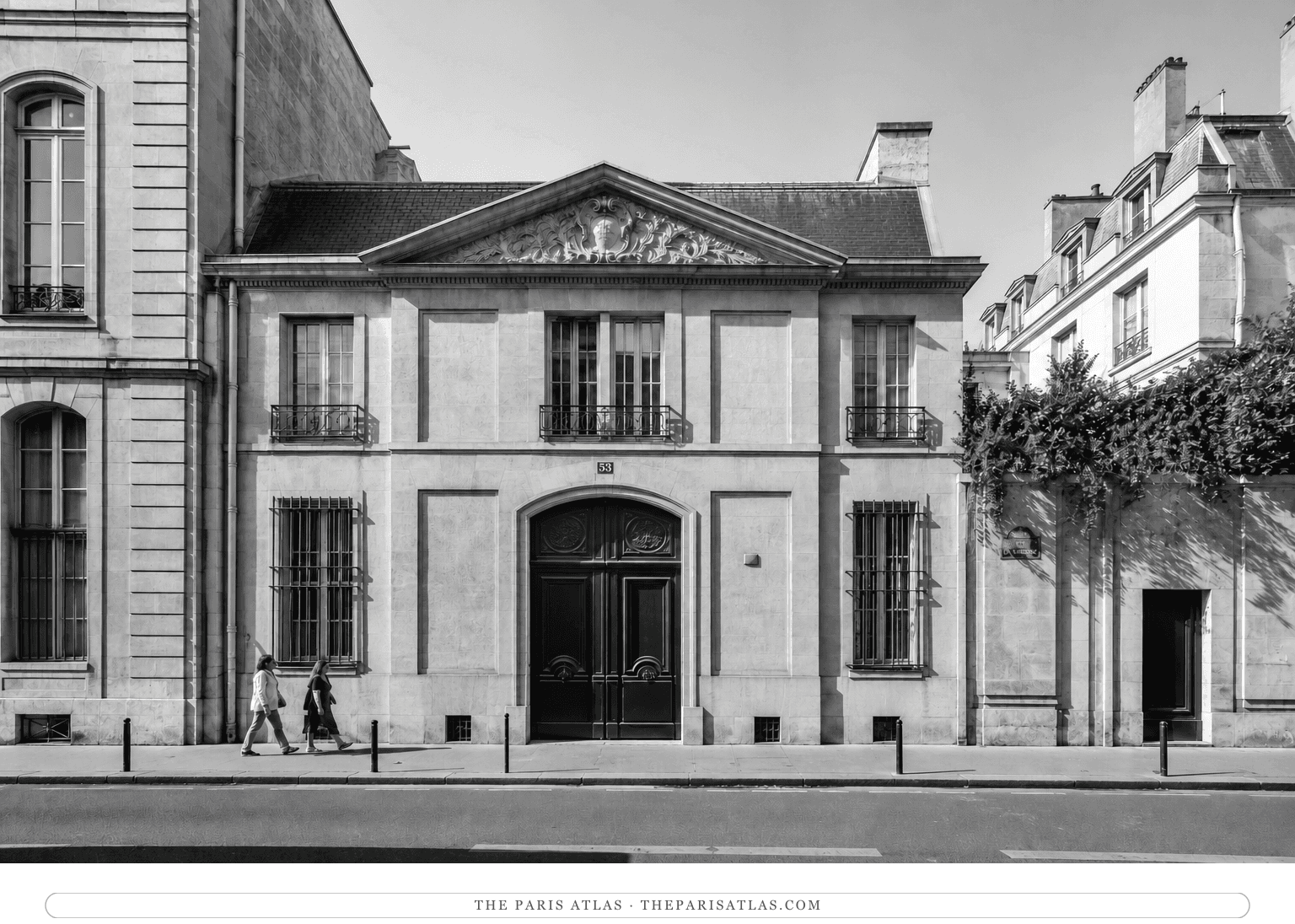
Wharton took the apartment at 53 rue de Varenne in January 1910. It became her principal Paris home and, during the First World War, the coordinating address for her refugee-relief organisations.
The apartment Edith Wharton took in January 1910 and made her principal Paris address — and which became, during the First World War, the headquarters of one of the largest private relief operations in France.
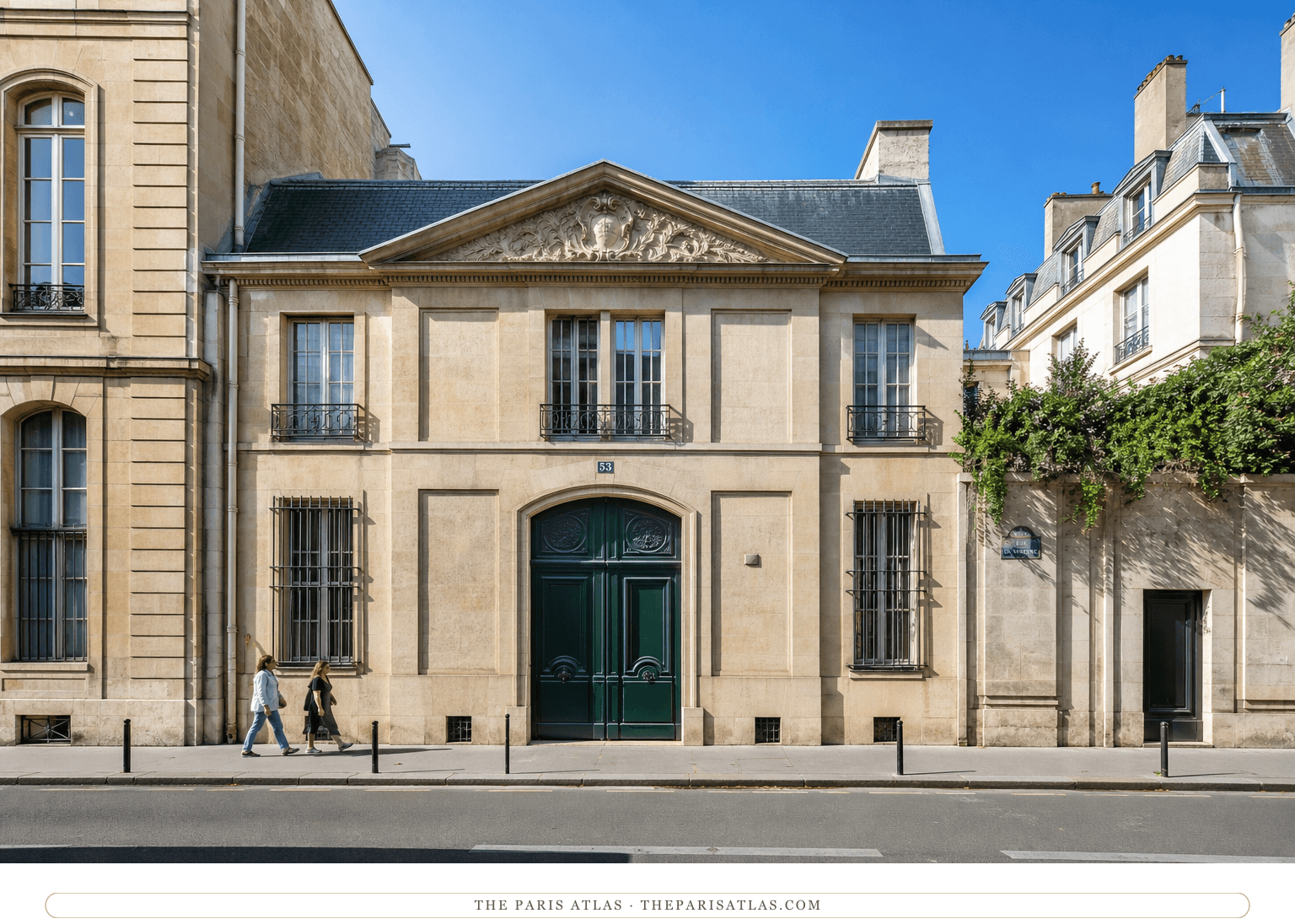
Edith Wharton took this apartment in January 1910, and it is the address that matters most in her Paris life. She was in her late forties, her marriage was ending, and she had decided that France rather than America was where she wanted to live. She would stay in France for the rest of her life.
The rue de Varenne runs through the Faubourg Saint-Germain, the old aristocratic quarter of Paris — a world of courtyards behind carriage doors, exactly the sort of closed and codified society Wharton had spent her career anatomising in New York. Living inside it was both a social achievement and useful research.
Then the war came, and this apartment became something else entirely. Wharton did not leave. She organised relief on a scale that is genuinely hard to credit for a private individual: workrooms for unemployed seamstresses, hostels for refugees arriving from Belgium and northern France, tuberculosis sanatoria, schools for refugee children. The rue de Varenne was the coordinating address and the return address on the correspondence.
In 1916 the French government made her a Chevalier of the Legion of Honour for the work. She also edited The Book of the Homeless, a fundraising anthology to which she persuaded an extraordinary list of writers and artists to contribute.
Wharton takes the apartment at 53 rue de Varenne in January.
War begins; the apartment becomes the base of her relief work.
She edits The Book of the Homeless to raise funds for the refugee charities.
France makes her a Chevalier of the Legion of Honour.
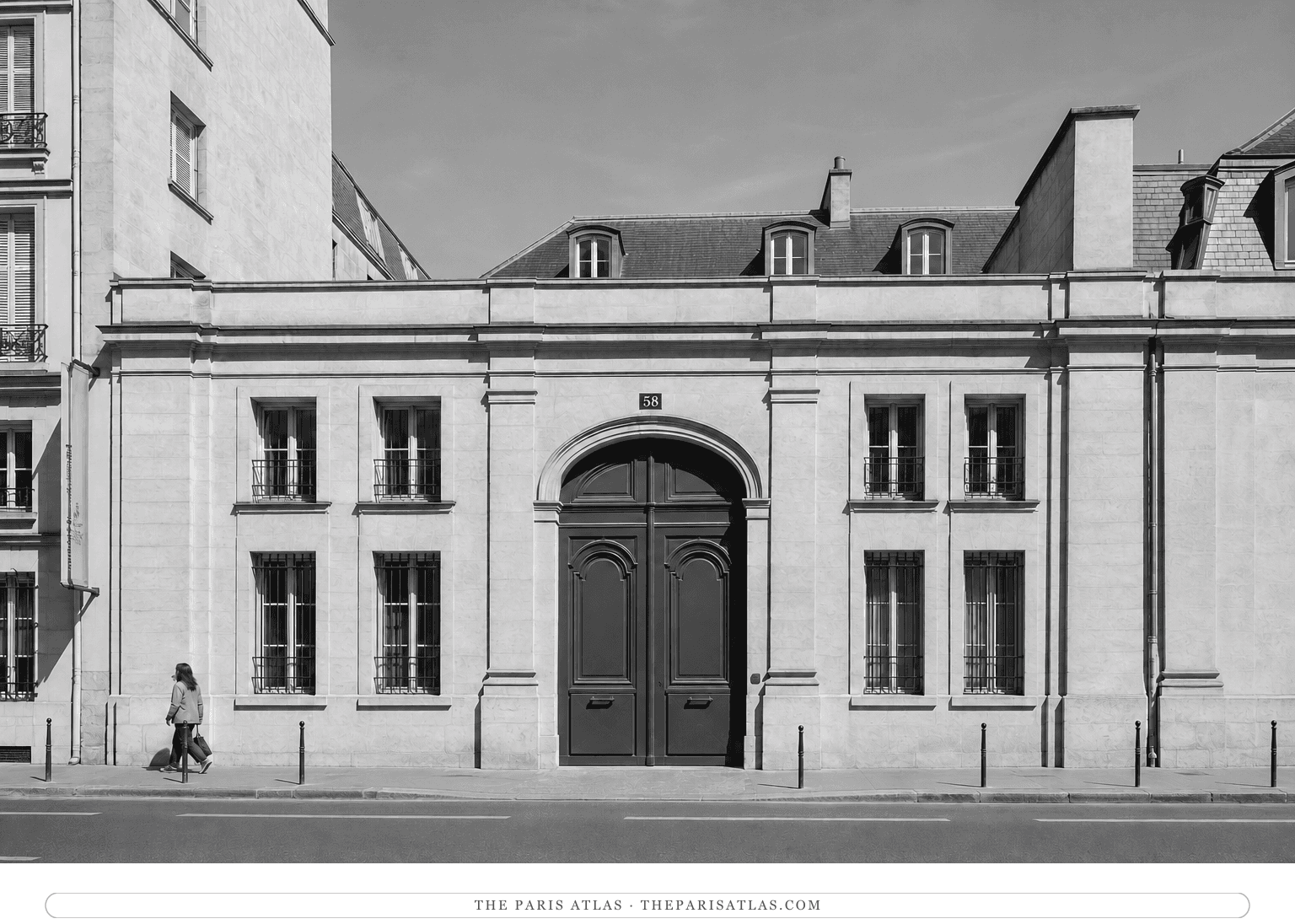
Her principal Paris home was 53 rue de Varenne in the 7th arrondissement, which she took in January 1910. She had rented 58 rue de Varenne, across the street, in 1907–08.
She stayed in France and ran large-scale relief operations — workrooms, refugee hostels, sanatoria and schools — coordinated from this apartment. France awarded her the Legion of Honour for it in 1916.
No. It is a private building in a district of closed courtyards.
Lived here · 1910
Wharton took the apartment at 53 rue de Varenne in January 1910. It became her principal Paris home and, during the First World War, the coordinating address for her refugee-relief organisations.
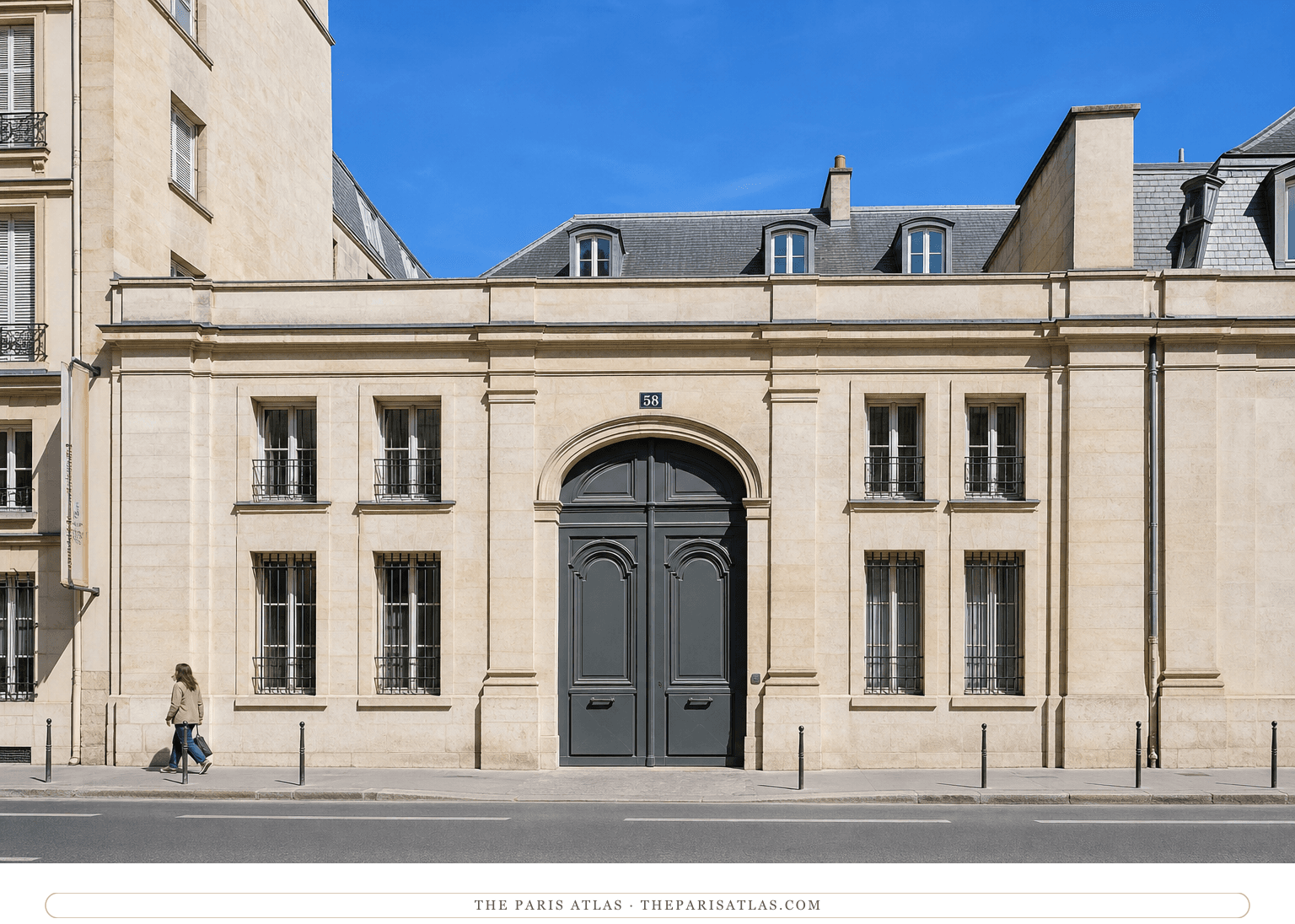
The apartment Edith Wharton rented from George Vanderbilt for the winters of 1907 and 1908 — her first real Paris home, a few doors from the address that would become her permanent one.
Visit the place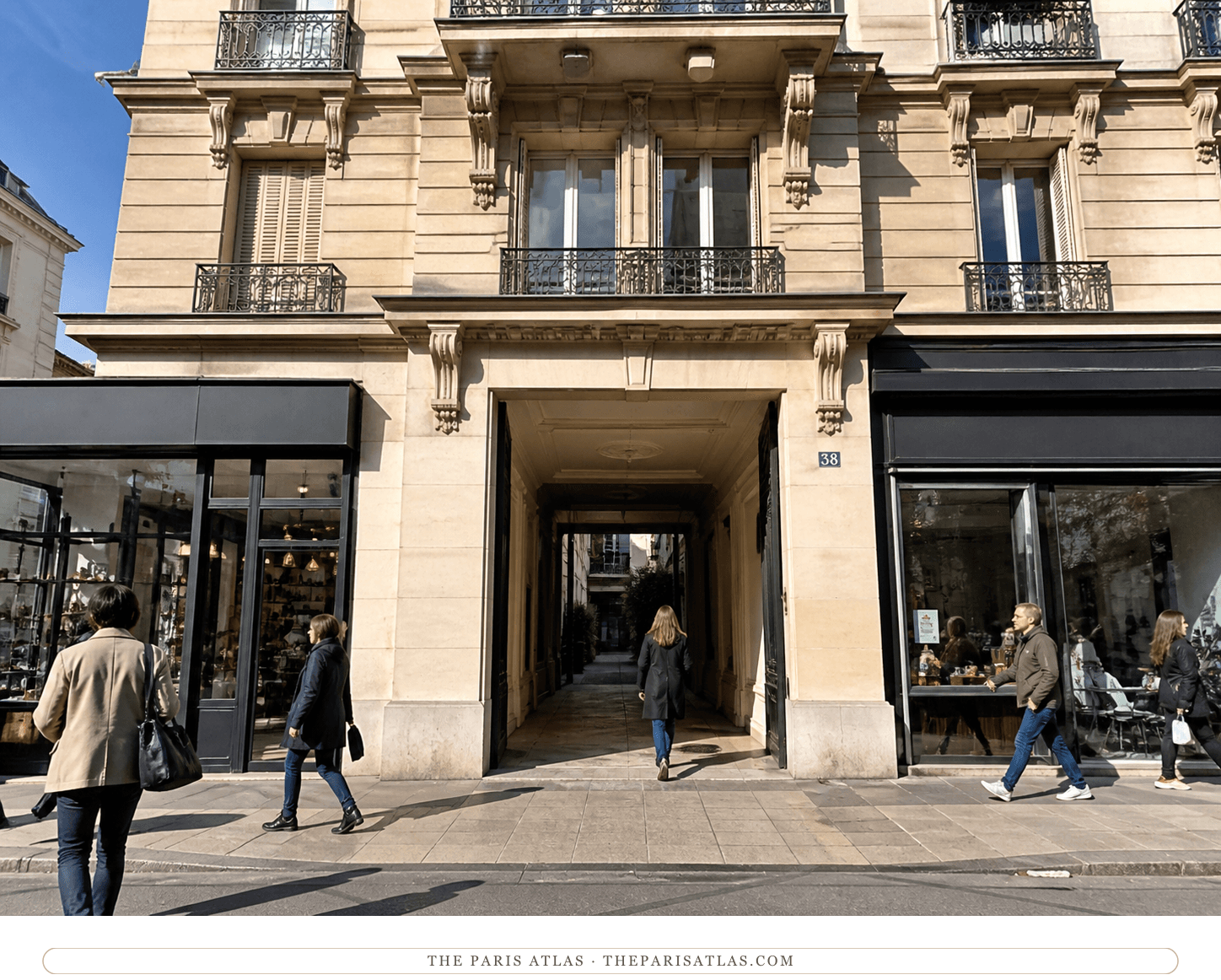
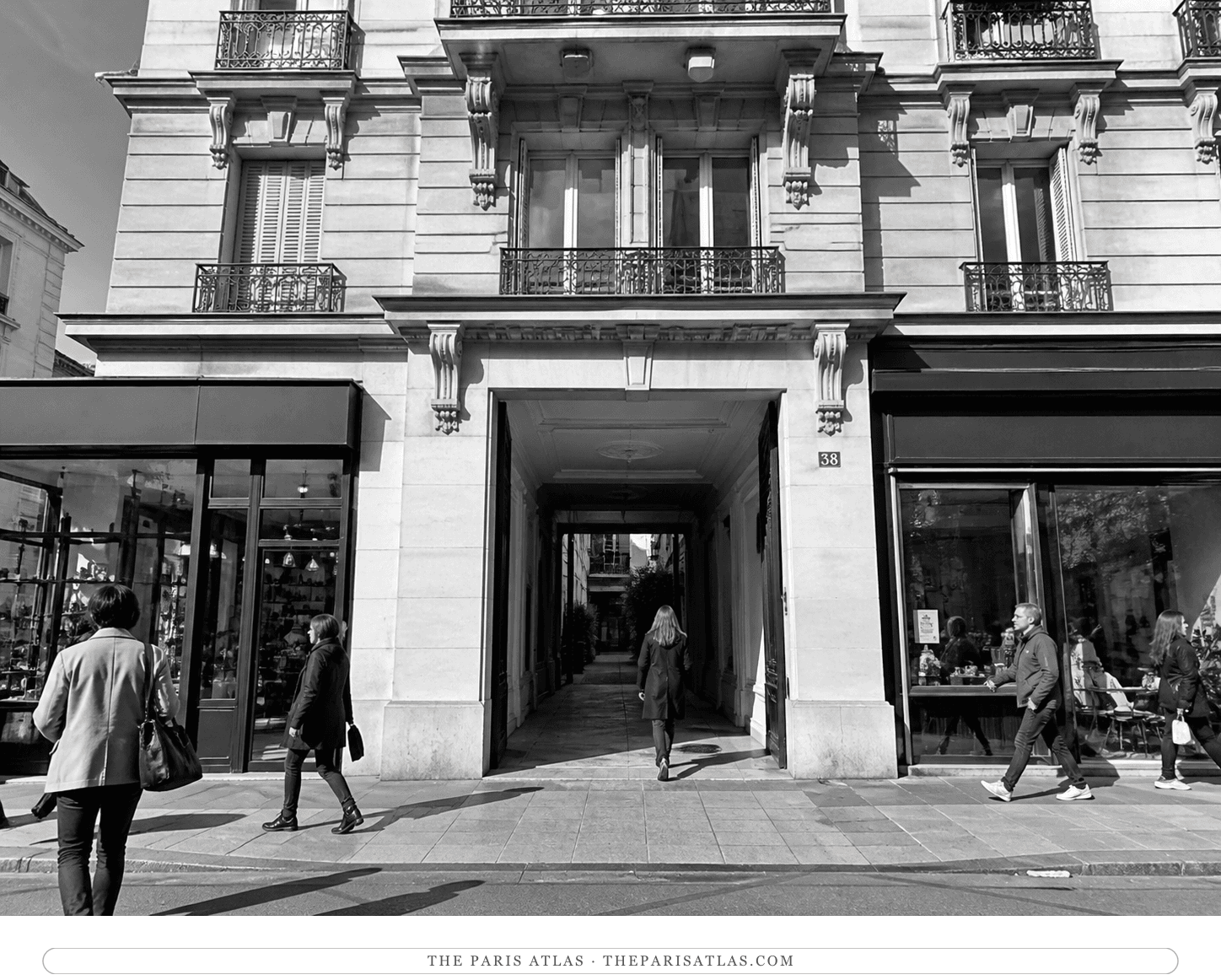
A small theatre at 38 boulevard Raspail, founded by Jean-Marie Serreau in 1952 and gone within a few years. On 5 January 1953 it staged the first performance of Samuel Beckett's En attendant Godot, directed by Roger Blin — the night modern theatre changed.
Visit the place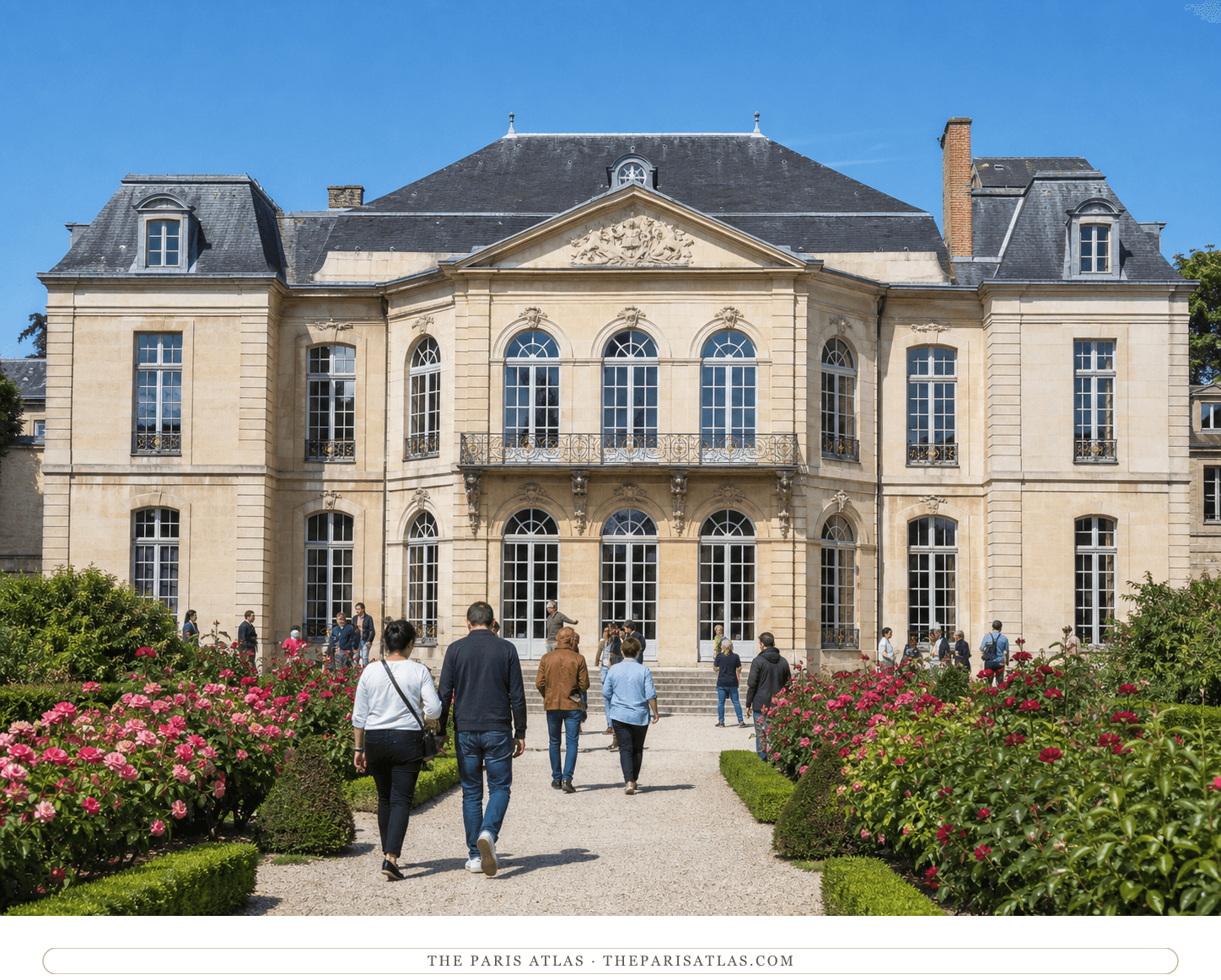
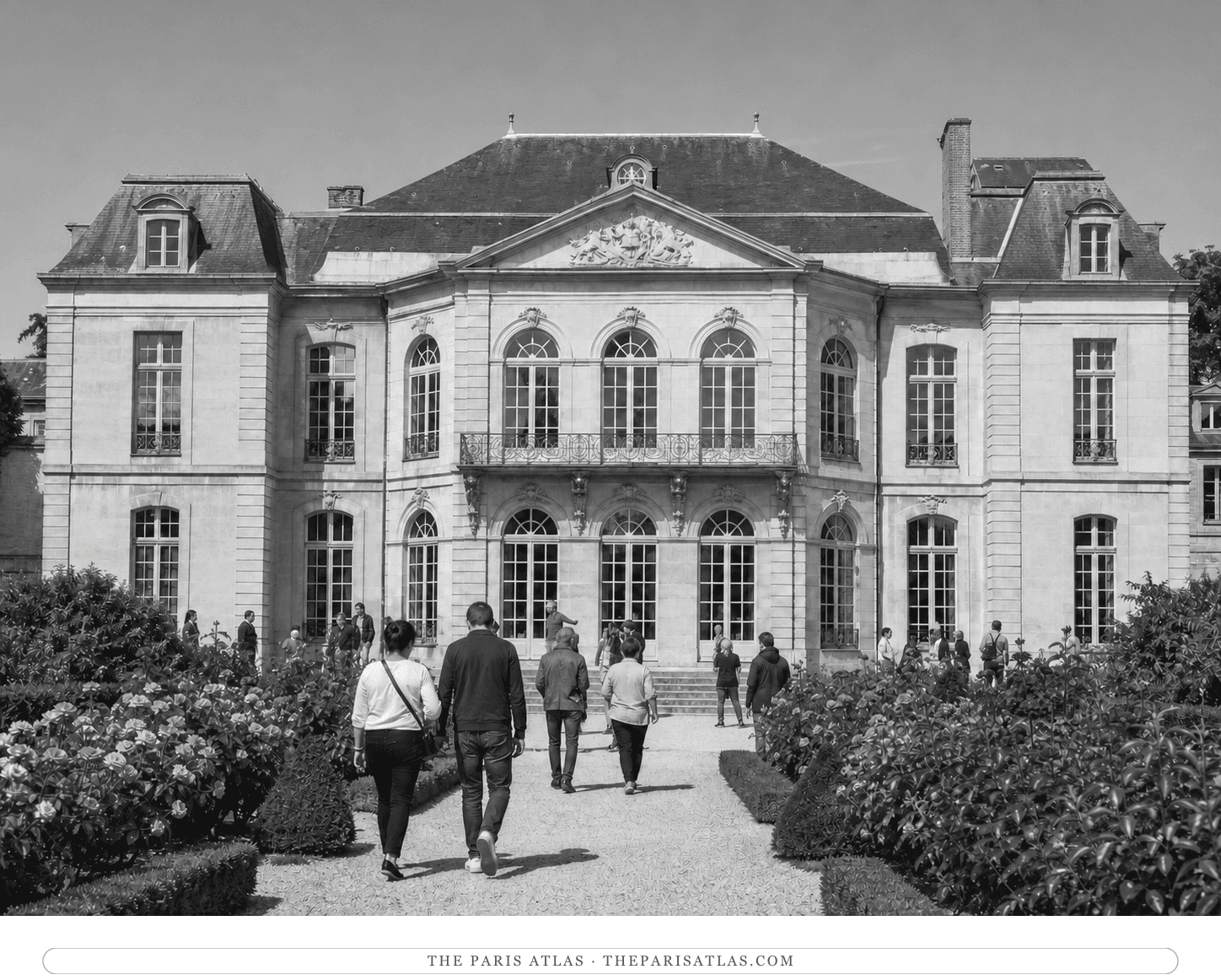
An eighteenth-century Paris mansion where Auguste Rodin rented four rooms in 1908, later took the whole building, and which he gave away in advance — donating his entire output to the French State on condition it buy the house and turn it into his museum. It opened in 1919, two years after his death.
Visit the place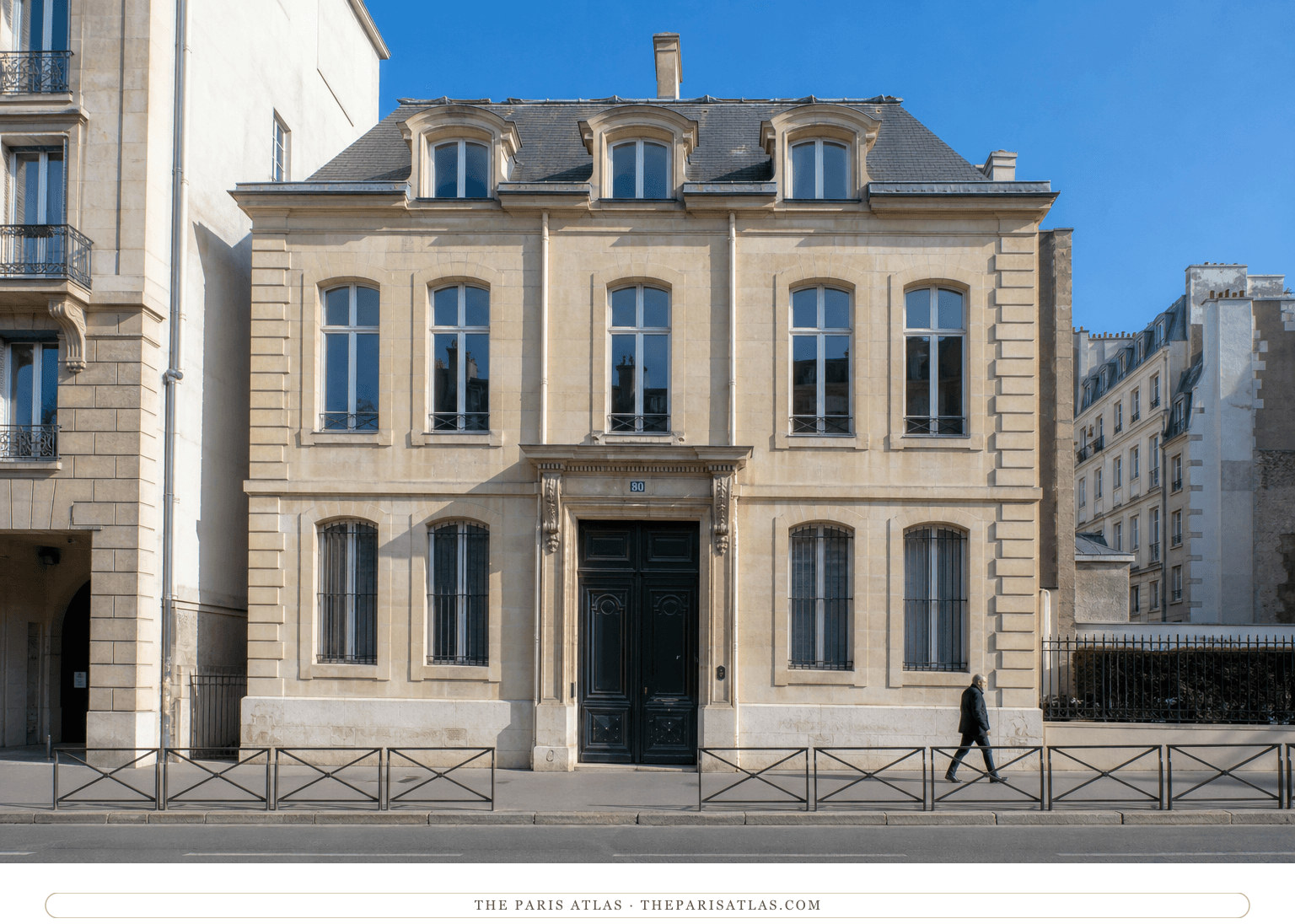
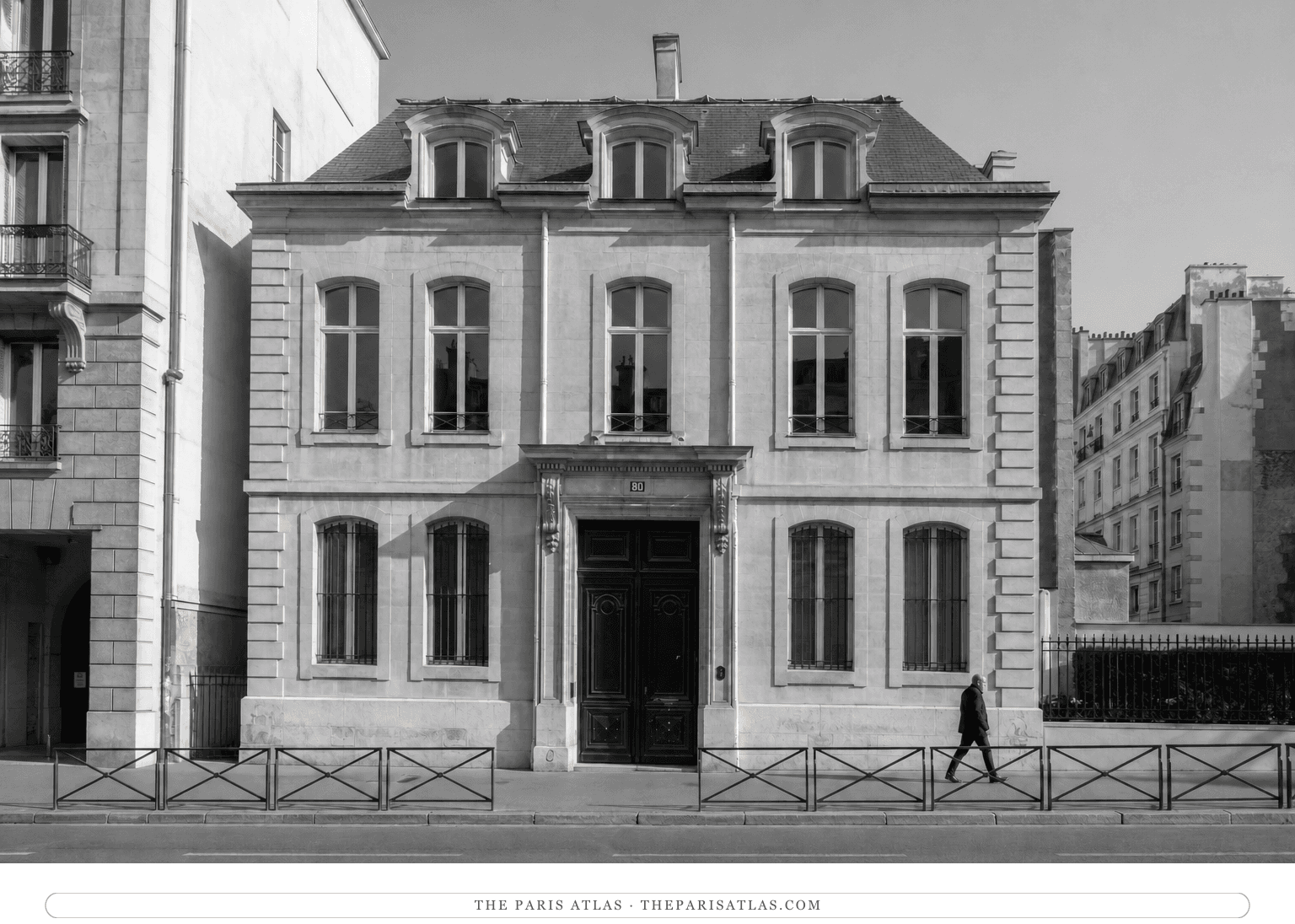
The Paris office of The Little Review, the magazine that serialised Ulysses and published Djuna Barnes — a publication link rather than a place she is known to have worked in.
Visit the placeThe sources below include histories, archival materials, scholarly research, and official records that informed this page. They document 53 rue de Varenne, the people connected to it, and its place in Paris.


Web source consulted for documented facts and historical context presented on the 53 rue de Varenne page.

Published analysis and historical context used in preparing the 53 rue de Varenne page.
Biographical evidence used to verify chronology, relationships, and historical context connected to 53 rue de Varenne.

Published analysis and historical context used in preparing the 53 rue de Varenne page.
These references provide the documented foundation for this page's history and context. Claim-level citations remain attached to the specific claims they support.
 Explore more resources
Newsletter
The cafés, studios, and walk-up flats where the work was made — one story from the map in every letter.