The place, briefly
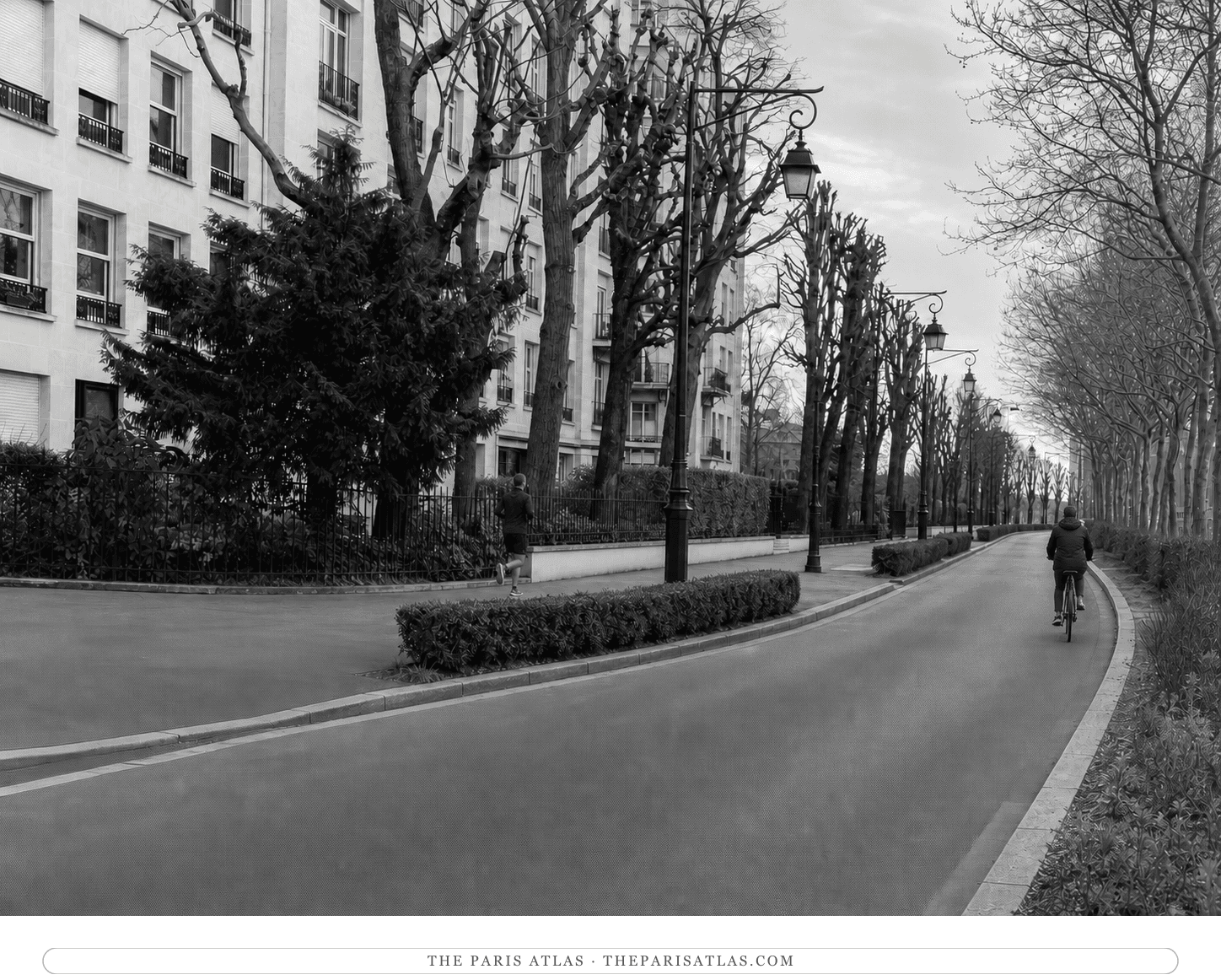
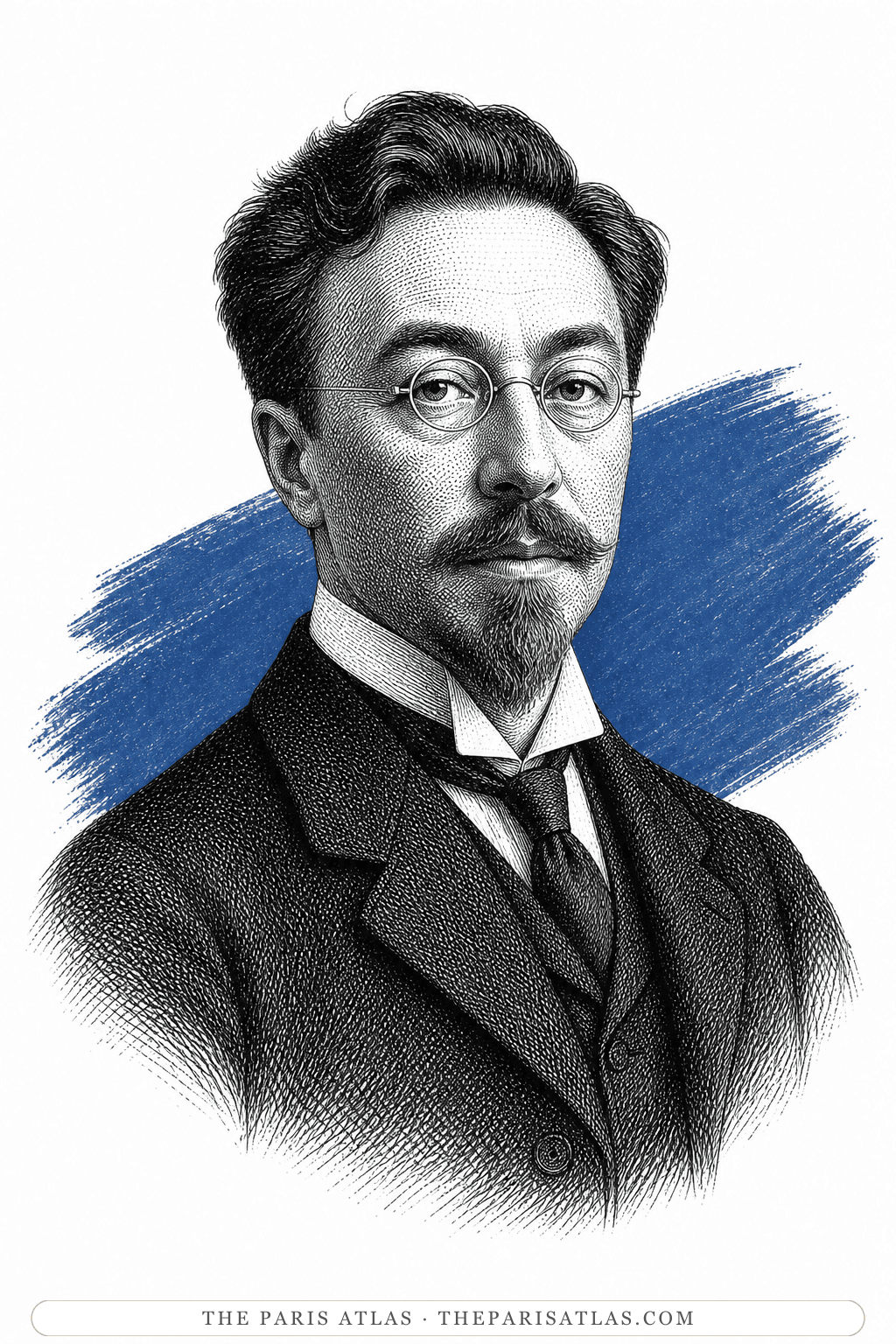
The Nazis closed the Bauhaus in 1933 and Wassily Kandinsky left Germany for France. In 1934 he and his wife Nina moved into a new building on what was then the boulevard de la Seine in Neuilly-sur-Seine, on a high floor — sources give the sixth or the seventh — looking over the river.
Marcel Duchamp is the reason they found it. He told the Kandinskys about the flat, which is a small detail that says a lot about how the exiled avant-garde in Paris actually functioned: not through institutions, which had largely shut their doors, but through people passing addresses to one another.
The working arrangement was domestic and improvised. Kandinsky took the living room of the three adjoining rooms, blocked off the double doors to the smaller one, and shut himself in to work in the larger space with its bay windows. Out of that converted sitting room came roughly 144 paintings and more than 200 watercolours and gouaches between 1934 and 1944 — the biomorphic late style, all floating cellular forms, that is as far from the Bauhaus geometry as the Bauhaus was from his early Munich work.
These were hard years. Abstract painting had few defenders in occupied Paris, materials were scarce, and most of the dealers who might have shown him would not. He died here of a stroke on 13 December 1944, aged seventy-eight, months after the Liberation and before the war ended.
The address needs care. The boulevard de la Seine has been renamed the boulevard du Général-Kœnig, and the old name now points somewhere else entirely — a street inside the Paris 16th, across the river. And Neuilly is not Paris: it is a separate commune, which is why the record sits outside the arrondissement structure.


 View source